Which Brush Suits a Springer Spaniel
The beautiful, flowing coat of an English Springer Spaniel is one of their most defining features, but let's be honest, it can also be a source of endless frustration for us owners. Mats, tangles, burrs, and seemingly endless shedding are constant battles. Choosing the right brush isn't just about making your dog look good; it’s about their comfort, health, and maintaining that gorgeous coat without tearing your hair out in the process. This guide will walk you through the essential tools and techniques to keep your Springer Spaniel's coat looking its best, no matter if they're a field dog or a show dog.
Understanding Your Springer Spaniel's Unique Coat Needs
Before we dive into the arsenal of brushes, it’s crucial to understand what kind of coat your Springer Spaniel actually has. While they are all English Springer Spaniels, there's a significant difference between the coat of a field-bred dog and a show-bred dog, and this directly impacts your grooming routine and brush choices.
The Field Springer Spaniel's Practical Coat
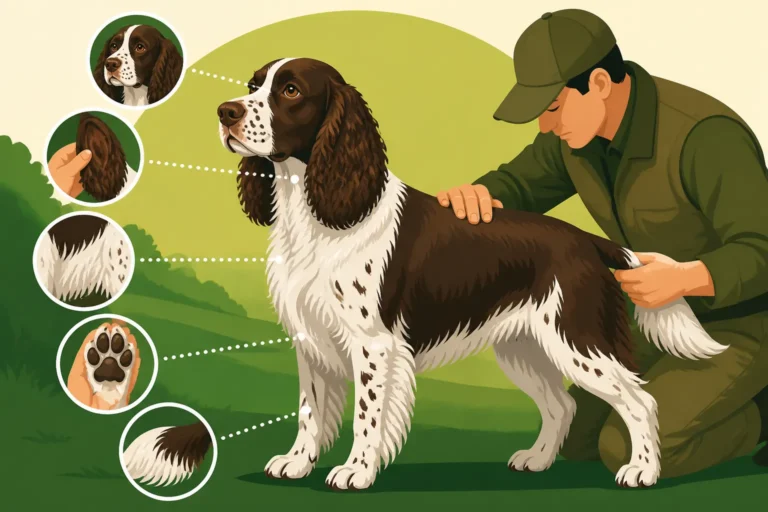
Field-bred Springer Spaniels typically have a coarser, shorter coat with less feathering on their legs, belly, and tail. This isn't just a stylistic choice; it's entirely functional. A shorter, denser coat offers better protection against thorns, brambles, and harsh weather when they are plunging through heavy cover. It's designed to repel water and dry quickly. However, "less feathering" doesn't mean "no feathering." They still have those gorgeous flags on their legs and tail, just generally not as profuse as their show-bred counterparts.
Even with a more practical coat, field Springers are still highly prone to collecting debris. Think about it: they're constantly running through fields, woods, and often water. Burrs, seeds, mud, and even ticks become unwelcome passengers. Their ears, while often shorter-coated, are still drop ears and prone to trapping moisture and debris. Why a Springer Spaniel's Ears Are Never Quite Healthy is a good read if you're wrestling with ear care. While less prone to massive mats than a show Springer, their undercoat can still pack down, especially around the neck, chest, and behind the ears, if not brushed regularly.
The Show Springer Spaniel's Luxurious Coat
Ah, the show Springer Spaniel. This is where the term "feathering" really shines. Show Springers boast a longer, silkier coat with abundant feathering on their legs, chest, belly, and tail. This is bred for aesthetics, designed to present a striking picture in the show ring. It's undeniably beautiful, but it comes with a much higher grooming commitment.
This luxurious length means show Springers are absolute mat magnets. Every walk outside can result in new tangles. The feathering can drag through mud, leaves, and everything else you encounter. Behind the ears, in the armpits, and on the backs of the legs are prime areas for mats to form quickly and painfully. This type of coat requires daily attention, not just for beauty, but for the dog's comfort and skin health. Without diligent brushing, these mats can become so tight they pull on the skin, causing irritation, hot spots, and even infections. Whether a Springer Spaniel Mats Behind the Ears delves into one of these common trouble spots.
Common Coat Challenges for All Springers
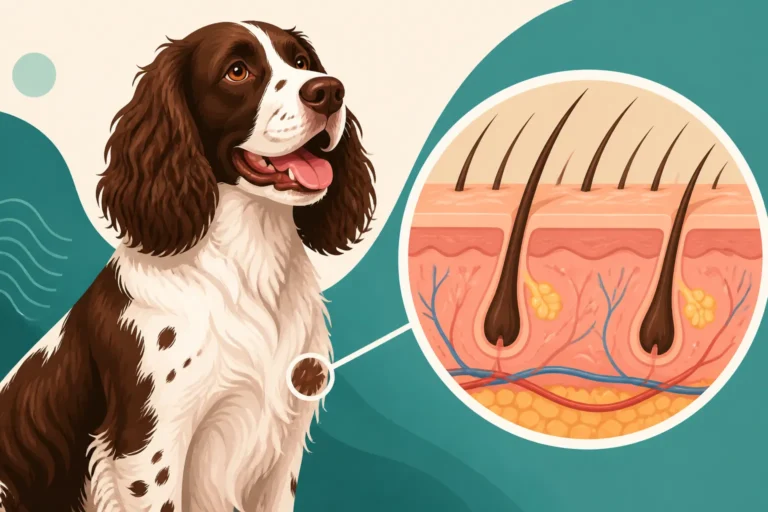
Regardless of type, all Springer Spaniels shed. They have a double coat, meaning a soft, dense undercoat for insulation and a coarser topcoat for protection. This undercoat sheds seasonally, often in impressive quantities, which can lead to a lot of hair around your house if not managed. Regular brushing helps remove this loose undercoat, distributing natural oils and preventing mats from forming. It also makes your home a little less hairy, which is a huge win!
Another universal challenge is keeping the coat free of foreign objects. Those long ears and feathered legs are like natural brooms, sweeping up everything from grass awns to burrs. Checking your dog over after every outing, especially if you've been in tall grass or brush, is non-negotiable. Burrs, Ticks and Grass Awns in a Working Springer Spaniel covers this in detail.
The Essential Brushes for Your Springer Spaniel's Grooming Kit
Now that we understand the coats, let's talk tools. You won't get by with just one brush for a Springer Spaniel. A well-rounded grooming kit will include several types, each designed for a specific task.
The Slicker Brush: Your Everyday Workhorse
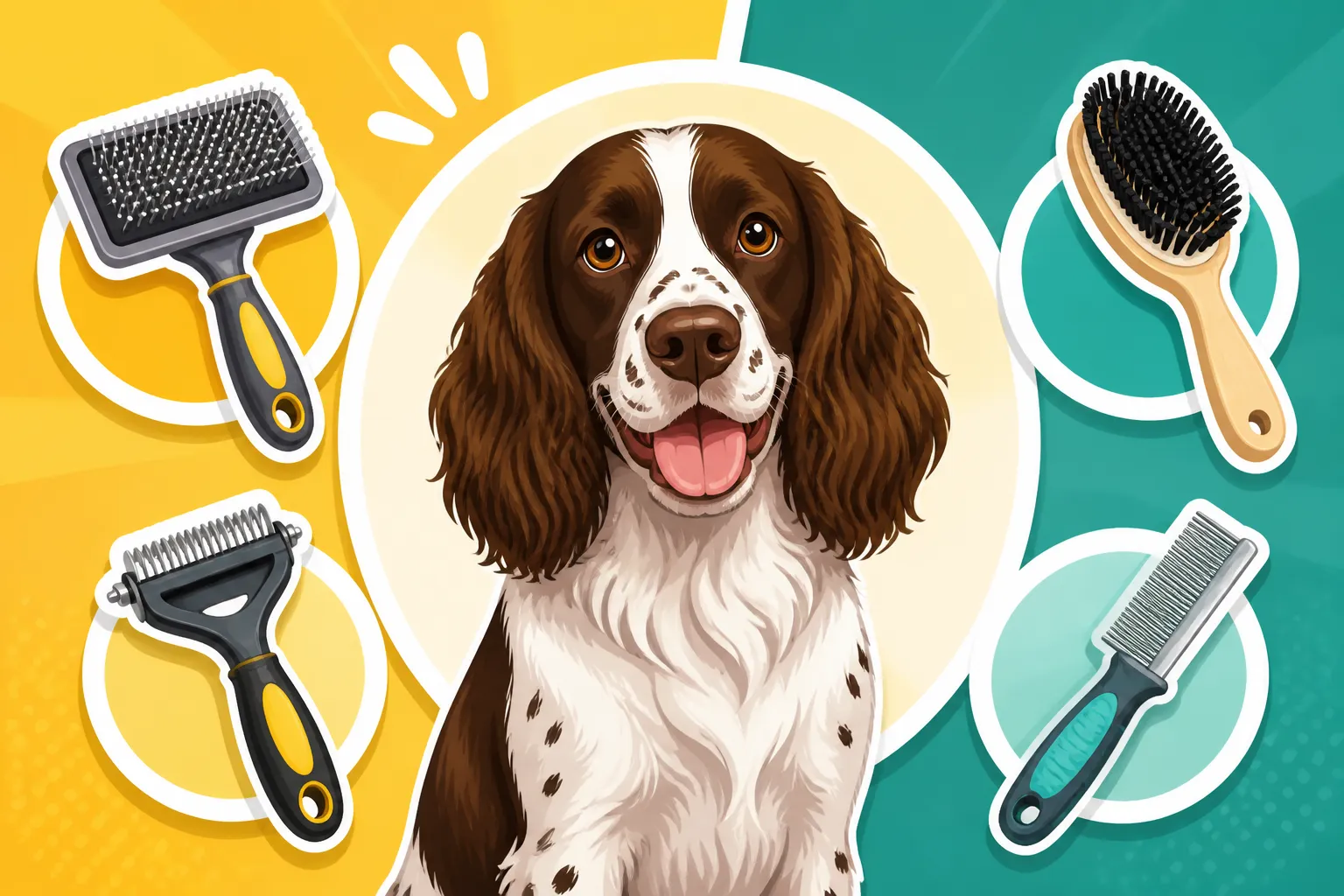
The slicker brush is arguably the most important brush in your Springer Spaniel's grooming kit. It features fine, short wires packed closely together on a flat or slightly curved surface. These wires are usually angled to gently grasp and remove loose hair and de-tangle mats.
Why it Suits a Springer Spaniel:
Slicker brushes are fantastic for both field and show Springers. For the show Springer with extensive feathering, it's essential for daily de-tangling and removing loose undercoat. For the field Springer, it helps to pull out any fine debris caught in the coat and keep the slightly less dense undercoat from packing down. It’s also excellent for gently working through the hair on their ears, which can get surprisingly matted, especially if they’ve been rooting around or swimming. How Often a Springer Spaniel Needs a Groomer will tell you that even with a groomer, daily slicker use is a must.
How to Use It Effectively:
Always brush in the direction of hair growth, starting from the skin and working your way out. Use light, gentle strokes, especially on sensitive areas like the belly, armpits, and behind the ears. If you hit a mat, don't yank. Instead, use the tips of the slicker brush to gently tease it apart. You can also "line brush" by parting the hair and brushing small sections at a time, ensuring you get down to the skin. This prevents mats from forming underneath the surface. When shopping, consider options available on Amazon or Chewy, looking for models with a comfortable handle for your hand, as you’ll be using it a lot!
The Pin Brush: For General Smoothing and Finishing
A pin brush looks a lot like a human hairbrush, featuring widely spaced, metal pins with rounded tips, set in a rubber or silicone base. It’s less aggressive than a slicker but still a valuable tool.
Why it Suits a Springer Spaniel:
The pin brush is great for general brushing on both types of Springers, especially if their coat is already relatively tangle-free. It's excellent for fluffing up the coat, stimulating circulation, and distributing natural oils, giving their fur a healthy sheen. For show Springers, it’s a good finishing brush after you've de-matted and de-shed with a slicker. For field Springers, it can be used for a quick brush-through after a walk to remove loose debris before it settles.
How to Use It Effectively:
Use long, smooth strokes over the entire body. It’s a good choice for puppies who are still getting used to grooming, as it’s very gentle. While it won’t tackle serious mats, it can help prevent minor tangles from escalating. Always be mindful of the pressure; though the pins are rounded, aggressive brushing can still be uncomfortable.
The Undercoat Rake: Taming the Shedding Beast
The undercoat rake is a specialized tool designed to penetrate the topcoat and remove loose, dead undercoat without cutting the guard hairs. It typically has one or two rows of widely spaced, blunt metal teeth.
Why it Suits a Springer Spaniel:
Given their double coat and propensity for shedding, an undercoat rake is indispensable for any Springer Spaniel owner, particularly during seasonal shedding periods. Removing this dead undercoat dramatically reduces shedding in your home and helps prevent those dense, painful mats that can form deep within the coat. It's especially useful for show Springers with their thicker undercoats, but field Springers also benefit immensely from its ability to thin out their insulation layers.
How to Use It Effectively:
Use the undercoat rake gently, following the direction of hair growth. Start from the neck and work your way down the body, paying special attention to the chest, flanks, and hindquarters where the undercoat can be thickest. Be careful around bony areas or thin skin. This is not a de-matting tool; it’s for shedding. If you encounter a mat, switch to your slicker brush or a de-matting tool first. You'll be amazed at the amount of hair this tool can remove! You can find a good selection of undercoat rakes on Chewy, often with ergonomic handles.
The Bristle Brush: For Shine and Skin Health
Bristle brushes feature natural bristles, similar to human hairbrushes, arranged in dense clusters.
Why it Suits a Springer Spaniel:
Bristle brushes are fantastic for finishing and polishing the coat. They excel at distributing the dog's natural skin oils throughout the fur, creating a healthy shine and removing fine dust or loose hairs from the surface. While not a primary de-shedding or de-matting tool, it's wonderful for invigorating the skin and giving that final, glossy touch, especially important for the silky coats of show Springers. For all Springers, it's also a great way to bond and stimulate the skin.
How to Use It Effectively:
Use gentle, sweeping strokes over the entire coat after you've done the heavy lifting with other brushes. It's particularly good for the shorter hair on the head and face. Think of it as a massage for your dog, promoting circulation and a healthy glow.
Specialty Tools: When You Need Extra Help
Sometimes, a regular brush just won't cut it. For those truly stubborn situations, a few specialty tools can be invaluable.
De-matting Comb/Tool:
These tools typically have sharp, curved blades (covered for safety) that are designed to cut through mats rather than pull them. They are invaluable for carefully breaking up dense mats that a slicker brush can't handle. Always use with extreme caution, and never pull directly on the mat; saw through it gently, always protecting the skin with your fingers. Whether a Matted Springer Spaniel Has to Be Shaved touches on how serious matting can get.
Wide-Toothed Comb:
A simple, sturdy metal comb with wide teeth is excellent for checking your work after brushing. It can find any small tangles you might have missed and is perfect for gently combing through feathering. It's also great for areas where a brush might be too harsh, like around the face or sensitive areas.
Grooming Glove:
A grooming glove, or shedding glove, has rubber nubs on the palm. While not a primary tool for serious grooming, it's excellent for daily surface shedding, especially for dogs who are sensitive to brushes. It's like petting your dog, but it removes loose hair at the same time. Great for a quick tidy-up or for getting hair off furniture.
Here’s a quick overview of brush types and their uses:
| Brush Type | Best For | Primary Function | Pros | Cons |
|---|---|---|---|---|
| Slicker Brush | All Springers, especially feathered areas | De-tangling, loose hair removal, mats | Highly effective, gets to undercoat | Can scratch skin if used improperly, needs caution |
| Pin Brush | All Springers, general brushing | Smoothing, stimulating, light tangles | Gentle, good for puppies, distributes oils | Not effective for heavy mats or shedding |
| Undercoat Rake | All Springers, heavy shedding periods | Removing dead undercoat, reducing shed | Drastically reduces shedding, prevents deep mats | Can be harsh if used too often or aggressively |
| Bristle Brush | All Springers, finishing, short coat areas | Polishing, shine, surface dust removal | Creates shine, gentle, good for sensitive skin | Not for de-tangling, minimal de-shedding |
| De-matting Tool | All Springers with significant mats | Safely cutting through stubborn mats | Effective for severe tangles | Requires extreme caution, can cut skin if misused |
| Wide-Toothed Comb | All Springers, checking work, delicate areas | Finding missed tangles, fluffing | Gentle, precise, good for feathering | Not for bulk de-shedding, can snag on mats |
Mastering the Brushing Routine: Tips and Techniques
Having the right tools is only half the battle; knowing how to use them is key. A consistent and correct brushing routine will save you headaches, time, and potentially expensive vet visits for mat removal.
Establishing a Regular Schedule
Consistency is absolutely vital with a Springer Spaniel's coat. For show-bred Springers with their extensive feathering, daily brushing is often necessary to prevent mats, especially in high-friction areas like the armpits and behind the ears. Field-bred Springers can often get by with a thorough brushing every 2-3 days, but after any outdoor excursion, particularly into brush or water, a full check and brush-through is a must. How Often a Field Springer Spaniel Needs Brushing goes into more detail.
Think of brushing as a mini health check. As you brush, you'll feel for any lumps, bumps, hot spots, or ticks that might be hiding under that glorious fur. You’ll also notice changes in their skin or coat condition.
The Art of Line Brushing
Line brushing is a technique that ensures you are brushing all the way down to the skin, not just skimming the surface. This is critical for preventing hidden mats, especially in densely feathered areas.
Here’s how to do it:
- Start at the bottom: Begin on one leg or the underside of the belly.
- Part the hair: Use your free hand to part the hair horizontally, holding the top section up and out of the way. This exposes a small strip of hair down to the skin.
- Brush the section: Use your slicker brush (or pin brush for lighter tangles) to brush this exposed strip from the skin outwards, thoroughly, until it's tangle-free.
- Repeat: Move your hand up slightly, releasing a bit more hair from the top section, and brush this new section. Continue this process, working your way up the leg or body, layer by layer.
- Be thorough: This might seem tedious, but it's the most effective way to prevent mats and ensure you’re removing all loose undercoat.
Tackling Mats Safely
Finding a mat can be frustrating, but panic-yanking is the worst thing you can do. It’s painful for your dog and can cause skin irritation.
Steps for Mat Removal:
- Assess the mat: Is it small and loose, or dense and tight to the skin?
- Apply detangling spray (optional but recommended): A good quality detangling spray can make a huge difference. You can find these on Chewy or Amazon.
- Use your fingers: Gently try to pull the mat apart with your fingers first.
- Slicker brush for smaller mats: Use the very tips of your slicker brush and gently work from the outside edges of the mat inwards, using small, light strokes. Hold the skin at the base of the mat to minimize pulling.
- De-matting tool for tougher mats: If the mat is dense, use a de-matting tool. Always place your fingers between the tool and the dog’s skin to avoid accidental cuts. Gently saw through the mat, a little at a time, moving the blades parallel to the skin.
- Wide-toothed comb to finish: Once the mat is broken up, use a wide-toothed comb to ensure all tangles are gone.
If a mat is severely tight to the skin, causes pain when touched, or you simply can’t get it out safely, please don’t hesitate to call a professional groomer or your vet. Sometimes, shaving is the kindest option.
Making Grooming a Positive Experience
No one wants to wrestle a reluctant dog with a brush. Start grooming early in your Springer's life, even as a puppy. Keep sessions short and positive, with lots of praise and high-value treats.
Tips for a Happy Grooming Session:
- Location matters: Choose a quiet, comfortable spot where your dog feels secure. A non-slip mat on a table can be helpful for your back and for keeping your dog still.
- Short and sweet: Especially in the beginning, keep sessions brief (5-10 minutes) and gradually increase the duration as your dog becomes more tolerant.
- Positive reinforcement: Reward calm behavior with treats and praise. Make it a positive association.
- Handle gently: Always be gentle, especially when working on sensitive areas. Be extra careful around ears, paw pads, and the belly.
- Inspect and praise: After brushing, give a full body massage, check for anything you missed, and finish with a big reward.
- Consider a grooming table: If you have a show Springer or simply struggle with your back, a grooming table can be a game-changer. You can find a variety of portable options on Amazon.
Beyond the Brush: A Holistic Approach to Coat Health
While the right brushes and consistent technique are paramount, a healthy coat is also a reflection of your Springer Spaniel’s overall well-being. Good nutrition and general care play a significant role.
The Role of Nutrition in Coat Quality
Just like with humans, what your dog eats directly impacts the health of their skin and coat. A diet rich in essential fatty acids, vitamins, and minerals can promote a shiny, healthy coat and reduce excessive shedding.
What to Look For:
- High-quality protein: This is the building block of healthy hair.
- Omega-3 and Omega-6 fatty acids: These are crucial for skin health and a glossy coat. Many quality dog foods include them, but you can also supplement with fish oil.
- Vitamins and minerals: Zinc, Vitamin E, and biotin all contribute to skin and coat health.
If your Springer has dull fur, dry skin, or excessive shedding despite regular brushing, consider reviewing their diet with your vet. Some owners find that fresh food diets, like those offered by Ollie, or limited ingredient diets can make a noticeable difference for dogs with sensitivities, which can manifest as skin issues. Whether Fish Oil Calms a Springer Spaniel's Skin further explores how diet can help.
Managing Skin Conditions and Allergies
Springer Spaniels, especially with their long ears and sometimes dense coats, can be prone to certain skin issues and allergies that can affect coat health. These can include:
- Allergies: Environmental or food allergies can lead to itching, scratching, and hot spots, which can damage the coat and create painful mats. Whether a Springer Spaniel Gets Skin Allergies is a common concern.
- Seborrhea: This condition causes oily or flaky skin and can lead to a greasy, sometimes smelly coat. Whether a Springer Spaniel Gets Seborrhea might offer more insight.
- Ear infections: Chronic ear infections can often be linked to underlying allergies that also affect the skin and coat elsewhere on the body.
If you notice excessive scratching, redness, hair loss, or a persistent odor, it's always best to consult your veterinarian. They can help diagnose any underlying issues and recommend appropriate treatment, which might include medicated shampoos, dietary changes, or medications like Apoquel.
Regular Health Checks During Grooming
Every grooming session is an opportunity for a head-to-tail inspection of your beloved Springer. This isn't just about their coat; it's about their overall health.
Things to check for:
- Ears: Look for redness, discharge, odor, or excessive wax. Gently wipe them clean if needed. Signs a Springer Spaniel Has an Ear Infection
- Eyes: Check for any redness, discharge, or irritation.
- Mouth: While brushing their coat, take a quick peek at their gums and teeth. Look for any broken teeth or red gums.
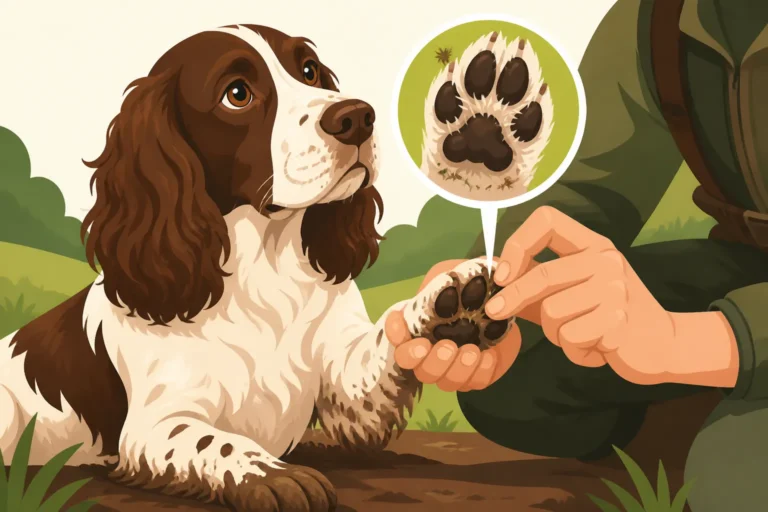
- Paws: Inspect between their paw pads for cuts, foreign objects (like those dreaded grass awns), or matted hair. Checking a Springer Spaniel's Feet After Working
- Skin: Feel for any new lumps, bumps, scabs, or parasites like ticks. Ticks can be tiny and easily missed in thick fur.
- Nails: Ensure their nails are a healthy length. Long nails can cause discomfort and even lead to orthopedic issues. Keeping a Working Springer Spaniel's Nails Short
By incorporating these checks into your routine, you can catch potential problems early, often before they become serious. This proactive approach to care is a hallmark of responsible Springer Spaniel ownership and helps ensure your lively companion remains happy and healthy for years to come.
Disclaimer
This article is for general informational purposes only and does not constitute professional advice. Laws, prices and regulations vary by location and change over time. Consult a qualified professional for guidance on your specific situation.