How Often a Springer Spaniel Needs a Groomer
It's a common dilemma for English Springer Spaniel owners: how often do these active, beautiful dogs actually need a trip to the groomer? With their gorgeous, often profuse coats, it can feel like a guessing game, especially when you consider the difference between a working field Springer and a more sedate companion. This comprehensive guide will walk you through everything you need to know about setting up a realistic grooming schedule for your Springer, considering their coat type, lifestyle, and individual needs.
Understanding the Springer Spaniel Coat: More Than Just "Long Hair"
Before we can even talk about frequency, we need to truly appreciate the English Springer Spaniel's coat. It's not just a pretty covering; it's a functional piece of equipment, designed by centuries of selective breeding for a specific purpose. Understanding its structure and nuances is the first step to knowing how to care for it.
The Double Coat's Purpose and Structure
A Springer Spaniel possesses a double coat, which means it has two distinct layers: a soft, dense undercoat and a longer, coarser outer coat. This isn't just for aesthetics; it's a brilliant piece of natural engineering. The undercoat acts as an insulator, keeping them warm in cold water and cool in hot weather, much like a well-insulated thermos. It traps air close to the body, creating a thermal barrier. The outer coat, often called the guard hairs, is tougher and water-repellent. It lies flat, providing a protective barrier against brush, thorns, and moisture, allowing water to bead off rather than soak through to the skin.
This double layer is fantastic for a dog that spends time out in various weather conditions, whether retrieving ducks from icy ponds or flushing pheasants through dense brambles. However, this functional design also means that regular grooming is non-negotiable. Without proper care, the undercoat can become matted and compacted, especially during shedding seasons. When this happens, it loses its insulating properties, can trap moisture against the skin leading to irritation and infections, and can become incredibly uncomfortable for your dog. It's truly an integral part of their well-being, not just a cosmetic feature.
How Field and Show Coats Differ
This is where the nuances of the English Springer Spaniel really come into play. While both types have that fundamental double coat, the seventy-year gene pool divide inside one Springer Spaniel breed has led to noticeable differences in coat texture and quantity, which directly impacts their grooming needs. Field bred Springers, often referred to as "working type," typically have a much shorter, coarser, and less profuse coat. Their feathering – the longer hair on their ears, legs, chest, and belly – is minimal. This streamlined coat is practical; it's less likely to collect burrs, mud, and debris when they're crashing through thick cover, and it dries faster.
On the other hand, show bred Springers, bred primarily for the conformation ring, tend to have a much longer, silkier, and more abundant coat with extensive feathering. This luxurious look is what the breed standard often emphasizes in the show ring, but it comes with increased maintenance. That flowing hair can look stunning, but it's a magnet for everything outdoors and requires significant upkeep to prevent tangles and mats. If you're wondering How different the two Springer Spaniel types look, the coat is one of the most immediate indicators.
The Impact of Feathering on Grooming Needs
The feathering is arguably the most demanding part of a Springer Spaniel's coat, regardless of type, though it's far more pronounced in show lines. These longer hairs on the ears, chest, belly, and legs are beautiful, but they are also highly prone to matting. On the ears, they can trail in food and water, picking up debris and bacteria, exacerbating the already tricky issue of ear health. If you've read about The Springer Spaniel Ear That Never Fully Dries, you know their ears are already a hotspot for issues. Feathering on the legs and belly acts like a broom, sweeping up everything from mud and burrs to thorns and foxtails.
For an active dog, especially one that enjoys splashing in puddles or plunging into a lake, this feathering becomes a tangled mess surprisingly quickly. Even a pet Springer who just romps in the backyard can develop significant mats behind the ears or in the armpits. These mats aren't just unsightly; they pull on the skin, causing pain and irritation. They can also hide skin infections, parasites, or injuries. Therefore, managing this feathering is a cornerstone of Springer Spaniel grooming, often requiring daily attention for show dogs and careful weekly checks for even the most streamlined field types.
Grooming Frequency for the Field Bred Springer Spaniel
The field bred Springer Spaniel is often chosen by owners looking for a lower-maintenance coat compared to their show-bred cousins. While it's true their coat is generally shorter and less prone to extensive matting, "low-maintenance" doesn't mean "no maintenance." These dogs are built for work, and their grooming routine needs to support that active lifestyle, protecting them from the elements and preventing issues that could impede their performance or comfort.
Daily Checks and Quick Brushes
For a field bred Springer, daily interaction is key. This isn't necessarily a full-blown grooming session, but rather a diligent post-activity check and a quick brush. If your dog has been out in the field, through tall grass, brush, or water, a thorough inspection is paramount. You're looking for burrs, twigs, thorns, and any other hitchhikers that have embedded themselves in the coat, especially in the minimal feathering on the legs, belly, and ears. These items can quickly turn into painful mats or even lead to skin irritation. Pay close attention to their paws for any cuts or abrasions and check between their toes where debris often lodges.
A quick brush-through with a slicker brush or a comb, particularly on the legs, chest, and behind the ears, can prevent small tangles from escalating. This daily ritual is also a wonderful bonding opportunity and helps you stay intimately familiar with your dog's skin and body, allowing you to spot any lumps, bumps, or injuries early. Many owners of working dogs have a ritual to check them over, as detailed in After the Hunt: Checking a Springer Spaniel Over Nose to Tail. This brief but consistent attention ensures their coat remains functional and healthy, even with constant exposure to challenging environments.
Monthly Maintenance for Working Dogs
While daily checks handle immediate concerns, a more thorough grooming session is typically needed for field-bred Springers once a month. This session might be done at home or with a professional groomer, depending on your comfort level and the specific tasks needed. This is the time for a good bath, especially if your Springer has been particularly muddy or spent time in stagnant water. Use a quality dog shampoo and conditioner to clean the coat without stripping natural oils, and always ensure thorough rinsing. Afterward, dry them completely to prevent skin issues.
During this monthly session, you'll also want to trim any excess hair around their paw pads to prevent slipping and collect debris. Their nails should be trimmed regularly, typically every 3-4 weeks, as long nails can be painful and affect their gait. The hair around their ears might need a slight tidy to ensure good air circulation, which is crucial for preventing ear infections in drop-eared breeds. Even though Whether a Field Bred Springer Spaniel Needs Grooming might seem like a simple question, the answer is a resounding "yes" for their health and comfort. A professional groomer can also help keep their overall coat tidy and functional, potentially using thinning shears to reduce bulk where necessary without compromising the protective outer coat.
Seasonal Grooming Considerations
The seasons play a significant role in a field Springer's grooming needs. Spring and fall are typically shedding seasons when the undercoat "blows," meaning they shed heavily to prepare for warmer or cooler weather. During these times, daily brushing becomes even more critical to remove dead undercoat. Failing to do so can lead to matting, especially in the thicker areas, and can hinder the coat's ability to regulate temperature. A good deshedding tool can be invaluable during these periods.
In winter, if your dog is actively working in cold, wet conditions, you might want to consider minimal trimming to preserve as much natural insulation as possible, while still ensuring areas prone to matting are managed. Conversely, in hot summer months, keeping their coat free of mats and dead undercoat will help them stay cooler. While you wouldn't typically shave a Springer, ensuring the undercoat is thinned out can make a big difference in heat dissipation. Many owners find their grooming routine adapts with the weather, a testament to the versatility of these dogs and their coats.
Grooming Frequency for the Show Bred Springer Spaniel
The grooming demands of a show bred English Springer Spaniel are on an entirely different level than their field-bred counterparts. These dogs are celebrated for their flowing lines, abundant feathering, and classic good looks, all of which require meticulous, consistent care. Maintaining a show-ready coat is a significant commitment, often involving a combination of dedicated home grooming and professional expertise.
The Weekly Show Coat Routine
For a show Springer Spaniel, weekly thorough grooming sessions are the absolute minimum. This isn't just a quick brush; it's a deep dive into every aspect of their coat. This includes a full body brush-out, starting with a pin brush to detangle and lift the coat, followed by a slicker brush to remove loose undercoat and smooth the outer layer. A metal comb should then be used systematically through all the feathering and shorter coat areas, especially behind the ears, armpits, and groin, where mats form quickly. You'd be surprised Where a Springer Spaniel Mats First, and it's almost always these high-friction areas.
These weekly sessions often include a bath using specialized shampoos and conditioners designed to enhance coat health and texture. Blow-drying is crucial to ensure the coat is perfectly straight and fluffed for optimal presentation. Neglecting a single week can lead to serious matting, making future sessions much harder and potentially damaging the coat. This routine isn't just about looking good for the judges; it's about preventing discomfort and potential skin issues that arise from a neglected, dense coat.
Professional Grooming Schedules for the Ring
While diligent home care is essential, most show Springer Spaniel owners rely heavily on professional groomers, especially those specializing in show breeds. A typical schedule might involve a full professional groom every 4-6 weeks, with touch-ups at home in between. These professional sessions go beyond bathing and brushing. They involve expert trimming, shaping, and hand-stripping techniques to sculpt the coat according to the breed standard.
A skilled groomer understands how to enhance the Springer's natural lines, manage the length of the feathering without sacrificing its elegance, and tidy the head and feet with precision. They can also address specific coat challenges, such as excessive undercoat or stubborn mats that have formed despite home efforts. The cost of these regular professional appointments for What a Full Groom on a Show Springer Spaniel Costs can be substantial, reflecting the expertise and time involved in maintaining such a demanding coat. Many owners will also schedule an additional groom a few days before a major show to ensure their dog looks impeccable.
Managing the Feathering of a Show Dog
The extensive feathering on a show Springer is its crowning glory, but also its biggest grooming challenge. This includes the long, flowing hair on the ears, chest, belly, and legs. To maintain this feathering, daily combing is often necessary to prevent tangles. Special attention must be paid to the ears, which can quickly become matted and collect debris. The sheer volume of hair means it will invariably pick up dirt, leaves, and burrs, even on short walks. This is the main reason that The Feathering a Show Springer Spaniel Drags Through Everything needs constant attention.
Owners often learn Trimming a Springer Spaniel's Feathering themselves, or leave it to their professional groomer, to keep it at a manageable yet still impressive length. Strategic trimming can keep it off the ground, out of food bowls, and less prone to tangles, while still maintaining the desired aesthetic. Some owners even use snoods for the ears during meal times to prevent them from getting soiled. Ultimately, the feathering dictates much of the grooming schedule for a show Springer, demanding constant vigilance and consistent care.
Factors Influencing Grooming Frequency Beyond Coat Type
While the distinction between field and show coats is a major determinant of grooming frequency, several other factors play a crucial role. Acknowledging these individual circumstances will help you tailor a grooming schedule that truly meets your Springer Spaniel's unique needs, keeping them comfortable and healthy in their specific environment.
Lifestyle and Environment: Mud, Water, and Burrs
Your Springer Spaniel's daily life and the environment they inhabit significantly impact how often they need grooming. A dog that lives in a city apartment with short, leash-walked pavement excursions will have vastly different needs from one who spends hours romping in a rural backyard, exploring wooded trails, or swimming in a local pond.
Dogs who are regularly exposed to mud, thick brush, sticky burrs, or frequent swims will inevitably require more frequent attention. Mud can cake into the coat, especially the feathering, and when it dries, it can pull on the skin and cause discomfort. Burrs are notorious for weaving into the soft undercoat and feathering, quickly creating painful, tight mats that are incredibly difficult to remove without cutting them out. Regular swims, while enjoyable for most Springers, necessitate thorough drying, especially of the ears, to prevent moisture-related skin and ear infections. Many owners find their grooming routine for Water Work and What It Does to a Springer Spaniel's Ears becomes a crucial part of preventing problems. After any particularly dirty or adventurous outing, a quick rinse or bath and a thorough brush-out become immediate necessities, potentially pushing up the frequency of full grooming sessions.
Skin Health and Allergies
A Springer Spaniel's underlying skin health is another major factor dictating grooming frequency. Springers are generally known for robust health, but like many breeds, they can be prone to skin allergies or sensitivities. If your dog suffers from environmental allergies, food allergies, or has a tendency towards oily skin (seborrhea), their grooming needs will shift. Allergies often manifest as itchy, irritated skin, which can lead to excessive licking, scratching, and even hot spots. These behaviors can cause the coat to become matted, greasy, or develop secondary infections, all of which require more frequent bathing with specialized shampoos and potentially more frequent trims to allow the skin to breathe and facilitate topical treatments.
Dogs with chronic skin conditions might need medicated baths more often than a healthy Springer, sometimes weekly or bi-weekly, as recommended by a veterinarian. This isn't about cosmetic grooming but therapeutic care. If your Springer is on a special diet, perhaps a limited ingredient diet from a brand like Ollie, or on medication like Apoquel for allergies, keeping their coat clean and free of irritants is even more critical. Similarly, regular brushing can help distribute natural oils, stimulate circulation, and allow you to monitor the skin for any new rashes, bumps, or flaky patches that could indicate a flare-up. An early detection of a problem can save you a lot of headache and your dog a lot of discomfort.
Age and Mobility Considerations
A Springer Spaniel's age also plays a role in their grooming needs. Puppies, with their soft, fluffy coats, typically don't require the same intense grooming as an adult, but they do need early introduction to grooming tools and routines. Positive early experiences make future grooming much easier. Young Springers can be quite rambunctious, so quick checks and gentle brushes are often more realistic than lengthy sessions.
As your Springer enters their senior years, their grooming needs may change again. Their coat might become thinner, coarser, or more brittle, and their skin can become more delicate. Arthritis in an Older Springer Spaniel can make standing for long grooming sessions uncomfortable or painful. You might need to adjust your approach, using softer brushes, shorter grooming sessions, or opting for more frequent, shorter professional visits to reduce strain. Older dogs might also have decreased mobility, making it harder for them to groom themselves effectively, such as reaching behind their ears or cleaning their paws, which means you'll need to step up your assistance. Their ability to regulate body temperature might also change, making it more important to keep their coat free of heavy undercoat in warmer months.
DIY Grooming vs. Professional Groomers: Finding Your Balance
Deciding between grooming your Springer Spaniel yourself and taking them to a professional is a choice many owners grapple with. The truth is, for most Springer Spaniels, it's not an either/or situation, but rather finding the right balance that suits your skills, your dog's needs, and your budget. Both approaches have their merits, and a combination often yields the best results.
What You Can Realistically Do at Home
Many Springer Spaniel owners can, and should, perform a significant amount of grooming at home. Daily or weekly brushing is essential for preventing mats, removing loose hair, and checking for debris or skin issues. Regular ear cleaning is also a must for this breed to prevent infections, especially if you understand Why a Drop Ear Traps Moisture in a Springer Spaniel. Nail trims, while sometimes daunting for new owners, are also manageable at home with the right tools and practice. Many excellent tutorials exist to guide you.
Bathing your Springer at home is also a common practice, especially after particularly muddy adventures. You can focus on using appropriate shampoos and conditioners for their coat and skin type. Trimming the hair around their paw pads and tidying up some of the lighter feathering on their legs or belly can also be done by a dedicated owner with some good quality thinning shears. While you may not achieve a show-ring finish, you can certainly keep your Springer Spaniel comfortable, clean, and healthy. For tips, check out What a Springer Spaniel Owner Can Groom at Home. This regular home maintenance is foundational to good coat care, regardless of whether a professional groomer is involved.
When to Call in the Professionals
Despite your best efforts, there are times when a professional groomer is invaluable. For show-bred Springers, professional grooming is almost a necessity to maintain the precise cuts and hand-stripping techniques required for the breed standard. Even for pet Springers, if you find yourself struggling with severe matting, or if your dog develops a skin condition that requires a specialized therapeutic bath and coat care you're not equipped to handle, a professional can step in.
Many owners opt for professional grooming every 6-12 weeks, depending on their dog's coat type and lifestyle, to get a thorough clean, professional deshedding, and precise trimming that's hard to replicate at home. Groomers have specialized equipment, like high-velocity dryers, that significantly reduce drying time and help de-shed the coat more effectively. They are also skilled at spotting skin issues, parasites, or ear problems that you might miss. If your dog is particularly anxious about grooming, a patient professional can also help make the experience more positive. Even if you're quite proficient at home, occasional professional grooms can serve as a "reset" for the coat, making your home maintenance easier.
Essential Grooming Tools for Springer Owners
Having the right tools at home can make all the difference in maintaining your Springer Spaniel's coat between professional visits. Investing in quality equipment will not only make the task easier but also more comfortable for your dog. You can often find a great selection of these tools from online retailers like Chewy.
Here's a breakdown of some essential items:
| Tool | Purpose | Frequency of Use |
|---|---|---|
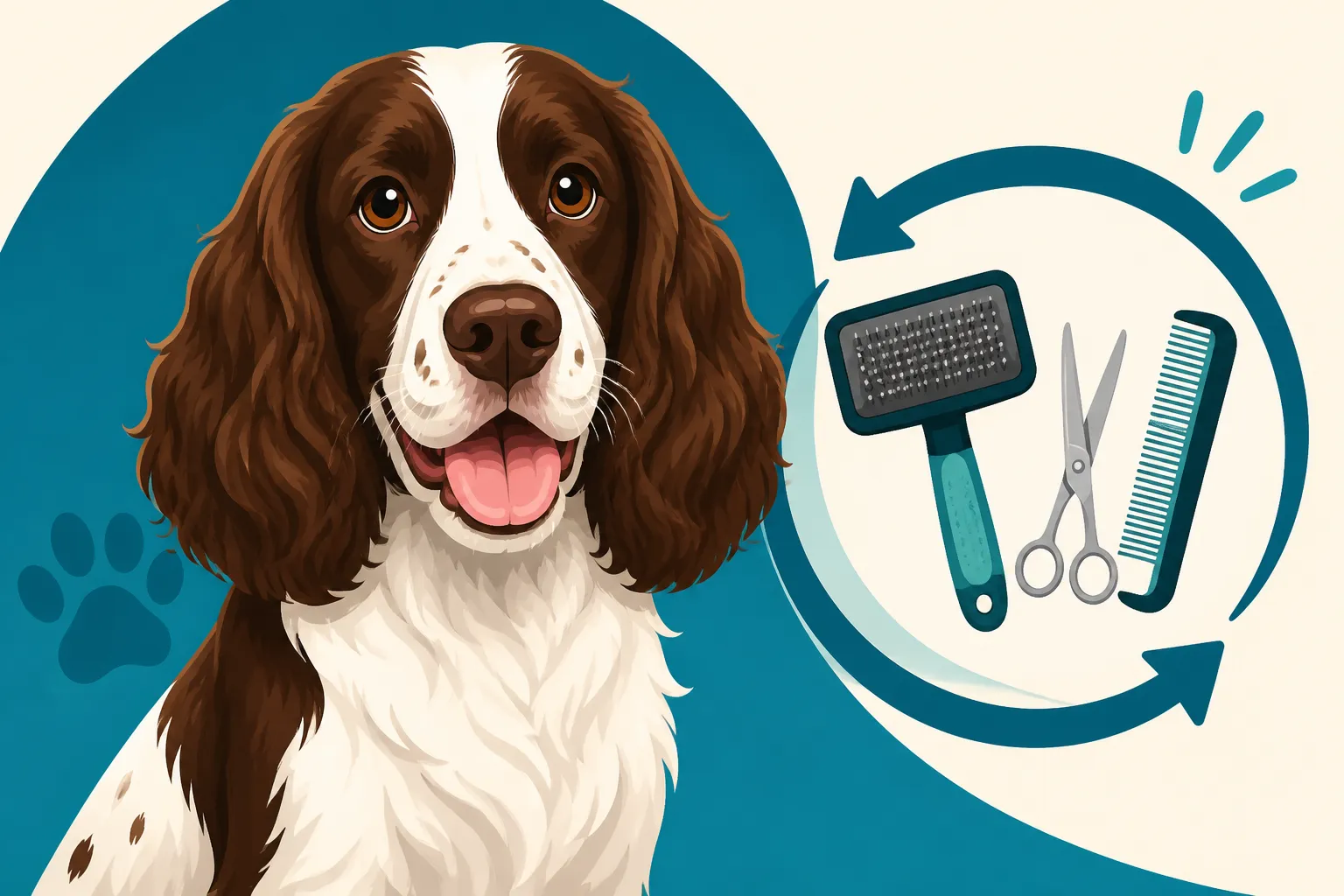
| Slicker Brush | Removes loose hair, detangles, and smooths the outer coat. Great for general brushing. | Daily to several times a week |
| Pin Brush | Penetrates deeper to detangle longer feathering and lift the coat. | Daily to several times a week |
| Metal Comb | Essential for checking for mats, especially behind ears, armpits, and feathering. Different tooth widths. | Daily to several times a week |
| Undercoat Rake | Specifically designed to remove dead undercoat, especially during shedding seasons. | Weekly to bi-weekly (seasonal) |
| Thinning Shears | Used to blend and thin out thicker areas of feathering without harsh cut lines. | Monthly or as needed |
| Blunt-Tipped Scissors | For carefully trimming hair around paw pads and hygiene areas. | Monthly or as needed |
| Nail Clippers | Keeps nails at a healthy length. Options include guillotine or scissor-style, or a Dremel. | Every 3-4 weeks |
| Ear Cleaner | Veterinarian-approved solution to keep ear canals clean and dry. | Weekly or as needed |
| Dog Shampoo & Conditioner | High-quality products suitable for double coats and sensitive skin, if applicable. | Monthly or as needed |
| High-Velocity Dryer | Speeds up drying, helps 'blow out' loose hair; a significant investment but highly effective. | After baths |
Remember, the goal is to make grooming a positive experience for your Springer, so always use gentle techniques and offer plenty of praise and treats. Whether you handle most of the grooming yourself or rely on a professional, a consistent routine tailored to your Springer's specific coat and lifestyle will ensure they remain happy, healthy, and looking their very best.
Disclaimer
This article is for general informational purposes only and does not constitute professional advice. Laws, prices and regulations vary by location and change over time. Consult a qualified professional for guidance on your specific situation.