Whether Show Springer Spaniel Lines Are Tested More
English Springer Spaniel health testing differences between field and show lines explain common hereditary conditions like hip dysplasia.
Know what to watch for.
Breed-specific conditions, screening and DNA tests, what surgery actually costs, and the daily habits that stretch a healthy lifespan.

English Springer Spaniel health testing differences between field and show lines explain common hereditary conditions like hip dysplasia.

Field Springer Spaniels and show Springer Spaniels undergo health testing comparisons regarding hereditary genetic conditions and historical breeding focuses.
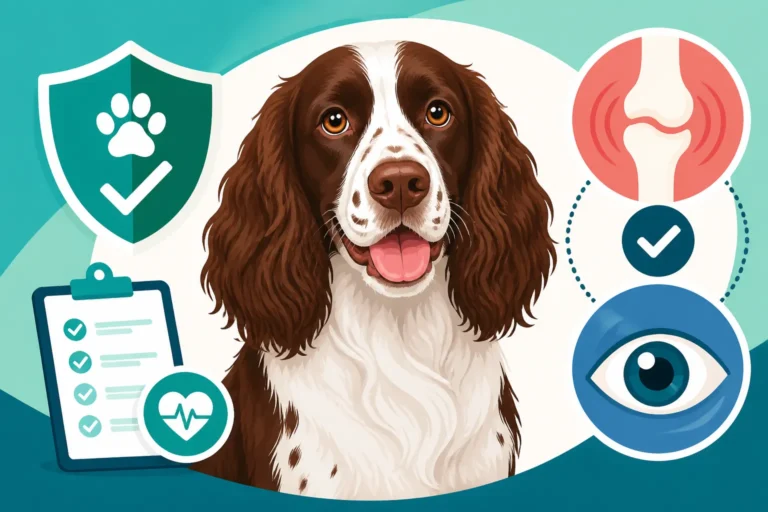
English Springer Spaniel health panels do not always cover breed-specific genetic conditions like Fucosidosis and PFK Deficiency.

Pre-breeding health testing for English Springer Spaniels protects puppies from inherited conditions like Fucosidosis and hip dysplasia.

Buying untested Springer Spaniel puppies carries hidden health risks and higher financial costs that owners face down the line.

English Springer Spaniel parent dogs need specific health tests and orthopedic screenings to prevent genetic conditions and ensure healthy puppies.

Senior English Springer Spaniel aging signs help owners assess chronic pain, mobility loss, and behavioral decline around nine or ten years old.

Older Springer Spaniels experience physical and cognitive changes that impact performance, yet their working drive often remains strong.

Cognitive Dysfunction Syndrome in senior English Springer Spaniels causes confusion, disorientation, and progressive age-related neurological decline.

Aging Springer Spaniels show physical changes like grey hair, joint stiffness, and sensory decline as they enter senior years.