How Old the Springer Spaniel Type Is
It’s easy to look at our lively, loving Springer Spaniels today and imagine them as a recent addition to the dog world, a perfectly crafted companion for modern life. But the truth is, the English Springer Spaniel boasts a rich, extensive history, deeply rooted in centuries of working alongside humans. Understanding their ancient lineage helps us appreciate just how much of their innate character – their drive, their nose, their eagerness to please – has been passed down through generations.
The Ancient Roots of the Spaniel Family
When we talk about how old the Springer Spaniel type is, we're really delving into the deep past of an entire category of dogs known as spaniels. For centuries, before specific breeds were formally recognized and kennel clubs drew up meticulous standards, dogs were primarily defined by the work they did. And spaniels, with their keen noses and energetic flushing abilities, were invaluable partners to hunters long before firearms became common.
Early Spaniels in Europe
The journey of the spaniel type is said to begin well over a thousand years ago, with many historians suggesting their origins lie in Spain, which is how they likely got their name – "spaniel" meaning "Spanish dog." These weren't the distinct breeds we know today, but rather a general type of dog suited for flushing game from dense cover. Imagine medieval hunts, not with rifles, but with nets, bows, or even falcons. Hunters needed a dog that could push birds or small game out of the thick brush so they could be captured or shot down. That's where the spaniel excelled. They were tireless, persistent, and perfectly built for navigating challenging terrain. These early dogs laid the foundation for every spaniel breed that followed. If you're curious about this long journey, you might enjoy reading more about Whether the Springer Spaniel's Ancestors Came From Spain.
These aren't just vague assumptions; records from the Middle Ages describe dogs remarkably similar in function to our modern Springers. Artistic depictions and written accounts from these eras often show medium-sized, long-eared dogs working diligently in the fields, driving game for their masters. These early "spaniels" were mentioned in hunting treatises and even popular literature, underscoring their integral role in rural life and sport. It’s truly fascinating to think that the same instincts that drive your Springer to investigate every rustle in the bushes have been present in their ancestors for centuries. If you're a history buff, digging into The Medieval Records That Mention Springer Spaniels can really paint a picture of these ancient canine companions.
The Undifferentiated Spaniel
For a very long time, spaniels weren't rigidly categorized into breeds like "Cocker" or "Springer." Instead, they were more of a fluid population, bred for their utility rather than a specific appearance. A single litter of spaniel puppies might contain dogs of various sizes and builds. Some might be smaller, better suited for hunting woodcock in tight cover – eventually becoming what we know as Cockers. Others might be larger and more powerful, ideal for "springing" (flushing) heavier game like pheasant and partridge, and covering more ground. These larger individuals were the progenitors of our modern Springer Spaniels. There wasn't a strict breeding program with official papers; it was all about practical hunting ability.
This fluidity meant that breeders weren't thinking about distinct bloodlines as much as they were about producing effective working dogs. A hunter would simply select the best puppies from a litter based on their size, eagerness, and natural talent for finding and flushing game. This explains why, even relatively recently in canine history, you could find How Springer and Cocker Puppies Once Shared a Litter. It wasn't until the late 19th and early 20th centuries that enthusiasts began to standardize these types into the distinct breeds we recognize today, giving them names and formal descriptions based on their size and presumed specialties.
The Genesis of the "Springing" Dog
The name "Springer Spaniel" itself is a direct nod to the primary function these dogs performed for generations. It wasn't about a fancy lineage or a specific kennel; it was about a job. The entire "type" evolved because of this essential role in hunting.
Function Over Form
The core of the Springer Spaniel's identity lies in its original purpose: to "spring" or flush game from cover, driving it out into the open for hunters. Imagine vast tracts of woodland and fields, filled with thick undergrowth where game birds like pheasants and partridges could hide. A hunter on foot, or with a gun, needed a dog that could systematically work through this cover, fearlessly pushing birds out so they could be shot. The Springer Spaniel was literally built for this. Their medium size allowed them to penetrate dense brush, while their powerful legs and boundless energy ensured they could do it all day. They developed an innate patterning of working back and forth in front of the hunter, a characteristic "quartering" search that is still prized today. Delving into Springing Game: What the Springer Spaniel Name Describes offers a wonderful insight into this foundational aspect of the breed.
Before the widespread use of modern firearms, these spaniels worked in conjunction with various hunting tools. They would flush game into nets, drive it towards waiting archers, or send birds skyward for falcons to pursue. This required a dog that was not only tenacious in cover but also responsive to its handler, capable of covering ground while remaining within a reasonable distance. The strong bond with their human companion, so evident in today’s Springer, was vital for this teamwork. Their ability to work independently to find scent, yet cooperate closely with the hunter, was a hallmark of their development. This historical role truly showcases How Springer Spaniels Worked Before Guns.
The Norfolk Spaniel Connection
When tracing the lineage of the English Springer Spaniel, one often encounters the name "Norfolk Spaniel." This extinct breed played a significant role in the development of the Springer as we know it today. The Norfolk Spaniel was a highly regarded land spaniel of the 18th and 19th centuries, known for its strong hunting instincts and robust build. They were particularly prevalent in the East Anglia region of England, specifically Norfolk, where they were meticulously bred for their working abilities. These dogs were essentially a key precursor, a local type that contributed heavily to the genetic pool that would eventually become the formal English Springer Spaniel.
Many believe that the Norfolk Spaniel was essentially the same dog, just an earlier, regionalized version of what would be formalized as the Springer. They shared many physical characteristics: a strong body, pendulous ears, and a keen intelligence. Their tireless work ethic and natural "springing" abilities were highly valued, and breeders of the emerging English Springer Spaniel undoubtedly drew heavily from these well-established working lines. Understanding the Norfolk Spaniel's influence is crucial to appreciating the full depth of the Springer's history; you can find more detailed information in The Norfolk Spaniel and the Springer Spaniel. These ancestral dogs were not just vague historical footnotes; they were the very practical, highly effective hunting companions that refined the traits we love in our Springers today.
Formal Recognition and the Breed's Evolution
The transition from a working type to a formally recognized breed is a crucial chapter in the Springer Spaniel's long history. This period marked a shift from purely functional breeding to a focus on consistent appearance and documented lineage, leading directly to the distinct English Springer Spaniel we cherish today.
The 19th Century and Early Breed Development
The 19th century was a transformative era for many dog breeds, as interest in canine exhibitions and selective breeding grew. Dog shows began to gain popularity, encouraging breeders to refine physical traits and establish pedigree lines. For spaniels, this meant a move towards more defined "types" based on size and specific working roles. Enthusiasts started keeping more meticulous records of parentage, laying the groundwork for what would eventually become formal breed registries. This period saw various strains of land spaniels gaining local renown, each contributing to the rich tapestry of the emerging English Springer Spaniel.
One of the most influential families in the early development of the English Springer Spaniel was the Boughey family of Aqualate, Shropshire. Their kennel, particularly through a dog named "Mompessons Blue," is often credited with establishing many of the foundational lines from which modern Springers descend. They focused on breeding spaniels with exceptional working abilities, combining the best traits from existing local strains. Their dedication to documenting and propagating these superior working dogs was instrumental in bringing consistency and recognition to the Springer type. You can learn more about their significant impact by exploring The Boughey Family's Springer Spaniel Line. Their foresight in breeding and record-keeping cemented a legacy that continues to influence the breed's conformation and working drive even now.
The Great Divide: Springer vs. Cocker
The formal recognition of the English Springer Spaniel as a distinct breed by The Kennel Club in England in 1902 was a landmark moment. However, it came with a significant caveat: it formalized a split that had been informally occurring for generations based on size and working preference. Before this, "land spaniels" were simply classified by weight, with heavier dogs often being called "Springers" and lighter ones "Cockers" (for hunting woodcock). This arbitrary distinction meant that pups from the same litter could be categorized as different "breeds" if they simply matured to different sizes.
The 1902 decision officially separated the two. The English Springer Spaniel was recognized as a distinct breed, larger than the Cocker, and valued for flushing game. This event, where The 1902 Split That Separated Springer From Cocker, effectively drew a line in the sand, giving the Springer its own official identity. The initial criteria, often involving a weight cutoff (for example, under 25 pounds for a Cocker, over for a Springer), highlights the somewhat fluid nature of breed definitions at the time. This division was more about practicality and tradition than strict genetic differences, solidifying What Weight Divided a Cocker From a Springer into a formal standard. This pivotal moment launched the Springer Spaniel onto its own trajectory, allowing breeders to focus specifically on developing the traits unique to this powerful flushing dog.
The Divergence: Field and Show Lines
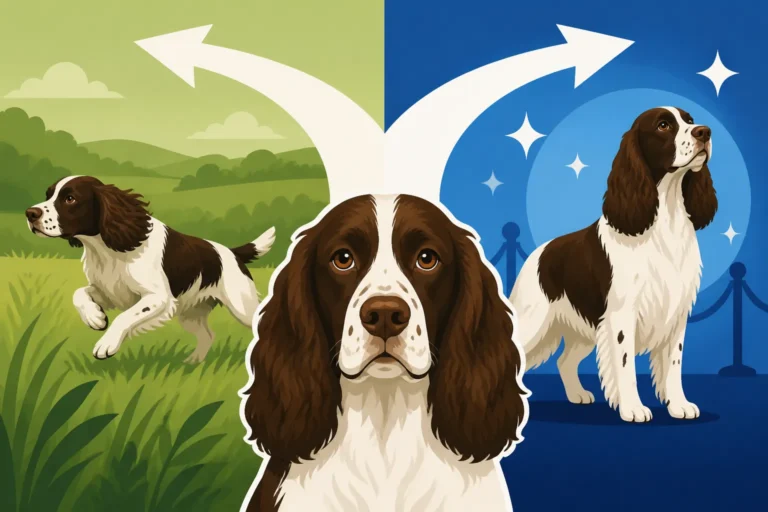
Following its formal recognition, the English Springer Spaniel, like many working breeds, began to experience a subtle yet profound divergence. Two distinct "types" emerged: those bred primarily for conformation in the show ring and those bred exclusively for their working ability in the field. This separation has been ongoing for over a century, creating two visually and temperamentally distinct versions of the same breed.
Post-Recognition Evolution
Once the English Springer Spaniel was formally recognized, breeders had clearer goals, but these goals themselves began to differ. On one side, there were those dedicated to preserving and enhancing the breed's working prowess, focusing on instinct, stamina, and scenting ability for hunting. On the other side were those who aimed to perfect the breed's aesthetic according to a written standard, emphasizing features like coat, bone structure, and gait for the show ring. Over time, these different breeding priorities led to noticeable changes. Field-bred Springers became lighter, more athletic, with less coat, while show-bred Springers developed heavier bone, more abundant feathering, and often a somewhat calmer demeanor. This divergence meant that the working dog was no longer necessarily the "show quality" dog, and vice-versa. For a deeper understanding of this fascinating divide, explore How the Field and Show Springer Spaniel Diverged.
This split was further influenced by cultural differences in dog sports. In America, especially, the rigorous demands of field trials emphasized speed, endurance, and extreme prey drive, pushing the field lines towards a very specific athletic build. In Britain, while working trials remained important, the show ring also held significant sway, and the conformation of the show Springer evolved to meet those aesthetic demands. This difference in focus across the Atlantic led to subtle variations even within the field and show types themselves, reflecting the local preferences and breeding priorities. Today's owners, seeking specific traits, often research these lines carefully, perhaps even looking up breed information on sites like Chewy to see what products cater to the energy levels of field versus show lines.
The Modern Look and Drive
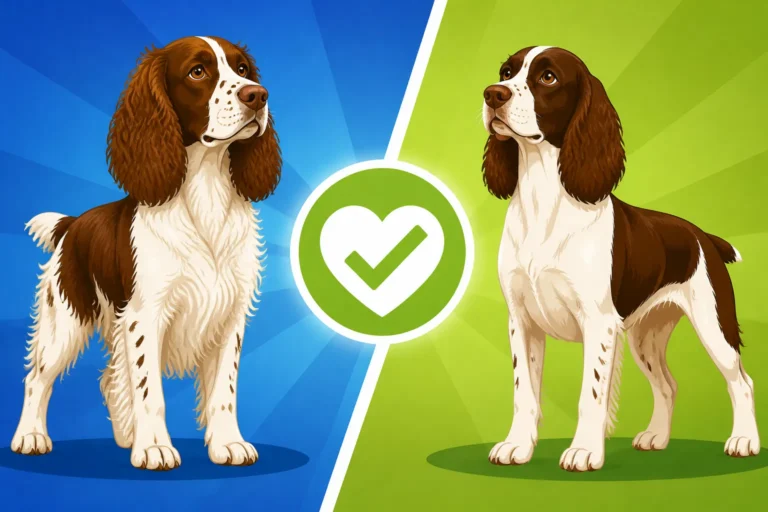
Today, the visual differences between a field-bred and a show-bred English Springer Spaniel are quite striking, even to an untrained eye. Field Springers tend to be leaner, with less dense coats, often shorter ears, and a more compact body built for speed and agility in dense cover. Their drive is often described as "red hot," with an almost insatiable desire to work and retrieve. Show Springers, conversely, typically possess a heavier bone structure, longer, more profuse feathering on their legs, belly, and ears, and a generally more substantial appearance. While still energetic and intelligent, their temperament is often a bit mellower, making them excellent family companions who might enjoy a good walk or a game of fetch rather than an all-day hunt. To truly grasp these distinctions, it’s worth comparing How Different the Two Springer Spaniel Types Look.
This divergence has, understandably, led to ongoing discussions among breed enthusiasts about the future of the English Springer Spaniel. Some argue that the two types have become so different that they effectively represent two distinct breeds and should be formally separated. Others believe that maintaining a single standard, even with internal variations, preserves the breed's heritage and genetic diversity. There's a constant tension between form and function, and the debate continues to this day, highlighting the passion and dedication of Springer Spaniel owners and breeders. Many breeders today strive to produce well-balanced dogs, acknowledging both the working heritage and the desire for a beautiful, healthy companion, sometimes even selecting supplies like specialized brushes or dietary supplements from retailers like Chewy that cater to their specific coat or energy needs. The conversation about Whether the Springer Spaniel Should Be Split Officially is still very much alive within the Springer community.
Global Spread and Modern Popularity
From its ancient origins as an undifferentiated working spaniel in the British Isles, the Springer Spaniel type has journeyed across continents, captivating hearts and becoming one of the most beloved sporting and family dogs worldwide. Its adaptability and engaging personality have ensured its enduring popularity.
Crossing the Atlantic
The English Springer Spaniel's journey across the Atlantic to North America began in earnest in the late 19th and early 20th centuries. Early imports of these talented hunting dogs quickly found favor with American sportsmen who appreciated their boundless energy, superb scenting abilities, and natural talent for flushing game. They were particularly well-suited to the diverse hunting terrains found throughout the United States and Canada, from dense woodlands to open fields. The breed's ability to work tirelessly and retrieve dependably made them indispensable hunting partners. For those interested in the timeline, exploring The Decade Springer Spaniels Reached America provides fascinating historical context.
Once established in North America, the breed's popularity grew steadily, not just among hunters but also as cherished family pets. Their cheerful disposition, intelligence, and eagerness to please made them appealing companions for active families. This dual appeal – excelling in both the field and the home – contributed significantly to their rise in prominence. Today, the English Springer Spaniel consistently ranks among the most popular breeds registered by the American Kennel Club (AKC), a testament to its enduring charm and versatility. Their continued high ranking among various breeds underscores Where the Springer Spaniel Ranks in AKC Registrations. This widespread recognition ensures that the Springer Spaniel's long history continues to be written by generations of devoted owners.
Enduring Appeal and Adaptation
The English Springer Spaniel's long history and continued popularity stem from its remarkable ability to adapt and connect with humans across different roles. Whether springing game in the field, excelling in agility and obedience trials, or simply offering unwavering companionship on the sofa, their core traits – intelligence, enthusiasm, and a deep desire to be with their people – shine through. They are truly one of those breeds that, despite their ancient roots, fit seamlessly into the modern world. Their natural drive and athleticism mean they thrive with active families, making them ideal partners for hikers, runners, and anyone who enjoys outdoor activities.
Even today, with the availability of specialized training resources, dietary advice, and grooming products from popular retailers like Chewy, owners can cater to their Springer's specific needs, whether that's high-performance food for a working dog or gentle shampoos for a show coat. This accessibility helps maintain the breed's health and well-being, allowing more people to enjoy the unique bond with a Springer. Their long lineage has imbued them with a robust genetic foundation, and with responsible breeding and dedicated care, they continue to be vibrant, healthy, and happy dogs. The English Springer Spaniel remains a testament to centuries of selective breeding for a specific purpose, evolving into the versatile and loving companion we know and adore.
Here's a brief look at some key milestones in the Springer Spaniel's journey:
| Era/Event | Description | Significance |
|---|---|---|
| Ancient Times | General "spaniel" type emerges in Europe, likely from Spain. | Early ancestors performing "flushing" duties for hunters with nets/falcons. |
| Medieval Period | Records and art depict spaniel-like dogs working game in Britain. | Establishes a long history of working land spaniels in England. |
| 18th-19th Century | "Norfolk Spaniel" and other regional spaniel strains become prominent. Boughey family lines develop. | Refinement of the "springing" type; early efforts at selective breeding and documentation. |
| 1902 | The Kennel Club (UK) formally recognizes the English Springer Spaniel. | Official separation from Cocker Spaniels; first formal breed standard established. |
| Early 1900s | English Springer Spaniels are imported to North America. | Rapid growth in popularity as hunting dogs and family companions in the US and Canada. |
| Mid-20th Century – Today | Divergence into distinct Field and Show lines becomes more pronounced. | Leads to the two modern "types" with differing physical traits and temperaments. |
Disclaimer
This article is for general informational purposes only and does not constitute professional advice. Laws, prices and regulations vary by location and change over time. Consult a qualified professional for guidance on your specific situation.