What Weight Divided a Cocker From a Springer
For generations, dog owners, particularly those who loved their floppy-eared companions for their keen noses and energetic field work, faced a real quandary. Before formal breed standards, trying to classify these beloved dogs felt like a guessing game, especially when you had a litter of puppies that were all over the map in terms of size and potential. This guide will take you back in time to explore how our English Springer Spaniels, and their Cocker cousins, were once sorted, shedding light on the fascinating, and sometimes arbitrary, lines drawn by early fanciers.
The Early Days of Spaniels: A Blurry Line
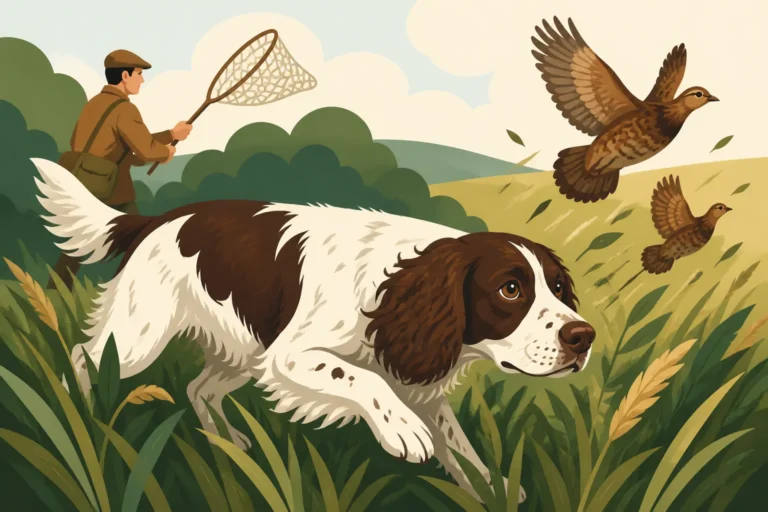
Imagine a time before official breed clubs, before carefully documented pedigrees and DNA tests. For centuries, "spaniel" was less a specific breed name and more a descriptor for a type of dog. These were dogs bred for a job: flushing game from cover for hunters, whether that was for nets, falcons, or eventually, firearms. The focus wasn't on a consistent look, but on consistent ability. As long as the dog could work, its exact measurements weren't the primary concern, or at least, not in the way we think of breed standards today.
A Spectrum of Sporting Dogs
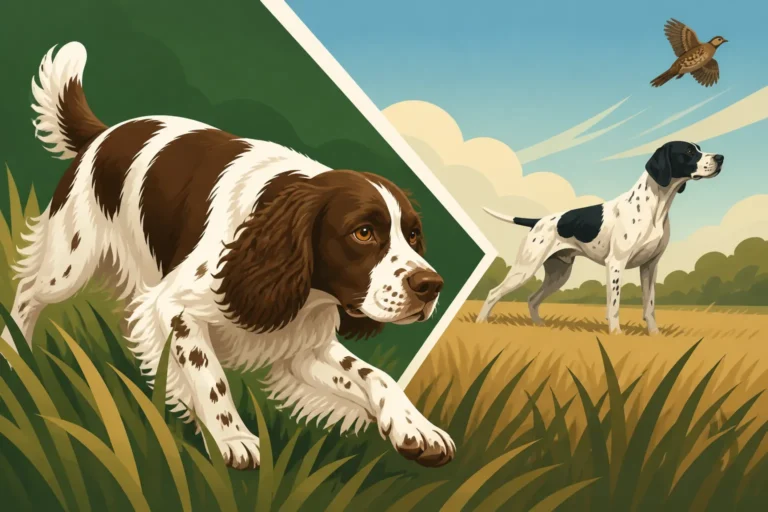
In those early days, a single litter of spaniel puppies could produce quite a variety. You might have smaller, feistier pups, excellent for busting through thick brush after woodcock, and larger, more robust ones, perfect for covering more ground and springing larger game. Hunters prized certain characteristics, but there wasn't a universal agreement on what made a "Cocker" versus a "Springer" until much later. The informal names often reflected their primary quarry or working style, rather than a definitive genetic lineage. It was a fluid definition, rooted in practical application rather than aesthetic.
Many of these local spaniel types were known by the regions they hailed from, such as Norfolk Spaniels or Shropshire Spaniels, rather than by a universal breed name. It was a patchwork of working dogs, all valuable in their own right, but lacking the standardized identity we associate with purebred dogs today. This lack of formal recognition made it tricky to predict what a puppy would grow into, or even what its temperament might be. Breeders often relied on reputation and word-of-mouth about a particular dog's working prowess, rather than a physical checklist.
The Problem of Definition in the Field
Without clear lines, a hunter might acquire a "spaniel" pup, hoping for a certain size or style of worker, only for it to mature into something quite different. This wasn't necessarily a bad thing if the dog could still do its job, but it made breeding for specific traits a real challenge. Think about it: how could you consistently produce a dog optimized for tight cover if you couldn't reliably distinguish its parents or siblings from dogs suited for more open ground? This practical problem spurred the desire for some form of classification. It wasn't just about showing dogs; it was about refining the tools of the hunt.
The lack of consistent sizing also meant equipment choices were a bit more hit-or-miss. You couldn't just walk into a general store and pick up a standard collar or a bed. Owners had to adapt. Even basic care, like estimating food portions, would have been more difficult without a general idea of expected adult size, a stark contrast to the readily available guidance we have today from resources like Chewy, which makes finding the right food for a specific breed size simple. This historical context really highlights how far we've come in understanding and caring for our canine companions.
The Emergence of Size-Based Classification
As dog shows began to gain popularity in the mid to late 19th century, there came a push to categorize these working spaniels more formally. Judges needed clear criteria. Breeders wanted a way to demonstrate the quality and consistency of their lines. And so, a rather simple, yet ultimately imperfect, system emerged: weight. It was an easy metric to measure and seemed to correlate broadly with a dog's general suitability for certain types of game.
The Weight Threshold: 25 Pounds
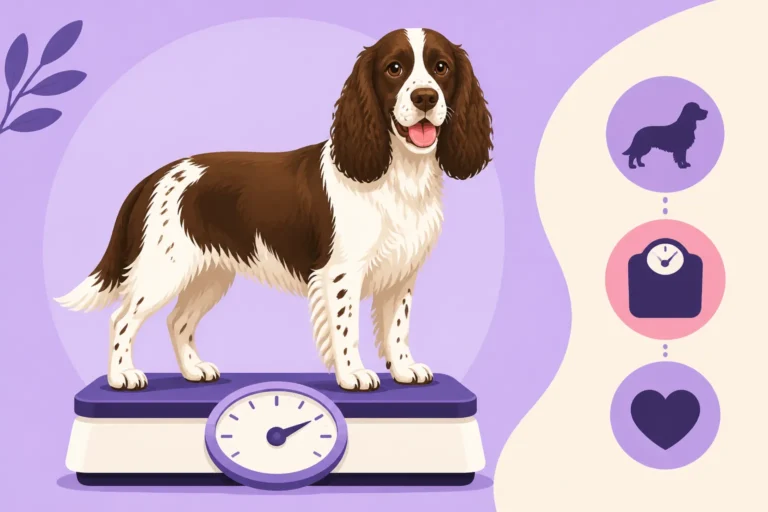
The critical dividing line for many years was roughly 25 pounds (around 11.3 kg). Any spaniel weighing under this amount was generally classified as a Cocker Spaniel, believed to be ideal for flushing woodcock in dense undergrowth. Those weighing over this 25-pound mark were considered Springer Spaniels, thought better suited for "springing" larger game like pheasants from heavier cover.
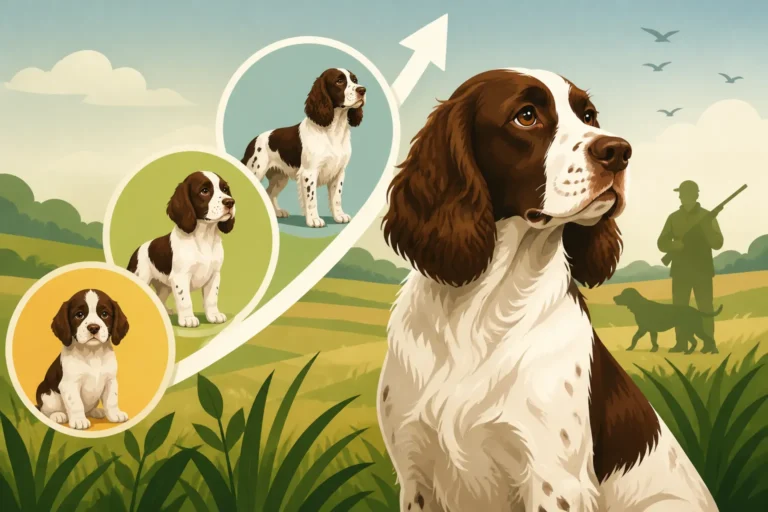
It sounds so straightforward, doesn't it? But imagine the reality. What about a dog that weighed 24.5 pounds but had the build and drive of a Springer? Or a 26-pounder that was clearly a smaller, more compact worker? This arbitrary line often led to confusion and frustration for breeders. Puppies from the same litter could even be categorized differently once they reached maturity, depending on whether they tipped the scales just above or below the magic number. It was a quantitative measure applied to a qualitative reality, and it rarely told the full story of a dog's true type or potential.
Here's a quick look at how this early classification worked, and how it evolved:
| Characteristic | Early (Pre-1900s) Weight-Based Classification | Modern (Post-1902) Breed-Based Classification |
|---|---|---|
| Primary Differentiator | Weight (approx. 25 lbs / 11.3 kg) | Distinct physical characteristics, build, coat, head shape, and working style |
| Cocker Spaniel | Any spaniel under 25 lbs (often smaller, tighter working) | Defined breed standard for English Cocker Spaniel (or American Cocker), regardless of exact weight |
| Springer Spaniel | Any spaniel over 25 lbs (often larger, wider working) | Defined breed standard for English Springer Spaniel (distinct from Welsh Springer) |
| Litter Outcomes | Puppies from the same litter could be classified as Cocker or Springer | Puppies from the same litter are one breed, though variation in size/type exists within that breed |
| Focus | Utility for specific game based on perceived size advantage | Consistency in appearance, temperament, and working style according to a written standard |
This rudimentary system was a starting point, certainly, but it caused a fair bit of head-scratching and debate amongst enthusiasts. It made the life of a breeder incredibly difficult when they were striving for consistency and type. You could produce two fantastic dogs from the same parents, but if one was slightly lighter, it would be called a Cocker, and the other a Springer, despite sharing the same genetics and often, similar working styles. This meant that for many years, breeders weren't really sure if they were breeding for a Cocker or a Springer until the pups matured and could be weighed. Why Springer and Cocker Puppies Once Came From One Litter delves deeper into this fascinating period.
The Inadequacy of a Single Metric
While weight offered a tangible way to differentiate, it quickly became apparent that it was an oversimplification. A dog's build, bone structure, head shape, and overall proportions all contributed more significantly to its working ability and breed type than a number on a scale. A small, fine-boned dog might easily be under 25 pounds, but if it had the courage and quartering instinct of a "Springer," calling it a Cocker didn't quite fit its true nature. Conversely, a larger, heavier-boned spaniel might struggle in dense cover, even if its weight put it in the "Springer" category.
This is a struggle we still see echoes of today when people try to categorize dogs based purely on size or a single trait. We know now that breeds are defined by a constellation of traits, not just one. It’s why organizations like the American Kennel Club (AKC) and The Kennel Club (UK) developed comprehensive written standards that encompass everything from muzzle length to tail set, recognizing the holistic nature of breed identity.
Beyond the Scales: The Formalization of Breeds
The dissatisfaction with a purely weight-based classification grew. Dog fanciers and working enthusiasts recognized that "type" – the overall appearance, temperament, and inherent working characteristics – was far more important than a simple number. This realization paved the way for the formal recognition of distinct spaniel breeds based on more comprehensive standards.
The Birth of the English Springer Spaniel
It wasn't until the very early 20th century that the English Springer Spaniel was formally recognized as a distinct breed. The English Kennel Club officially separated the two in 1902, with the AKC following suit shortly after. This was a monumental shift. No longer would a spaniel's identity be determined by whether it weighed a few pounds more or less than its littermates. Instead, specific standards were written, detailing the ideal appearance, structure, and temperament that defined an English Springer Spaniel.
This meant breeders could finally focus on developing consistent lines, aiming for dogs that embodied the full suite of Springer traits, not just a certain weight. The standards described everything from the shape of their skull to the length of their feathering, and of course, their inherent desire to "spring" game. This era marked a true turning point for the breed, allowing dedicated enthusiasts to refine the characteristics we know and love today. The 1902 Split That Separated Springer From Cocker provides more context on this historic decision.
Evolving Distinctions: Field vs. Show
Even after the formal separation, the breed continued to evolve. Over the decades, distinct lines began to emerge within the English Springer Spaniel breed itself: the field-bred (or working) Springer and the show-bred Springer. While both are undeniably English Springer Spaniels, they represent different priorities in breeding.
Field-bred Springers are selected primarily for their working ability, drive, and athleticism in the field. Their coats are typically shorter and less profuse, designed for efficiency in cover, and their build tends to be lighter and more agile. Show-bred Springers, on the other hand, are bred to conform to the breed's written standard for appearance, emphasizing specific aesthetics like a heavier bone structure, a fuller coat, and a particular head shape. While they often retain the inherent spaniel temperament, their focus is on the conformation ring. You can learn more about this divergence in How the Field and Show Springer Spaniel Diverged.
This internal divergence is a testament to the fact that even formal breed standards can be interpreted and prioritized differently by various breeders. It shows that defining a breed is an ongoing process, influenced by culture, purpose, and evolving preferences. While weight is no longer the dividing factor between Cockers and Springers, the distinct types within the Springer breed still illustrate how physical characteristics and purpose shape our understanding of these wonderful dogs. Today, whether you have a robust show Springer or a lithe field Springer, the focus is on celebrating their unique qualities as true English Springer Spaniels. It’s a far cry from the days when a few pounds on a scale dictated their entire identity.
Implications for Today's Springer Spaniel Owners
Understanding this historical context isn't just a fun trivia fact; it offers valuable insight into the breed's inherent versatility and why we see some of the variations in English Springer Spaniels today. It also highlights the importance of choosing a reputable breeder who understands the specific type of Springer they are producing and can guide you on what to expect.
The Importance of Breed Type Over Size
Today, when you acquire an English Springer Spaniel, you're getting a dog bred to a specific standard, rather than just a weight class. While there will naturally be some variation in size within the breed, it's the overall "type" – their structure, coat, temperament, and genetic predisposition for certain tasks – that truly defines them. A field-bred Springer, for example, might be on the leaner side of the weight spectrum, but its intense drive and athleticism are what make it a field Springer. A show-bred Springer might be more heavily boned and carry a more luxurious coat, but it's still very much an English Springer Spaniel.
For owners, this means looking beyond just the numbers. Consider what you want in a companion. Are you seeking a high-energy working partner for hunting or dog sports? Or are you looking for a devoted family companion with a slightly more laid-back demeanor? Both are Springers, but their specific breeding lines will influence their temperament and exercise needs. It's crucial to understand these nuances to ensure you're bringing home a dog that fits your lifestyle. Resources like A Field Bred Springer Spaniel Is a Different Dog to Live With can help you differentiate between the types.
Choosing a Reputable Breeder
A responsible breeder understands the history of the English Springer Spaniel and the specific characteristics of their lines. They aren't just breeding for "Springer Spaniels" in a generic sense; they are usually focusing on either field lines or show lines, or occasionally, a blend of both (though this is less common with the clear divergence). They will be able to discuss the health clearances of the parents, the expected temperaments of the puppies, and whether their dogs align with the traditional working qualities or the conformational standards.
They also provide a clear health guarantee and ensure their puppies are well-socialized. A good breeder knows that genetics play a huge role in a puppy's future, and they've meticulously selected their breeding stock to produce healthy, well-adjusted dogs that exemplify the best of the English Springer Spaniel breed. They won't be guessing a puppy's "breed" based on its weight, but rather presenting you with a dog whose lineage is clearly documented as an English Springer Spaniel. To understand what health tests are essential, check out The DNA Test That Should Precede Every Springer Spaniel Purchase.
Feeding and Care for Different Types
Even within the modern English Springer Spaniel breed, the differences between field and show lines can impact their daily care. Field-bred dogs, with their higher energy levels and more active lifestyles, often require diets formulated for active dogs, with higher protein and fat content. Their leaner build means maintaining a healthy weight is often about fueling their activity. Show-bred dogs might have a slightly lower caloric need if they're not engaged in rigorous work, and their denser coats require more diligent grooming to prevent matting.
Knowing the historical roots of the breed helps us appreciate why these differences exist and how to best care for our Springers today. Whether you need a performance food for an active worker or a sensitive skin formula for a Springer prone to allergies, platforms like Chewy offer a vast array of options tailored to every dog's needs. The journey from a simple weight classification to the nuanced understanding of breed type is a testament to our ongoing commitment to these incredible dogs.
Disclaimer
This article is for general informational purposes only and does not constitute professional advice. Laws, prices and regulations vary by location and change over time. Consult a qualified professional for guidance on your specific situation.