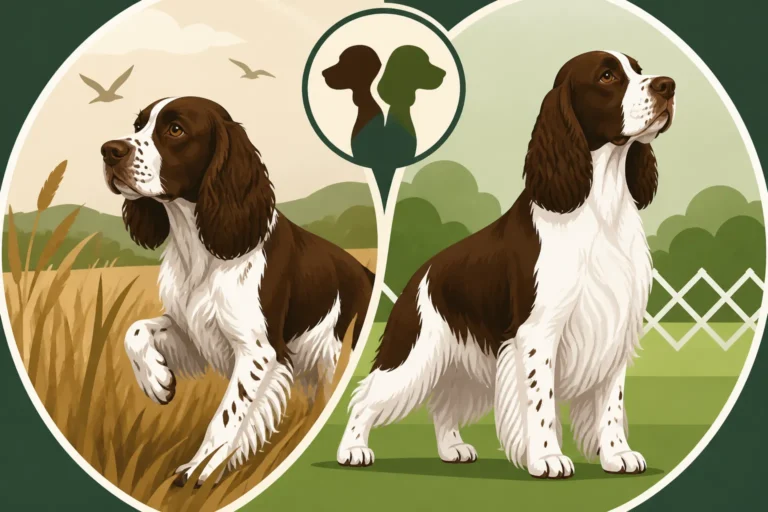
Whether the Springer Spaniel Should Be Split Officially
It's a question that has quietly simmered for decades within the English Springer Spaniel community, often causing confusion and sometimes frustration for families simply looking for a beloved companion or a dedicated hunting partner: should this wonderful breed actually be two? The vast differences in appearance, temperament, and needs between the field-bred and show-bred Springer Spaniel can be startlingly apparent, leaving many to wonder if an official split is not only logical but necessary. This comprehensive guide will delve into the heart of this debate, exploring the compelling arguments for and against formally dividing the English Springer Spaniel into two distinct breeds.
The Historical Roots of a Single Breed with Divergent Paths
To truly understand why we even have this conversation about splitting the English Springer Spaniel, we need to take a little trip back in time. It’s not a new phenomenon for dog breeds to evolve, but the journey of the Springer is particularly fascinating because, for a long time, the "type" of spaniel you had was more about its size and how it worked than a rigid pedigree.
Early Spaniel Classification and the 1902 Split
Before formal kennel clubs and breed standards took hold, spaniels were essentially categorized by their working role and size. You had "land spaniels" and "water spaniels," and within the land spaniels, there were larger dogs used for "springing" game into nets or for hawking, and smaller ones for flushing woodcock – hence, "cocking spaniels" or "cockers." It wasn't uncommon for puppies of both types to appear in the same litter! Imagine the confusion at bath time, trying to decide which was which!
The pivotal moment arrived in 1902 when The Kennel Club (UK) officially recognized the English Springer Spaniel as a distinct breed. This was a monumental step, drawing a line in the sand between the larger, leggy Springer and the smaller Cocker. It was a move aimed at bringing order to the canine world, ensuring a consistent type and predictable traits for future generations. However, even with this official recognition, the underlying potential for variation within the breed remained, especially as breeding goals began to subtly shift. The focus was still very much on a functional working dog, but the seeds of divergence were already being sown.
How the Field and Show Springer Spaniel Diverged
Once the breed was formally established, two distinct paths began to emerge, driven by different objectives. On one side, you had breeders who were intensely focused on maintaining and enhancing the Springer Spaniel's original purpose: a tireless, intelligent gundog built for flushing and retrieving game. These were the "field-bred" Springers, and their form followed their function. Every aspect of their physical structure and innate drive was selected for performance in the field—agility, endurance, scenting ability, and biddability in a hunting environment.
On the other side, breeders began to focus on conformation shows. The goal here was to produce dogs that precisely matched an idealized written standard for appearance. This led to the development of the "show-bred" Springer Spaniel. While still expected to retain the breed's fundamental good nature, the emphasis in breeding decisions gradually shifted towards aesthetic qualities: a luxuriant coat, a specific head shape, heavier bone, and a particular overall silhouette that would fare well in the show ring. Over the decades, these two breeding programs, though technically still under the same breed umbrella, operated almost entirely separately. How the Field and Show Springer Spaniel Diverged is truly fascinating to explore in depth, as it highlights how different human goals can shape a breed's destiny.
The Distinct Characteristics: A Tale of Two Springers
If you've ever seen a field-bred Springer next to a show-bred Springer, you might honestly do a double-take and wonder if they are even the same breed. The differences aren't just subtle nuances; they are often quite dramatic, impacting everything from their looks to their everyday behavior. It’s like comparing a marathon runner to a bodybuilder—both are athletic, but in very different ways.
Physical Differences in Form and Function
Let's talk about appearance first, because that's often the most striking difference. A show-bred Springer Spaniel, the one you typically see in the Westminster ring, is often heavier-boned, with a more substantial, dense coat and significantly longer feathering on its legs, chest, and belly. Their ears tend to be longer and set lower, framing a broader head. Their gait is often described as more flowing and elegant, reflecting the importance of ring presence. This type of coat, while stunningly beautiful, requires quite a bit of upkeep. If you’ve ever had to brush out burrs from a show coat, you know the struggle is real! The Show Springer Spaniel Coat That Adds a Groomer to Your Budget is a good read if you're wondering about the grooming commitment.
A field-bred Springer, in contrast, is typically lighter in build, with a much finer, shorter coat and less profuse feathering. Their ears are often set higher, and their overall appearance is more athletic and streamlined, built for agility and speed in dense cover. The coat on a field Springer is designed to be protective yet easy to maintain, shedding dirt and water, and preventing snagging on thorns and brush. They look, quite simply, like a dog ready to work all day in the toughest conditions. These physical variations are not arbitrary; they are the direct result of generations of selective breeding for specific functions, with the field type optimizing for practicality and durability, and the show type for conformity to an aesthetic ideal.
Temperament and Drive: More Than Just Looks
Beyond the visual distinctions, the temperament and innate drive are arguably even more significant. Field-bred Springers are often described as high-octane dogs, possessing an almost boundless energy and an intense desire to work. They are bred for quickness, relentless quartering, and retrieving, and this translates into a dog that needs a tremendous amount of physical and mental stimulation. If you've ever watched one work, you'll see a dog that lives to hunt, driven by an incredible nose and an unshakeable focus. If you bring one into a pet home without a job, you might find your furniture rearranged or your socks "collected" with admirable zeal! A Field Bred Springer Spaniel Is a Different Dog to Live With truly captures this reality. They thrive on having a purpose, whether it's hunting, agility, or competitive obedience.
Show-bred Springers, while still intelligent and active, generally have a somewhat calmer disposition. While they certainly need exercise and mental engagement, their energy levels are often more manageable for a typical family pet home. They are still affectionate, eager to please, and devoted companions, but their intensity isn't usually quite as "on" as their field-bred counterparts. Breeders of show lines often prioritize an even, biddable temperament that makes them excellent family dogs and pleasant companions both in the home and in the show ring. However, don't mistake "calmer" for "couch potato" – any Springer Spaniel needs plenty of activity. Understanding these differences in drive is absolutely critical for prospective owners to avoid heartbreaking mismatches. When looking for gear on a site like Chewy, a field Springer owner might prioritize super durable retrieving dummies, while a show Springer owner might focus on grooming tools.
The Arguments for an Official Split
Given these profound differences, it's easy to see why many passionate individuals argue for an official separation of the English Springer Spaniel into two distinct breeds. The current situation, they contend, creates confusion and can even hinder the breed's overall health and public perception.
Preserving Breed Purity and Purpose
One of the strongest arguments for a split centers on preserving the integrity and purpose of each type. When you have two such divergent lines under one breed standard, it creates an inherent tension. A single standard struggles to accurately describe, let alone prioritize, the traits essential for a high-performance gundog while simultaneously defining the ideal conformation dog. Breeders dedicated to the working lines often feel that the show standard doesn't reflect the needs of a functional hunting dog, and vice-versa. An official split would allow each type to have its own standard, tailored precisely to its specific form and function.
This clarity would be a huge benefit for prospective owners. Imagine going to a breeder knowing you're looking for an "English Field Springer Spaniel" or an "English Show Springer Spaniel." The guesswork, the need for extensive research into "lines" and "types," would be significantly reduced. It would set clear expectations from the outset, leading to better matches between dogs and their forever homes. It would also empower breeders to focus unequivocally on their chosen path, refining the traits that matter most to them without feeling they are compromising or breeding against a standard that doesn't quite fit their vision. This helps maintain the "purity" of each type's purpose, ensuring that dedicated field dogs remain exceptional in the field, and dedicated show dogs remain stunning in the ring and wonderful family pets.
Addressing Health Concerns and Breeding Practices
Another significant point in favor of a split revolves around health. While both types of Springer Spaniel are generally healthy, there can be subtle differences in health priorities and the prevalence of certain conditions due to the distinct breeding goals. For example, a field-bred dog, with its demanding athletic lifestyle, might be more prone to certain types of injuries or wear and tear, while the heavier build and denser coat of a show-bred dog could predispose it to different concerns, such as specific skin issues or joint problems related to weight. How Health Problems Differ Between Springer Spaniel Types delves deeper into these nuances.
An official split could allow for more targeted health screening protocols and research for each distinct breed. Currently, many health tests are recommended for "English Springer Spaniels" universally, but perhaps certain tests are more critical for one type than the other, or certain genetic predispositions are more prevalent in one line. For instance, the discussion around The DNA Test That Should Precede Every Springer Spaniel Purchase is vital for all Springers, but understanding how specific conditions might manifest differently, or be more common in one type, could lead to better-informed breeding decisions. With separate recognition, each breed could develop its own breed club, which could then establish specific health priorities, fund research tailored to their particular lines, and enforce health testing with greater precision, ultimately benefiting the dogs themselves.
The Arguments Against an Official Split
Despite the compelling differences, many dedicated Springer Spaniel enthusiasts and established breeders firmly believe that the breed should remain unified. Their arguments often touch upon history, genetics, and the practical realities of such a monumental change.
Maintaining a Shared Heritage and Genetic Diversity
One of the most powerful arguments against splitting the breed is the desire to preserve its shared heritage. Despite the divergence, both types of Springer Spaniel sprung from the same historical roots. They share a common ancestor and a fundamental "Springer" essence – that merry, energetic, eager-to-please spaniel nature. To officially split them, some argue, would be to deny this shared history and potentially lose a valuable connection to the breed's origins.
Furthermore, there's a significant concern about genetic diversity. The current unified breed, despite its internal divisions, still represents a single, larger gene pool. If the breed were to be split, these two new, smaller gene pools would be far more restricted. This could inadvertently lead to a decrease in overall genetic diversity within each new breed, potentially increasing the risk of inherited health conditions or limiting the ability to breed away from existing problems. While controlled breeding within specific lines is important, a broader gene pool can offer resilience and adaptability over the long term. Even if the types are rarely bred together today, the potential to do so in the future, if needed for genetic health, is something many want to preserve.
Practical Challenges and Breeder Resistance
Beyond the philosophical and genetic arguments, the practical realities of an official breed split are immense. Imagine the administrative nightmare for kennel clubs! Every currently registered English Springer Spaniel would need to be reclassified. What about dogs that fall in the middle, or those with mixed field and show lines in their ancestry? What about champions of record? Would their titles still stand, or would they need to be re-earned in a new, distinct breed category? The logistical hurdles would be astronomical, affecting registrations, pedigrees, show qualifications, and record-keeping for generations.
There would also undoubtedly be significant resistance from breeders. Many breeders have invested decades in their lines, operating under the existing framework. Some might breed "dual purpose" dogs, aiming for animals that can both excel in the field and conform to the show standard, however challenging that might be. Others might simply prefer the current system, even with its complexities, rather than navigating an entirely new classification. The process of getting such a split approved would require consensus across numerous national and international kennel clubs, breed associations, and countless individual breeders and owners. This is a formidable task, akin to trying to turn a very large ship around in a narrow canal. The sheer magnitude of the undertaking is often seen as a deterrent in itself.
What the Current System Means for Owners and Breeders
So, in the absence of an official split, what does this "two types, one breed" reality mean for those of us who adore these dogs? It mostly means extra homework, but it also means having clearer conversations with breeders.
Navigating the "Two Types" as a Prospective Owner
For anyone considering bringing an English Springer Spaniel into their life, understanding the existence of these two types is not just helpful, it's absolutely critical. Walking into the journey unprepared can lead to a significant mismatch between owner expectations and the dog's innate needs, which is unfair to both. As a prospective owner, your homework starts with honest self-assessment: what kind of lifestyle do you lead? How much time, energy, and dedication can you truly commit to exercising and mentally stimulating a dog every single day, for The Twelve to Fourteen Years a Springer Spaniel Lives?
If you're an avid hunter, an outdoor enthusiast, or someone deeply involved in dog sports like agility or hunt tests, a field-bred Springer might be your perfect match. They thrive on having a job and will excel in those environments. You'll want to seek out breeders who specifically advertise field lines, focusing on working titles in their pedigrees, and you'll need to be prepared for a dog with incredible drive and stamina. You might even find yourself browsing Chewy for specialized training gear and high-performance dog food!
However, if you're looking for a loving family companion who enjoys walks, playtime, and being an integral part of your home life without the intense demands of a working dog, a show-bred Springer is likely a better fit. They still need plenty of activity, don't get me wrong, but their energy levels tend to be more adaptable to a suburban or active family setting. When speaking to breeders, ask explicitly about the temperament of their lines, the parents' activity levels, and what kind of homes their puppies typically go to. Which Springer Spaniel Type Suits a Pet Home is a question many people ponder, and doing your research before committing is key. Don't be afraid to ask for references, visit the kennel, and spend time with the parent dogs to get a feel for their nature.
| Feature | Field-Bred English Springer Spaniel | Show-Bred English Springer Spaniel |
|---|---|---|
| Appearance | Lighter build, more athletic; shorter, finer coat; less feathering; higher ear set; streamlined look. | Heavier bone structure, more substantial; longer, denser coat; profuse feathering; lower ear set; broader head. |
| Temperament | High drive, intense, boundless energy, strong prey drive, relentless worker, requires significant mental/physical stimulation. | Generally calmer, more biddable, adaptable, affectionate, still active but with more manageable energy for a pet home. |
| Purpose | Flushing and retrieving gundog; excels in hunting, field trials, agility, competitive obedience. | Conformation show dog; family companion; can participate in less intense dog sports or obedience. |
| Grooming Needs | Moderate; protective coat, sheds dirt/water; needs regular brushing but less intricate trimming. | High; luxuriant coat requires frequent brushing, detangling, and professional grooming/trimming to maintain. |
| Exercise Needs | Very high; needs hours of vigorous exercise daily, often specific work or training tasks to prevent boredom. | High; needs regular walks, playtime, and mental stimulation, but often less demanding than a field line. |
| Coat Type | Coarser, thinner, less dense, designed for protection in cover. | Softer, thicker, heavier, designed for aesthetic appeal in the show ring. |
Breeder Responsibilities in a Unified Breed
For breeders, the current "two types" reality places a significant responsibility on their shoulders to be transparent and ethical. A reputable breeder, regardless of whether they focus on field or show lines, understands the distinct characteristics of their dogs and will be forthright about them. They know that a happy dog starts with a happy owner, and that means a good match.
Responsible breeders should clearly articulate whether their puppies come from predominantly field lines, show lines, or a blend. They should discuss the expected temperament, energy levels, and grooming needs associated with their specific dogs. They will also be diligent about health testing relevant to their lines, and be prepared to show you results for things like hip scores, eye certifications, and DNA tests for conditions such as Fucosidosis and PFK Deficiency. Whether a Springer Spaniel Breeder Should Show Fucosidosis Results is a question that highlights this transparency. Even though the breed is unified, the careful selection of breeding partners and the clear communication of their offspring's likely traits is paramount. They’re effectively acting as matchmakers, ensuring that their beautiful puppies go to homes that truly understand and can meet their specific needs, thereby upholding the reputation and well-being of the English Springer Spaniel breed as a whole.
Disclaimer
This article is for general informational purposes only and does not constitute professional advice. Laws, prices and regulations vary by location and change over time. Consult a qualified professional for guidance on your specific situation.