How Springer and Cocker Puppies Once Shared a Litter
Many new English Springer Spaniel owners, and even some seasoned ones, find themselves puzzled by the historical ties between Springers and Cocker Spaniels. It’s hard to imagine these two distinct breeds, so clearly defined today, ever emerging from the same litter. Yet, for a significant part of canine history, this was precisely how it worked, shaping the very essence of both breeds we adore today. This guide will take you on a journey back in time, unraveling the fascinating origins and the practical reasons why Springer and Cocker puppies once shared a litter.
The Historical Tapestry of British Spaniels
Before the meticulously cataloged breeds we know today, the world of working dogs was a much more fluid place. Early spaniels, particularly in Britain, weren't bred to conform to a specific look or size as much as they were bred for their function. They were essentially all "land spaniels" – dogs developed to work on foot, finding and flushing game birds and small mammals in dense cover, making them ready for nets, hawks, or the eventual firearm.
A Shared Ancestry in the Hunting Fields
Imagine the rolling hills and thickets of 17th or 18th-century England. A hunter needed a dog that could dive into brambles and scare out pheasants or woodcock. This need gave rise to various types of spaniels, but they weren't yet called "English Springer Spaniels" or "English Cocker Spaniels." They were simply "springing spaniels" or "cocking spaniels," named for the type of game they were best suited to find. They all shared a common genetic pool, a rich heritage of keen noses, boundless energy, and an eagerness to please their human companions. How Old the Springer Spaniel Is as an English Gundog delves deeper into this ancient lineage.
Within a single litter, you might find puppies that varied considerably in size and bone structure. Some would be a bit smaller, perhaps a touch lighter, while others would be larger and more substantial. These differences weren't seen as flaws but as natural variations within a functional working population. Breeders at the time weren't worried about conformity to a written standard; they were focused on producing dogs that could do the job.
Before Official Breed Standards
The concept of a "breed" as we understand it today, with precise standards for appearance, temperament, and genetic lineage, is a relatively modern invention. For centuries, dogs were simply categorized by their utility. A "terrier" dug; a "hound" tracked; a "spaniel" flushed. The nuances within these categories were often determined by the specific tasks they performed or the terrain they worked.
There was no formal registry like the Kennel Club dictating what a Springer or a Cocker should look like. Instead, the local gamekeeper or country squire would breed dogs that performed well, often crossing types freely to enhance certain working traits. It was a pragmatic approach to dog breeding, driven entirely by the demands of the hunt. This meant that the dogs we now call English Springer Spaniels and English Cocker Spaniels were, for a long time, simply variations of the same general type of flushing spaniel, their distinctions defined by their eventual role in the field rather than their birth certificate.
The Practice of "Culling by Size"
One of the most fascinating and, to modern sensibilities, perhaps surprising aspects of early spaniel breeding was the practice of separating puppies from the same litter based purely on their size and weight. This wasn't done out of malice, but out of practicality and the specific needs of different types of hunting.
The Era of Size-Based Classification
In a world without formal breed distinctions, a litter of spaniel puppies might contain individuals with a range of sizes. When these pups grew, their size often dictated their perceived suitability for a particular hunting role. Smaller, more compact dogs were deemed ideal for flushing woodcock, a notoriously difficult bird to find in thick cover. These dogs became known as "cocking spaniels" or "cockers." Their smaller stature allowed them to navigate dense undergrowth with greater agility and less effort.
Conversely, the larger, more powerful puppies in the same litter were seen as better suited for "springing" larger game birds like pheasants, partridges, and hares out of heavier cover. These dogs were designated "springing spaniels" or "springers." Their greater size and strength helped them push through dense brambles and tall grasses, giving game a "spring" into the air for the waiting gun or net. It was a functional separation, not a genetic one at this point. How Springer Spaniels Were Sorted by Size Before 1902 explains this sorting method in detail.
What Weight Divided a Cocker From a Springer
Historically, there was an unofficial weight threshold that often determined whether a puppy from a shared litter would be classified as a "cocker" or a "springer." While not a hard and fast rule universally applied, dogs weighing under approximately 25 pounds (around 11-12 kg) when mature were generally considered "cockers," suitable for woodcock hunting. Dogs over this weight were more often classified as "springers." This wasn't about a specific pedigree or a distinct set of parents; it was about the physical outcome of the breeding.
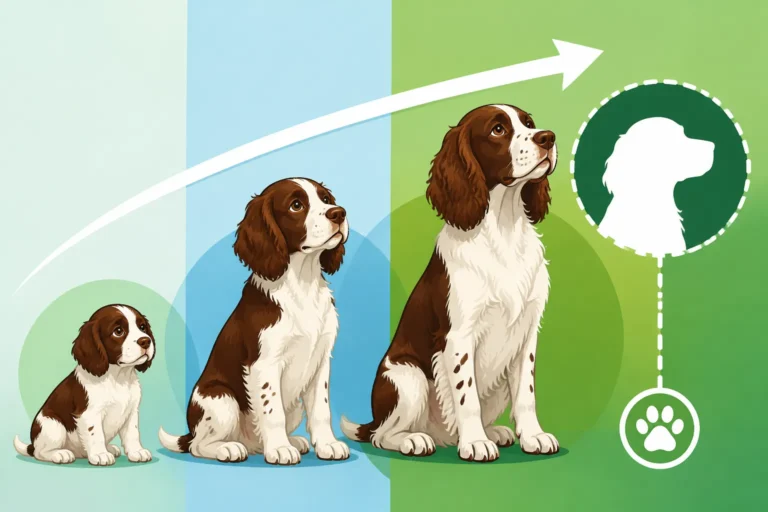
Think about it: a breeder might have a litter of eight puppies. At six months old, some might be clearly on the smaller side, while others are developing into more robust, larger individuals. The smaller ones would be selected, or "culled" in the historical sense of selection, for hunting woodcock, while their larger littermates would be destined for other game. This practice, while appearing crude now, was perfectly logical for the needs of the time, efficiently utilizing the genetic variation within litters. What Weight Divided a Cocker From a Springer provides more insight into this specific distinction.
The Impact on Early Breeding Decisions
This size-based classification had a profound impact on early breeding decisions and, ultimately, on the genetic divergence of the two types. Breeders would naturally select the "best" cockers to breed more cockers, and the "best" springers to breed more springers, even if these "best" dogs were siblings from the same dam. Over generations, this consistent selection pressure, based on size and the associated working ability, began to solidify certain physical traits.
While initially from a common gene pool, the continuous selection for either smaller, denser cover workers (cockers) or larger, more powerful flushers (springers) gradually led to a more distinct physical appearance. This wasn't a conscious effort to create two breeds at first, but a natural consequence of breeding dogs for specific job requirements. It highlights how utility often precedes aesthetics in the development of working dog breeds.
The Formalization of Breeds and Divergence
The informal system of classifying spaniels by size and function eventually gave way to the more structured world of dog show competitions and formal breed registries. This shift marked a critical turning point for both the English Springer Spaniel and the English Cocker Spaniel.
The Kennel Club's Influence and 1902 Split
The late 19th and early 20th centuries saw the rise of dog shows and the establishment of kennel clubs, most notably The Kennel Club in the UK. These organizations sought to standardize breeds, creating written descriptions (standards) and maintaining stud books to track lineage. This desire for order and clear distinctions brought the practice of culling by size to an end, at least officially.
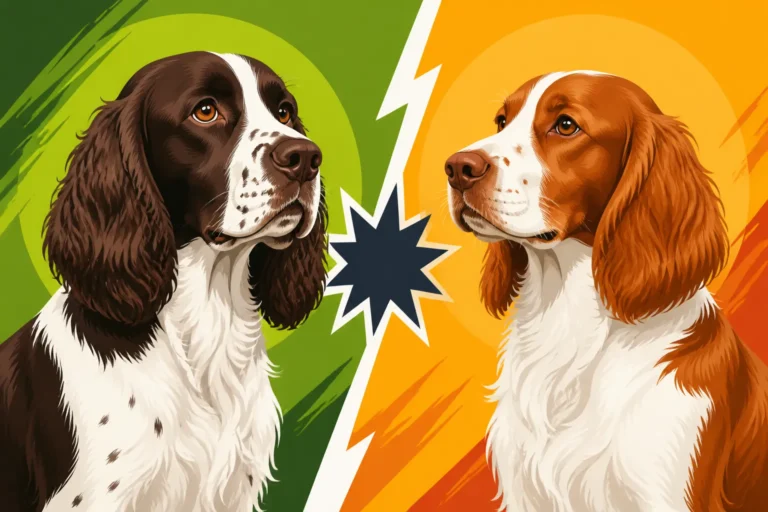
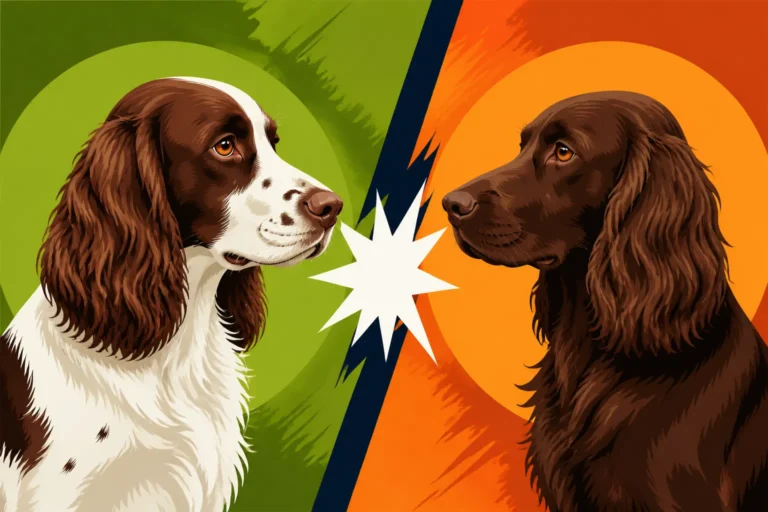
In 1902, The Kennel Club officially recognized the English Springer Spaniel as a distinct breed, separating it from the Cocker Spaniel. This was a monumental decision, taking what had been a functional distinction and turning it into a formal, genetic one. No longer would puppies from the same litter be arbitrarily assigned to different "breeds" based on their mature size. From this point on, a puppy was either an English Springer Spaniel or an English Cocker Spaniel, depending on its registered parents. This formal separation is detailed in The 1902 Split That Separated Springer From Cocker. You can even find modern supplies and breed-specific information for both types on sites like Chewy, a testament to their established identities.
The Modern Field and Show Line Divide
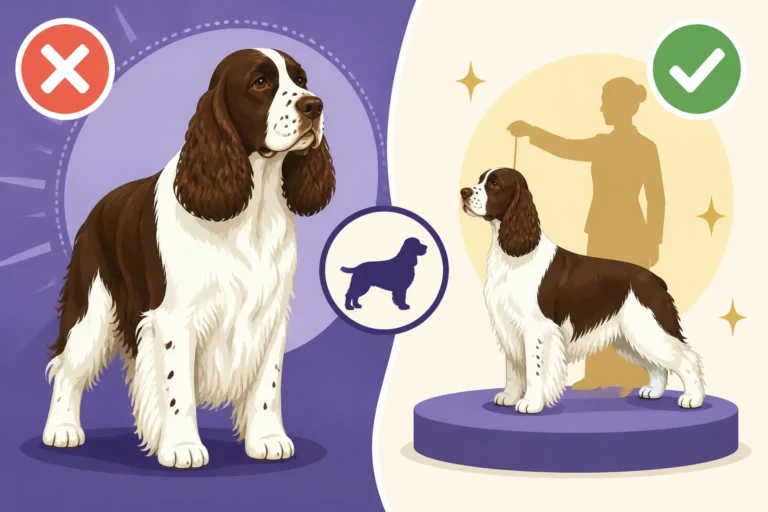
Even after the official separation in 1902, the journey of the English Springer Spaniel didn't stop there. Over the subsequent decades, and especially with the growing popularity of conformation shows versus working trials, a further divergence occurred within the English Springer Spaniel breed itself. We now largely recognize two distinct types: the "field-bred" or "working" Springer Spaniel and the "show-bred" Springer Spaniel.
The field-bred Springers are still very much focused on their original purpose: flushing and retrieving game. They tend to be lighter-boned, with less coat, and possess an intense drive. Show-bred Springers, while retaining many core spaniel traits, have been selectively bred for conformity to the breed standard's appearance, often resulting in a heavier build and more profuse feathering. This internal split within a single breed is a powerful echo of the historical division between Springers and Cockers, highlighting how different breeding goals can subtly (or not so subtly) alter a dog's form and function. To understand more about this modern split, consider reading Two Breeds Registered as One: the Field and Show Springer Spaniel and The Seventy Year Gene Pool Divide Inside One Springer Spaniel Breed.
Legacy and What It Means Today
Understanding this shared history isn't just a fascinating anecdote; it offers valuable insights into the behavior, characteristics, and needs of our modern English Springer Spaniels and English Cocker Spaniels.
A Glimpse into Canine History
The fact that Springer and Cocker puppies once shared a litter underscores the deeply intertwined history of working spaniels. It reminds us that breeds are not static entities but products of human need, environment, and selective breeding over centuries. This lineage helps explain why both breeds, despite their differences, share so many fundamental traits: their incredible scenting ability, boundless energy, innate desire to retrieve, and their famously wagging tails that never seem to stop.
When you watch a Springer Spaniel quarter a field, or a Cocker Spaniel eagerly sniff out a hidden toy, you're seeing instincts that have been honed for hundreds of years. This shared past tells us that the core spaniel temperament—biddable, enthusiastic, and devoted—is a common thread running through all these wonderful dogs. It's a rich history that adds another layer of appreciation for these loyal companions.
Understanding Modern Spaniel Traits
This historical context is invaluable for understanding the traits we see in our dogs today. For example, the intense desire to work cover and flush game, so characteristic of Springers, comes directly from their ancestry as springing spaniels. Similarly, the compact nature and keen nose of a Cocker are direct descendants of their specific role in woodcock hunting. While modern breeding has refined these traits, the underlying instincts remain powerful.
Consider the energy levels. Both breeds are active, but a field-bred Springer often possesses an almost inexhaustible drive, requiring significant physical and mental exercise. This harkens back to their role as tireless hunters. Even a show-bred Springer or a Cocker, though often bred for a slightly less intense lifestyle, still carries the genetic blueprint for activity and engagement. Recognizing this helps us provide appropriate enrichment and training for our pets, ensuring they live happy, fulfilled lives. Finding durable toys and enrichment items for these active breeds is something many owners consider from retailers like Chewy.
The table below offers a simple comparison of how these early spaniel types from a shared litter might have been distinguished, and what that distinction led to over time.
| Feature | Early "Cocker-type" Puppy (from shared litter) | Early "Springer-type" Puppy (from shared litter) | Modern English Cocker Spaniel | Modern English Springer Spaniel |
|---|---|---|---|---|
| Primary Function | Flushing woodcock | Springing larger game (pheasants, hare) | Flushing woodcock, companions | Flushing, retrieving game, companions |
| General Size | Smaller, more compact | Larger, more substantial | Compact, sturdy | Medium-sized, athletic |
| Working Terrain | Dense undergrowth | Heavier cover, open fields | Dense brush, smaller areas | Varied terrain, larger areas |
| Bone Structure | Lighter to moderate | Moderate to heavy | Solid, balanced | Strong, well-muscled |
| Official Status | Informal classification by weight | Informal classification by weight | Recognized breed (1902 onwards) | Recognized breed (1902 onwards) |
Ultimately, knowing that your beloved Springer shares a historical family tree with the charming Cocker Spaniel only deepens the appreciation for the rich history and incredible adaptability of these sporting dogs. From shared litters to distinct breeds, their journey reflects centuries of partnership between humans and their canine companions in the pursuit of the hunt. If you're pondering whether a Springer or a Cocker might be right for your family, Springer Spaniel or Cocker for a Family might offer further useful insights.
Disclaimer
This article is for general informational purposes only and does not constitute professional advice. Laws, prices and regulations vary by location and change over time. Consult a qualified professional for guidance on your specific situation.