The Medieval Records That Mention Springer Spaniels
When you look at your English Springer Spaniel bounding through the yard, nose to the ground, it’s easy to feel like you’re witnessing an ancient ritual. There's a deep-seated instinct in these dogs, a history etched into their very being, and many owners wonder just how far back that lineage goes. This guide dives into the fascinating medieval records that shed light on the early ancestors of our beloved Springers, connecting their working heritage to the distant past.
Tracing the Spaniel Lineage: From Ancient Art to Written Word
It’s often a challenge to pinpoint the exact moment a breed like the English Springer Spaniel truly "began" because dog types evolved fluidly over centuries, shaped by their utility to humans rather than strict breed standards. However, we can certainly trace their ancestors, the general spaniel type, back through a rich tapestry of art and literature. For those of us who adore our Springers, understanding this deep history gives us an even greater appreciation for the heritage pulsing through their veins.
Early Depictions and the Ambiguity of "Spaniel"
Before the precise breed distinctions we have today, the term "spaniel" was quite broad, often used to describe a type of dog believed to have originated from Spain – hence the name. These dogs were generally smaller, typically had long ears, and were known for their keen sense of smell and their ability to work in dense cover. If you look at medieval tapestries, illuminated manuscripts, and early paintings, you’ll frequently see dogs that fit this description. They might not look exactly like the English Springer Spaniel we recognize today, but the resemblance is undeniable. The dogs depicted are clearly active, often shown in fields or woods, pursuing game with an eagerness that would be familiar to any modern Springer owner. It’s a wonderful reminder that our dogs carry the visual echoes of centuries past.
One common frustration for history buffs interested in dog breeds is the lack of specific nomenclature. Imagine trying to differentiate between a "field spaniel" and a "cocker spaniel" back in the 14th century when those terms simply didn't exist in the way they do now. Owners simply referred to them by their job or general appearance. This makes our archaeological work, sifting through old texts, a bit like detective work – piecing together clues from descriptions of their hunting methods, their size, and their general temperament. Yet, even with this ambiguity, the spirit of the spaniel shines through. You can almost feel the presence of these energetic, intelligent dogs leaping from the pages of history.
The Role of Early Spaniels in Hunting
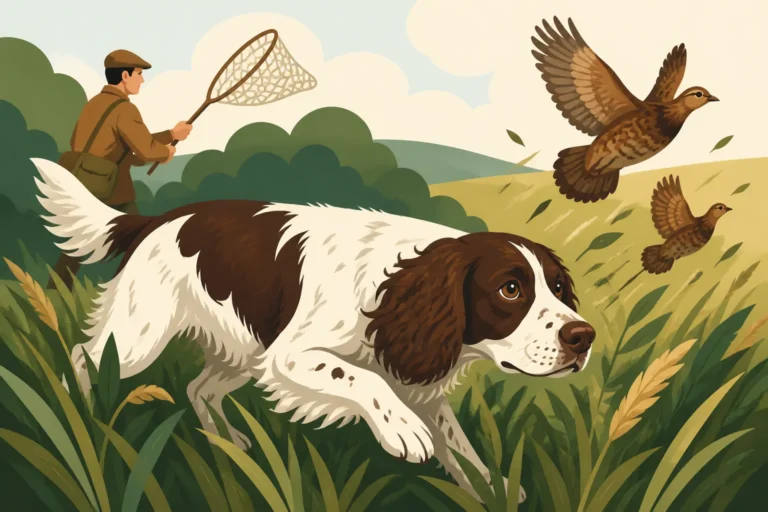
The primary role of these early spaniels was, unequivocally, hunting. Unlike pointers or setters that indicate game from a distance, or retrievers that merely fetch downed birds, spaniels were "springing" dogs. They were bred and trained to flush game from thickets and undergrowth, forcing birds like partridge, pheasant, or woodcock into the air or small mammals like rabbits and hares out into the open for hunters with nets, bows, or eventually, primitive firearms. This action, the "springing" of game, is where our English Springer Spaniel gets its name, a direct link to their ancient purpose.
These were not dainty lapdogs; they were hardy, determined working animals, essential tools for putting food on the table or providing sport for the nobility. Imagine a chilly autumn morning, the mist hanging low, and a pack of these eager spaniels bursting into a covert, tails wagging furiously, their noses guiding them through the scent trails. Their distinctive style of working close to the hunter, quartering the ground methodically, would have been highly valued. It shows us How Springer Spaniels Worked Before Guns and how integral they were to the hunting practices of the era. Their enthusiasm and biddability made them ideal partners, a trait that still defines our Springers today, often making us marvel at their innate desire to work.
Medieval Manuscripts and the Hunting Dog
Diving deeper into the written records of the Middle Ages, we find more explicit mentions and descriptions of dogs that undeniably point to the ancestors of our English Springer Spaniels. These records aren't scientific papers, but rather hunting treatises, household accounts, and occasionally, literary works that offer glimpses into the lives of medieval people and their canine companions.
Noble Pursuits and Canine Companions
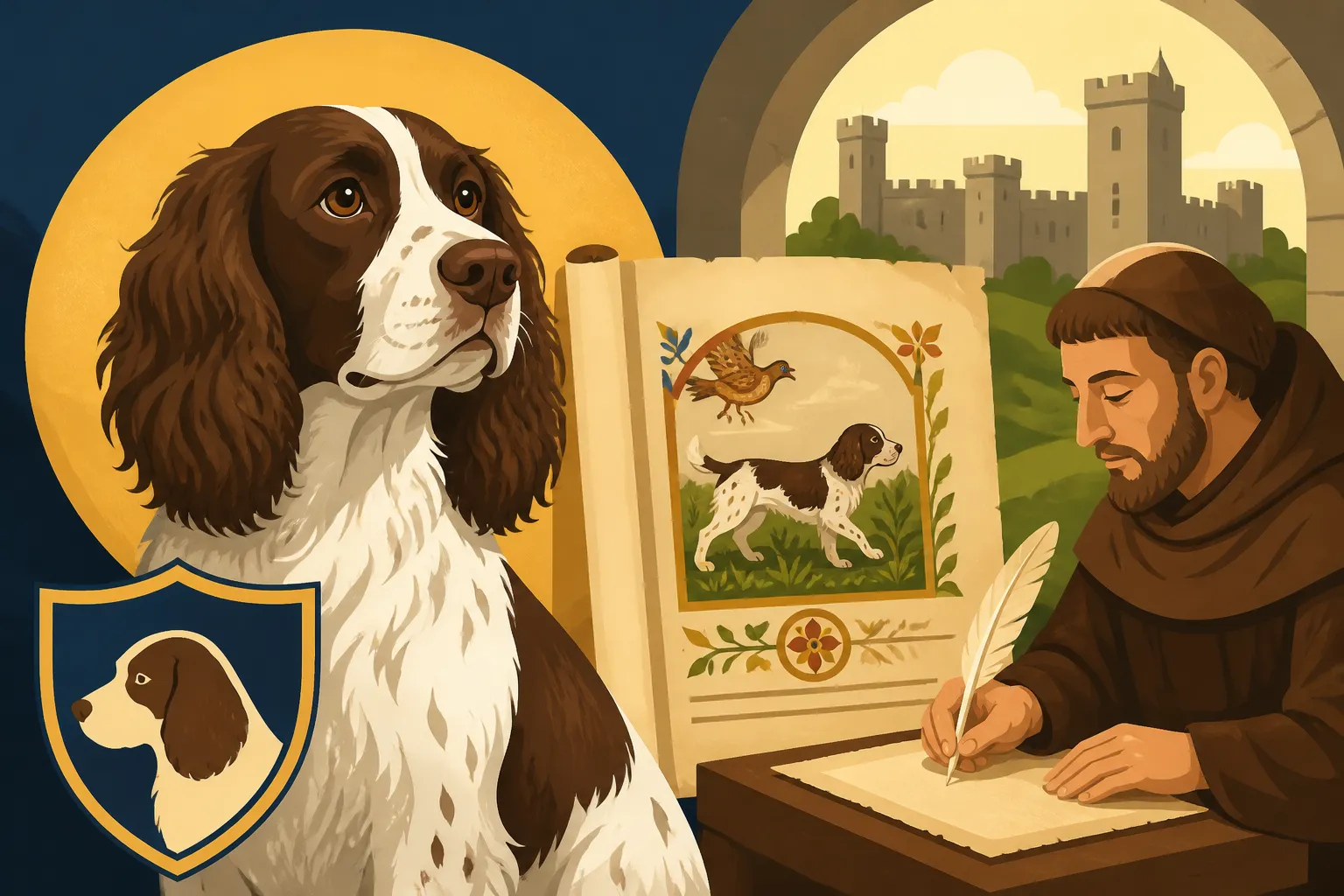
Hunting was a highly esteemed activity among the nobility and gentry in medieval Europe, not just for sustenance but also as a sport and a means of demonstrating prowess. Consequently, detailed manuals on venery (the art of hunting) were produced, and these are goldmines for understanding historical dog breeds. Works such as "The Master of Game," written by Edward, Duke of York, in the early 15th century, provide invaluable insights. This text, based on an earlier French treatise, describes various types of hunting dogs, including different kinds of spaniels.
The descriptions talk about dogs that were "good at finding birds," "active and swift," and "excellent at springing game." While not using the exact term "English Springer Spaniel," the characteristics align perfectly with the breed's historical function. These dogs were more than just tools; they were companions in noble pursuits, valued for their skill and loyalty. It's a testament to the enduring bond between humans and these particular dogs that the fundamental traits of devotion and hunting drive have persisted for so many centuries. The very essence of the Springer, ever eager to please and to work alongside their human, has a deeply rooted past.
Identifying "Springer" Characteristics in Historical Texts
To really grasp how medieval records mention what would become the Springer Spaniel, we need to look beyond just the name and focus on the action. The term "springing spaniel" or "land spaniel" appears in some later medieval and early modern texts, clearly differentiating them from "water spaniels" or smaller "cocker" types. These documents emphasize their ability to spring game from dense cover. They were not typically described as pointing or setting, but rather as actively driving game forward.
Consider the detailed advice given in these old texts about training young spaniels to work within a specific range, to respond to the horn or voice, and to retrieve game gently. This mirrors much of the training we still undertake with our Springers today, aiming to develop that same close-working partnership. The core instincts haven't changed: the unwavering desire to hunt, the incredible nose, and the energetic quartering pattern. When you see your Springer systematically sweeping back and forth in a field, you're observing a behavior that has been refined through centuries of selective breeding for a very specific job. These deep-seated drives are why A Field Bred Springer Spaniel Is a Different Dog to Live With even today.
| Trait/Function | Medieval Spaniel Description (Implied) | Modern English Springer Spaniel |
|---|---|---|
| Primary Role | Springing/flushing game for nets/bows | Springing/flushing game for guns |
| Hunting Style | Active, quartering, works close to hunter | Active, quartering, works close to hunter |
| Temperament | Eager, biddable, energetic, intelligent | Eager, biddable, energetic, intelligent |
| Physical Appearance | Long ears, good nose, smaller to medium size | Long ears, excellent nose, medium size |
| Value to Hunter | Essential tool, loyal companion | Valued gundog, beloved family member |
The Evolution of the "Springer" Name
It's fascinating to watch the subtle shift in language over time, gradually moving from broad classifications to more specific breed names. For the ancestors of our Springer Spaniels, this evolution reflects a growing specialization in their working roles, leading to the eventual distinction we recognize today.
From Generic Spaniel to a Specific Role
For centuries, "spaniel" was a blanket term. But as hunting practices evolved and became more refined, so did the specialization of the dogs used. Hunters began to differentiate between spaniels that "sprang" game (our Springers), those that "cocked" or flushed woodcock (our Cockers), and those that retrieved from water. This wasn't about formal breed registries, which were still centuries away, but about practical working distinctions. A hunter knew exactly what kind of spaniel they needed for a particular type of game or terrain.
The term "springing spaniel" would have gained traction because it accurately described the dog's unique contribution to the hunt. It signified a dog that actively pushed game out of cover, a crucial role especially when hunting with nets or falcons. Springer Spaniels Working Under Falcons would have required a dog that drove game efficiently into the open, allowing the falconer to make their move. This focus on function over strict appearance is a hallmark of how working breeds developed, and it highlights how practical considerations shaped the lineage that would eventually become the English Springer Spaniel. It was about their innate talent and tireless drive in the field.
The Gradual Differentiation from Cocker Spaniels
Perhaps one of the most interesting aspects of the Springer's name evolution is its close historical tie to the Cocker Spaniel. For a very long time, even into the 19th century, Springer and Cocker puppies could actually come from the same litter! The distinction was often made by size: the larger puppies were designated "Springers," and the smaller ones "Cockers." It wasn't until the early 20th century, specifically around The 1902 Split That Separated Springer From Cocker, that the Kennel Club formally recognized them as distinct breeds, each with its own standard based on size and specific working purpose.
Before this official split, if you had a litter of spaniel puppies, you'd be looking at their development and deciding if they were destined to be a "springer" for bigger game or a "cocker" for smaller birds like woodcock. This shared ancestry underscores how closely related these two wonderful breeds are. Even today, both share that incredible spaniel exuberance and intelligence. This historical context helps us understand why sometimes you see a modern Springer that might be a bit smaller, or a Cocker with a touch more size – remnants of a time when the lines were much blurrier, and the defining characteristic was less about pedigree and more about the individual dog's ability to do its particular job.
The Legacy of Medieval Spaniels in Today's English Springer
It's truly remarkable how many of the core characteristics of those medieval spaniels have persevered through the centuries to define the English Springer Spaniel we know and love today. This isn't just a matter of physical resemblance but a deep-seated continuation of temperament, drive, and innate abilities.
Enduring Traits and Instincts
When your Springer is nose-to-the-ground, tail furiously wagging, meticulously working a scent trail, you're seeing a direct echo of their medieval ancestors. That intense focus, that boundless energy, that unshakeable determination to find game – these are not new traits. They are the product of hundreds of years of selective breeding for a specific purpose. The medieval hunter needed a dog that wouldn't give up, that would push through briars and thickets, and that would bring game to the fore. Our modern Springers still possess that same incredible drive.
Even their gentle mouths, perfect for retrieving delicate game without damage, have a long history. Early hunters relied on dogs that could bring back their quarry in pristine condition. This "soft mouth" is a prized trait that has been carefully preserved. Furthermore, their unwavering loyalty and desire to be part of the family, always by your side (or underfoot!), can be traced back to their role as constant companions to their hunting masters. They weren't just tools; they were members of the hunting party, essential and cherished. This enduring bond is part of the magic of owning a Springer.
Bridging the Centuries: How History Informs Modern Ownership
Understanding this rich history doesn't just make for interesting conversation; it profoundly impacts how we understand and care for our English Springer Spaniels today. Their deeply ingrained instincts are not something that can simply be wished away or ignored. If you find yourself wondering Why a Springer Spaniel Puts Its Nose to the Ground and Vanishes, it's because that's precisely what their ancestors were bred to do. Their incredible nose and drive to follow a scent are centuries old.
This historical context explains why they need so much mental and physical stimulation, whether it's through active games of fetch, scent work, or even formal gundog training. A bored Springer is often a destructive Springer, simply because their powerful instincts aren't being channeled appropriately. Owners who recognize this are better equipped to provide an enriching life for their dogs, one that honors their heritage. Knowing their history helps us appreciate their quirks, understand their needs, and ultimately build a stronger, more harmonious relationship with these magnificent dogs. This isn't just about owning a pet; it's about being a guardian of a living piece of history.
Disclaimer
This article is for general informational purposes only and does not constitute professional advice. Laws, prices and regulations vary by location and change over time. Consult a qualified professional for guidance on your specific situation.