How the Field and Show Springer Spaniel Diverged
If you’ve ever found yourself looking at two beautiful English Springer Spaniels, wondering why one looks like it just rolled out of a salon and the other appears ready to conquer a thorny thicket, you’re not alone. It’s a common point of confusion for many aspiring owners, and even for seasoned Springer enthusiasts. The truth is, while they share a name and a common ancestry, the field-bred and show-bred Springer Spaniels have truly diverged over time, becoming almost two distinct types within the same breed. This guide aims to unravel that fascinating journey, showing you exactly how their paths split and what that means for the dogs we cherish today.
The Shared Ancestry: Before the Split
Before we dive into the fascinating world of how these two types of Springers became so distinct, it’s really important to understand that they all came from the same place. Imagine a time when dogs were primarily bred for a job, not for a beauty pageant or a specific "look" dictated by a club. That’s essentially the starting point for all spaniels, including our beloved Springers.
A Single Breed, Diverse Roles
In the early days of gundogs, there wasn't a strict separation of breeds as we know it today. Instead, there were "spaniels," a broad category of dogs thought to have originated from Spain, valued for their ability to flush game from cover. Within these spaniel populations, there was a natural variation in size and build. Larger, leggy dogs were better suited for "springing" game—flushing birds into the air for falconers or net-hunters. Smaller, stockier dogs were more adept at working dense cover and flushing woodcock, hence the eventual name "Cocker." It wasn't about distinct breeds as much as it was about specialized functions within a single, adaptable lineage. A litter could easily produce both smaller and larger pups, and they'd simply be assigned their role based on their physical traits and aptitude as they grew. It's a far cry from the meticulous breeding we see today.
The Dawn of Breed Recognition
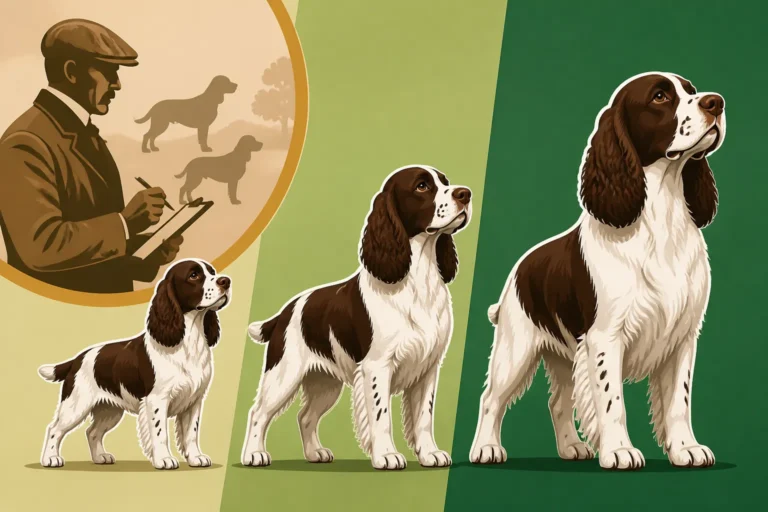
The turn of the 20th century marked a significant shift in dog breeding, particularly with the rise of formal kennel clubs and breed standards. People began to formalize what they saw as distinct types, giving them official names and setting criteria for their appearance. This is when the English Kennel Club stepped in, attempting to bring order to the diverse world of spaniels. In 1902, the English Springer Spaniel was officially recognized as a distinct breed, separating it formally from the Cocker Spaniel based primarily on size and weight. Essentially, if a spaniel pup from a litter weighed over a certain amount—often around 25 pounds—it was designated a Springer. If it was lighter, it was a Cocker. Can you imagine the frustration of a breeder back then, trying to predict which category their adorable puppies would fall into? This early, somewhat arbitrary split was the first step on a long road that would eventually lead to the significant divergence we observe between the field and show types today. For a deeper dive, read The 1902 Split That Separated Springer From Cocker.
The Fork in the Road: Function vs. Form
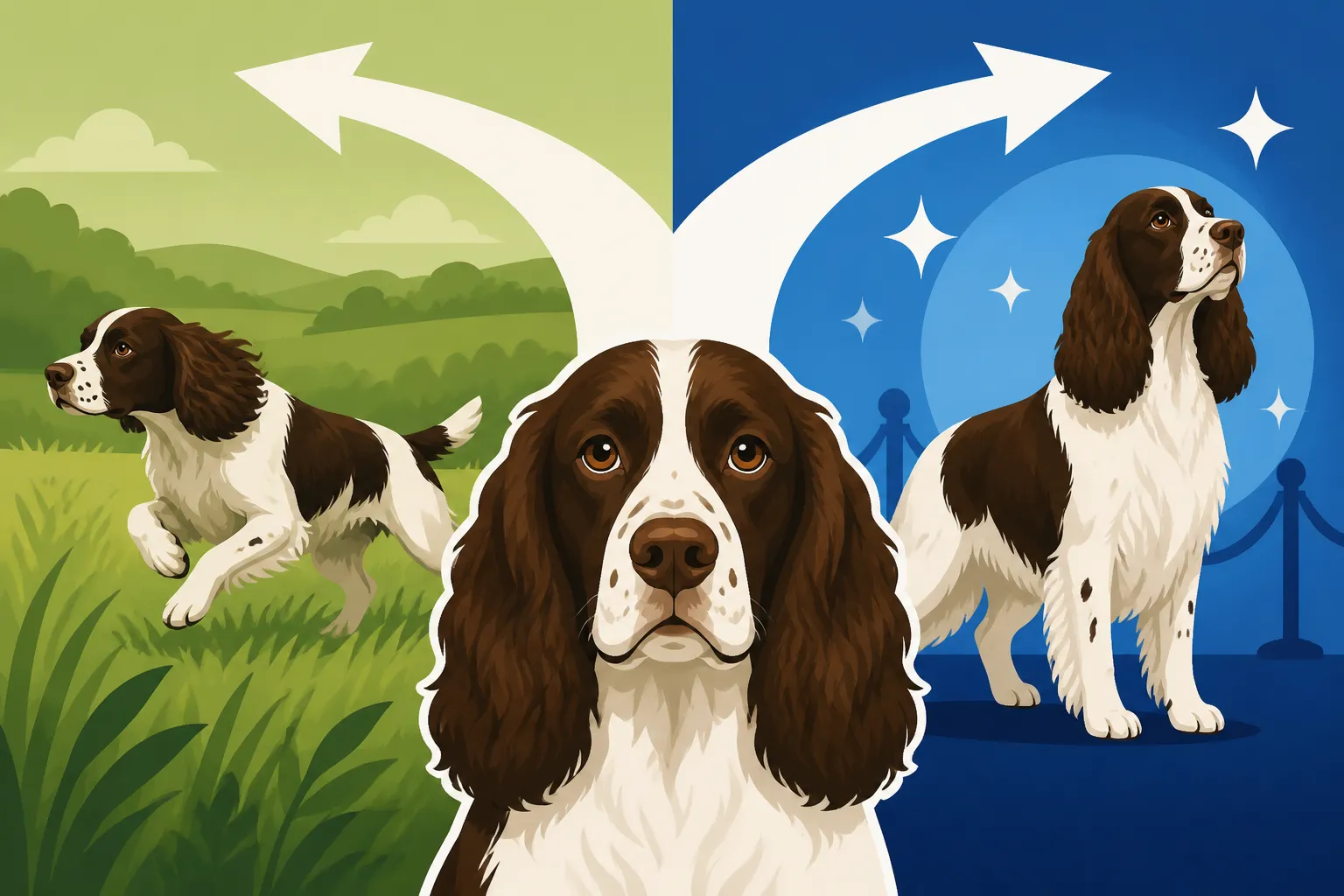
Once the English Springer Spaniel was formally recognized, its destiny began to branch into two very distinct paths, driven by the differing priorities of competitive events. On one side, we had the world of field trials, which demanded peak athletic performance. On the other, the growing popularity of conformation shows placed an emphasis on aesthetic perfection and adherence to a visual standard. This division didn’t happen overnight, but rather solidified over decades, creating dogs that, while still recognizably Springers, were bred for entirely different purposes.
The Rise of Field Trials
For many enthusiasts, the heart of the Springer Spaniel has always been its working ability. These dogs were bred for a specific job: to find, flush, and retrieve game, particularly birds. As organized hunting and competitive field trials gained traction, especially in North America, breeders began selecting dogs almost exclusively for traits that enhanced their performance in the field. This meant prioritizing incredible stamina, explosive flushing power, a keen nose, biddability, and an intense desire to hunt. Dogs that excelled in these trials were celebrated and became highly sought-after breeding stock, regardless of whether they conformed to a stringent visual standard.
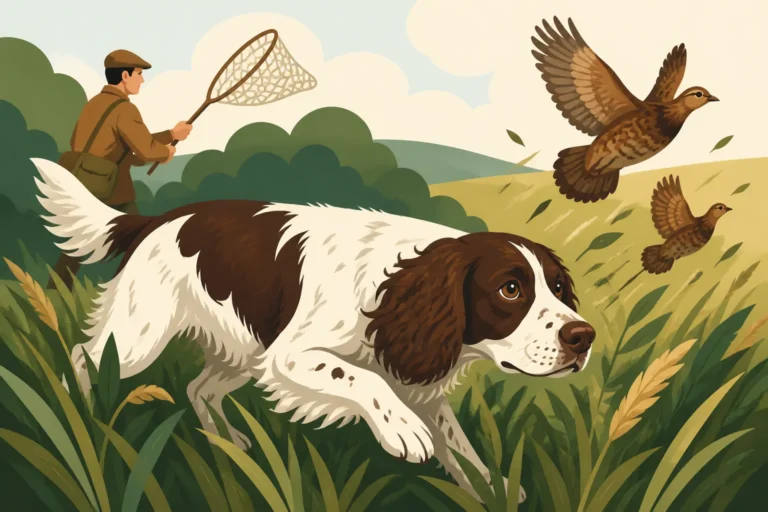
Imagine a sunny autumn morning, the dew still clinging to the tall grasses. A field-bred Springer is tirelessly "quartering" – systematically searching the ground in a zigzag pattern – its tail a blur, nose to the ground. When it hits scent, the dog "springs" the bird with an explosive burst of energy, then waits patiently, marking the fall, ready to retrieve on command. This kind of intense, athletic performance became the benchmark for field-bred Springers. Breeders refined lines to enhance these natural instincts, focusing on functional efficiency above all else. This pursuit of peak performance led to a lighter, more agile build, often with shorter coats that wouldn't hinder them in heavy cover. These dogs are truly athletes first and foremost. You can learn more about their drive in How a Field Bred Springer Spaniel Differs in Drive.
The Influence of the Show Ring
Simultaneously, another branch of the breed was flourishing in a very different arena: the conformation show ring. Here, the emphasis shifted from what the dog could do to what the dog looked like. The breed standard, meticulously written by kennel clubs, described the ideal Springer Spaniel in terms of appearance: head shape, ear set, coat texture, length of feathering, tail carriage, and overall symmetry. Dogs that most closely matched this visual blueprint were awarded ribbons and championships, becoming the stars of their class.
Breeders committed to the show ring dedicated themselves to producing dogs that exemplified these aesthetic ideals. This often resulted in a dog with a more substantial, heavier-boned build, a longer, more profuse coat with extensive feathering, and a generally calmer demeanor when stacked or gaiting around a ring. While these dogs still possessed the inherent instincts of a spaniel, the rigorous selection for specific visual traits meant that working ability often took a backseat. The focus became perfecting the "picture" of the Springer Spaniel as described by the standard. This isn't to say show Springers can't hunt – many do, and some are excellent companions in the field – but their primary selection pressure was undeniably visual. To understand more about their specific appearance, check out How different the two Springer Spaniel types look.
Physical Distinctions: What You See Today
When you look at a field-bred Springer Spaniel next to a show-bred Springer Spaniel today, the differences are often immediately apparent, even to the untrained eye. It’s not just a subtle variation; they genuinely look and feel like different dogs, despite sharing the same breed registration. This divergence in appearance is a direct consequence of the differing selection pressures we just discussed—utility versus aesthetics.
Size, Substance, and Build
One of the most striking differences lies in their overall build and substance. Field-bred Springers are typically lighter, more athletic, and leanly muscled. They possess a more streamlined silhouette, designed for agility and endurance. Their bone structure tends to be finer, and they often stand a bit taller on their legs relative to their body length, giving them a more "leggy" appearance. This build allows them to move quickly and tirelessly through various terrains, springing over obstacles and maneuvering through dense cover without expending unnecessary energy. They are built for speed and stamina, ready to go all day.
Show-bred Springers, on the other hand, tend to be more substantial. They have a heavier bone structure, a deeper chest, and a more compact, square body shape. Their overall appearance conveys an impression of power and elegance. While still athletic, their build is designed to meet the aesthetic standards of the show ring, which often favors a more "finished" and balanced look. They might appear a bit lower to the ground, with a more pronounced neck and broad back, contributing to that classic, symmetrical profile judges look for. When you heft a show Springer, you often feel a greater density and weight compared to a field Springer of the same height. Interestingly, despite these visual differences, both types typically fall within the general height range stipulated by the breed standard, though their weights can vary somewhat. To understand more about their typical size, explore What a Springer Spaniel Actually Weighs.
Coat, Color, and Feathering
The coat is another major differentiator, and it’s where many owners first notice the divide. Show-bred Springers are renowned for their luxuriant, flowing coats and extensive feathering on their legs, chest, and belly. This magnificent coat is a hallmark of their beauty in the show ring, designed to enhance their elegant appearance. However, it requires significant grooming to keep it free of mats, burrs, and debris. While beautiful, this coat can be quite demanding, often necessitating professional grooming or a dedicated home routine of brushing, stripping, and trimming to maintain its pristine condition. The Show Springer Spaniel Coat That Adds a Groomer to Your Budget is a good read if you're considering this type.
Field-bred Springers, in contrast, have a much shorter, coarser, and denser coat, with significantly less feathering. This practical coat is built for function, not aesthetics. It's designed to protect them from thorns, briars, and harsh weather when working in the field, while being easy to maintain and quick to dry. The minimal feathering means fewer snags and less material to collect mud or burrs, making them much more "wash and wear" companions. While they still require regular grooming, especially after a day in the brush, their coat is undeniably lower maintenance. Both types come in the same traditional Springer Spaniel colors—liver and white, black and white, or tri-color—but the way these colors are presented, especially with the amount of white and ticking, can appear different due to the variation in coat density and length.
Temperamental and Instinctual Variations
Beyond the obvious physical differences, perhaps the most significant divergence between field and show Springers lies in their inherent temperament and instinctual drives. This is where many prospective owners get tripped up, as the "Springer Spaniel" name conjures a certain image, but the reality can be quite different depending on the lineage. Understanding these behavioral nuances is crucial for choosing the right dog for your lifestyle.
Drive and Energy Levels
The field-bred Springer Spaniel is, first and foremost, a working dog. They are bred to perform a demanding job for hours on end, and their drive and energy levels reflect this. They possess an almost insatiable desire to be active, to use their nose, and to retrieve. This translates into a dog with extremely high energy, a relentless motor, and an intense focus on scent work. They thrive on having a "job" to do, whether it's actual hunting, participating in dog sports like agility or dock diving, or engaging in extensive daily exercise and mental challenges. If a field Springer doesn't get sufficient physical and mental stimulation, they can easily become bored, destructive, or develop undesirable behaviors born out of pent-up energy. They are certainly not couch potatoes. Think of them as high-performance sports cars – exhilarating, but they need to be driven.
Show-bred Springers generally have a calmer disposition, though it's important to stress that "calmer" for a Springer still means energetic! They still possess the inherent exuberance and intelligence of the breed, but their energy levels are typically more manageable for a pet home. They often have an "off switch" that field lines might lack, meaning they can settle down indoors after a good walk or play session. While they still love to run, play fetch, and explore, their drive to hunt isn't usually as intense or all-consuming. This makes them excellent companions for families or individuals who enjoy active outdoor pursuits but aren't necessarily looking for a dedicated hunting partner. However, don't mistake their relative calm for inactivity; a show Springer still needs substantial daily exercise and mental engagement to be a happy, well-adjusted member of the family. You might find useful insights into How Much Exercise a Show Bred Springer Spaniel Needs.
Trainability and Aptitude
Both types of Springers are intelligent and eager to please, making them generally highly trainable. However, their specific aptitudes and sensitivities can differ. Field-bred Springers, with their intense focus and biddability, are often quick learners, especially when it comes to scent work and retrieving. They respond well to consistent, positive reinforcement training and thrive on having clear tasks. Because of their high drive, they can sometimes be more sensitive to harsh corrections, preferring a lighter, more encouraging touch. Their desire to work with their handler is a huge asset, but it needs to be channeled appropriately. They need an owner who understands their working heritage and can provide structured outlets for their energy and intelligence.
Show-bred Springers are also very intelligent and eager to engage with their families. They excel in obedience, rally, and other dog sports that emphasize precision and partnership. They can be a bit softer in temperament than some field lines, meaning they might be more easily discouraged by overly stern training methods. Their strong desire to be near their people makes them highly motivated to learn and cooperate. While they may not possess the same frantic intensity for a retrieve as a field Springer, they are still very capable and enjoy learning new things. They adapt well to various training activities, from basic manners to more advanced tricks or even therapy work. The key for either type is early socialization and consistent, positive training to help them grow into confident, well-mannered companions. For those considering a companion dog, Which Springer Spaniel Type Suits a Pet Home might offer some clarity.
Living with Each Type: Considerations for Owners
Deciding to bring a Springer Spaniel into your life is exciting, but understanding the differences between the field and show types is absolutely critical for a successful partnership. Many people fall in love with the general idea of a Springer, only to find themselves overwhelmed by the reality of a dog whose energy and needs don't match their lifestyle. This is where being honest with yourself about what you can realistically provide comes into play.
Exercise and Mental Stimulation Needs
This is perhaps the biggest consideration for prospective owners. A field-bred Springer Spaniel needs a lot of exercise, and not just a quick walk around the block. We're talking about vigorous, sustained activity, often for an hour or more, twice a day, every single day. They thrive on off-leash running, exploring scent trails, retrieving sessions that make your arm ache, or participating in intense dog sports. A large, securely fenced yard is a must, but it's not enough on its own; they need to go places and do things. Without adequate outlets for their energy and innate drive, a field Springer will invent its own entertainment, which often involves digging, chewing, or becoming quite vocal. They are absolutely fantastic companions for hikers, runners, active families, or anyone involved in gundog sports, but they will leave a less active owner feeling exhausted and frustrated. If you're pondering the energy requirements, How Much Exercise a Field Bred Springer Spaniel Needs will provide more detail.
Show-bred Springer Spaniels, while still energetic dogs, typically have more manageable exercise requirements for the average family. They still need a good daily walk or two, usually 30-60 minutes of brisk activity, plus playtime in the yard. They enjoy fetch, trips to the dog park, and long strolls, but they generally don't possess the same relentless, insatiable drive as their field counterparts. They are more likely to be content with a substantial walk and then curl up for a nap at your feet. However, don't underestimate them; they are still spaniels! A bored show Springer can still find mischief. They benefit greatly from mental stimulation too, like puzzle toys, training sessions, or scent games that you can easily find at retailers like Chewy. The key is consistency in meeting their needs to ensure they are a happy, well-adjusted companion in your home.
Grooming and Care Demands
The contrast in coat type translates directly into vastly different grooming demands. Caring for a show-bred Springer Spaniel is a commitment. Their long, flowing coats and abundant feathering are prone to matting, especially behind the ears, in the armpits, and on the belly and legs. Regular brushing, at least every other day, is essential to prevent painful tangles and remove loose hair. Many show Springer owners opt for professional grooming every 6-8 weeks, which can include bathing, drying, trimming, and hand-stripping to maintain the coat's integrity and shape. Furthermore, their longer ears are more susceptible to infections and require frequent checks and cleaning. This dedication to grooming is part of the show Springer ownership experience, and it's a significant factor in their overall care budget. It's truly an investment of time and money.
The field-bred Springer Spaniel, with its shorter, denser coat and minimal feathering, is much lower maintenance on the grooming front. While they still shed and require regular brushing, perhaps once or twice a week, to keep their coat healthy and remove loose hair, they are far less prone to matting. After a day in the field, a quick brush-down to remove any burrs or debris, easily found on places like Chewy, is often sufficient. Their ears, while still needing attention, are less likely to drag in water or food, though regular cleaning is still important for all drop-eared breeds. This practicality makes them an appealing choice for owners who want the Springer personality without the extensive grooming routine. However, regardless of type, all Springers benefit from regular nail trims, dental care, and ear checks to keep them healthy and comfortable.
The Ongoing Debate and Future
The striking differences between field and show Springer Spaniels naturally lead to discussions among enthusiasts, breeders, and even veterinary professionals about the breed's identity and future. It's a fascinating, sometimes contentious, topic that highlights the complex relationship between breed standards, function, and genetic health. Many feel that the divergence has become so profound that it begs the question: are they truly still the same breed?
Are They Still the Same Breed?
This is a question that sparks lively debate within the Springer Spaniel community. On paper, legally and genetically, they are undeniably the same breed, English Springer Spaniel. They share a common ancestry, and a purebred field Springer and a purebred show Springer are both recognized by kennel clubs as representatives of the breed. However, in practical terms, their physical appearance, temperament, and specialized needs have drifted so far apart that some argue they should be officially recognized as two distinct varieties, much like the American and English Cocker Spaniels have been separated in some registries. The challenges for a breeder trying to produce a dog that excels in both the field and the show ring are immense, often leading to compromises in one area or the other. This divide has solidified over decades, creating what some refer to as Two Breeds Registered as One: the Field and Show Springer Spaniel. This is a natural consequence of intense selective breeding for specific traits, where form and function became mutually exclusive goals in many breeding programs.
Crossing the Divide and Genetic Health
Historically, there was some occasional interbreeding between the types, especially when dual champions—dogs that excelled in both conformation and field trials—were more common. However, today, the two gene pools are largely separate, with very few breeders intentionally crossing field lines with show lines. This seventy-year gene pool divide, as detailed in The Seventy Year Gene Pool Divide Inside One Springer Spaniel Breed, has implications for genetic diversity and health. While both types are susceptible to certain breed-specific health issues, the prevalence and focus can sometimes differ. For instance, some working lines might be more focused on conditions that impact athletic performance, while show lines might contend with issues more common in dogs with a heavier build or specific head structures.
The lack of interbreeding, while maintaining the distinct characteristics of each type, also means that beneficial genes from one type aren't easily shared with the other, potentially limiting genetic diversity within each sub-population. There's a constant effort among responsible breeders of both types to utilize available health testing, like those you can learn about in The DNA Test That Should Precede Every Springer Spaniel Purchase, to screen for common issues such as hip and elbow dysplasia, eye diseases, and certain genetic disorders like Fucosidosis or PFK deficiency. The hope is that through careful breeding practices, both the field and show types can maintain their unique qualities while also fostering robust health for future generations. Ultimately, whether you choose a field or show Springer, you're embracing a dog with a rich history and a specific set of needs that, when met, will bring immense joy and companionship to your home.
Disclaimer
This article is for general informational purposes only and does not constitute professional advice. Laws, prices and regulations vary by location and change over time. Consult a qualified professional for guidance on your specific situation.