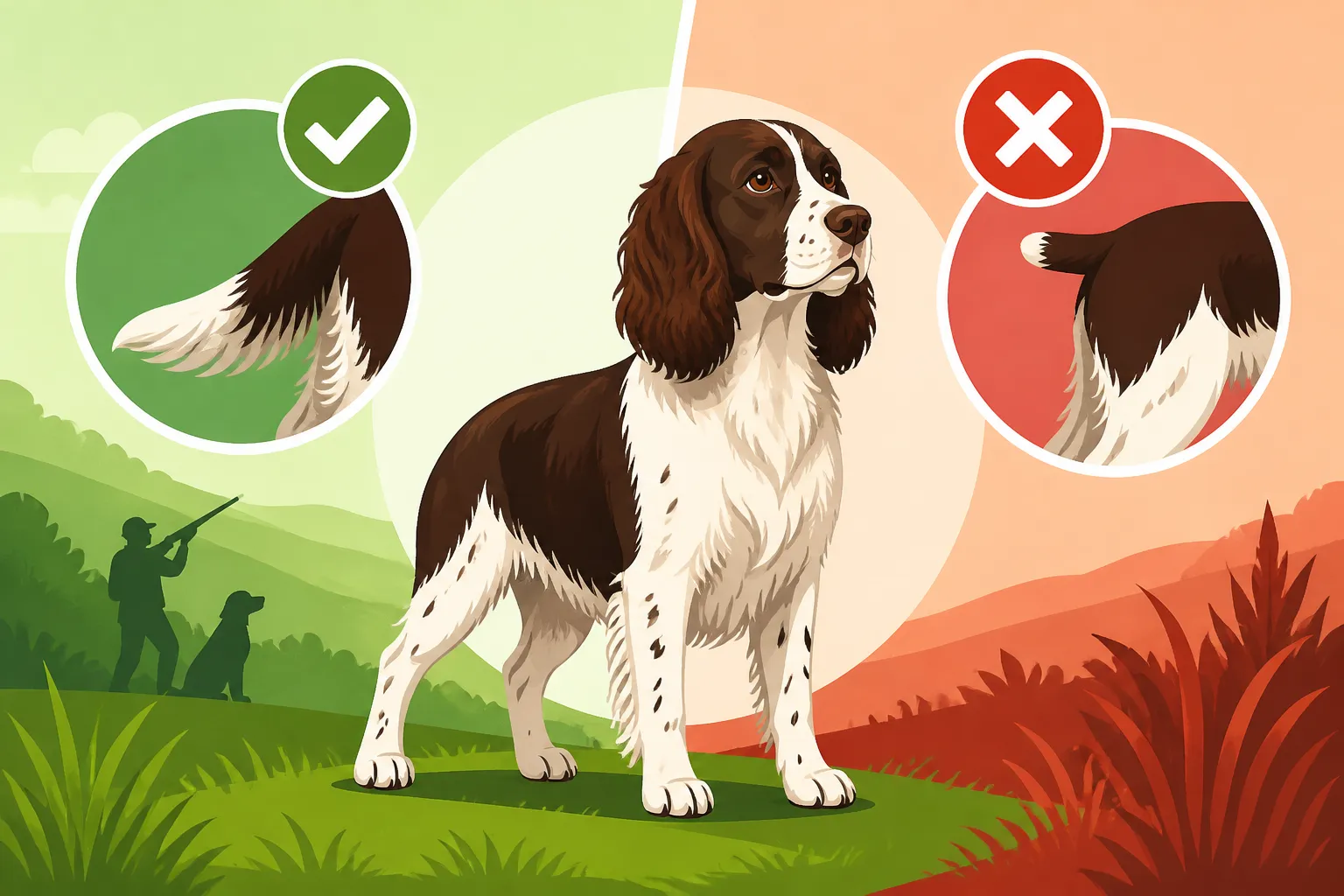
Whether a Working Springer Spaniel Needs a Docked Tail
A working Springer Spaniel charging through brambles can injure its tail, so it is understandable that some owners wonder whether docking prevents trouble. But a docked tail is not a requirement for every working dog, and docking does not remove every risk. This guide explains the practical trade-offs, legal considerations, and safer ways to make a decision for an individual dog.
Why some working Springer Spaniels have docked tails
The traditional concern about tail injuries
Springer Spaniels work close to cover, where a tail may brush against thorny hedges, brambles, gorse, or rough vegetation. Repeated knocks or cuts can sometimes lead to a painful injury. In working lines, that concern helped create a tradition of docking tails when puppies were young.
The risk is real, but it is not the same for every dog or every kind of work. A spaniel regularly working dense, thorny cover may face different hazards from one doing occasional retrieves in open fields. The type of ground, duration of work, and individual dog’s tail carriage all matter. A docked tail can still be injured, and an intact tail does not automatically mean a dog will be hurt.
Field and show Springer Spaniels can differ in appearance and working priorities, but a dog’s type alone does not tell you whether its tail will be injured. For more on those differences, see Two Breeds Registered as One: the Field and Show Springer Spaniel and How the Field and Show Springer Spaniel Diverged.
A tail has a job beyond appearance
A dog’s tail is part of how it communicates. Its position and movement can offer clues about excitement, uncertainty, or social intent, though you should always read the whole dog rather than relying on the tail alone. In a busy training ground or household, an intact tail gives other dogs and people more of that visible information.
The tail also moves as the dog runs and turns. It contributes to body movement and balance, although the degree of importance can vary with the activity. That does not mean a docked dog cannot run, hunt, or enjoy an active life; many do. It does mean docking is not a consequence-free cosmetic choice.
Tail carriage, coat, and feathering can make field dogs look quite different from show dogs. If you are comparing the two, Tail Docking in Field Springer Spaniels and Whether a Springer Spaniel's Tail Is Docked in America provide useful related background.
Is docking legally permitted where you live
Rules depend on location and circumstances
Tail docking laws differ between countries and may also differ within a country. Some jurisdictions prohibit routine cosmetic docking but allow narrowly defined exceptions for certain working dogs. Those exceptions can involve the dog’s intended work, timing, who performs the procedure, and documentation. A breeder’s or buyer’s claim that a puppy is “for work” does not necessarily settle whether docking is lawful.
Rules can change, and the details matter. If you are in the United Kingdom, check the rules that apply in the specific nation where the puppy is born and where you live; do not assume the same conditions apply across England, Wales, Scotland, and Northern Ireland. In the United States, state and local requirements may differ. Ask a veterinarian or relevant local authority what is permitted before making arrangements.
For a useful overview of the UK issue, read Britain's Ban on Docking Springer Spaniel Tails. Treat any general article as a starting point, not a substitute for confirming the requirements that apply to your location.
Docking and veterinary amputation are not the same decision
People often use “docking” broadly, but there is an important distinction. Docking usually refers to shortening a puppy’s tail, whereas a veterinarian may recommend amputating part or all of a tail later because of a serious injury or disease. A medical procedure is assessed for the welfare needs of that particular dog; it is not simply a delayed version of a routine choice.
If an adult Springer Spaniel has a tail injury, do not try to judge at home whether it needs surgery. Persistent bleeding, swelling, an open wound, marked pain, or repeated injury deserves prompt veterinary attention. The veterinarian can assess the damage, discuss treatment options, and explain what aftercare would involve.
| Situation | What it means | Practical next step |
|---|---|---|
| Puppy tail docking | A decision made early in life, subject to local law and any applicable conditions | Confirm legality and procedure requirements with a veterinarian before proceeding |
| Adult dog with an injured tail | A health problem that may need examination and treatment | Arrange veterinary advice, especially for bleeding, swelling, pain, or a wound that will not heal |
| Dog working with an intact tail | A normal working arrangement for many spaniels | Adjust exposure where practical and check the tail after work |
| Dog with a docked tail | A dog that may work normally but has a shortened tail | Monitor the remaining tail and read body language using the whole dog |
How to reduce risk if your Springer Spaniel has a full tail
Match the work to the dog and the ground
An intact tail does not necessarily mean a Springer Spaniel must avoid all cover. It does make sensible management worthwhile. Be aware of the terrain, especially dense thorny areas, and watch for signs that your dog is repeatedly catching or striking its tail. If a particular patch of cover is causing injuries, changing the route or limiting time there may be more helpful than hoping the dog will simply adapt.
Check your dog after each outing, particularly when you have worked through thick vegetation. Look gently along the tail for cuts, swelling, tenderness, wet or matted hair, and signs of fresh blood. Stop if your dog reacts as though it is painful; do not force a close examination of a sore area. A post-work routine should include the rest of the dog as well. What to Check on a Springer Spaniel After a Day in Cover and Whether a Springer Spaniel Needs a Post Hunt Check Every Time offer broader checkup guidance.
Build a calm, useful field-care routine
Keep basic supplies together so you are not searching for them after a long walk or training session. A field kit might include clean gauze, a lead, and a way to contact your veterinarian. Keep any first-aid steps within the advice you have already received from a veterinary professional; a home kit is not a replacement for treatment.
Some owners use retailers such as Chewy to find ordinary pet-care supplies, but the important part is choosing items suited to your dog and knowing how to use them safely. If a cut is deep, continues to bleed, or appears painful, contact a veterinarian rather than relying on a product from a kit. Avoid wrapping a tail tightly unless a veterinary professional has shown you how, since an unsuitable bandage can create additional problems.
Make the check part of the same routine as looking between the toes, around the ears, and through the coat for plant material. A grass awn or thorn can be easy to miss under feathering. See How to Find a Grass Awn on a Springer Spaniel and Checking a Springer Spaniel's Feet After Working for other useful parts of a post-work inspection.
How to decide what is right for your dog
Ask practical questions before choosing a puppy
If you are speaking with a breeder, ask whether the puppy’s tail is intact or docked, why that choice was made, and what legal requirements apply. Ask what kind of work the parents actually do and what the breeder has observed about tail injuries in their dogs. A clear, specific answer is more useful than a blanket claim that all working Springer Spaniels need docking.
Also consider the work you realistically expect to do. A dog intended for frequent work in dense cover may face different conditions from one that will mostly hike, train, or retrieve in more open areas. Be honest about your plans rather than choosing a tail procedure based on a vague idea of what a “working dog” ought to look like. For more on the demands of field work, see How a Field Bred Springer Spaniel Differs in Drive.
Weigh the choices without treating one as universal
There is no single answer that fits every Springer Spaniel. Some working dogs have docked tails; many dogs work with full tails. A useful decision considers the dog’s intended activity, likely terrain, local law, veterinary guidance, and the welfare implications of the procedure. It should not be based only on tradition, appearance, or the assumption that injury is inevitable.
If you already have an intact-tailed dog, focus on practical prevention: observe the ground, check the tail after work, and seek veterinary advice when you notice a problem. If you are choosing a puppy, discuss the decision early enough to understand the breeder’s approach and local requirements. Chewy may be one place to find everyday grooming or field-care supplies, but no supply can replace a careful check and prompt veterinary attention when an injury occurs.
A working Springer Spaniel does not automatically need a docked tail. The best decision is the one that is lawful, informed, and centered on the individual dog’s welfare and the work it will actually do.
Disclaimer
This article is for general informational purposes only and does not constitute professional advice. Laws, prices and regulations vary by location and change over time. Consult a qualified professional for guidance on your specific situation.