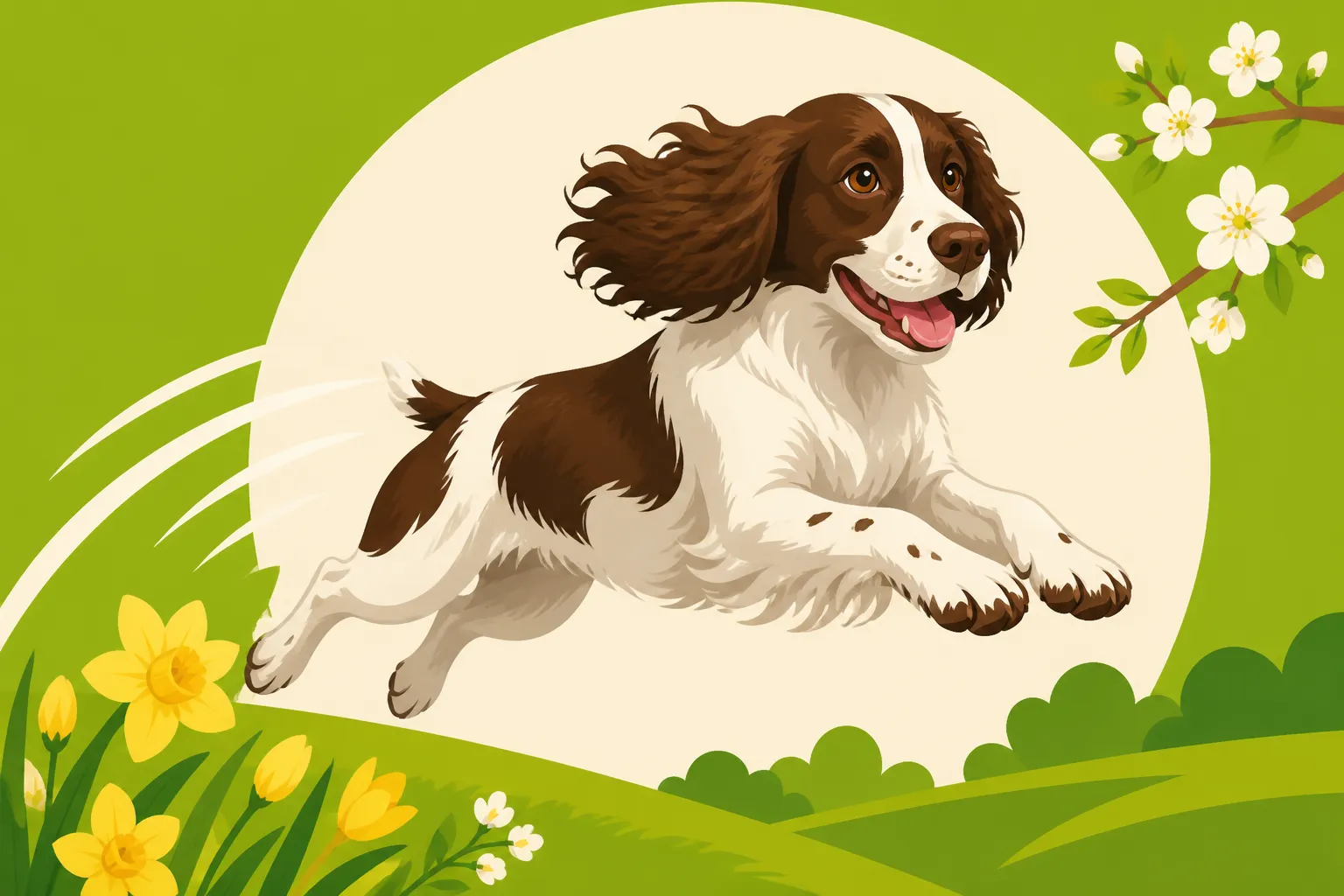
Springing Game: What the Springer Spaniel Name Describes
One of the most charming and persistent questions I hear from fellow English Springer Spaniel enthusiasts, or those just considering bringing one of these energetic bundles of joy into their lives, is "What does 'Springer' even mean?" It's not just a cute moniker; it’s a living descriptor of a breed purpose steeped in centuries of history, and understanding it truly unlocks the essence of what makes these dogs tick. This guide will take you on a journey through time, explaining the historical context of the name "Springer Spaniel" and how it continues to shape the instincts, temperament, and care requirements of these wonderful dogs today.
The Ancient Roots of the Spaniel Name
To truly grasp the "Springer" part of their name, we first need to briefly look at the "Spaniel" bit. The word "spaniel" itself carries a rich history, hinting at the breed's origins and early development as a distinct type of hunting dog. It's not just a generic term; it speaks volumes about where these dogs likely came from and the purpose they served long before the advent of modern firearms.
Tracing the "Spaniel" Origin
The generally accepted theory is that the term "spaniel" derives from "Espagne" or "Hispania," referring to Spain. This suggests that the ancestors of today's spaniels originated on the Iberian Peninsula, eventually making their way across Europe with various conquerors, traders, and travelers. These dogs were highly valued for their ability to work in dense cover, flushing game for hunters. They weren't just any dog; they were specialized hunters, adept at navigating tough terrain and using their keen noses to locate hidden birds. Think of early medieval hunts where stealth and a dog's natural drive were paramount. The spaniel type spread and diversified over centuries, adapting to the specific needs of different regions and hunting styles.
It's fascinating to consider that before formalized breeds and kennel clubs, dogs were often named for their function or their place of origin. So, a "spaniel" was essentially a dog of the "Spanish type," known for a particular way of hunting. These were robust, intelligent dogs with a strong prey drive, making them indispensable companions for anyone trying to put food on the table or enjoy the sport of fowling. They weren't pampered pets; they were working animals, vital to the success of a hunt. This history is crucial because it sets the stage for the specialized role the "Springer" would eventually play.
Early European Hunting Dogs
Before the English Springer Spaniel we recognize today took shape, there were various "land spaniels" across Europe. These dogs were generally smaller than mastiff types but more substantial than terriers, bred specifically to find and roust game from thickets and undergrowth. Their purpose was simple: to locate hidden birds and small animals, driving them out so that hunters could capture them. They were integral to hunting practices that relied on nets, bows, or even falcons, long before the gun became commonplace.
These early spaniels were not yet distinguished into the numerous modern breeds we know. Instead, they were often categorized by their size or the type of game they hunted. A larger spaniel might be called a "springing" or "land" spaniel, while smaller ones, used primarily for woodcock, eventually became known as "cockers." In fact, it was not uncommon for puppies from the same litter to be designated "springers" or "cockers" based purely on their size and perceived ability to flush larger game versus smaller birds. This fluid classification highlights their shared ancestry and functional roles. The emphasis was always on their ability to locate and flush game, rather than on their appearance, which would become a primary concern much later in breed development.
"Springing" into Action: The Dog's Original Role
Now, let's dive into the "Springer" part. This isn't just a quaint addition; it’s the most direct and descriptive element of the breed's name, perfectly encapsulating their traditional job in the field. When you see a Springer Spaniel working, that name immediately makes sense.
The Act of Flushing Game
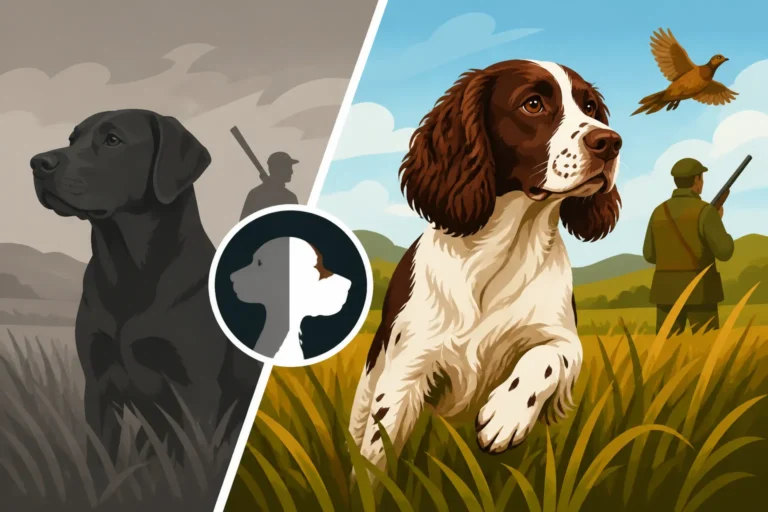
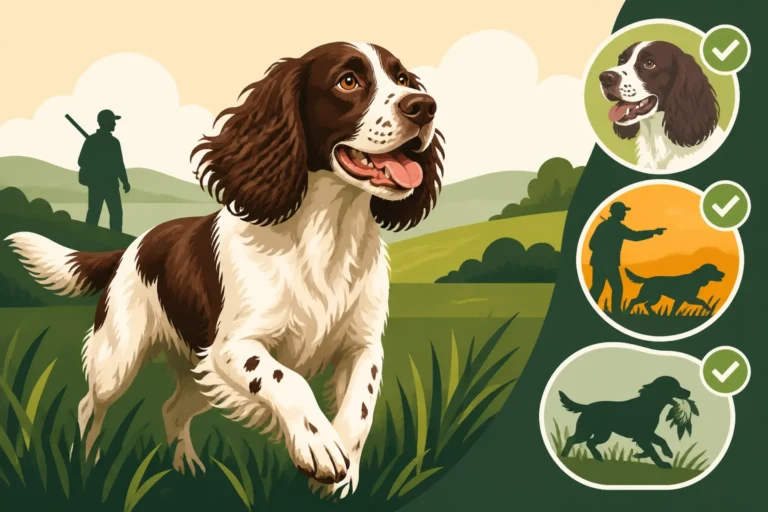
The term "springing" refers to the dog's characteristic method of locating hidden game, typically birds like pheasant, partridge, or grouse, and then "springing" or flushing them out of cover. Imagine dense undergrowth, tall grasses, or thickets where a bird might hide. A Springer Spaniel, with its exceptional nose and relentless energy, systematically works through this cover, zigzagging back and forth in a pattern known as "quartering." This ensures no patch of ground is missed. Once the dog catches the scent of a bird, it intensifies its efforts, its tail usually wagging furiously, until the bird is forced to fly or "spring" into the air.
This act of springing game is distinct from a pointer, which would simply freeze and indicate the bird's location. The Springer's job is active and dynamic, designed to create a clear shot for the hunter. It requires immense stamina, keen senses, and a robust build to push through challenging terrain all day long. For centuries, this ability to effectively flush game made them invaluable partners in the hunt. Without a dog like the Springer, much of the hidden game would simply remain undetected, or flush too far away to be successfully captured.
A Partner, Not Just a Retriever
While today many people associate gun dogs primarily with retrieving, the Springer Spaniel's original and namesake role was about finding and flushing. Of course, they are also excellent retrievers, often bringing back downed game with a soft mouth, but this was a secondary skill that developed alongside their primary flushing duty. Their purpose was to make the game accessible to the hunter. The partnership between dog and human was a dance: the dog would locate and flush, the hunter would take the shot, and then the dog would often retrieve.
This makes the Springer a "dual-purpose" gundog in many respects, even if flushing was the primary focus for its name. They were bred for intelligence, trainability, and an intense desire to please their handler, all critical traits for a dog working cooperatively in the field. Their ability to work within gun range, responding to whistle and hand signals, ensured that the hunter always had control, even when the dog was deeply engrossed in a scent. This close working relationship is still evident in well-bred and well-trained Springers today, who thrive on having a "job" and working alongside their human companions. It’s part of what makes them such rewarding, albeit demanding, partners.
Before Guns: How Spaniels Worked Game
It's easy to imagine a Springer Spaniel in a modern hunting scenario, working alongside a hunter with a shotgun. However, their history goes back much further than the invention of firearms. Understanding how their ancestors worked before guns gives us a deeper appreciation for their innate abilities and the specialized niche they filled in the hunting world. This ancient heritage explains much of their drive and instinct even in today's pet homes.
Working with Nets and Hawks
In medieval Europe, hunting methods were very different. Without firearms, hunters relied on other means to capture game, and spaniels were central to these techniques. One common method involved using nets. A spaniel would be sent into cover to flush birds, "springing" them into the air or driving them into strategically placed nets. The dog's job was crucial here: it had to find the game, push it in the right direction, and do so without damaging the bird, which was then caught in the net. This required a keen nose, controlled drive, and a handler who understood how to position the nets effectively. The efficiency of the hunt depended heavily on the spaniel's ability to perform its "springing" task. How a Springer Spaniel Drove Game Into Nets sheds more light on this fascinating technique.
Another sophisticated hunting method involved falconry. Here, spaniels worked in concert with birds of prey. The spaniel would flush game from cover, sending it airborne, at which point a trained falcon or hawk would swoop down to capture it. This partnership demanded a highly intelligent and disciplined dog that understood its role and could work seamlessly with another animal, and its human handler, to achieve the objective. The spaniel's ability to flush with enthusiasm but also with control was paramount. It's a testament to the breed type's intelligence and biddability that they could adapt to such varied and complex hunting scenarios.
The Role in Early Feudal Hunts
Beyond specific tools like nets and hawks, spaniels played a significant role in the broader context of feudal hunts. These were often grand affairs, more than just about acquiring food; they were social events, demonstrations of wealth and power, and opportunities for nobility to practice military skills. Spaniels, including the ancestors of the Springer, were essential for these elaborate hunts. They were used to clear large areas of brush and woodland, pushing game towards waiting hunters, often positioned with bows and arrows, or simply corralling animals into designated areas.
The stamina and systematic hunting style of these early spaniels made them indispensable for covering vast estates. They were hardy dogs, capable of enduring long hours in the field, navigating difficult terrain, and performing their duties regardless of weather conditions. This historical context emphasizes that the Springer Spaniel was never a delicate breed; it was always a robust, working dog with a strong drive and a physical constitution built for demanding tasks. Even in modern times, their descendants retain this incredible stamina and need for activity, which is why The Daily Routine a Springer Spaniel Actually Needs often surprises new owners.
The Evolution of the Springer's Job with Firearms
The invention and increasing accessibility of firearms dramatically changed hunting practices across Europe. This shift presented new challenges and opportunities for hunting dogs, and the Springer Spaniel adapted beautifully, solidifying its place as a premier gundog. The very definition of "springing" took on an even more critical meaning.
Adapting to the Gun Dog Era
With the advent of reliable firearms, the need for dogs that could flush game directly for the shot became paramount. A dog that simply pointed might be useful, but one that could find the game and send it flying within range of the gun was invaluable. This is precisely where the "Springer" excelled. Their natural quartering pattern and their enthusiastic flush were perfectly suited to the new technology. Hunters could walk through cover with their Springer Spaniel, and when the dog "sprung" a bird, they had a prime opportunity for a shot.
This era refined the Springer's role. While retrieving was always a helpful skill, it became even more important to recover downed game quickly and efficiently, especially from dense cover or water. The Springer's soft mouth, developed over centuries to avoid damaging game for nets or falcons, proved equally valuable for retrieving shot birds. They became, in essence, the complete package for the walking hunter. What a Springer Spaniel Did for a Gun Before Retrievers explains the fascinating transition of these dogs' roles as hunting technology advanced.
From Flushing to Retrieving (and Flushing Again)
The modern English Springer Spaniel is often called a "flushing and retrieving" dog, reflecting its perfected role in gun dog work. They are expected to quarter ahead of the hunter, find game, flush it boldly on command (or instinctively once located), remain "steady to wing and shot" (meaning they don't chase after the flushed bird immediately but wait for the shot), and then, once given the command, retrieve the downed bird. This sequence requires incredible discipline, focus, and a strong bond with the handler.
The challenge for a Springer Spaniel, with its innate high prey drive and desire to chase, is to learn this steadiness. It’s a testament to their intelligence and trainability that they can be taught to override their natural impulse to pursue a flushing bird. This balanced skill set—the powerful flush combined with disciplined retrieve—is what truly defines the Springer Spaniel's utility in the field today. For those interested in the working lineage, A Field Bred Springer Spaniel Is a Different Dog to Live With delves into how these traits are amplified in field-bred lines.
The Physical Traits Built for Springing
The very physical appearance of the English Springer Spaniel, from the tip of its nose to the wag of its tail, has been shaped by centuries of performing its specific job: springing game. Every aspect of their build and coat serves a functional purpose in the field.
Built for Endurance and Agility
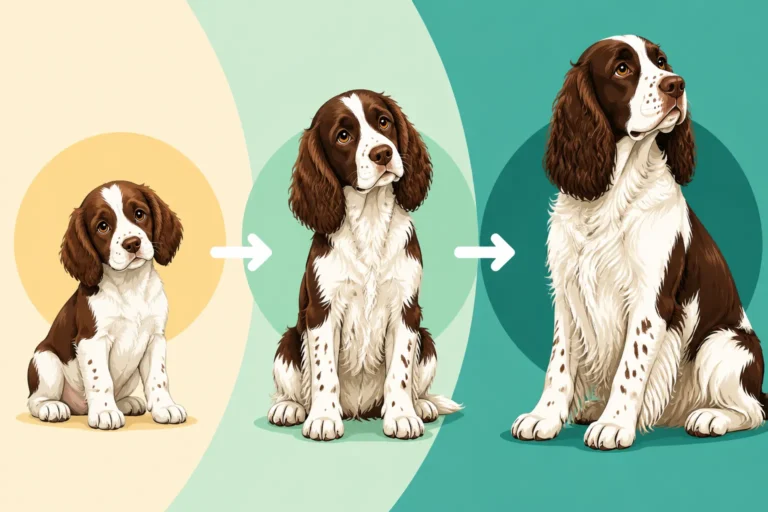
A Springer Spaniel is a dog of medium build, perfectly proportioned for agility and endurance. They aren't oversized, which would make them cumbersome in thick cover, nor are they too small to push through dense brush or retrieve substantial game birds. Their powerful hindquarters provide the thrust needed to "spring" forward and to cover ground rapidly, while their strong, muscular forelegs allow them to navigate uneven terrain with ease. This athletic build means they can maintain a brisk pace for hours, tirelessly searching for game.
Their deep chest provides ample room for lung capacity, essential for sustained effort, and their well-sprung ribs offer protection to vital organs while allowing for flexibility. These are not dogs built for short bursts of speed like a Greyhound, but rather for continuous, energetic work. If you've ever seen a Springer Spaniel quartering a field, you'll witness this blend of power and grace firsthand. It's a marvel of canine engineering, all directed towards their original purpose.
The Iconic Coat and Feathering
The Springer Spaniel's coat is another hallmark of its working heritage. It's a medium-length double coat, designed to protect them from the elements and the rigors of working in dense cover. The outer coat is water-resistant and relatively coarse, shedding rain and protecting against thorns and brambles. The dense undercoat provides insulation, keeping them warm in cold, wet weather, which is often encountered during hunting season. This combination makes them highly adaptable to various climates and environments.
Their distinctive "feathering" – the longer hair found on their legs, chest, and belly – serves a practical purpose as well. While it looks elegant, it offers additional protection from brush and cold water. However, this feathering also requires care, especially for field-bred dogs who spend a lot of time in cover. Burrs, seeds, and mud can easily get tangled, necessitating regular grooming. Even pet Springers need attention to their coats to prevent mats. Chewy offers a wide range of brushes and grooming tools to keep their coats in top condition, reflecting the ongoing need for care these working coats demand.
How the Name Defines the Breed's Instincts Today
Even if your English Springer Spaniel has never set foot in a hunting field, the ancient calling encoded in their name deeply influences their behavior, energy levels, and needs as a companion animal. Understanding these innate instincts is key to having a happy and well-adjusted Springer.
The Drive to Hunt and Explore
The strong desire to "spring" game, to find and flush, manifests in many ways in a pet Springer. They have an insatiable curiosity and a powerful drive to explore with their nose. That zigzagging "quartering" pattern they perform in the field? You'll often see them doing a version of it in your backyard or during a walk, systematically investigating every scent trail. This isn't just random sniffing; it's their brain's ancient programming kicking in, searching for something interesting to flush.
This innate drive means they require significant mental and physical stimulation. A simple walk around the block might not be enough to satisfy a Springer's need to "work" its nose. They thrive on opportunities to investigate new environments, engage in scent games, or even participate in dog sports like agility or obedience that tap into their intelligence and athleticism. Without outlets for this drive, a Springer can become bored, restless, and sometimes destructive, Whether a Bored Springer Spaniel Destroys Things is a common concern for owners. Their enthusiasm for discovery is part of their charm, but it's also a responsibility for their owners to nurture.
The Ever-Present Nose
A Springer Spaniel's nose is arguably its most powerful tool and a primary driver of its behavior. They live in a world of scent, constantly processing information that we humans can only vaguely imagine. This isn't just about finding game; it's about understanding their environment, communicating with other dogs, and fulfilling their inherent need to "work." That intense focus on a scent trail, often leading them to ignore your calls, is a direct inheritance from their ancestors who had to follow a scent regardless of distractions to find game.
This powerful olfactory ability is why many Springers excel in detection work, whether for professional purposes or just fun scent games at home. It's also why a secure yard and a reliable recall are non-negotiable for a Springer owner. When a captivating scent hits their nose, their genetic programming takes over, and they will follow it. Why a Springer Spaniel Puts Its Nose to the Ground and Vanishes is a testament to this powerful instinct. Providing appropriate outlets for their sniffing instincts, such as snuffle mats or hide-and-seek games, can go a long way in enriching their lives and preventing unwanted "self-employment" in the neighborhood.
The Two Types of Springer: Still Springing?
The English Springer Spaniel breed has undergone a significant divergence over the past century, resulting in what are now widely recognized as two distinct "types": field-bred and show-bred. While they are technically the same breed, their appearances, temperaments, and instincts can vary considerably, all stemming from different interpretations of the "springing" legacy.
Field-Bred: The Traditional Springer
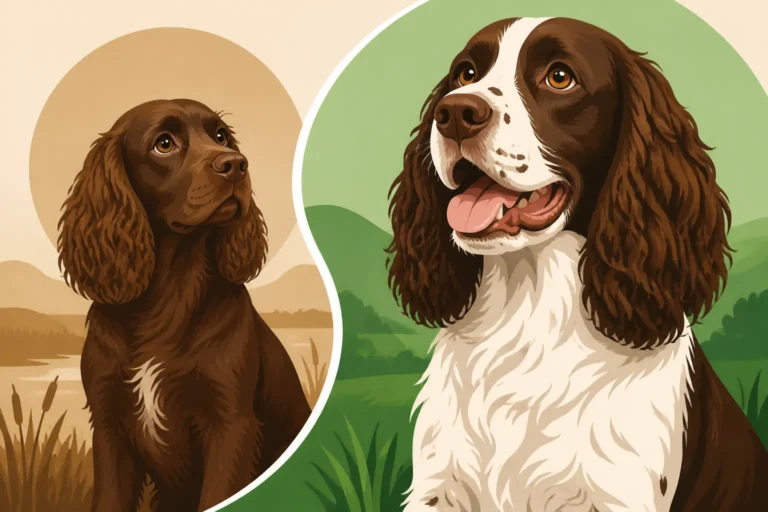
Field-bred English Springer Spaniels are bred primarily for their working ability in the hunting field. Their breeders prioritize characteristics that make them excellent flushing and retrieving dogs: high energy, intense prey drive, exceptional nose, stamina, biddability, and a coat that is functional rather than ornamental. These dogs typically have a leaner build, often shorter coats with less feathering, and a more athletic appearance. Their drive to "spring" and hunt is often exceptionally strong, making them true athletes of the canine world.
For an owner seeking a hunting companion, a field trial competitor, or an active dog for dog sports, a field-bred Springer is usually the preferred choice. They require extensive exercise, mental stimulation, and consistent training to channel their boundless energy and powerful instincts. Without a job, or at least a very active lifestyle, they can become a handful for the average pet owner. Understanding How a Field Bred Springer Spaniel Differs in Drive is essential for anyone considering this type. They are magnificent partners for those who can meet their needs, embodying the historical "springing" spirit in its purest form.
Show-Bred: Different Focus, Same Roots
Show-bred English Springer Spaniels, sometimes referred to as "bench" Springers, are bred according to a breed standard that emphasizes appearance, conformation, and temperament suitable for the show ring. While they retain the underlying instincts of a Springer, their drive and energy levels are often less intense than their field-bred counterparts. They tend to have a heavier bone structure, a more profuse coat with extensive feathering, and a somewhat calmer demeanor. The focus in their breeding is on producing a dog that fits the aesthetic ideal of the breed standard.
This isn't to say show-bred Springers can't hunt or don't have a strong nose; many do, and some excel in both conformation and performance events. However, their primary purpose in breeding has shifted. They generally make excellent family pets for active households, offering a wonderful balance of affectionate companionship and still plenty of "spring" in their step. They still need regular exercise and mental engagement, but perhaps not to the extreme degree of a dedicated field dog. The long-standing The Seventy Year Gene Pool Divide Inside One Springer Spaniel Breed has created these distinct variations, showcasing how the interpretation of a breed's purpose can evolve over time. Nonetheless, even the calmest show Springer will often surprise you with an enthusiastic flush of a squirrel in the park, reminding you that the "springing" instinct is never far below the surface. Chewy provides an array of training aids that can help channel these instincts, whether your Springer is field or show bred.
Embracing the Springer Name: More Than Just a Label
The name "English Springer Spaniel" is far more than a simple identifier; it's a profound declaration of their historical purpose and innate character. It speaks to centuries of dedicated breeding for specific working traits, and it continues to define these dogs in the modern world.
A Legacy of Partnership and Purpose
Understanding what "springing game" truly means allows us to appreciate the English Springer Spaniel for the magnificent, purpose-bred animal it is. It's a legacy of partnership between dog and human, built on trust, intelligence, and an unwavering desire to work together. This breed wasn't just pulled out of thin air; it was meticulously developed over generations to perform a vital role in hunting. From working with nets and falcons to flushing pheasants for the gun, the Springer has consistently proven its worth as an adaptable, tireless, and devoted companion.
This deep history explains why these dogs are so smart, so eager to please, and so incredibly energetic. They are wired to be active, to use their brains, and to engage with their human partners. The name itself is a constant reminder of the incredible dedication and specific skills that went into creating this beloved breed. It encourages us as owners to honor that heritage by providing them with lives that fulfill their innate needs.
The Responsibility of the Modern Springer Owner
For anyone living with an English Springer Spaniel today, embracing the meaning of their name means accepting the responsibility that comes with their historical purpose. These aren't ornamental dogs meant to sit idly; they are dogs of action, energy, and intelligence. Whether you own a field-bred dynamo or a show-bred charmer, that "springing" instinct is still there, bubbling under the surface. It demands expression.
This means providing plenty of opportunities for exercise, mental stimulation, and engagement. Daily long walks, active play sessions, training, and even scent work or dog sports are not luxuries for a Springer; they are necessities. It also means appreciating their unwavering loyalty and boundless enthusiasm, even when it sometimes translates into a muddy paw print or an unexpectedly flushed squirrel. When you look at your Springer, remember that you're seeing a direct descendant of those intrepid dogs who "sprung" game for hunters centuries ago. That connection to their past is what makes them such unique, challenging, and ultimately, deeply rewarding companions. From quality dog food to durable toys, Chewy provides essentials to support an active Springer lifestyle.
Here's a quick look at how the original "springing" role has influenced the Springer Spaniel's traits:
| Trait | Original Hunting Purpose | Modern-Day Manifestation |
|---|---|---|
| "Springing" Instinct | To flush game from cover for the hunter. | Zigzagging in yards, strong prey drive, love of exploring new scents. |
| Endurance & Agility | To work all day in tough terrain. | High energy levels, needs extensive exercise, excels in dog sports. |
| Keen Nose | To locate hidden game birds. | Obsessive sniffers, can get lost on scent, great for scent work. |
| Biddability | To work closely with a human partner. | Eager to please, highly trainable, thrives on cooperative activities. |
| Soft Mouth | To retrieve game undamaged. | Gentle retrievers, often carry objects around, excellent with children. |
| Protective Coat | To withstand weather and cover. | Requires regular grooming, prone to tangles if not maintained. |
| Affectionate Nature | A close working relationship with handler. | Devoted companions, prone to separation anxiety if left alone too long. |
Disclaimer
This article is for general informational purposes only and does not constitute professional advice. Laws, prices and regulations vary by location and change over time. Consult a qualified professional for guidance on your specific situation.