Whether a Springer Spaniel Needs a Post Hunt Check Every Time
After a long day in the field, it's tempting to just hose down your hardworking English Springer Spaniel, toss them a well-deserved meal, and let them collapse in their bed. We've all been there, exhausted ourselves, thinking "just this once, they look fine." But that quick glance often misses the insidious little issues that can turn into major problems for our gundogs. This guide is all about understanding why a thorough post-hunt check isn't just a suggestion, but a crucial part of responsible ownership, and how to make it a seamless part of your routine to keep your Springer healthy and ready for the next adventure.
The Non-Negotiable Reality of the Post-Hunt Check
It's easy to dismiss a detailed check after every outing, especially if it was a short one or seemingly "easy" cover. You might think, "My dog's tough, they shake off anything." But the truth is, the very characteristics that make Springer Spaniels such incredible hunting partners—their dense coats, their tireless drive, their ability to dive headfirst into the thickest cover—also make them uniquely susceptible to certain dangers. Skipping even one check can lead to discomfort, infection, or even life-threatening conditions.
Why "Every Time" Isn't Just a Suggestion
Think about it from your Springer's perspective. They've spent hours crashing through briars, wading through wetlands, and poking their noses into every nook and cranny. Their instincts are fully engaged, meaning they're not always aware of every snag, every thorn, or every sharp stick. A post-hunt check isn't just about cleaning off mud; it's about intercepting potential problems before they escalate. A tiny cut that might seem insignificant can, in the right conditions, become a painful abscess. A single burr left deeply embedded can cause skin irritation or lead to matting that pulls and chafes.
Moreover, many of the hazards our Springers face in the field are subtle. A grass awn, that seemingly innocent seed head, can migrate through tissue and cause incredible damage, far from where it initially entered. How to Find a Grass Awn on a Springer Spaniel is a good read if you've never had to deal with one. These aren't always immediately obvious, and your dog, focused on the thrill of the hunt, might not show immediate signs of discomfort. Regular, thorough checks allow you to catch these things early, often saving you a costly vet visit and your dog a great deal of suffering.
The Hidden Dangers Even a "Quick" Hunt Holds
We've all had those "just a quick walk-up" or "only an hour in the marsh" kind of hunts. You might assume less time in the field means less risk. Unfortunately, nature doesn't discriminate based on duration. A single pass through a field can expose your Springer to ticks, especially in tall grass or brushy areas. Even one tick can transmit serious diseases. Similarly, a brief retrieve from a pond can introduce bacteria into your dog's ears, setting the stage for an infection, particularly with the Springer's characteristic drop ears.
Consider the environment. A field that looks innocuous in the morning sun might hide a broken branch or a patch of burs from last season. Your Springer's enthusiasm for the hunt means they're often moving at speed, making them less likely to notice or avoid these small hazards. It’s also important to remember that a dog's pain tolerance can be quite high, especially when their drive is focused on their work. They might be limping by the end of the day, but a deeper injury might have gone unnoticed hours earlier. That's why being proactive with a physical check is so vital. It’s not just about what you can see; it’s about what you can feel and discover. Burrs, Ticks and Grass Awns in a Working Springer Spaniel delves into these common field hazards in more detail.
A Head-to-Tail Approach: What to Look For
A systematic approach is key to an effective post-hunt check. You don't want to miss anything, so start at one end and work your way to the other, paying close attention to the areas most prone to trouble. This methodical routine will become second nature over time, making it faster and more efficient.
Starting from the Nose: Eyes, Ears, and Mouth
Begin your check at the front. Your Springer's eyes, being so exposed, are vulnerable to debris.
- Eyes: Gently part their eyelids and look for any redness, discharge, squinting, or foreign objects like tiny seeds or dust. Even a small piece of grit can irritate the cornea, leading to pain and potential infection. If you suspect something is in the eye, don't try to remove it yourself if it's deeply embedded; a vet visit is best.
- Ears: This is arguably the most critical area for a Springer Spaniel. Their long, pendulous ears trap moisture, dirt, and debris, creating a perfect breeding ground for bacteria and yeast. Why a Springer Spaniel's Ears Are Never Quite Healthy is a stark reminder of this susceptibility. Lift each ear flap and examine the inside of the ear canal. Look for redness, swelling, excessive wax, a foul odor, or any discharge. Pay attention to the hair around the ear canal opening; burrs or foxtails can lodge here, working their way deeper. Gently wipe away any visible dirt with a soft cloth. If your Springer has been in water, ensuring their ears are properly dried is paramount. Drying a Springer Spaniel's Ears After Swimming offers specific advice on this.
- Mouth and Nose: Briefly check inside their mouth. Look for cuts on the gums or tongue from sticks, or any signs of irritation from what they might have picked up. Examine their nose for scratches or thorns, and ensure there's no unusual discharge. While Springers are bred to have a soft mouth, they can still pick up splinters or sharp objects.
The Trunk and Tail: Body, Coat, and Skin
Next, move to the main body, where a lot of the action happens during a hunt.
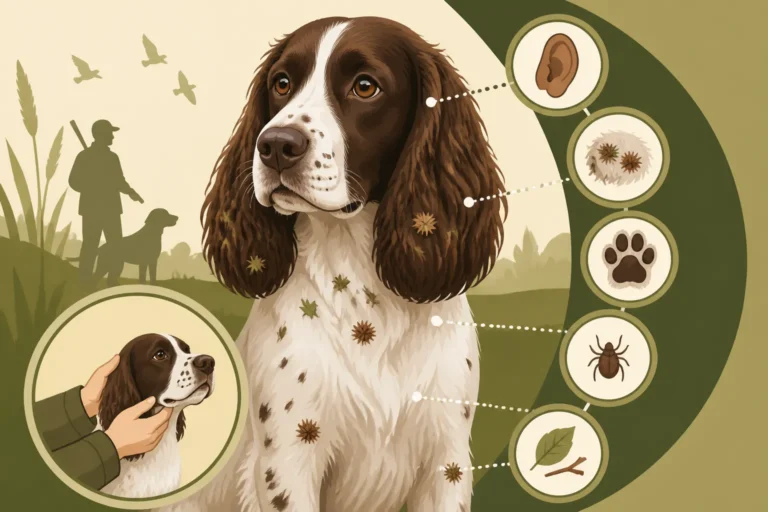
- Coat and Skin: This requires a thorough run-through with your hands, feeling for anything unusual beneath the fur. Start at the neck and work your way down their back, sides, and belly. You're looking for:
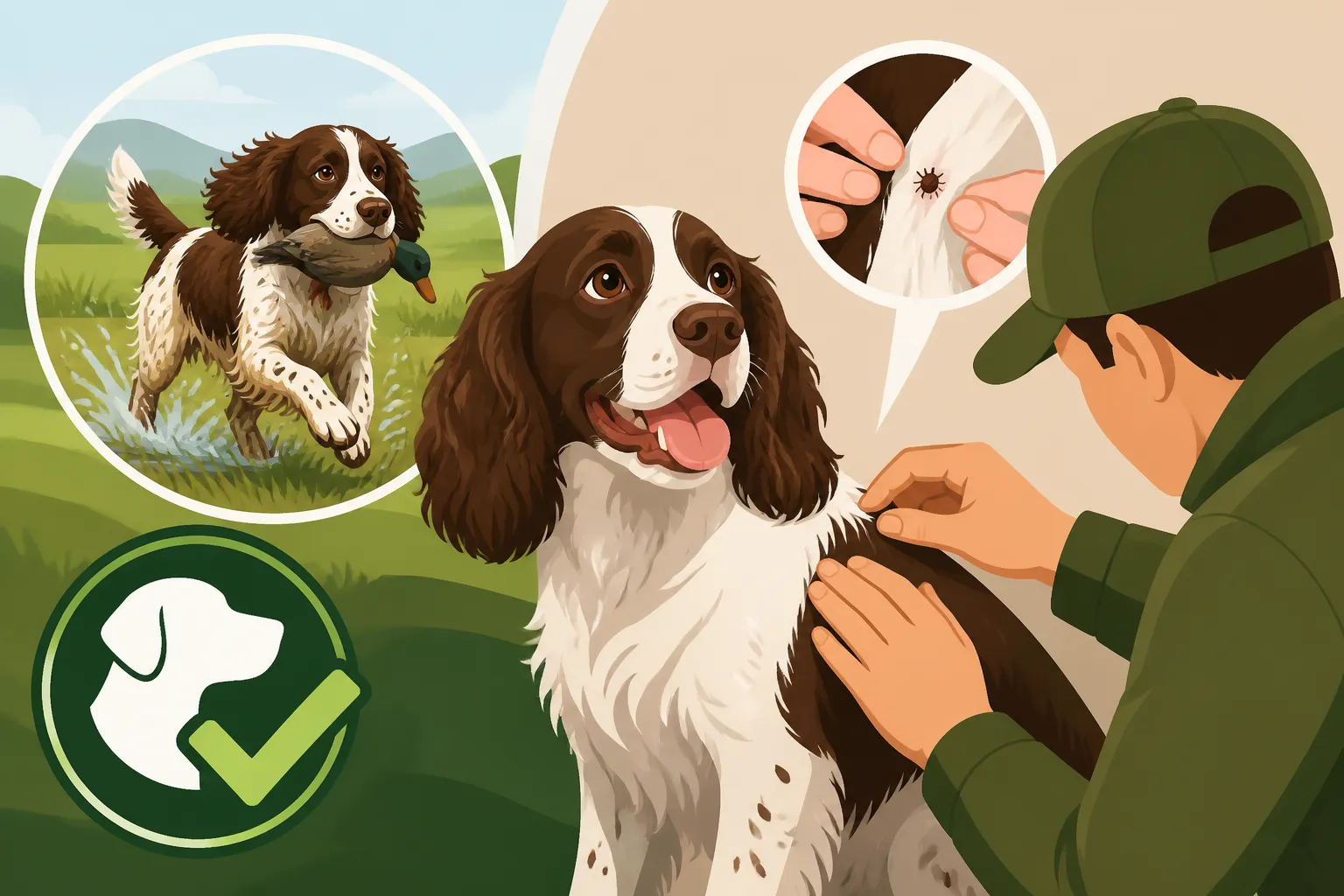
- Ticks: These parasites can latch on anywhere but favor warm, hidden spots like armpits, groin, and behind the ears. Feel for small bumps. If you find one, remove it carefully with tweezers or a tick removal tool, ensuring you get the head.
- Cuts, Scrapes, and Punctures: These can be hidden by dense fur. Run your fingers against the grain of the fur to expose the skin. Small thorns or briars can become embedded.
- Burrs and Plant Matter: Springers, especially the show-bred types with longer feathering, are magnets for burrs. These can quickly mat the coat and pull at the skin. Carefully remove them, using a comb if necessary. Pay close attention to the feathering on their legs, belly, and tail. Trimming a Springer Spaniel's Feathering can help minimize how many burrs get stuck.
- Hot Spots or Rashes: Areas of redness, irritation, or raw skin might indicate an allergic reaction, insect bites, or the start of a "hot spot" – a quickly developing skin infection often caused by excessive licking or moisture.
- Tail: If your Springer's tail is docked, check the tip for any scrapes or bleeding, as it's often wagging furiously and can brush against rough surfaces. If undocked, check the entire length, especially the feathering, for burrs or injuries.
Paws and Pads: The Unsung Heroes
Your Springer's paws are their primary tools in the field, taking the brunt of every step, jump, and scramble. They deserve extra attention.
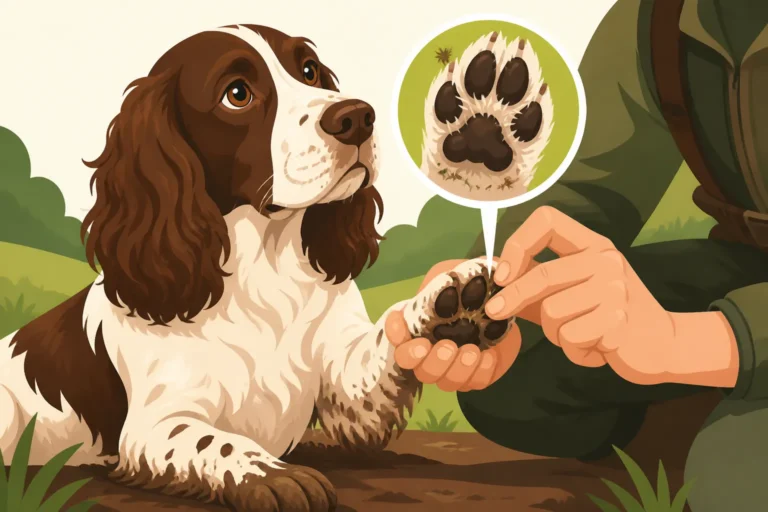
- Pads: Examine each pad closely. Look for cuts, punctures from sharp rocks or thorns, abrasions from rough terrain, or cracks. Tough pads can still get damaged.
- Between the Toes: This is a prime spot for grass awns, small stones, mud, and ice balls (in winter) to accumulate. Spread the toes apart and carefully inspect the webbing. Any foreign object here can cause intense discomfort, limping, and lead to infection if left. Checking a Springer Spaniel's Feet After Working is a must-read for comprehensive paw care.
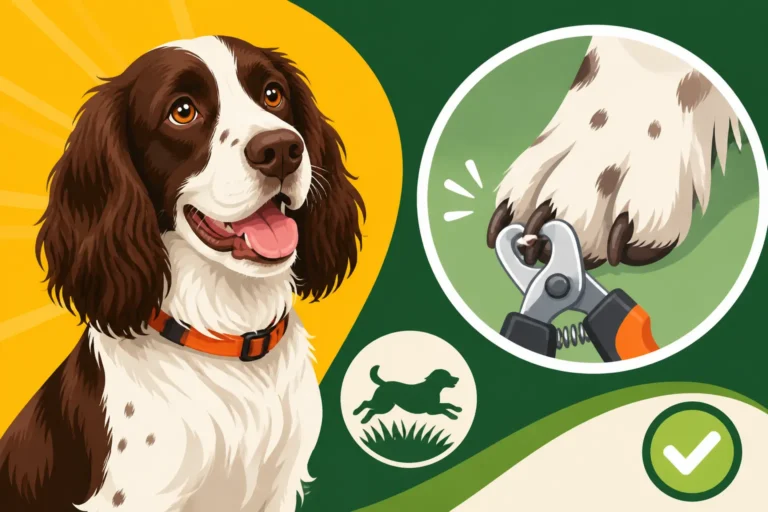
- Nails: Check for cracked, broken, or excessively long nails. While working in the field can help wear them down, they can also snag and break, which is incredibly painful. If your Springer has dewclaws, inspect them carefully, as they can easily get torn.
- Legs and Joints: Feel along the length of each leg for swelling, heat, or tenderness that might indicate a sprain, strain, or more serious injury. Watch for any unusual limping or reluctance to bear weight during the check itself.
Essential Tools and Making it a Routine
Having the right tools on hand makes the post-hunt check much easier and more effective. Think of it as preparing a mini first-aid station specifically for post-field recovery.
Your Post-Hunt Check Kit
A small, dedicated kit can be invaluable. Keep it in your hunting bag or near where you typically clean up your dog.
- Good Lighting: A headlamp or a bright flashlight is incredibly helpful, especially for checking ears and between toes, or if you're returning home after dark.
- Gloves: For removing ticks or dealing with minor cuts, disposable gloves can be useful.
- Tick Remover Tool: There are various types, but a simple tick twister or fine-pointed tweezers work wonders for safe removal.
- Blunt-nosed Scissors or Shears: For carefully cutting away matted fur around burrs, or trimming hair between pads if it’s excessively long and trapping debris.
- Fine-toothed Comb: Excellent for removing smaller burrs and checking for ticks.
- Antiseptic Spray or Wipes: For cleaning minor cuts and scrapes. Products designed for dogs are best.
- Sterile Saline Solution: For flushing out eyes if they have dust or grit.
- Ear Cleaner and Cotton Balls/Pads: Specifically formulated for dogs, this is essential for keeping those ears healthy. Which Ear Cleaner Suits a Springer Spaniel can help you choose.
- Paw Balm or Wax: For soothing and protecting pads that might be dry or cracked after rough terrain.
- Small Towel: For drying ears or cleaning up any mess.
- Magnifying Glass: Sounds excessive, but for tiny thorns or grass awns, it can be a lifesaver.
These items don't have to be expensive. Many can be found at your local pet supply store or online platforms like Chewy or Amazon. Having them organized and readily available means you're more likely to use them.
Integrating the Check into Your Post-Hunt Ritual
Consistency is key. The more you make this a habit, the less it feels like a chore and the more it becomes a natural part of your dog's post-hunt wind-down.
- Timing is Everything: Try to do the check as soon as possible after the hunt. This is often when you're already doing other post-hunt activities like hosing off mud or giving water.
- Make it Calm and Positive: Your Springer has just been in high drive. Transitioning to a calm, gentle examination helps them relax. Use a soft, reassuring voice. Offer praise and perhaps a special treat if they are cooperative.
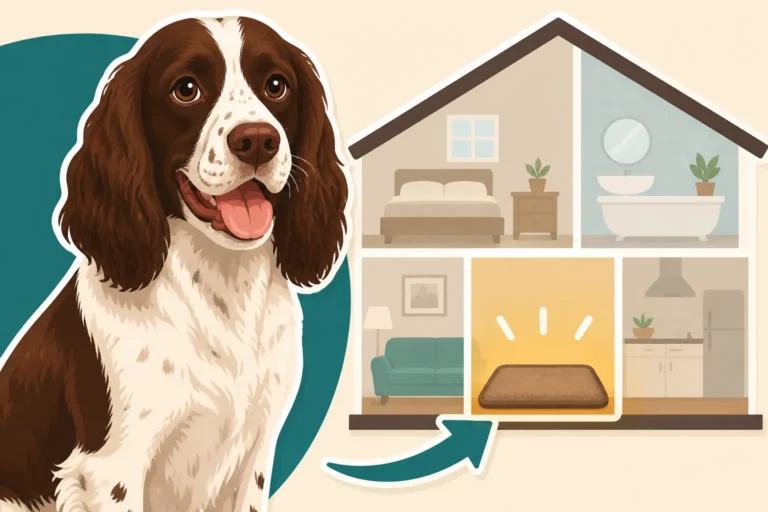
- Dedicated Space: Have a designated spot, whether it's on a grooming table, a sturdy bench, or even a specific mat on the floor, where your Springer knows the check happens. This routine helps them mentally prepare.
- Full Body Scan: Stick to your head-to-tail routine. This systematic approach ensures you don't overlook any area. You'll get faster with practice, but don't rush through it.
- Preventative Measures: Consider what your Springer wears in the field. Whether a Springer Spaniel Needs a Vest in Heavy Cover discusses how protective gear can minimize injuries. A good vest can prevent many cuts and scrapes on the chest and belly.
When to Act: From Minor Niggles to Major Concerns
Knowing what you’re looking at and when to escalate from home care to a veterinary visit is a crucial part of the post-hunt check. Not every issue requires an emergency trip, but some do warrant immediate attention.
Distinguishing Between Minor Irritations and Vet-Worthy Issues
It's natural to feel a bit anxious when you find something on your dog. Here’s a general guide:
| Issue Type | Minor Irritations (Home Care) | Major Concerns (Vet Visit Recommended/Required) |
|---|---|---|
| Cuts/Scrapes | Small, superficial cuts (less than 1/2 inch), no active bleeding. | Deep lacerations, continuous bleeding, punctures, gaping wounds, or signs of infection. |
| Ears | Minor dirt, a little extra wax, no odor, no redness. | Redness, swelling, foul odor, discharge (yellow/green/brown), constant head shaking. |
| Paws/Pads | Small abrasions, minor dryness, small burr easily removed. | Deep cuts on pads, bleeding between toes, limping that doesn't resolve quickly. |
| Coat/Skin | Easily removed burrs, small, non-swollen tick removed cleanly. | Multiple embedded ticks, large areas of matted fur pulling skin, deep skin punctures. |
| Foreign Objects | Dust in eyes flushed with saline, surface-level thorns removed. | Embedded grass awns (especially migrating ones), anything in eye not easily removed. |
| General Health | Mild fatigue. | Persistent limping, swelling, lethargy, fever, vomiting, change in appetite/behavior. |
For any issue that causes persistent pain, significant swelling, keeps recurring, or makes your dog obviously miserable, a trip to the vet is always the safest bet. It's better to be overly cautious than to let something fester. Remember, a common concern for Springers is ear infections, which can stem from moisture or debris. What Treating a Springer Spaniel's Ear Infection Costs can give you an idea of the financial side of letting minor issues become major ones.
Proactive Care Beyond the Immediate Check
The post-hunt check is just one piece of the puzzle. Proactive, ongoing care significantly reduces the chances of issues appearing in the first place.
- Regular Grooming: Keeping your Springer's coat in good condition, especially the feathering, means fewer burrs will get tangled and easier detection of skin issues. How Often a Show Springer Spaniel Needs Trimming and How Often a Field Springer Spaniel Needs Brushing offer breed-specific advice.
- Ear Maintenance: Regular cleaning, even when not hunting, helps prevent infections. After water work, always dry your dog's ears thoroughly.
- Paw Care: Consider paw balms before and after hunts to protect pads. Keep the hair between their toes trimmed to reduce the surface area for debris to cling to.
- Vaccinations and Parasite Prevention: Stay current on all vaccinations and consistently use flea, tick, and heartworm prevention as recommended by your vet. This reduces the risk of serious diseases transmitted by pests. You can often find a good selection of these products on Chewy or Amazon.
- Proper Nutrition: A healthy dog with a strong immune system is better equipped to heal and fight off minor infections. Ensure your working Springer is on a diet appropriate for their activity level. How Much a Working Springer Spaniel Should Eat is a useful guide. Brands like Ollie often offer fresh food options which some owners find beneficial for overall health, including skin and coat condition.
- Know Your Dog: You know your Springer best. Any subtle change in their behavior, gait, or appetite can be a clue that something is amiss. Trust your gut feeling; if you feel something isn't right, investigate further or consult your vet.
In conclusion, the answer to "Does a Springer Spaniel need a post-hunt check every time?" is an unequivocal yes. It’s an investment of a few minutes that pays dividends in your dog's health, comfort, and longevity. Make it a habit, arm yourself with the right tools, and enjoy many more safe and happy hunts with your beloved companion.
Disclaimer
This article is for general informational purposes only and does not constitute professional advice. Laws, prices and regulations vary by location and change over time. Consult a qualified professional for guidance on your specific situation.