How Many Cups a Day a Working Springer Spaniel Eats
It's a common question, and honestly, one that can keep even the most experienced Springer Spaniel owners scratching their heads: exactly how much food does a working Springer Spaniel really need in a day? You see your tireless companion crashing through cover, making retrieve after retrieve, or tearing across an agility course with boundless energy, and it's clear they're not your average sedentary dog. This guide is here to unravel the mystery of feeding these incredible athletes, helping you ensure your working Springer is perfectly fueled for whatever challenge comes their way.
The Unique Nutritional Landscape of a Working Springer Spaniel
Let's be real, a working Springer Spaniel isn't built for lounging on the sofa all day – even though they're masters at that, too, given half a chance! Their bodies are finely tuned machines, constantly burning energy, repairing muscles, and demanding top-tier nutrition to sustain their drive and athleticism.
Defining "Working" for Your Springer
When we talk about a "working" Springer Spaniel, we're not just throwing around a fancy term; we're talking about a dog with a specific job that requires significant physical and mental output. This could mean anything from an eight-hour pheasant hunt in chilly conditions, pushing through thick brambles and wading through icy water, to intense agility training sessions or competitive field trials that demand sustained bursts of speed and endurance. It could even be scent detection work, which might seem less physical but is incredibly mentally taxing and still burns considerable calories.
These aren't just short strolls around the block. A working Springer covers serious ground, often at a high pace, using their powerful legs to spring through heavy cover and their keen nose to quarter diligently. Think about the sustained effort involved in a full day of upland hunting, where your dog might literally run miles for every mile you walk. That constant movement, the explosive flushes, the focused retrieves – it all adds up to a massive energy drain. Without adequate fuel, they simply can't perform at their best, and their recovery suffers. The Daily Routine a Springer Spaniel Actually Needs is a great resource if you're trying to set up your dog for success in general.
Why Their Caloric Needs Soar Above a Pet Springer's
It might seem obvious, but the difference in caloric needs between a "working" Springer and a "pet" Springer (who might still get good walks, don't get me wrong!) is like night and day. Imagine a human athlete training for a marathon versus someone who enjoys a leisurely jog a couple of times a week. Their dietary requirements are fundamentally different.
A working Springer isn't just burning calories during their peak activity; their metabolism is elevated throughout the day as their body recovers and prepares for the next session. They need a diet rich in high-quality protein to repair muscle tissue that's constantly being worked, and a good balance of fats to provide sustained energy. Fats are a highly efficient fuel source for endurance activities, and working dogs utilize them exceptionally well. While carbohydrates provide quick energy, fats are the slow-burn fuel that keeps them going hour after hour. This demanding lifestyle also puts more stress on their joints and immune system, making comprehensive, nutrient-dense nutrition even more vital to support overall health and prevent injury or burnout. It's a significant investment, and you'll likely notice the difference in your monthly budget for food compared to a less active dog. How a Springer Spaniel's Feed Bill Compares Between Types covers this in more detail.
Decoding the "Cups Per Day" for Your Active Companion
Alright, let's get down to the nitty-gritty: how many cups? This is where many owners feel lost, and for good reason. It's rarely a simple "X cups per day, every day."
Starting with the Food Bag: A Necessary But Insufficient Guide
Every bag of dog food, whether you pick it up from a local store or order it from Chewy, comes with feeding guidelines. These charts usually provide a range based on your dog's weight. For example, a 45-pound dog might be recommended 2 to 3.5 cups per day. This is a starting point, a general estimation for an average dog with average activity levels.
The problem? Your working Springer is anything but "average" when they're in full swing. These guidelines seldom account for the intense, sustained energy expenditure of a true working dog. Plus, a "cup" can be incredibly misleading because the caloric density varies wildly between different brands and formulas. A cup of a high-performance kibble designed for active dogs might contain 450-500 kilocalories (kcal), while a generic adult maintenance formula might only have 300-350 kcal per cup. Always look for the kcal/cup or kcal/kg on the label. If your dog needs 1,800 kcal a day, that could mean 4 cups of the high-performance food or 6 cups of the lower-density food. Without checking the actual caloric content, you're just guessing, and your dog's performance and health could suffer. Whether a Working Springer Spaniel Needs a Performance Formula dives into this specific requirement.
Factors for Individualized Feeding Adjustments
Because those bag guidelines are just a jumping-off point, you'll need to become a keen observer of your own dog and their specific circumstances.
Intensity and Duration of Work
This is perhaps the biggest variable. A Springer Spaniel that participates in a brisk 45-minute agility training session a few times a week will have vastly different caloric needs than one that's putting in full, intense days at field trials or hunting camps. Consider the difference between a dog working light cover for a few hours versus one pushing through heavy marshland for a full day in challenging weather. The latter might need significantly more fuel, perhaps even a midday snack to keep their energy reserves topped up. A dog performing explosive, short bursts of activity might benefit from slightly more carbohydrates, while one on an all-day endurance mission needs more fat for sustained energy. Don't forget, recovery days also need consideration; you wouldn't feed marathon levels of food on a rest day!
Environmental Conditions
The weather plays a massive role. If your Springer is working in freezing temperatures, they're burning extra calories just to maintain their core body temperature. Imagine the energy expenditure of working in deep snow compared to a mild autumn day. Conversely, extreme heat can sometimes suppress appetite, but the dog still requires sufficient energy, especially if they are working. Wind, rain, and even the type of terrain (muddy fields require more effort than dry grass) all contribute to the energy equation. Always factor in these external demands when adjusting food portions.
Age and Metabolism
Just like people, dogs have individual metabolic rates. Some Springers are naturally "hard keepers," burning through calories faster and needing more food to maintain condition, even with similar activity levels to another dog who might easily gain weight. Younger, growing Springers, even if they're working, have different needs from a mature adult. Once they hit their senior years, even if still active, their metabolism might slow slightly, or they might not recover as quickly, requiring careful recalibration of their diet. Observing your individual dog's weight, energy, and overall zest for life is key. You'll want to aim for a lean, athletic build. The Weight a Male Springer Spaniel Should Hold and The Weight a Female Springer Spaniel Should Hold offer insights into ideal weights.
Here’s a general guide to help visualize the difference, but remember, these are estimates and individual needs vary widely:
| Activity Level | Description | Estimated Daily Kcal/lb (of ideal body weight) | Example Daily Cups (350 kcal/cup) for 45lb Springer |
|---|---|---|---|
| Light Activity | Casual walks, short play sessions (typical pet home scenario) | 20-25 | 2.5 – 3.2 cups |
| Moderate Working | Regular training sessions, daily vigorous exercise, light hunting days | 25-35 | 3.2 – 4.5 cups |
| Heavy Working / Peak Season | All-day hunting, field trials, strenuous endurance activities (cold weather) | 35-50+ | 4.5 – 6.5+ cups |
Note: Always consult your veterinarian for personalized advice, especially if your dog has specific health concerns or is undergoing extreme exertion.
Crafting the Optimal Diet: Food Choices and Monitoring
It's not just about how much, but what kind of fuel you're putting into your Springer Spaniel's engine. A high-performance dog needs high-performance nutrition.
Selecting the Right Fuel for Performance
For a working Springer, you'll want to prioritize a diet that's high in quality protein and has a moderate to high fat content. Look for formulas specifically marketed for "active," "performance," or "sporting" dogs. These diets are typically more calorically dense and contain higher levels of the nutrients needed for sustained energy and muscle recovery. You can find a vast array of these specialized foods through online retailers like Chewy, which makes it easier to compare ingredients and nutritional profiles.
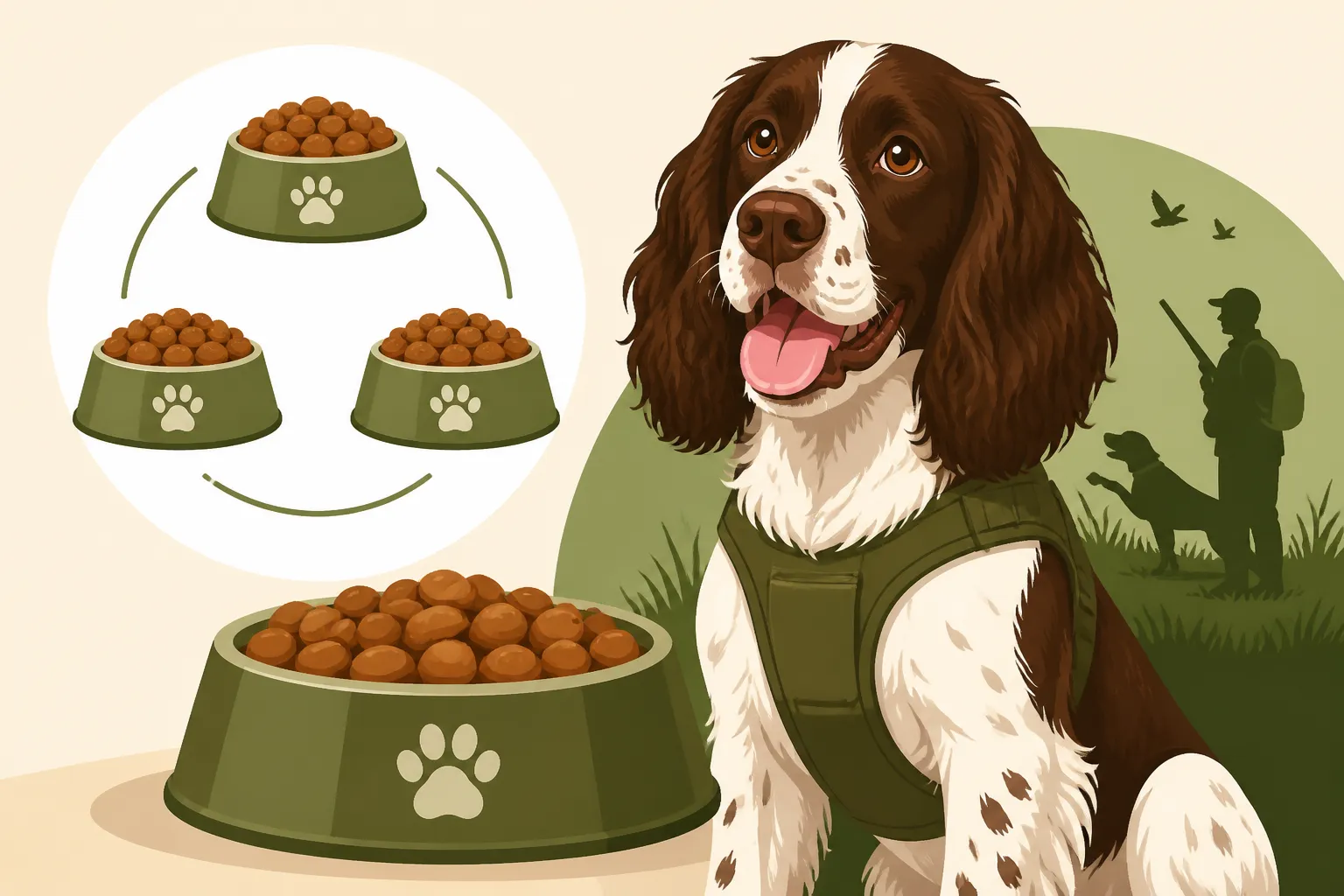
Beyond traditional dry kibble, you might explore other options. Some owners of working dogs opt for raw feeding, believing it offers superior digestibility and nutrient availability. Others choose fresh-cooked food services, like Ollie, which provide customized, human-grade meals that can be a fantastic option for dogs with sensitive stomachs or specific dietary needs, though often at a higher cost. Each approach has its proponents and requires careful research to ensure it's balanced and meets the intense demands of a working dog. Whatever you choose, ensure the first few ingredients are high-quality meat sources. During peak work seasons, consistency in food choice is often best to avoid digestive upset, though some owners successfully rotate protein sources for variety and to minimize potential sensitivities.
The Art of Observation: Monitoring Body Condition and Energy
The best gauge of whether you're feeding your working Springer correctly isn't the bag's instructions, but your dog's actual body condition and performance. This is where the "art" comes in. Instead of just relying on the number on the scale, learn to perform a body condition score (BCS) check. You should be able to easily feel your dog's ribs with slight pressure, but not see them prominently. When viewed from above, your Springer should have a noticeable waistline, and from the side, a clear abdominal tuck. A working Springer needs to be lean and athletic, not padded with extra fat, which can hinder performance and put unnecessary strain on their joints. Keeping a Springer Spaniel at a Working Weight is crucial for their longevity.
Pay close attention to their energy levels, coat quality, and even their stool consistency. Is your dog flagging during a hunt when they usually wouldn't? Are they taking longer to recover after a strenuous session? These could be signs they're not getting enough fuel. Conversely, if they're putting on weight despite their activity, you're likely overfeeding. Make adjustments gradually, in small increments (perhaps a quarter to half a cup at a time), and give it a few days to a week to see the effect. Always use a consistent measuring cup, not just a random scoop, to ensure accuracy. Regular weight checks are a good idea, too, as is an annual or biannual vet check-up to ensure their internal systems are all in balance.
Strategic Feeding During Peak Activity and Recovery
Feeding a working Springer isn't just about the daily total; it's about when and how you deliver that fuel, especially around intense work periods.
Fueling Up for the Workday
Timing is everything when it comes to feeding a working dog. You generally want to avoid feeding a large, heavy meal right before intense work. A full stomach can lead to discomfort, reduce agility, and in some breeds, increase the risk of bloat (though less common in Springers, it's always a consideration with active dogs). Many owners prefer to feed the majority of the day's calories in the evening, after the work is done.
If your Springer is heading out for a long, demanding day, a smaller, easily digestible breakfast given a few hours before activity can provide some initial energy without weighing them down. Think a portion of their regular kibble or a small, easily metabolized snack like a few high-energy treats. Throughout the workday, especially if it's strenuous and extended, consider offering small, high-calorie snacks or even a liquid supplement during breaks. These can provide a quick energy boost. Most importantly, ensure your dog has constant access to fresh water. Dehydration can rapidly diminish performance and lead to serious health issues. A working Springer, especially if they are doing water work, might even benefit from a specialized vest. Whether a Working Springer Spaniel Needs a Neoprene Vest for Water could be worth looking into.
Post-Work Recovery and Re-Fueling
The period immediately following intense work is critical for recovery. First and foremost, focus on rehydration. Offer water freely and ensure your dog is cooled down before offering a substantial meal. Feeding a dog that is still overheated or panting heavily can sometimes lead to digestive upset.
Once they've settled, the post-work meal is essential for replenishing glycogen stores (the energy reserves in their muscles) and aiding in muscle repair. A balanced meal with good quality protein and carbohydrates is usually recommended. Some owners might offer a small, easily digestible "recovery meal" shortly after a particularly grueling session, followed by their main meal later in the evening. This strategy aims to kickstart the recovery process quickly. This is also where you might consider supplements. Many working dog owners give joint supplements to support their dogs' active lifestyles, potentially sourcing them from retailers like Amazon. After the Hunt: Checking a Springer Spaniel Over Nose to Tail is a must-read for post-hunt care, and When a Working Springer Spaniel Should Start Joint Support offers valuable information on supporting their active joints.
Ultimately, feeding a working Springer Spaniel is an ongoing conversation between you, your dog, and their activity level. It requires attentiveness, flexibility, and a commitment to providing the best possible nutrition to fuel their incredible spirit and drive.
Disclaimer
This article is for general informational purposes only and does not constitute professional advice. Laws, prices and regulations vary by location and change over time. Consult a qualified professional for guidance on your specific situation.