Whether the UK Springer Spaniel Standard Differs From the AKC’s
It can be incredibly confusing when you're looking into bringing an English Springer Spaniel into your life, only to find discussions about "types" and differing "standards." You might wonder if you're even looking at the same breed sometimes! The truth is, while we all adore our Springers, the breed's journey has led to some fascinating, and at times perplexing, distinctions between how they're viewed and bred across the Atlantic. This guide will help you understand whether the UK Springer Spaniel standard differs from the AKC's, and what those differences truly mean for you and your potential canine companion.
The Historical Roots of the Springer Spaniel Standards
Before we dive into the nitty-gritty of today's differences, it's really helpful to understand how breed standards came to be in the first place. Think of it like a family tree, but for dogs. Each branch represents a slightly different interpretation or a specific focus that breeders and enthusiasts developed over time, often influenced by geography, cultural practices, and the primary purpose for which the dogs were being bred. It’s not just about what a dog looks like, but what it was meant to do.
Early Days and the Dawn of Breed Recognition
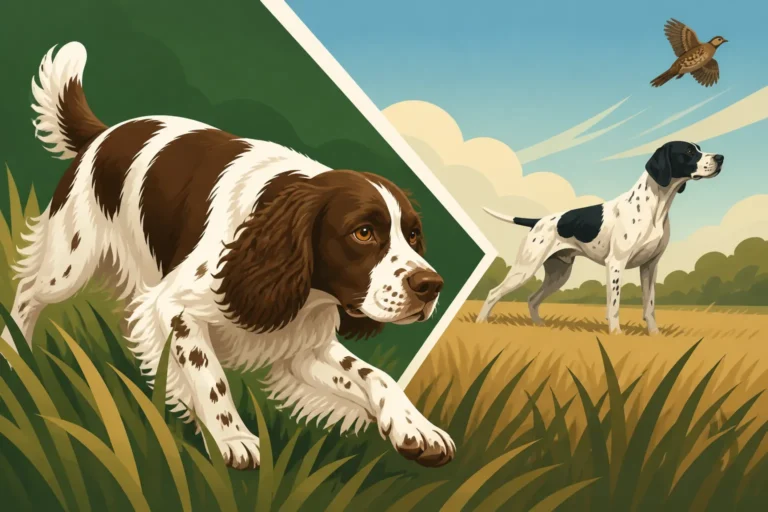
Back in the day, long before kennel clubs and official registrations, dogs were bred for very specific jobs. A "spaniel" was simply a type of dog used to flush game for hunters, whether that was into nets, for falcons, or eventually, for guns. There wasn't a strict "breed standard" as we know it now, but rather an understanding of what made a good working dog for a particular task. If a dog could effectively "spring" game, it was a Springer-type. This practical approach meant there was a lot of variation, and even size wasn't always a hard and fast rule; in fact, Which Littermates Became Cockers and Which Springers tells a fascinating story of how different sized pups from the same litter could be designated as Cockers or Springers based on their weight and potential job.
As dog shows gained popularity in the late 19th and early 20th centuries, people started wanting to formalize these distinctions. They wanted to create a consistent "ideal" for each breed, both in terms of appearance and underlying characteristics. This push for standardization led to the formation of national kennel clubs, each setting its own benchmarks for what constituted a "purebred" dog of a particular type. These early standards were often heavily influenced by the prevailing tastes and breeding goals of the country where the club was founded.
The Great Divide: UK vs. USA Kennel Club Formations
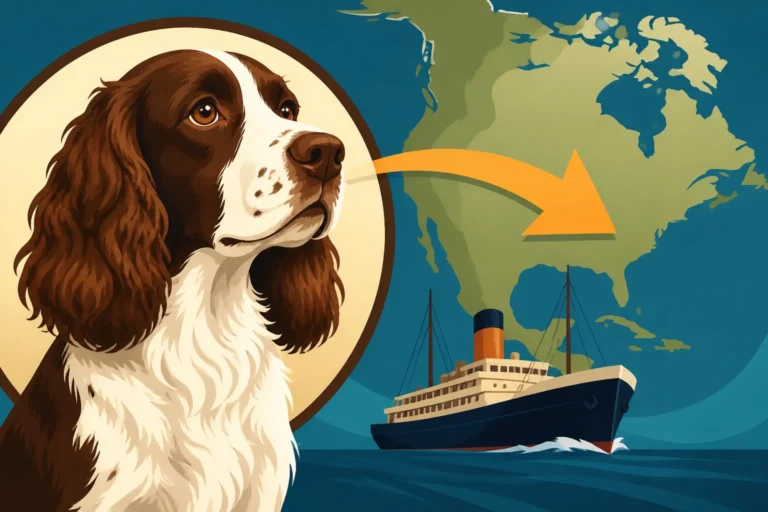
The Kennel Club (KC) in the United Kingdom, founded in 1873, was one of the very first organizations to formalize breed standards. The English Springer Spaniel was officially recognized by the KC in 1902. Across the pond, the American Kennel Club (AKC), established in 1884, soon followed suit, recognizing the English Springer Spaniel in 1910. While both clubs acknowledged the same fundamental breed, the standards they developed weren't identical. They emerged from slightly different historical contexts, different preferences for working style versus show ring aesthetics, and ultimately, different ideas about the "perfect" Springer.
This initial divergence, though subtle at first, set the stage for the distinct breeding paths we see today. It contributed to How Britain and America Diverged on Springer Spaniel Type. Imagine two artists starting with the same beautiful landscape, but one emphasizing the rugged mountains for function, and the other focusing on the flowing river for elegance. Both are correct interpretations, but they lead to different finished pieces. Over the decades, selective breeding based on these differing standards, coupled with the geographic separation and less frequent exchange of breeding stock, led to a more noticeable differentiation between what many refer to as "show type" and "field type" Springers within each country, and then even more so between the UK and US interpretations of those types.
Key Differences in the English Springer Spaniel Standards
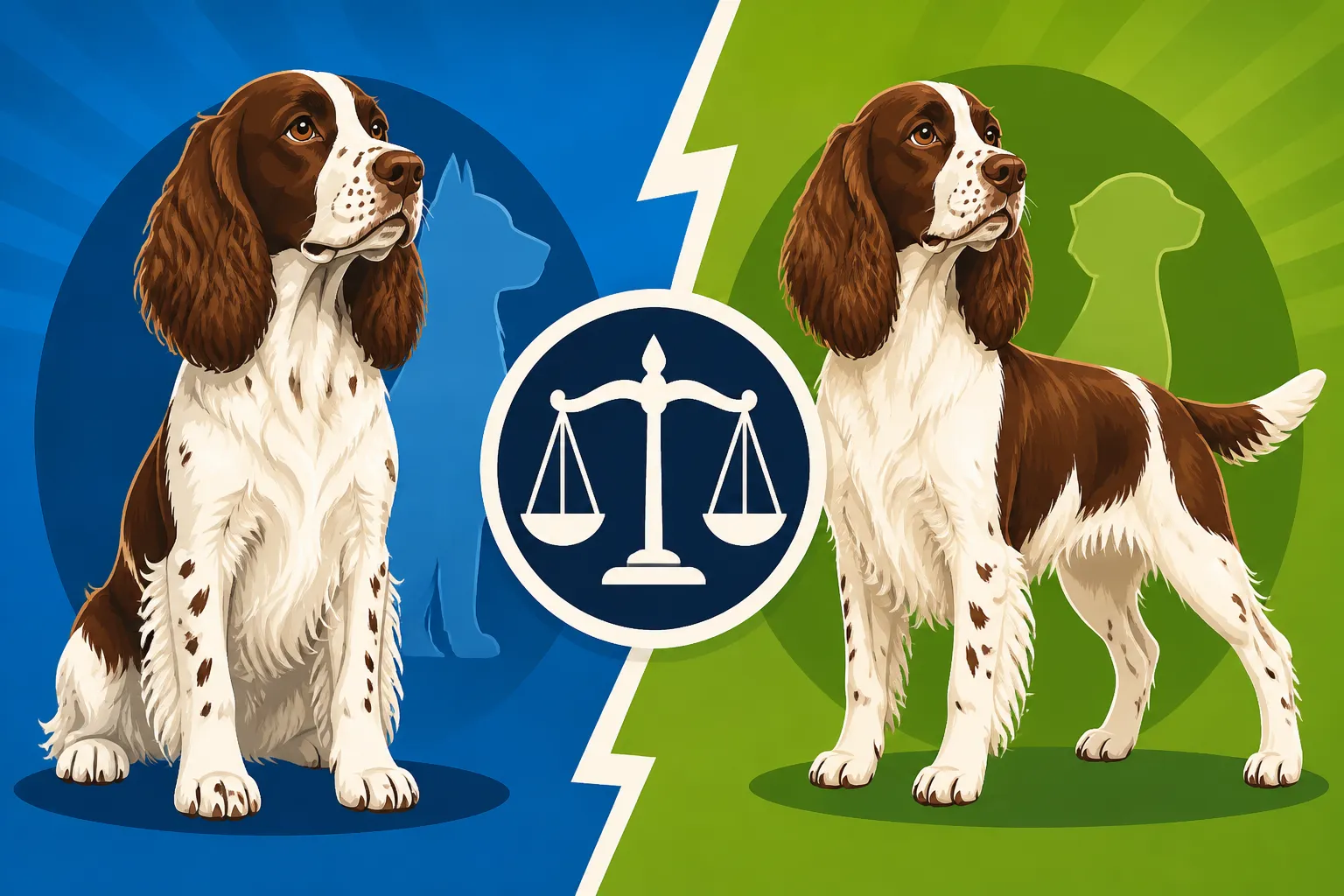
When you look at the official documents, both the UK Kennel Club and the AKC are describing the same breed, the English Springer Spaniel. However, the emphasis, the nuance, and even the specific wording of their respective breed standards create dogs that, while clearly related, often present with observable differences. It's not about one being "right" and the other "wrong," but rather different ideals that breeders strive for. This is part of the larger discussion covered in Two Breeds Registered as One: the Field and Show Springer Spaniel.
Physical Appearance: A Tale of Two Silhouettes
One of the most immediate areas where differences become apparent is in the physical structure and overall silhouette. The AKC standard generally describes a Springer Spaniel that is solid, well-muscled, and built for endurance and agility in the field, but with a certain amount of bone and substance. The UK Kennel Club standard, while also emphasizing a working dog, often leans towards a slightly more refined or elegant build in its show ring interpretation, though the working lines within the UK are as athletic as any.
Let's break down some common points of subtle variation:
- Size and Substance: Both standards give a height and weight range. The AKC standard for a male Springer suggests a height of 20 inches at the shoulder and a weight of 50 pounds, with females slightly smaller at 19 inches and 40 pounds. The UK KC standard provides similar guidance, but often the interpretation in the show ring in the UK tends towards dogs that might feel a touch lighter in bone or have a more streamlined profile compared to some of the heavier-boned American show lines. It's a subtle difference, but one that dedicated enthusiasts can often spot. If you want to dive deeper into typical sizes, articles like How Much a Male Springer Spaniel Weighs and How Much a Female Springer Spaniel Weighs can provide more detail.
- Head and Expression: This is where the "look" really comes into play. Both standards call for an intelligent, kindly expression. However, the AKC standard might emphasize a slightly broader skull and a more pronounced stop (the indentation between the eyes), contributing to a more powerful head appearance. The UK standard might favor a slightly narrower skull and a less abrupt stop, giving a look that some describe as more "classic" or elegant. These are minute details, but they lead to different "types" being celebrated in the show ring.
- Coat and Feathering: Both standards describe a medium-length coat, weather-resistant, and with good feathering. However, in practice, the American show Springer often carries a more profuse and longer coat, especially on the legs, chest, and ears, requiring significant grooming to maintain that "show ring" look. How Show Springer Spaniel Ears Differ is a great example of how these aesthetic preferences play out. While the UK show Springer also has feathering, it is sometimes presented in a way that emphasizes practicality and less extreme length, perhaps a nod to the breed's working heritage even in the show ring. For a field-bred dog, regardless of origin, the coat is always about protection and function.
Temperament and Movement: More Than Just Looks
Beyond the aesthetics, the standards also guide expectations for temperament and how a Springer Spaniel should move. Here, the underlying purpose of the breed—a diligent flushing spaniel—is paramount for both, but again, there can be subtle differences in emphasis.
- Temperament: Both the AKC and KC standards demand a merry, eager, and kindly dog, devoid of aggression or timidity. The Springer's hallmark "merry" disposition is non-negotiable. However, the AKC standard might lean slightly more into the robust, energetic working dog ideal for its show ring interpretation, meaning judges might forgive a touch more exuberance. The UK standard, while still valuing spirit, sometimes emphasizes a slightly more reserved or composed presentation in the show ring, reflecting a desire for elegance even in temperament. This isn't to say UK Springers are less energetic; it's more about how that energy is displayed in a judging scenario.
- Movement: A Springer Spaniel should move with powerful, coordinated strides, covering ground efficiently. Both standards describe this, but the AKC standard often highlights a strong, driving rear and a smooth, ground-covering gait, emphasizing athleticism. The UK standard emphasizes a free, tireless, and true gait, again with an underlying demand for efficiency and elegance. These differences in description might lead to slightly different interpretations in the judging ring regarding ideal stride length, lift, and overall flow. For any Springer, whether a pet or a competitor, a healthy, efficient gait is crucial for their well-being, and products from reputable retailers like Chewy can help support their joint health if needed.
Acceptable Colors and Markings
When it comes to colors, both kennel clubs are largely in agreement, defining the traditional liver and white, or black and white, as the primary acceptable colors, sometimes with tan markings (tricolor). However, the degree of ticking or roaning, and the specific distribution of markings, can sometimes be interpreted slightly differently. The Colors a Springer Spaniel Comes In provides a comprehensive overview of the color variations.
- Roan and Ticking: Both standards accept roan (a fine mingling of white and colored hairs) and ticking (small, isolated spots of color on white areas). However, in some show circles, certain patterns or densities of roan/ticking might be preferred over others, though this tends to be more of a fashion or individual judge's preference rather than a strict standard difference. The important thing is that the color is clean and distinct.
- Tricolor: Both standards permit tan markings, usually on the eyebrows, muzzle, and under the tail, in conjunction with either black and white or liver and white. This is known as tricolor. There isn't a significant divergence here, as tricolor is a historically recognized pattern for the breed. The main takeaway is that extreme or unusual color patterns not listed in the standard would be considered disqualifying by both clubs, upholding the integrity of the breed's traditional appearance.
Why These Differences Matter to Owners and Breeders
Understanding the subtle distinctions between the UK Kennel Club and AKC standards isn't just an academic exercise for breed fanatics. These differences have tangible impacts on breeding programs, the characteristics of puppies produced, and ultimately, the kind of dog you might welcome into your home. It's a foundational element of How the Field and Show Springer Spaniel Diverged.
Impact on Breeding Decisions
For breeders, the choice of which standard to adhere to, or whether to breed primarily for conformation (show ring) or performance (field trials), dictates almost every decision they make. A breeder in the UK aiming for success in KC conformation shows might prioritize a slightly more elegant outline and specific head proportions, looking for subtle refinements in bone and coat that align with their national interpretation. Conversely, an AKC show breeder might seek a more substantial dog with perhaps a more profuse coat that excels in the American show ring.
The field lines, on both sides of the Atlantic, prioritize working ability above all else. Here, the emphasis is on drive, intelligence, scenting ability, biddability, and stamina. Physical characteristics that hinder performance – like overly long coats that collect burrs or delicate bone structure that can't withstand rough terrain – are naturally deselected. This is why you often hear about The Seventy Year Gene Pool Divide Inside One Springer Spaniel Breed, as the goals of show breeders and field breeders have diverged significantly, even within the same country, let alone across continents. Reputable breeders, regardless of their focus, use health screening and careful lineage research to make sound breeding decisions. You can often find specialty supplements and diet options tailored for breeding dogs or puppies on sites like Chewy.
What It Means for the Pet Owner
For the average pet owner, these differences translate directly into the characteristics of the dog they bring home. If you acquire a Springer from a breeder who focuses on AKC conformation lines, you might find a dog that is generally more heavily boned, with a thicker, more luxurious coat requiring more frequent grooming. They still possess that wonderful Springer energy and affectionate nature, but their appearance might be more "stately."
On the other hand, a Springer from a UK field line or even a UK show line with less extreme coat might be a slightly lighter-boned, more athletic-looking dog, perhaps with a less profuse coat that's easier to maintain for an active lifestyle. Regardless of the standard the breeder follows, the core Springer personality – the eagerness, the intelligence, the loving devotion – remains. The crucial takeaway for a pet owner is to understand what kind of Springer their potential puppy's parents exemplify. Do you want a dog built for speed and agility in the field, or one with a striking presence in the show ring that requires more dedicated grooming? Your lifestyle should guide your choice, not just a picture!
The Challenge of Consistency in a Global Breed
In a world where dogs can travel across continents, maintaining consistent breed standards is an ongoing challenge. While the internet allows for easier access to international pedigrees and stud dogs, the fundamental differences in interpretation and breeding goals between kennel clubs persist. This can create confusion when, for example, a dog bred to the UK standard is shown in an AKC event, or vice-versa. Judges trained under one standard might interpret certain traits differently from judges trained under another.
This isn't necessarily a bad thing; it simply reflects the natural evolution and preferences within a globally popular breed. It highlights the importance of asking questions and being clear about what you're looking for when seeking a puppy. It's a testament to the adaptability of the Springer Spaniel that it can thrive under various interpretations of its ideal, continuing to excel as both a cherished family companion and a tireless working partner.
Navigating the Standards: Practical Advice
So, you're armed with knowledge about the subtle differences in breed standards. How do you use this information to make the best choice for your family and your future Springer Spaniel? It comes down to thoughtful research, clear communication, and prioritizing what truly matters to you in a canine companion.
Understanding Your Dog's Heritage
If you're considering a Springer Spaniel, try to understand the lineage of the specific puppies you're looking at. Ask the breeder about the parents' backgrounds – were they bred for show? For field work? What kennel club are they registered with? This information will give you a clearer picture of what to expect in terms of appearance, energy levels, and grooming needs.
For instance, if you're drawn to the classic, elegant look of some UK show lines, but you're in the US, finding a breeder who imports UK lines or adheres closely to that aesthetic might be your best bet. Conversely, if you want a robust, powerful worker, looking for strong field lines in either country will serve you well. Remember, even within the same country, there are distinct "types." How a Show Springer Spaniel Fares in a Hunt Test and How a Field Springer Spaniel Fares in the Ring really illustrate the divergence in aptitude and appearance.
Finding a Reputable Breeder
This is paramount, regardless of which standard you prefer. A reputable breeder will be transparent about their breeding goals, the health testing they perform, and the characteristics of their specific lines. They will openly discuss the parent dogs, their temperaments, and their accomplishments (whether in the show ring, field, or as beloved family pets).
Here's what to look for:
- Health Clearances: Both parents should have current health clearances for common Springer Spaniel ailments such as hip and elbow dysplasia, eye diseases, and DNA tests for conditions like PFK deficiency and Fucosidosis. This is non-negotiable for a healthy puppy. The DNA Test That Should Precede Every Springer Spaniel Purchase is an excellent resource for this.
- Transparency: A good breeder welcomes questions, allows you to meet the puppy's mother (and sometimes the father), and is keen to learn about your home environment to ensure a good match.
- Contract and Support: They should provide a written contract, ideally with a health guarantee, and be available for support and advice throughout your dog's life.
- References: Don't hesitate to ask for references from other puppy buyers.
A great breeder will guide you, explaining the nuances of their particular line of Springers and helping you choose a puppy whose temperament and potential align with your expectations. They understand that while standards exist, finding the right individual dog for your lifestyle is key. You can find helpful resources for new puppy owners, from training pads to high-quality food, on Chewy.
The Role of Breed Clubs
National and regional English Springer Spaniel clubs play a vital role in preserving the breed and educating owners. They are excellent resources for understanding the breed standard, finding reputable breeders, and connecting with other Springer enthusiasts. Whether it's the English Springer Spaniel Club of America (ESSFTA) or The English Springer Spaniel Club in the UK, these organizations often publish detailed guides, host events (conformation shows, field trials, obedience, agility), and work to promote responsible ownership.
Joining a local club can offer invaluable mentorship, especially if you're new to the breed. You'll gain access to experienced owners and breeders who can provide practical advice on everything from grooming to training. They can help you decipher the jargon, understand the nuances of the breed's temperament, and even point you towards local training opportunities that suit a Springer's intelligent and eager-to-please nature.
Ultimately, while the UK and AKC breed standards for the English Springer Spaniel do have their subtle differences, they both celebrate a remarkable dog – a loyal, intelligent, and energetic companion with an undeniable zest for life. Your task as a prospective owner is to understand these nuances, align them with your own lifestyle, and always, always prioritize health and responsible breeding practices.
| Feature | UK KC Springer Spaniel (Show Line General Tendency) | AKC Springer Spaniel (Show Line General Tendency) | Working/Field Springer Spaniel (Both UK & US) |
|---|---|---|---|
| Overall Build | Slightly more refined, elegant | Solid, substantial, sometimes heavier boned | Athletic, streamlined, muscular |
| Head Shape | May have a slightly narrower skull, less abrupt stop | May have a slightly broader skull, more pronounced stop | Functional, intelligent expression |
| Coat Length/Profuseness | Medium length, good feathering, often maintained with practicality | Medium to long, often very profuse feathering | Shorter, denser, less feathering for function |
| Grooming Needs | Regular, but perhaps less extreme for show ring | High, significant effort for show ring | Moderate, focus on burr/tick prevention |
| Temperament (Show Presentation) | Merry but perhaps slightly more composed/controlled | Merry, often more exuberant/expressive | High drive, biddable, intelligent, tireless |
| Movement | Free, tireless, efficient, elegant | Powerful, ground-covering, strong rear drive | Agile, quick, efficient, covers ground quickly |
| Primary Focus | Conformation showing, general companion | Conformation showing, general companion | Hunting, field trials, active sport |
Disclaimer
This article is for general informational purposes only and does not constitute professional advice. Laws, prices and regulations vary by location and change over time. Consult a qualified professional for guidance on your specific situation.