Which Littermates Became Cockers and Which Springers
It's quite a head-scratcher when you start digging into the history of our beloved English Springer Spaniels, especially when you learn that at one point, Cocker Spaniels and Springer Spaniels could literally come from the very same litter! It seems wild to us now, but this isn't just a quirky historical footnote; it actually tells us a lot about the foundational purpose of these wonderful dogs and how breeds evolve. This guide will take a deep dive into that fascinating period, explaining how these distinctions were made, why it mattered, and what it means for the breeds we cherish today.
The Ancient Roots of Flushing Spaniels
Before we had the clear-cut breed lines we recognize today, the world of working dogs was much more fluid. People needed dogs for specific jobs, and those dogs were bred for their ability to perform, not necessarily for a standardized look or lineage. This is particularly true for spaniels, a diverse group of dogs whose very name likely traces back to their origins as "Spanish dogs," eventually making their way across Europe.
Undifferentiated Beginnings: Before Formal Breed Recognition
Imagine a time before kennel clubs, breed standards, and DNA tests. Dogs were simply known by the tasks they performed. If you had a dog that flushed game from cover, it was a "spaniel." The term wasn't a rigid identifier like it is now, but rather a job description. These early spaniels were invaluable companions for hunters, weaving through dense undergrowth to find and rouse birds, earning their keep through their tireless work ethic and keen noses. They were, in essence, generalists of the field, adaptable and eager to please their human partners. The idea of a specific "breed" as we understand it today was still centuries away from being fully formalized.
The Universal Purpose of the Early Working Spaniel
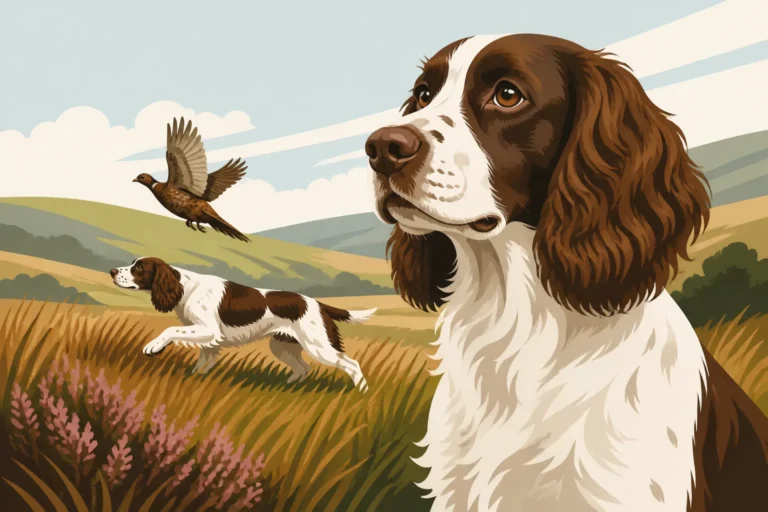
The primary directive for these dogs was clear: locate game and make it take flight or "spring" into the air, allowing hunters to net or shoot it. This "springing" action is, of course, where our Springer Spaniel gets its name. But what about the "Cocker" part? That comes from their proficiency in flushing woodcock, a notoriously difficult bird to find in thick cover. Essentially, all these early spaniels were flushing dogs, bred for their ability to quarter ground efficiently, use their incredible scenting power, and work in close concert with their handlers. Whether they were called land spaniels, field spaniels, or simply "hunting dogs," their mission was the same: put game in the bag. You didn't worry so much about How Old the Springer Spaniel Is as an English Gundog; you just cared that it worked.
The Size-Based Sorting System: A Practical Solution
So, if all these dogs came from a similar genetic pool and performed the same basic function, how did they start to differentiate into what would become distinct breeds? The answer is surprisingly simple and pragmatic: size. In an era without formal breed registries or intricate genealogies, hunters and breeders relied on observable traits, and nothing was more obvious than how big a dog got.
The 'Cocking Spaniel' and 'Springing Spaniel' Distinction
Before official breed names, people used descriptive terms based on a dog's job or size. A smaller spaniel, typically one that excelled at flushing woodcock in dense, tangled undergrowth, might be referred to as a "Cocking Spaniel." Their compact size allowed them to navigate tight spaces with ease, making them specialists for specific types of game. On the other hand, a larger, more robust spaniel, capable of "springing" or flushing heavier game like pheasants or larger birds from more open fields, would be called a "Springing Spaniel." It wasn't about different parents or distinct ancestries; it was purely about which role the dog seemed best suited for, often determined as they matured. This informal labeling was the bedrock upon which our modern breeds were eventually built.
The Weight Criterion: Dividing the Litter
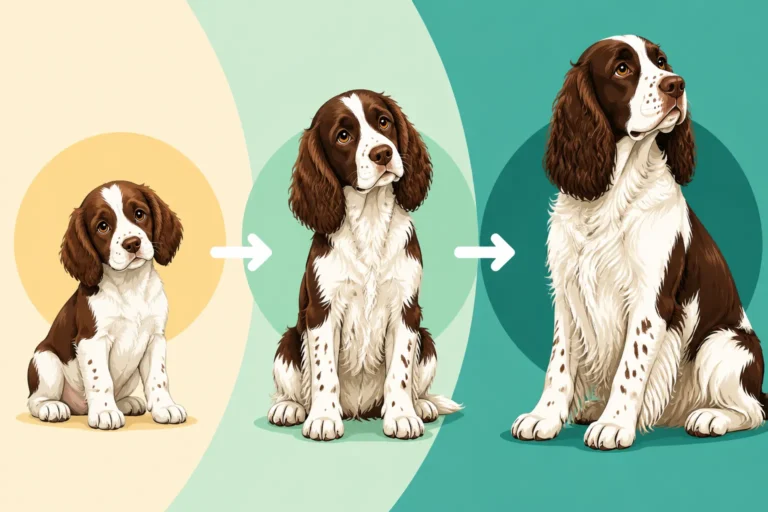
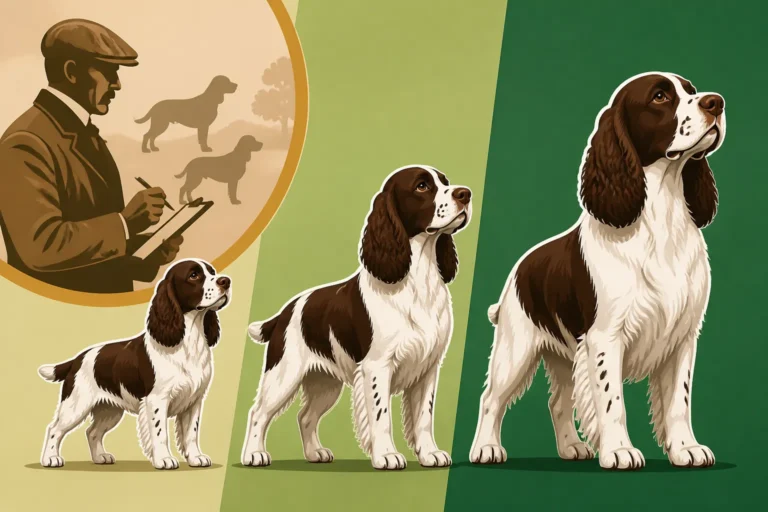
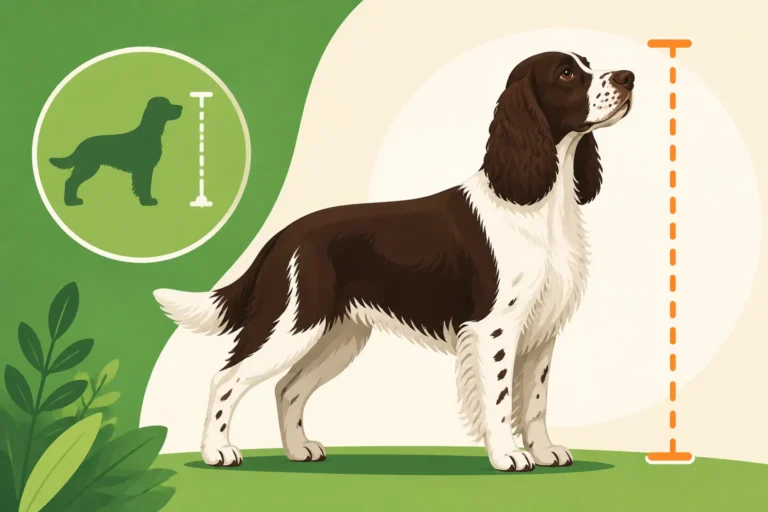
This is where it gets really interesting for those curious about our Springer's history. For a long time, particularly in the late 19th and early 20th centuries, the primary differentiator between what would be called a Cocker and what would be called a Springer was simply a weight guideline. A common threshold was around 25 pounds. If a puppy from a litter grew to be under this weight, it might be classified as a Cocker Spaniel. If it exceeded 25 pounds, it would be a Springer Spaniel. This meant that siblings, sharing the exact same mother and father, could end up being registered as different breeds based solely on their mature size.
Imagine the discussions among breeders and hunters: "That little one, he's a cracking little cocker, perfectly built for the tight cover. But his brother, bless him, he's shot up like a weed, a proper springer, that one, for the bigger birds." This practical approach made sense in a working context, ensuring that each dog was assigned to the role it was most physically capable of performing. It speaks volumes about How Springer Spaniels Were Sorted by Size Before 1902 and the utilitarian mindset of the time.
Here's a simplified look at the historical distinction:
| Characteristic | "Cocking Spaniel" (Pre-Breed) | "Springing Spaniel" (Pre-Breed) |
|---|---|---|
| Primary Game | Woodcock, smaller birds | Pheasants, larger game, hares |
| Size/Weight | Smaller, typically under 25 lbs | Larger, typically over 25 lbs |
| Terrain | Dense cover, thick brush | More open fields, heavier cover |
| Role | Flushed game from tight spots | Sprung game more broadly |
| Modern Breed | English Cocker Spaniel | English Springer Spaniel |
The Practicalities of Sorting a Litter in the Old Days
This system of distinguishing between "Cocker" and "Springer" based on size, even from the same litter, wasn't some arbitrary decision made on a whim. It was born out of necessity and a deep understanding of what made a dog effective in the field. Breeders and hunters were keenly observant of their dogs' development and innate abilities.
The Breeder's Dilemma with Shared Parentage
For breeders in those early days, the process was less about pedigree papers and more about performance potential. When a litter of spaniel puppies arrived, they would observe them as they grew, noting their individual sizes, builds, and perhaps even early indications of their working preferences. A breeder might have a dam and sire known for producing excellent flushing dogs. Some of the puppies might be clearly robust and large-boned, destined to push through heavy cover and "spring" larger game. Others might be daintier, more agile, and perfectly suited for the more intricate work of finding woodcock.
This wasn't a "dilemma" in the sense of a moral quandary, but rather a practical challenge: how best to categorize and utilize these dogs for maximum effectiveness in the hunt. They understood that even within a single family, there would be variations, and these variations could be harnessed. It's truly fascinating to think about Which Littermates Became Cockers and Which Springers based on such fluid criteria. You could essentially have one registration form for a pup that matured into a "Cocker" and another for its sibling that became a "Springer."
Implications for Appearance and Purpose Beyond the Name
This size-based sorting wasn't just about assigning a name; it subtly influenced breeding decisions and the perception of purpose. Breeders might actively select for smaller dogs if they needed excellent woodcock hunters, or larger, more powerful dogs if their focus was pheasants. Over time, these preferences, driven by the practical demands of hunting, would start to solidify certain physical characteristics within populations of "cocking" and "springing" spaniels, even before they were officially separate breeds.
It meant that while their lineage was intertwined, their perceived specializations began to nudge them down different evolutionary paths. A smaller "Cocker" might be valued for its compact, durable coat for busting through briars, while a "Springer" might be preferred for its longer legs and powerful stride to cover more ground. The name wasn't just a label; it became a shorthand for expected performance and, eventually, a blueprint for physical type.
The Official Breed Split: A Turning Point
The informal system of classifying spaniels by size and working utility couldn't last forever, especially as dog shows and formal kennel clubs began to gain prominence. The desire for standardization, predictability in breeding, and a clearer sense of "type" eventually led to the official division of these historically intermingled spaniels.
The Kennel Club's Role in Formalizing Breeds
The late 19th and early 20th centuries saw the rise of organizations like the Kennel Club in England and the American Kennel Club (AKC) in the United States. These clubs sought to define and standardize dog breeds, moving away from loose, functional descriptions to specific written standards outlining physical appearance, temperament, and sometimes even historical purpose. This was a monumental shift from the days when "spaniel" was a catch-all term.
It was in this environment that the English Springer Spaniel began its journey to becoming a distinct, recognized breed. The Kennel Club's recognition was a pivotal moment, taking the "springing spaniel" from a type of dog to a formal breed with its own unique identity and set of characteristics. This wasn't merely a bureaucratic exercise; it was about preserving specific lines, promoting predictable traits, and creating a framework for breeding programs. You can read more about The Year the Kennel Club Recognized the Springer Spaniel to understand the precise timeline of this formalization.
The Lasting Impact of the Split
The official split, which formally separated the English Springer Spaniel and the English Cocker Spaniel, primarily occurred around 1902 with the Kennel Club. This decision enshrined the size-based distinctions into formal breed standards. From that point forward, puppies from the same litter could no longer be registered as different breeds. A Springer litter produced Springers, and a Cocker litter produced Cockers.
This had profound and lasting consequences. While the breeds shared a common ancestry, their paths diverged significantly. Breeders of English Springer Spaniels began to focus on the traits outlined in their specific standard, emphasizing the conformation, coat, and temperament desired for their breed. The same happened for English Cocker Spaniel breeders. Over decades, this led to the development of distinct physical types and, particularly in the Springer Spaniel, a further split into distinct "field" and "show" lines. The initial simple size separation eventually blossomed into the vastly different appearance and working styles we see between a How Different the Two Springer Spaniel Types Look. This historical decision is truly at the heart of The 1902 Split That Separated Springer From Cocker.
Why This Historical Context Matters Today
Understanding that our English Springer Spaniels once shared a nursery with what would become Cocker Spaniels isn't just a fun fact for dog trivia night. It provides invaluable insight into the core nature of the breed, their instincts, and even some of their enduring health predispositions. This history helps us appreciate the journey of these dogs and how our companionship with them has shaped them over generations.
Understanding the Breed's Foundation and Instincts
When you know that Springer Spaniels were historically defined by their ability to "spring" game, it immediately illuminates their inherent drive and boundless energy. It explains why they are such persistent, enthusiastic workers in the field and why a pet Springer needs plenty of mental and physical stimulation to be a happy, well-adjusted companion. Their foundational purpose was to work tirelessly alongside a hunter, covering ground, sniffing out game, and doing it all with an exuberant tail wag.
This historical context also helps us understand traits like their incredible nose, their eagerness to please, and their biddability, which are all characteristics that were highly valued in a working gundog. Even if your Springer never steps foot in a pheasant field, those instincts are still deeply ingrained. When your Springer quarters your yard, head down, tail up, investigating every scent, you're seeing centuries of breeding for purpose manifesting right before your eyes. They are still doing What a Springer Spaniel Did for a Gun Before Retrievers, just perhaps with a tennis ball instead of a bird.
Genetic Legacies and Modern Health Considerations
The shared gene pool and eventual split also have implications for modern health, although indirectly. While specific diseases don't necessarily trace back to the "Cocker vs. Springer" split, the fact that these breeds were once so closely related means they share some vulnerabilities. For example, ear health is a common concern across many spaniel breeds due to their pendulous ears. The practices of early breeders, while focused on utility, didn't always involve the extensive health testing that responsible breeders undertake today.
Today, as owners, we benefit from the extensive knowledge and testing available. We understand that while the initial sorting was basic, modern breeding is much more sophisticated. When considering a puppy, look for breeders who conduct comprehensive health screens for conditions relevant to the breed. It's worth noting that even with modern efforts, the divergence of types continues, leading to discussions about The Seventy Year Gene Pool Divide Inside One Springer Spaniel Breed. To ensure your furry friend gets the best start in life, you'll want to gather appropriate supplies, from sturdy crates to high-quality food, which are readily available from retailers like Chewy. Having a good foundation of supplies can make all the difference in those first few weeks with a new puppy, regardless of its historical lineage.
The Evolution of the English Springer Spaniel
The journey from an undifferentiated "spaniel" to the distinct English Springer Spaniel we know and love today is a testament to both selective breeding and the practical demands of hunting. This evolution hasn't stopped, even after the formal breed split. Within the English Springer Spaniel itself, further distinctions arose, driven by differing priorities in the show ring versus the hunting field.
From Generalist to Specialist: The Field and Show Divide
Once the English Springer Spaniel was formally recognized, breeders began to focus on specific traits. Unfortunately, this often led to a divergence of priorities. One group of breeders aimed for dogs that excelled in conformation shows, emphasizing appearance, coat, and structure according to the breed standard. These became known as "show-bred" Springers. They often have heavier coats, slightly different body proportions, and a calmer demeanor.
Simultaneously, another group of breeders remained fiercely dedicated to the working abilities of the Springer Spaniel. They prioritized drive, scenting ability, biddability, and endurance above all else, often making breeding decisions based purely on performance in the field or in hunt tests. These became the "field-bred" Springers, known for their leaner build, shorter coats, and intense energy. This internal divergence is a classic example of How the Field and Show Springer Spaniel Diverged, creating what are almost two distinct breeds under one name. Both types, however, still require appropriate training tools and supplies, which can easily be found through online pet stores like Chewy, ensuring every Springer, whether show or field, gets what they need to thrive.
Modern-Day Ramifications of Historical Divisions
This historical journey, from shared littermates to distinct breeds, and then to separate lines within a single breed, has profound implications for anyone considering an English Springer Spaniel today. It means that researching a puppy's lineage and understanding the breeder's focus is crucial. A field-bred Springer, while sharing the same breed name, will likely have very different exercise and training needs than a show-bred Springer. Their energy levels, coat maintenance, and inherent drives can vary significantly.
For example, a field-bred Springer is unlikely to be content with just a leisurely walk around the block; they thrive on extensive exercise and mental challenges, needing a "job" to do, whether it's hunting, agility, or competitive obedience. On the other hand, a show-bred Springer might be a more fitting choice for a family looking for a slightly less intense companion, albeit one still requiring plenty of activity. Knowing this history helps prospective owners make informed decisions about which type of Springer Spaniel will best fit their lifestyle. The breed's history teaches us that purpose and utility have always been central to their development, and this legacy continues to shape them.
Disclaimer
This article is for general informational purposes only and does not constitute professional advice. Laws, prices and regulations vary by location and change over time. Consult a qualified professional for guidance on your specific situation.