How Much a Male Springer Spaniel Weighs
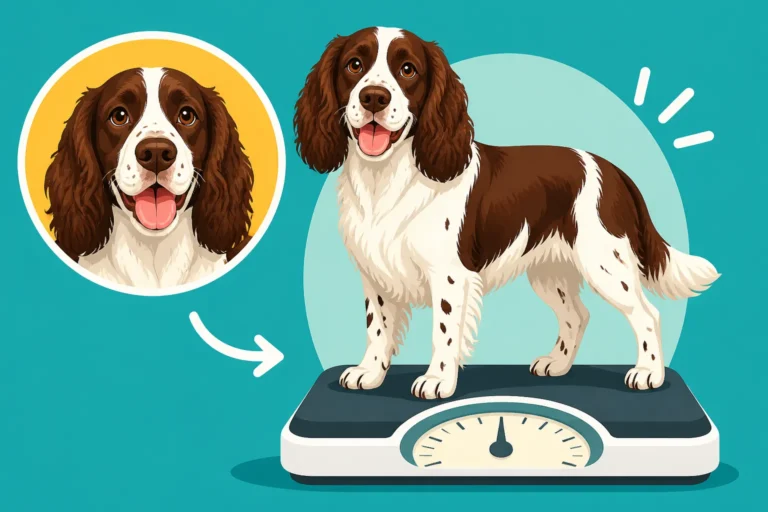
An adult male English Springer Spaniel often weighs around 50 pounds, but that figure is a guide rather than a pass-or-fail target. A dog’s frame, age, activity and body condition all matter, and the feathering can make extra weight surprisingly hard to spot. This guide explains what to expect, how to assess your dog, and when a change deserves a vet’s attention.
Typical weight for a male English Springer Spaniel
Why 50 pounds is a reference point, not a rule
The breed standard commonly describes a male English Springer Spaniel as standing about 20 inches at the shoulder and weighing about 50 pounds. That is a useful reference for understanding the breed, but it is not a universal healthy-weight prescription. A male with a smaller frame may be in good condition below that figure, while a larger, more substantial dog may be healthy above it.
You may see adult male Springers described as falling roughly in the mid-40s to mid-50s in pounds. Treat that as a broad practical range, not a diagnostic chart. Two dogs can weigh the same but have different body conditions: one may be lean and muscular, while another carries excess fat. A scale reading cannot tell you which is which.
The more useful question is whether your dog’s weight suits his frame and whether it is changing unexpectedly. If you are unsure, ask your veterinarian to assess his body condition and establish a healthy target. For broader context on the breed’s size, What a Springer Spaniel Actually Weighs is a helpful companion read.
Field-bred and show-bred males may differ
English Springer Spaniels are often discussed as field-bred and show-bred types. Field-bred dogs are commonly leaner and more lightly built, while show-bred dogs may have more bone and coat. Those are tendencies, not guarantees. Individual dogs vary, and a field-bred Springer can be heavy or stocky, just as a show-bred dog can be athletic and trim.
That difference can make a single number misleading. A lean, active male who spends time running or working may have a different healthy weight from a similarly tall dog with a heavier frame and a less active routine. The coat can also affect your impression: thick feathering may make the outline look fuller without adding body fat. Whether a Field Springer Spaniel Is Lighter explores why type can influence the scale without determining health on its own.
| What you notice | What it may mean | What to do |
|---|---|---|
| A steady weight that suits his frame | Often a reassuring pattern, especially if body condition is healthy | Keep tracking weight and body shape at routine intervals |
| A gradual increase after activity drops | Food portions or treats may now exceed daily needs | Review the routine and ask your vet about an appropriate adjustment |
| Ribs are difficult to feel and the waist has disappeared | Possible excess body fat, even if the dog looks “solid” under his coat | Arrange a body-condition check and discuss a safe plan |
| Sudden weight loss or gain without an obvious reason | Could reflect a health issue, not just feeding or exercise | Contact your veterinarian rather than trying to correct it with diet alone |
| A growing puppy’s weight changes quickly | Growth can be uneven, and adult targets do not apply | Track growth with your vet and avoid restricting food without advice |
How to tell whether your male Springer is at a healthy weight
Use your hands as well as your eyes
A Springer’s coat can hide the shape of his body, so feel for landmarks rather than relying on appearance alone. With your dog standing comfortably, run your hands lightly over his sides. You should generally be able to feel his ribs beneath a thin covering, without pressing hard. The ribs should not be sharply visible, but they should not be buried under a thick layer of fat either.
Look down at him from above and check for a waist behind the ribs. Then view him from the side: the abdomen should usually tuck upward toward the hind legs rather than forming a straight, heavy line. These are general body-condition clues, not a substitute for an examination. A very fluffy coat, loose skin, posture, or muscle can make the outline harder to judge.
Owners often find it helpful to check the same way every few weeks, not just when the dog is at the vet. If you are uncertain about what you feel, ask your vet or a veterinary nurse to show you. The guide Feeling for a Springer Spaniel's Ribs Under Feathering focuses on that hands-on check, while How to Spot a Heavy Springer Spaniel Under Feathering covers signs that can be obscured by the coat.
Look for a trend rather than one isolated number
A single weigh-in can be misleading. Your dog may have eaten recently, be carrying a full coat, or be positioned differently on the scale. A trend over time is more informative. Weigh him under similar conditions when you can, record the number, and note any changes in exercise, food, appetite, or health.
At home, you can weigh yourself holding your dog and then weigh yourself alone, using the difference as a rough estimate. This method is less dependable with a wriggly dog or an inconsistent household scale, but it can help track general direction. A veterinary clinic’s scale is usually more reliable, particularly for a dog who is difficult to lift.
Make a note if his weight shifts noticeably, even if he still seems cheerful. Gradual gain can happen after neutering, during a quieter season, or when family members are giving extra treats. Unexplained loss, a sudden increase, or a change accompanied by thirst, appetite changes, vomiting, lethargy, or mobility problems warrants veterinary advice. Avoid waiting for a dramatic change before raising the question.
Weight changes through a Springer Spaniel’s life
Puppies and adolescents need growth-specific guidance
A puppy’s weight rises quickly, but growth does not always happen in a perfectly smooth line. A growth spurt may be followed by a period when the puppy seems to change very little. Adult male weight figures are not suitable targets for a young dog, and trying to make a puppy reach an adult size faster by feeding extra can encourage unhealthy growth.
Your vet can assess the puppy’s development alongside his age, frame and body condition. Keep track of his weight at routine appointments and ask whether his growth pattern looks appropriate. Feed a complete diet suitable for his life stage, and follow professional advice if you are considering changing portions or food. The article The Age a Springer Spaniel Stops Growing explains why a dog can still mature after he appears close to adult height.
Adolescents can be especially confusing: they may look lanky, then gradually gain muscle and substance. A narrow-looking young dog is not automatically underweight, just as a broad-looking adolescent is not automatically overweight. Let body condition and veterinary guidance steer decisions rather than comparing him with a neighbor’s Springer or a photo online.
Adult routines, age and activity affect the number
An adult male’s healthy weight can shift as his daily life changes. A dog who used to run, train, or work outdoors may gain weight if walks become shorter or the season turns quieter, even though his food bowl stays the same. Likewise, an older dog may move less because of joint discomfort, making it easier for calories to exceed what he uses.
Food portions are a common source of confusion. Feeding guides on packaging are starting points, not personalized prescriptions, and treats, chews, training rewards and table scraps count too. Measure meals consistently rather than estimating by eye. If you change foods, use the new food’s feeding guidance as a starting point and reassess your dog’s body condition with your vet.
For a dog who has a regular diet, keeping the food consistent can make it easier to notice whether a portion change is helping. Some households reorder familiar food through a retailer such as Chewy, while others buy it locally; whichever route you use, check the actual product and feeding directions rather than assuming a new bag has identical guidance. How Much a Pet Springer Spaniel Should Eat offers more detail on portions and the factors that affect them.
What to do if his weight seems too high or low
Make a careful plan instead of making a sudden diet change
If your male Springer appears overweight, begin with an honest record of everything he eats. Include measured meals, treats during training, chews, food used for medication, and the little extras that different family members may offer. A week-long log can reveal patterns that are easy to miss, such as several people rewarding the same behavior or generous portions on less-active days.
Then talk with your veterinarian about his body condition and an appropriate target. If weight loss is recommended, ask what portion to feed and how to monitor progress. Do not sharply cut food or remove essential nutrients without professional guidance, particularly if your dog is still growing, has a medical condition, or is already eating a prescribed diet. A slow, managed approach is generally more sensible than a crash diet.
Exercise can support weight management, but it should suit the dog’s age and health. Adding long, intense runs to a dog who is unfit or sore is not a safe shortcut. Your vet can help you decide whether to build up walks, add controlled play, or investigate a mobility problem first. In some cases, diet adjustments matter more than simply trying to exercise the weight off.
Get veterinary advice for unexplained changes
A weight change may have a straightforward explanation, such as a change in food or routine, but it can also be an early sign of illness. Contact your vet if your dog loses weight despite eating normally, gains weight without a clear reason, or has a noticeable change in appetite, thirst, energy, coat, bowel habits, or movement. A veterinarian can decide whether an examination or further checks are needed.
If your Springer is underweight, do not assume that simply offering more food is the answer. Dental discomfort, digestive problems, parasites, stress, or other health concerns can affect weight and appetite. If he is overweight, do not assume that every extra pound is harmless because he is a sturdy breed. The goal is a healthy body condition that supports comfortable movement and good day-to-day wellbeing.
For a practical next step, write down his current weight, what he eats in a typical day, and how his activity has changed. Bring those notes to the appointment. That gives your vet more to work with than a rough estimate such as “he seems a bit bigger,” and helps you agree on a plan that fits your dog rather than a generic number.
Disclaimer
This article is for general informational purposes only and does not constitute professional advice. Laws, prices and regulations vary by location and change over time. Consult a qualified professional for guidance on your specific situation.