How a Field Springer Spaniel Fares in the Ring
A field-bred Springer Spaniel can enter a conformation ring, but its working build and practical coat may look quite different from the dogs people expect to see there. That does not make it automatically unsuitable or disqualify it. This guide explains what judges assess, where field type may stand out, how to prepare, and what to consider before choosing a show.
Can a Field Springer Spaniel Compete in the Conformation Ring
In many registries, field-bred and show-bred English Springer Spaniels are not separate breeds for conformation purposes. A registered field-bred dog may therefore be eligible to compete, provided it meets the relevant registry’s entry requirements. The key distinction is that conformation judging assesses how closely a dog matches the breed standard, not how well it hunts or performs in the field.
Before entering, check the rules for your country and the specific event. Registration status, class eligibility, identification requirements, and local regulations can vary. A breeder, breed club, or show secretary can help you confirm the details rather than leaving you to discover a paperwork problem on show day.
What the judge is assessing
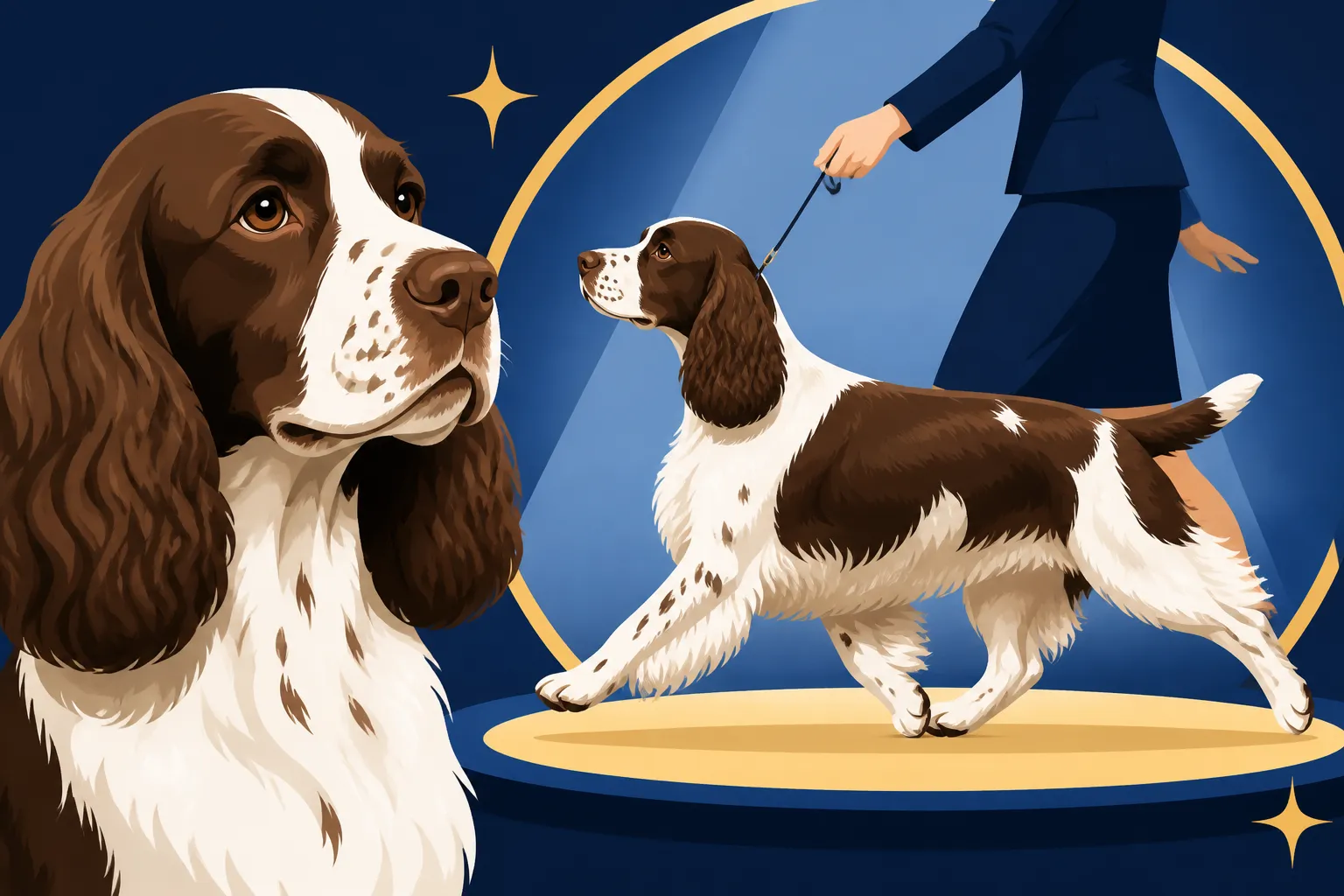
A conformation judge compares each dog with the written English Springer Spaniel standard used by that registry. The judge considers the dog’s overall structure, movement, proportions, coat, and breed characteristics. The aim is not to reward a particular career, pedigree label, or training style. A working title may be meaningful evidence of ability, but it does not substitute for meeting the conformation standard.
This is why a field-bred Springer may be able to compete and still find the ring challenging. Field lines have often been selected with practical work in mind: covering ground, moving efficiently, and carrying a coat that is manageable outdoors. Show lines have generally been selected more heavily for the traits emphasized in the conformation ring. The differences are not absolute, and individual dogs vary, but those breeding priorities can produce noticeably different types. For a closer look at how those differences developed, see How the Field and Show Springer Spaniel Diverged.
The judge is not expected to excuse a dog’s structure because it works well in the field, nor should a dog be penalized simply for having working ancestry. Instead, the question is how the dog in front of the judge compares with the standard. Owners weighing the likely differences can also read How Different the Two Springer Spaniel Types Look.
What being field-bred does and does not mean
“Field-bred” describes a breeding emphasis, not a guarantee that every dog will be lean, short-coated, or identical in appearance. Some field-bred Springers have more coat or bone than others, and a dog’s exact look depends on its parents and wider pedigree. Likewise, a show-bred dog is not necessarily unable to work. The labels are useful shorthand, but they cannot tell you everything about an individual dog.
Field-bred Springers are not barred from the ring just because their ancestors were selected for hunting. The challenge is more practical: a dog whose appearance differs from the common show-ring type may be less competitive if judges consistently favor features that are more typical of show lines. That is a question of fit to the standard and the competition, not a statement about the dog’s value as a companion or worker.
It is also worth separating conformation competition from performance events. A field-bred Springer might be especially suited to hunt tests or field trials, while a conformation show evaluates a different set of qualities. Some owners enjoy doing both, but success in one venue does not promise success in the other. The comparison in How a Show Springer Spaniel Fares in a Hunt Test helps illustrate how different priorities can shape each type.
How Field Type May Compare With the Show-Ring Ideal
A field-bred Springer may present a lighter, more athletic outline than the heavier-coated dogs commonly associated with the show ring. That can make the dog look strikingly different in a lineup, particularly when the other entries have more substance, coat, or elaborate trimming. The difference is not automatically a fault. What matters is whether the individual dog’s features fall within the applicable standard and how those features compare with the rest of the class.
| Feature | Field-bred type may commonly show | Show-bred type may commonly show | What the judge considers |
|---|---|---|---|
| Overall outline | Leaner, more work-oriented appearance | Often more substantial or groomed in presentation | Balance, proportions, and breed type |
| Coat | Often more practical and less profuse | Frequently fuller feathering and more finish | Correct coat and condition under the standard |
| Movement | Efficient, athletic movement | A polished presentation of movement | Soundness and movement appropriate to the standard |
| Ring preparation | Usually needs tidy, restrained grooming | May have more coat preparation | Neatness without disguising structure |
| Working background | Often selected with field performance in mind | Often selected more heavily for conformation | The dog’s actual conformation, not its label |
These are broad tendencies, not a scorecard for every dog. A field-bred dog can have abundant feathering, and a show-bred Springer can be athletic and capable outdoors. Do not assume that a field-bred dog will be automatically penalized for being less heavily coated, or that a full coat will guarantee a higher placing. The judge assesses the whole dog.
Coat and grooming can affect first impressions
A practical coat may need less shaping and trimming than a fuller show coat, but “less grooming” does not mean “no preparation.” Mats behind the ears, loose hair, dirty feet, and overgrown nails can distract from a dog’s presentation. A bath and careful brushing, followed by modest tidying where appropriate, can make a field-bred Springer look clean and cared for without trying to turn its coat into something it is not.
Grooming should support the dog’s natural outline rather than create an artificial one. If you are unsure what is acceptable, ask a breed-experienced groomer or exhibitor to demonstrate. A few well-chosen tools—a comb, brush, nail trimmer, and suitable shampoo—may be enough for routine preparation. Chewy is one retailer where owners may look for basic grooming supplies, but the right tool depends on the dog’s coat and comfort, not the store you buy it from.
There is a practical reason to avoid excessive trimming: a coat shaped to exaggerate the dog’s outline can obscure what the judge needs to assess and may conflict with show rules. Learn the standard and local presentation rules before grooming for an event. For a useful contrast between coat types, see How Heavily Boned a Show Springer Spaniel Is and How a Field Springer Spaniel Fares in the Ring.
Structure matters more than a working label
A field-bred Springer’s efficient frame can look especially appealing to someone who values athletic movement. In the ring, though, athletic ability alone is not the measure. The judge assesses whether the dog is sound, balanced, and consistent with the breed standard. A dog that runs tirelessly in cover may still have a feature that places it outside the conformation ideal, while a dog with a show-oriented pedigree still needs sound construction and good movement.
Watch the dog move naturally rather than relying only on photographs or a stacked pose. A handler may present a dog well, but no grooming or ring technique can change its basic structure. If you are evaluating a puppy or planning a show career, ask experienced people to assess the dog honestly and explain what they see. That conversation is more useful than a vague promise that a dog is “show quality.”
Body size can also influence how a field dog appears beside other entries. Do not rely on a single expected weight to judge suitability; height, proportions, condition, and the standard all matter. What a Springer Spaniel Actually Weighs offers broader context on size, while the standard for your registry remains the reference for judging.
Preparing a Field-Bred Springer for a Show
A successful first show is not only about the ribbon. For a dog accustomed to open ground, birds, or energetic training, a crowded venue with unfamiliar dogs, loudspeakers, polished floors, and long periods of waiting can feel like a very different task. Preparation should help the dog feel comfortable and teach you how to handle the routine. It should not involve pressuring the dog to tolerate a situation it finds overwhelming.
Build ring skills gradually
Start with brief practice sessions at home or in a quiet outdoor space. Teach the dog to stand calmly, allow a stranger to examine it, and move at a controlled pace beside you. Keep sessions short and reward relaxed attention. A dog that has learned field commands may be responsive, but show handling requires different habits: the dog may need to stand still while someone checks its body and teeth, then trot on a lead without pulling toward every interesting smell.
Practice around distractions in manageable steps. For example, begin with one familiar person acting as the examiner, then practice in a busier training class or at a club event if available. Build up to standing near unfamiliar dogs without expecting your Springer to greet every one. The goal is not a robotic performance; it is a dog that can remain composed and be handled safely.
If your dog is used to whistle cues, retrieve games, or searching for scent, it may take time to understand that the ring asks for patience rather than action. That is normal. Reward the quiet moments, give the dog breaks, and avoid drilling until it becomes frustrated. A confident, comfortable dog is easier to present than one that has been rehearsed into fatigue.
Keep grooming practical and kind
A field-bred Springer may come home from a walk with burrs in its feathering, mud on its legs, or debris between its toes. Before a show, check the coat and skin carefully, especially behind the ears, under the legs, and around the feet. Brush out tangles gently instead of pulling through them. If a mat is tight or close to the skin, ask a groomer for help rather than turning preparation into a painful struggle.
Introduce grooming tools before show week. Let the dog sniff a brush or comb, touch the coat briefly, and receive a reward for standing calmly. If nail trimming is part of the routine, practice gradually too. Owners who need to assemble a simple home kit may browse options at Chewy, but a well-fitted comb and calm handling matter more than collecting a drawer full of products.
After grooming, check the dog in natural light and make sure it can move freely and comfortably. Avoid a dramatic change to the coat just before an event. A new haircut, unfamiliar bathing routine, or long grooming session can leave a dog uncomfortable or unsettled. If the coat is confusing to manage, get advice from someone familiar with Springer Spaniels and the rules of the event.
Choose an event that suits your dog
Not every show venue is equally comfortable for every dog. Some dogs settle well in a busy indoor hall; others do better starting at a smaller event with more room to observe. Look at the event’s schedule, arrival arrangements, and rules in advance. Pack water, a familiar resting mat, a lead, waste bags, grooming basics, and whatever your dog needs to relax safely between classes.
On the day, allow time for the dog to sniff and acclimate without letting it rush up to other entries. Keep the atmosphere low-key. If your Springer becomes overwhelmed, take a break in a quieter area rather than insisting on more practice in the middle of the crowd. The first outing should teach you what your dog handles well and what needs more gradual preparation.
Some owners eventually compete in both conformation and working events. The skills can complement one another, but the goals are distinct. Before planning a dual path, understand the registry and event rules and speak with people who have experience in both settings. Whether Any Registry Separates the Two Springer Spaniel Types and The Breeders Still Crossing the Two Springer Spaniel Types provide further context on how the two populations relate.
Is the Ring a Good Fit for Your Field Springer
The conformation ring can be a rewarding way to spend time with a field-bred Springer, learn more about the breed standard, and meet other owners. It may also be frustrating if your main expectation is that working ability will automatically earn a high placing. A dog can be an exceptional hunter and companion while not matching the look most rewarded in a particular show class.
Set realistic goals before entering
Before you enter, decide what you want from the experience. If your goal is socialization and learning, a first show can be worthwhile even without a ribbon. If you are considering a serious conformation campaign, ask a knowledgeable breeder or exhibitor to assess your dog against the written standard. Request specific feedback about movement, proportions, coat, and presentation rather than asking only whether the dog is “good enough.”
It can help to attend a show as a spectator first. Watch how handlers move their dogs, how judges examine them, and how much waiting is involved. Talk to exhibitors respectfully between classes, when they are not preparing to go into the ring. A candid conversation can clarify whether your dog’s type and temperament are likely to make the experience enjoyable and whether you are comfortable with the grooming and travel involved.
A field-bred dog may be a good candidate for the ring even if it is not a likely winner. Conversely, having a show-bred parent does not guarantee success. The individual dog, the standard, the competition, and the handler’s ability all play a part. The best reason to enter is that you and your dog enjoy the process—not because a label promises a result.
Keep the dog’s wellbeing at the center
A show should remain a positive activity for the dog. Pay attention to signs of stress such as persistent avoidance, trembling, repeated attempts to leave, or inability to settle. Some nervousness in a new environment is understandable, but the dog should have room to recover and should not be forced through repeated handling when it is distressed. Seek gradual training support if the ring environment is difficult.
A dog’s working identity does not need to disappear for it to enjoy showing. You can keep up appropriate exercise and enrichment while teaching the quieter skills required for the ring. After an event, offer water, rest, and a familiar activity. If your Springer seems to prefer field work, that is useful information—not a failure.
In the end, a field Springer Spaniel can fare in the ring as well as its individual conformation, preparation, and temperament allow. The field-bred label neither guarantees nor prevents success. Understanding the standard, preparing thoughtfully, and keeping expectations realistic will give you a fairer picture of what the experience can offer.
Disclaimer
This article is for general informational purposes only and does not constitute professional advice. Laws, prices and regulations vary by location and change over time. Consult a qualified professional for guidance on your specific situation.