How Show Springer Spaniel Ears Differ
A show-bred English Springer Spaniel’s ears can look longer, fuller, and more dramatic than a field-bred dog’s, but much of that difference comes from feathering, trimming, and grooming—not a separate ear shape. This guide explains what is actually different, what both types share, and how to care for those soft, hanging ears without over-cleaning them.
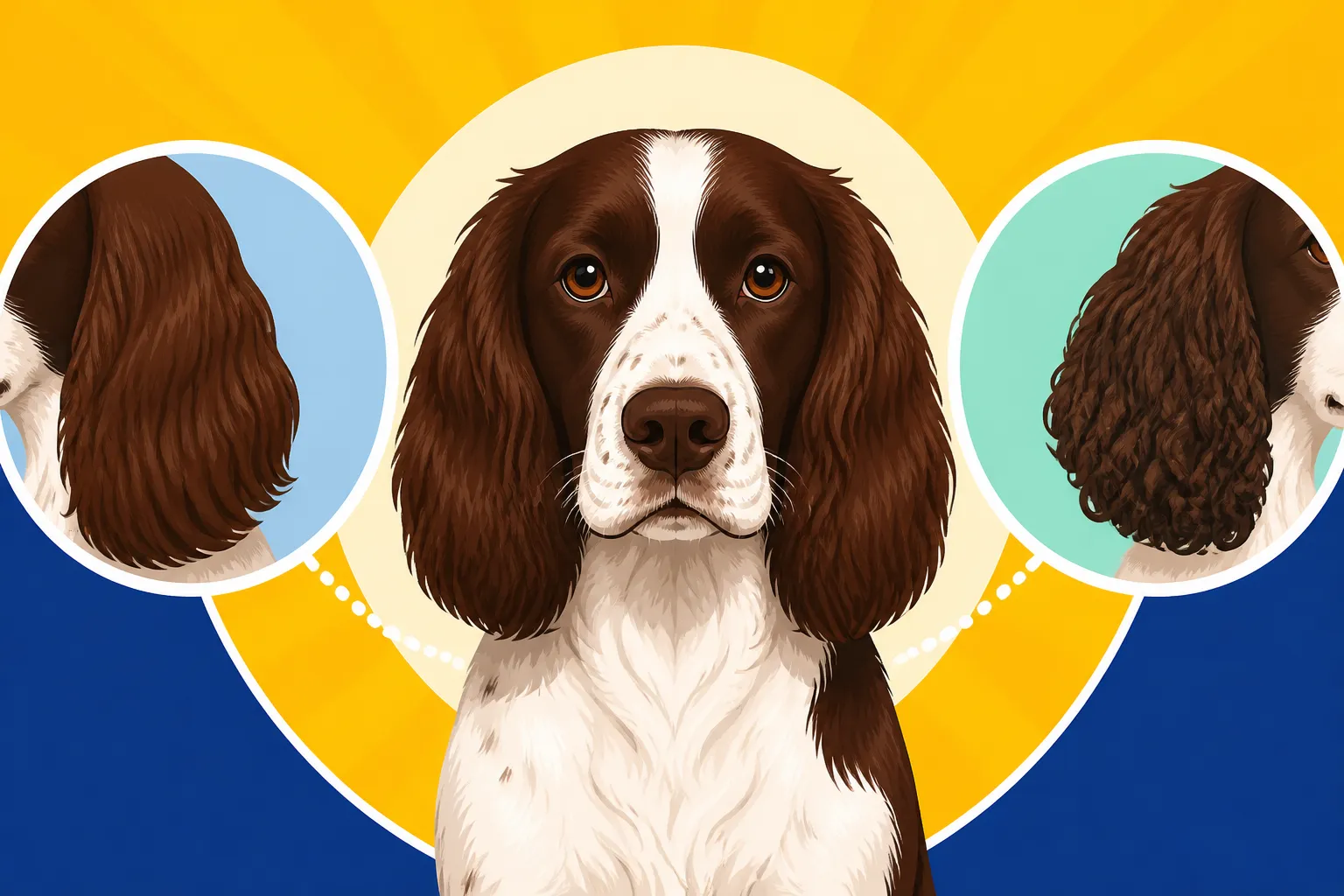
What show Springer Spaniel ears look like
The shared Springer Spaniel ear shape
Show and field Springer Spaniels are types within the same breed, not two separately recognized breeds. Both have the characteristic drop ear: it hangs down beside the head rather than standing upright. Breed standards describe ears that hang close to the head, with the leather—the ear flap itself—well shaped and sufficiently long. The precise wording varies between registries, but the overall look is unmistakably Springer.
That means a show dog is not supposed to have a wholly different kind of ear from a field dog. Both should have the familiar soft, pendulous ear that frames the face. Individual dogs still vary: one may have slightly longer ear leather, another may have a narrower flap, and some ears sit closer to the cheek than others. Those differences can occur within either type.
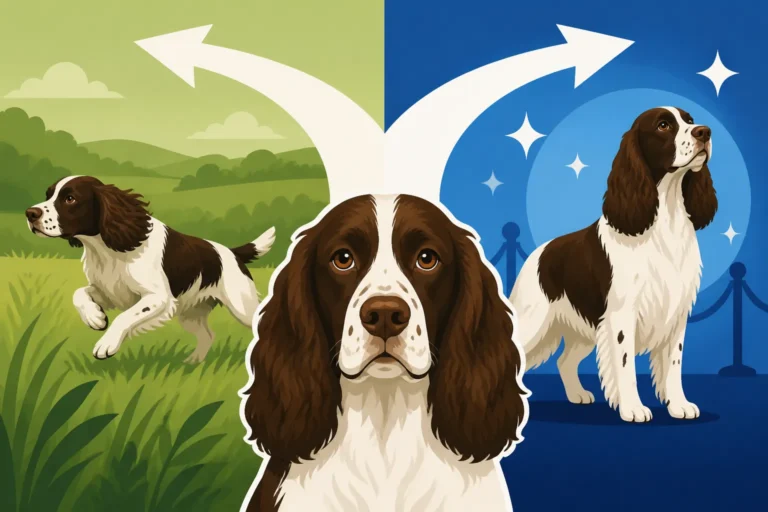
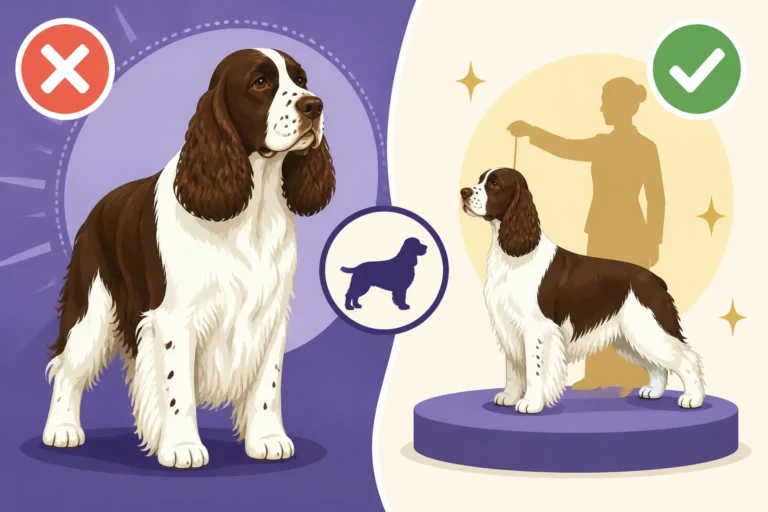
The most noticeable contrast is often the hair. Show-bred Springers are commonly presented with longer, more abundant feathering along the ears. Field-bred dogs are more often kept with shorter, practical hair, especially if they work through brush or spend time in wet cover. For a closer look at the broader visual differences, see How Different the Two Springer Spaniel Types Look.
Why show ears often appear longer
A curtain of long ear hair changes the outline of the head. When feathering falls below the ear leather, the whole ear looks longer, even though the underlying flap may be similar in length to a field-bred dog’s. Fuller hair can also make the ears seem wider or heavier, particularly when it is brushed out for a show presentation.
The coat around the ear and cheek contributes to the effect, too. In a well-groomed show Springer, the longer hair can blend into the neck and chest furnishings, creating a soft, flowing frame. A field Springer with the same basic ear structure may have much less hair in those areas, so the ear looks simpler and more clearly defined.
There is no single ear length or amount of feathering that applies to every show-bred dog. Pedigree, individual coat, age, and grooming all play a part. Puppy coat can change as a dog matures, and a dog that has recently been clipped may look quite different from one whose coat has been allowed to grow. The coat distinction is part of the larger picture explained in How a Show Springer Spaniel's Coat Differs.
What grooming can and cannot change
Grooming can alter the appearance of the ears, but it does not change the ear leather or the dog’s underlying anatomy. Trimming the hair may make the ear look shorter and neater; letting the feathering grow can make it look more abundant. Neither choice turns a field-bred dog’s ear into a show-bred ear or vice versa.
For show presentation, grooming is generally aimed at keeping the coat tidy while preserving the desired outline. A groomer familiar with the breed can explain how much hair to leave and how to shape it without taking too much off. If you are preparing a dog for the ring, ask the breeder or an experienced Springer Spaniel groomer what is appropriate for that dog’s coat and local show requirements. The practical grooming differences are covered in How Often a Show Springer Spaniel Needs Trimming.
At home, avoid cutting close to the skin or trying to reshape the ear by guesswork. The skin around the ear can be delicate, and a dog that suddenly jerks its head can be nicked by scissors. If the hair is tangled, work slowly with your fingers or a suitable comb. If a mat is tight against the skin, ask a groomer or veterinary professional for help rather than pulling at it.
How field-bred ears differ in appearance
A practical coat, not a different ear
Field-bred Springer Spaniels are often seen with shorter, less conspicuous feathering than show-bred dogs. This practical look can make their ears appear smaller, cleaner-edged, or less heavily fringed. It is easy to assume that the ear itself is different, especially when comparing a neatly trimmed field dog with a show dog whose long hair fans out around the face.
But less ear feathering does not automatically mean less ear leather. A field-bred Springer may still have a long, low-set, close-hanging ear beneath its shorter coat. Conversely, a show-bred dog can have relatively modest feathering. Type offers a clue about typical coat presentation, not a guarantee about one dog’s ear shape.
Shorter hair can be useful for dogs that push through brambles, wet vegetation, or dense cover because it may collect fewer burrs and tangles. It does not make the ear immune to irritation or infection, however. The folded ear still limits airflow compared with an upright ear, and a dog that swims or works in damp conditions may need careful aftercare. See Whether a Field Springer Spaniel Has Less Feathering for more about the coat differences between types.
Field work and ear comfort
A field dog may come home with seeds, burrs, or damp debris caught in its ear furnishings. After a walk or day working in cover, check the outside of the ear and the visible opening without poking into the canal. Look for plant material, redness, swelling, an unusual smell, or signs that the dog is persistently rubbing or shaking its head.
If you find a loose burr in the hair, you can usually separate it carefully with your fingers or a comb, taking care not to pull the skin. If something appears to be inside the ear canal, do not try to retrieve it with tweezers or a cotton swab. A grass awn or other foreign material can be difficult to see and may move deeper if prodded. Contact a veterinarian if you suspect something is lodged in the canal or the dog is distressed.
Some owners keep a basic grooming kit at home and replenish combs, towels, and other routine supplies through retailers such as Chewy. What matters most is choosing tools that suit your dog’s coat and using them gently; a shopping list cannot replace a vet visit when an ear is painful or inflamed.
The ear-care needs both types share
Whether a Springer is show-bred or field-bred, the ear should be checked routinely. Make the check part of a calm grooming session: lift the ear flap gently, look at the visible skin, and notice whether the ear seems clean and comfortable. A healthy ear does not necessarily need frequent cleaning. Unnecessary cleaning, vigorous rubbing, or using products that are not suitable for that dog can irritate the canal.
The fold and flap can hold warmth and moisture, particularly after swimming, bathing, or exercise in rain. That does not mean every damp ear will become infected, but helping the outer ear dry and watching for symptoms is sensible. The anatomy behind this issue is explained in Why a Drop Ear Traps Moisture in a Springer Spaniel.
Owners sometimes wonder whether field dogs need less care because their ears have less hair. Shorter feathering may make the outside easier to inspect and detangle, but it does not remove the underlying drop-ear structure. Likewise, long show furnishings do not automatically mean the dog has an ear infection. Comfort, odor, discharge, and changes in behavior are more useful clues than appearance alone.
Show and field Springer Spaniel ears compared
| Feature | Show-bred Springer Spaniel | Field-bred Springer Spaniel |
|---|---|---|
| Basic ear type | Drop ear that hangs close to the head | Drop ear that hangs close to the head |
| Ear leather | Varies by individual dog | Varies by individual dog |
| Typical visible feathering | Often longer and fuller | Often shorter or less prominent |
| Overall impression | Can look longer, wider, or more flowing | Can look neater and less heavily fringed |
| Effect of grooming | Coat may be shaped to preserve a fuller outline | Hair may be kept shorter for practical reasons |
| Main care considerations | Detangling furnishings and checking skin beneath hair | Checking for moisture, debris, and irritation after outdoor work |
How to tell hair from ear leather
When comparing two dogs, part the hair gently and look at the actual ear flap. The fleshy, flexible part is the ear leather; the longer strands extending beyond or around it are coat. This simple distinction prevents a common misunderstanding: a long fringe is not the same thing as an unusually long ear.
Do not stretch or pull the ear to compare it. Simply observe where the flap sits and how it hangs when the dog is relaxed. Photos can be misleading, too. A dog photographed with its ears lifted by wind or movement may appear to have a different shape from one standing calmly. Grooming, coat length, and camera angle can all exaggerate the contrast.
If you are choosing a puppy and ear appearance matters to you, ask the breeder about the parents’ coat and grooming needs rather than expecting a puppy’s current ears to predict the finished adult look precisely. Puppy furnishings develop over time, and the coat may become more noticeable as the dog matures.
Cleaning and drying without overdoing it
Routine care should be gentle and guided by what the ear actually needs. If the visible outer ear is dirty, use a soft cloth or a product recommended by your veterinarian. Do not pour household mixtures into the canal, and do not use cotton swabs inside it. If your dog has a history of ear disease, ask your vet whether a particular cleaning routine is appropriate before making it a regular habit.
After swimming or bathing, dry the outer ear gently with a clean towel. Avoid rubbing hard or pushing material into the canal. If your dog swims often, ask your veterinarian for advice on whether a drying solution is suitable; the right approach depends on the dog’s ear health and whether the eardrum or canal has any problems. More practical guidance is available in Drying a Springer Spaniel's Ears After Swimming.
For ordinary grooming, you may find it convenient to keep a few basic supplies together. Chewy is one place owners may look for grooming items, but check that any ear-care product is appropriate for your dog and follow veterinary guidance. A product labeled for ears is not automatically right for every dog, particularly one with pain, discharge, or a history of recurring infections.
When an ear needs veterinary attention
Signs that deserve a closer look
A difference in ear length or feathering is usually just a difference in appearance. A sudden change in comfort or behavior is more important. Watch for repeated head shaking, scratching, rubbing the ear on furniture, redness, swelling, discharge, a strong odor, or sensitivity when you touch the area. Some dogs also tilt their head or seem less willing to have that side of the face handled.
If the ear looks abnormal or your dog seems uncomfortable, arrange a veterinary examination rather than trying several cleaners at home. Ear infections can have different causes, and the treatment depends on what is happening inside the canal. A vet may need to examine the ear and, where appropriate, test a sample before recommending medication.
Prompt care matters when there is marked pain, sudden swelling, bleeding, loss of balance, or a foreign object may be lodged in the ear. Do not put drops into an ear that is painful or producing discharge unless a veterinarian has advised you to do so. A product that helped a previous episode may not be suitable for a new one. Review Signs a Springer Spaniel's Ear Has Gone Wrong for symptoms to watch for.
Avoiding common ear-care mistakes
One frequent mistake is cleaning healthy ears on a fixed schedule regardless of what they look or smell like. Some dogs need more attention than others, but excessive cleaning can irritate sensitive tissue. Another is assuming that a pleasant-smelling ear is necessarily healthy—or that a bit of visible wax automatically means infection. If you are unsure, ask your veterinary clinic what is normal for your dog.
Plucking ear hair is another area where advice can vary. Removing hair is not a universal requirement for Springer Spaniels, and pulling at hair can irritate the skin. If the canal is hairy or the dog has recurring ear problems, discuss the pros and cons with your veterinarian rather than making plucking part of every grooming session. See Whether Ear Hair Should Be Plucked on a Springer Spaniel.
Finally, do not blame every ear problem on the coat type. A show dog’s long feathering may make the outside harder to inspect, while a field dog’s outdoor work may expose it to water and debris. Neither type is guaranteed to have healthy ears or to develop disease. Regular, gentle checks and early attention to discomfort are more useful than judging by how long the hair looks.
Disclaimer
This article is for general informational purposes only and does not constitute professional advice. Laws, prices and regulations vary by location and change over time. Consult a qualified professional for guidance on your specific situation.