Whether a Springer Spaniel Puppy’s Eyes Are Checked at Eight Weeks
Bringing home a new Springer Spaniel puppy is an exciting time, but it often comes with a flurry of questions about their health, especially those crucial early weeks. One common concern I hear from new owners and aspiring puppy parents alike is whether a Springer Spaniel puppy's eyes are actually checked at the tender age of eight weeks. This guide will walk you through what to expect regarding your puppy's eye health during this vital developmental stage.
The Critical Importance of Early Eye Exams for Springer Spaniel Puppies
You've just brought home a bundle of energy, floppy ears, and an eager nose, ready to explore the world. It’s natural to feel a bit overwhelmed by all the health checks and advice you’re receiving. However, when it comes to eye health in a Springer Spaniel, early screening is absolutely paramount. These lively dogs rely heavily on their excellent vision for everything from navigating dense cover in the field to finding their favorite squeaky toy under the sofa. Inherited eye conditions can significantly impact their quality of life, and catching them early, or even knowing the risk, can make all the difference.
Many genetic eye diseases common in Springer Spaniels don't necessarily show obvious clinical signs until later in life, sometimes not until they're adults. This is precisely why early examinations by qualified professionals are so vital. A thorough check at eight weeks isn't just a formality; it's a foundational step in ensuring your puppy has the best possible start to a life of clear vision and uninhibited activity. It also gives you, as the new owner, a baseline understanding of your puppy’s ocular health, which is invaluable for future care.
Why Eight Weeks Is a Key Developmental Window
Around eight weeks of age, puppies are typically transitioning from their breeder's care to their new homes. This timing often coincides with their first comprehensive veterinary check-up with their new family's vet. While a general veterinarian will perform an overall health assessment, including a basic eye check, it's also a common window for breeders to arrange specialized ophthalmic examinations. At this age, a puppy’s eyes are developed enough for a veterinary ophthalmologist to detect certain structural abnormalities or early signs of inherited conditions. Their eyes are still developing rapidly, and some conditions, like Retinal Dysplasia in a Springer Spaniel, might present as subtle folds or detachments that are easier to identify before they become more widespread or chronic.
Moreover, if a genetic condition is suspected or identified at this early stage, it allows you and your vet to establish a long-term management plan sooner rather than later. This could involve anything from monitoring the condition closely to considering early interventions or making lifestyle adjustments. Knowledge is power, especially when it comes to the health of our beloved Springers.
The Breeder's Role in Pre-Purchase Eye Screening
A responsible Springer Spaniel breeder should be doing more than just feeding and socializing puppies; they should be actively screening for genetic health issues, including those affecting the eyes. Often, breeders will arrange for an independent board-certified veterinary ophthalmologist to perform examinations on the entire litter before they go to their new homes. This usually occurs between 6 and 8 weeks of age. This specialized examination is often referred to as a "CERF" exam (Canine Eye Registration Foundation, though now often reported through OFA – Orthopedic Foundation for Animals – as the "Eye Certification Registry").
The purpose of these breeder-initiated exams is to identify any hereditary eye diseases in the litter before sale. A breeder should be transparent about these results and provide you with documentation from these screenings. Don't be shy about asking to see the results for your puppy and its parents; it's a key part of The DNA Test That Should Precede Every Springer Spaniel Purchase and understanding your puppy's genetic heritage. If the breeder hasn't had these specialized checks done, your regular vet at the 8-week check-up might recommend one, which could involve an additional cost, but it's an investment worth making for peace of mind and your puppy's future health.
What an Eye Exam Entails for an Eight-Week-Old Springer Spaniel
When your eight-week-old Springer Spaniel puppy goes in for their first vet visit with you, the veterinarian will definitely take a look at their eyes. However, it's important to understand the difference between a general ocular assessment by a family vet and a comprehensive examination by a board-certified veterinary ophthalmologist. Both are valuable, but they serve slightly different purposes at this stage.
The General Veterinary Check-up
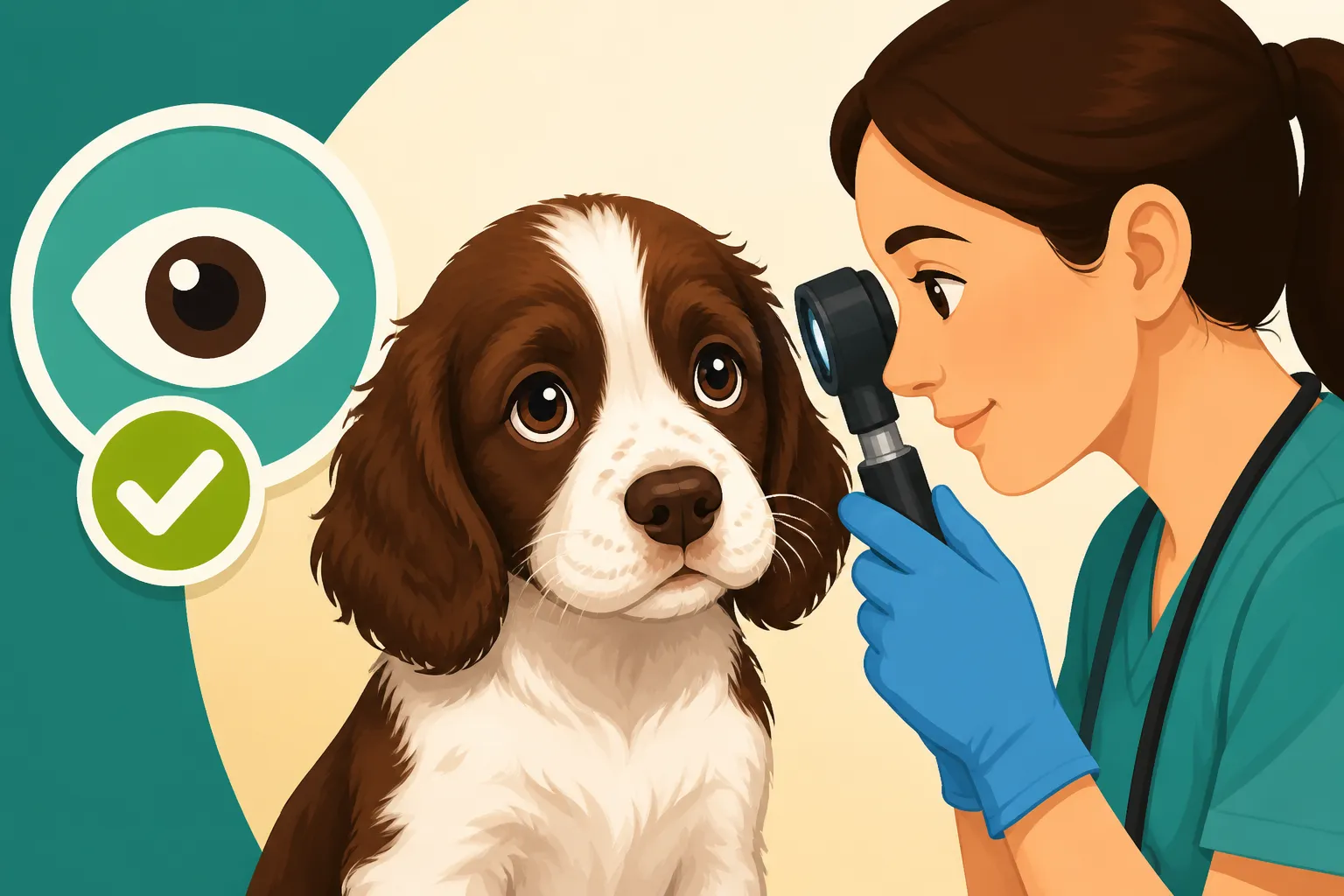
During a routine 8-week puppy check-up, your general veterinarian will typically perform a visual inspection of your puppy's eyes. They'll look for obvious signs of trouble, such as discharge, redness, swelling around the eyelids, or any cloudiness in the cornea. They'll also check how the eyelids sit – for instance, making sure there's no Entropion in a Springer Spaniel, where the eyelid rolls inward, or ectropion, where it rolls outward. They might use a penlight or ophthalmoscope to get a basic view of the internal structures, checking for pupillary light reflexes and generally ensuring the eyes appear healthy and bright.
This initial check is crucial for identifying common puppy issues, like mild conjunctivitis or injuries that could have occurred during play. It's the first line of defense, catching anything overtly wrong. However, a general vet might not have the specialized equipment or the extensive training to detect the subtle nuances of all inherited eye conditions that a specialist would be looking for. Think of it as a good general health screen, but not necessarily a deep dive into specific genetic predispositions.
Specialized Ophthalmic Examination by a Board-Certified Specialist
For a truly thorough assessment of inherited eye diseases, you need a board-certified veterinary ophthalmologist. If your breeder has arranged this, it's a huge plus. If not, and you have concerns or just want to be extra diligent, you can request a referral. During this specialized exam, the ophthalmologist will use a range of sophisticated tools.
They'll dilate your puppy's pupils with special eye drops to get a clearer view of the retina and optic nerve at the back of the eye. They'll use an indirect ophthalmoscope, which allows them to see a wider area of the retina, and often a slit lamp biomicroscope to examine the cornea, iris, and lens in great detail. They're looking for very specific, often microscopic, signs of diseases like Progressive Retinal Atrophy in a Springer Spaniel or certain types of glaucoma. This is the gold standard for inherited eye disease screening and helps identify conditions that might otherwise go unnoticed for months or even years.
Common Eye Conditions Screened in Springer Spaniel Puppies
Springer Spaniels are, unfortunately, predisposed to several inherited eye conditions, which is why early and specialized screening is so important. Knowing what to look for, and what your vet or ophthalmologist is looking for, can empower you as an owner. The Four Eye Diseases a Springer Spaniel Breeder Screens For typically include many of these.
Retinal Dysplasia
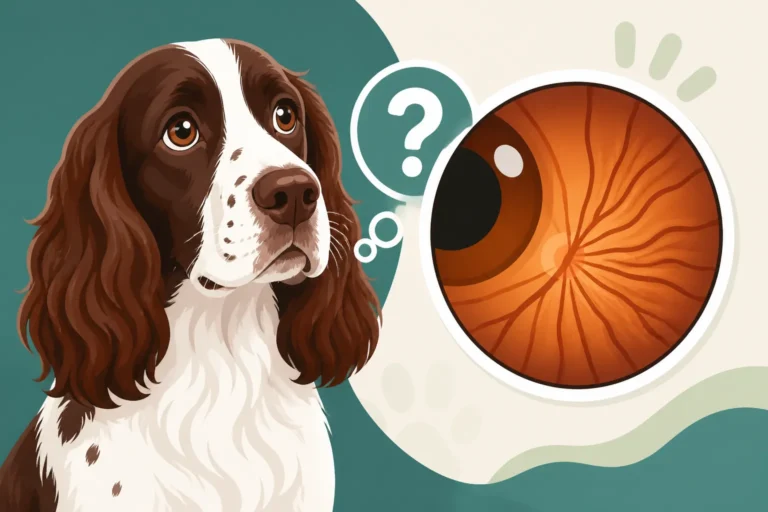
One of the more common conditions screened for in young Springer Spaniels is retinal dysplasia. This is a congenital abnormality where the retina, the light-sensitive tissue at the back of the eye, develops abnormally. It can range from mild folds in the retina that don't affect vision significantly (often called multifocal retinal dysplasia) to more severe geographical retinal dysplasia or even total retinal detachment, which can cause blindness.
An ophthalmologist can usually detect retinal folds or more severe forms of dysplasia in puppies as young as 6-8 weeks old. While mild forms might not require treatment, severe cases can lead to vision impairment. This is why it's a crucial part of the early eye exam process. For more detailed information, you can read about Retinal Dysplasia in a Springer Spaniel.
Persistent Pupillary Membranes (PPMs)
PPMs are remnants of a fetal structure that normally regresses by about 4-6 weeks of age. These strands of tissue can stretch across the pupil or attach to other structures within the eye. In most cases, if they're small and don't attach to the cornea or lens, they cause no vision problems and may even fully disappear by the time the puppy is older.
However, if they are extensive or attach to critical areas, they can cause corneal opacities or cataracts, potentially affecting vision. An ophthalmologist can easily identify PPMs during a dilated eye exam and determine their significance. While not always a serious issue, it's something to note and monitor, as it can sometimes be linked to other developmental ocular anomalies.
Entropion and Ectropion
These are eyelid abnormalities that can be present from a young age, although sometimes they only become apparent as the puppy grows. Entropion, as mentioned earlier, is when the eyelid rolls inward, causing eyelashes and hair to rub against the cornea, leading to irritation, pain, tearing, and potentially corneal ulcers. Ectropion is the opposite, where the eyelid rolls outward, exposing the conjunctiva and predisposing the eye to dryness and infection.
Both conditions can be detected at 8 weeks, especially if severe. Mild cases might be monitored, but significant entropion often requires surgical correction to prevent chronic pain and damage to the eye. Understanding Whether a Springer Spaniel's Eyelashes Grow Inward is critical for detecting entropion.
Here's a quick overview of common eye conditions and their typical screening window:
| Condition | Description | Observable at 8 Weeks | Treatment/Management |
|---|---|---|---|
| Retinal Dysplasia | Abnormal development of the retina (folds, detachments). | Yes (especially folds) | Monitoring; surgery for severe detachment (rare). |
| Persistent Pupillary Membranes (PPMs) | Remnants of fetal eye tissue across pupil. | Yes | Often no treatment; monitor for corneal/lens issues. |
| Entropion | Eyelid rolls inward, causing irritation from lashes. | Yes | Surgical correction for moderate to severe cases. |
| Ectropion | Eyelid rolls outward, exposing conjunctiva. | Yes | Monitoring; surgery for severe cases. |
| Juvenile Cataracts | Opacity in the lens, can be inherited. | Sometimes | Surgical removal if vision is significantly impaired. |
| Progressive Retinal Atrophy (PRA) | Degeneration of the retina, leading to blindness. | No (early signs rarely) | No cure; DNA testing crucial. |
| Primary Glaucoma | Increased pressure in the eye, painful, leads to blindness. | No (predisposition can be screened later) | Medication; surgery to preserve vision/comfort. |
While not typically observable at 8 weeks, it's important to remember that conditions like Progressive Retinal Atrophy in a Springer Spaniel and Primary Glaucoma and the Springer Spaniel That Loses an Eye are significant concerns for the breed. While clinical signs for these might appear later, reputable breeders will have screened the parents for these conditions using genetic tests and OFA Eye Certification Registry exams, which also helps identify breeding dogs with narrow drainage angles (a risk factor for glaucoma). This emphasizes the importance of verifying parental health clearances.
What to Do if Your Springer Spaniel Puppy Fails an Eye Exam
Finding out your adorable eight-week-old Springer Spaniel puppy has an eye issue can be incredibly disheartening, but it's not always a cause for panic. Your course of action will depend heavily on the specific diagnosis, its severity, and the advice of your veterinary ophthalmologist.
Understanding the Diagnosis and Prognosis
First and foremost, it’s crucial to get a clear understanding of the diagnosis. Ask your vet or the specialist to explain everything in detail. Is it a minor issue like a small PPM that may resolve on its own? Or is it a more serious condition like significant retinal dysplasia or severe entropion? Knowing the specific condition, its potential progression, and the prognosis for your puppy’s vision is paramount. For instance, some mild retinal folds might never impact vision, while others could lead to progressive issues.
Don't hesitate to ask about the long-term outlook. Will your puppy likely maintain good vision? Will they require lifelong medication or future surgeries? Understanding the full scope of the diagnosis will help you make informed decisions about your puppy's care. This is also where having a good pet insurance policy, such as one from Healthy Paws, can be incredibly beneficial, as unexpected veterinary costs for specialized care can add up quickly.
Seeking Second Opinions and Specialist Care
If the diagnosis is serious or unclear, don't be afraid to seek a second opinion from another board-certified veterinary ophthalmologist. Medical opinions can sometimes vary, and getting another perspective can offer reassurance or present alternative treatment strategies. In many cases, especially with inherited conditions, ongoing specialist care will be necessary. Your general veterinarian will work in conjunction with the ophthalmologist to ensure your puppy receives the best possible care.
The ophthalmologist might recommend further diagnostic tests, such as electroretinography (ERG) for certain retinal conditions, or specific genetic tests if the breeder hasn't already performed them on the parents. This collaborative approach ensures that your Springer Spaniel gets comprehensive and specialized treatment tailored to their unique needs. Remember that Whether a Springer Spaniel Needs a Yearly Eye Exam becomes even more critical for a puppy with an existing eye condition.
Managing and Living with Eye Conditions
Living with a Springer Spaniel puppy who has an eye condition often means a commitment to ongoing management. This could involve daily eye drops, regular follow-up appointments with the ophthalmologist, or even surgical procedures. For conditions like severe entropion, surgery is often recommended to prevent chronic pain and corneal damage. For Whether a Springer Spaniel Gets Cataracts in young dogs, surgery might be an option to restore vision.
You might also need to make adjustments to your puppy's environment to keep them safe and comfortable, especially if their vision is compromised. This might include keeping furniture in consistent locations, using scent cues, or avoiding overly stimulating environments. The most important thing is to provide a loving and supportive home that caters to their needs. With proper care and attention, many Springer Spaniels with eye conditions can still lead full, happy, and active lives. Again, the financial aspect of long-term care for specific eye conditions can be substantial, so if you're looking into pet insurance, consider plans like those offered by Healthy Paws which can help cover these ongoing costs.
Ultimately, your commitment to your puppy's well-being is what matters most. By understanding the significance of early eye exams, advocating for your puppy's health, and working closely with veterinary professionals, you can navigate any challenges and ensure your Springer Spaniel enjoys a lifetime of joyful companionship, regardless of their visual acuity.
Disclaimer
This article is intended for informational purposes only and does not constitute veterinary advice. Always consult with a qualified veterinarian or a board-certified veterinary ophthalmologist for any health concerns or before making any decisions about your pet's medical care.