Whether a Field Springer Spaniel Is Tested as Often
It's a question I hear all the time from folks diving into the world of English Springer Spaniels: "Do field-bred Springers get the same rigorous health checks as their show-bred cousins?" There's a persistent whisper out there that working lines might cut corners on testing, especially when compared to the meticulously presented dogs you see in the conformation ring. This guide will explore the realities of health testing across both types, helping you understand what to look for no matter which kind of Springer captures your heart.
Understanding the Health Testing Landscape for Springer Spaniels
When we talk about "health testing" in purebred dogs, we're not just referring to a quick vet check-up. We're talking about specific, often specialist-performed evaluations and DNA tests designed to screen for genetic conditions known to affect a particular breed. For English Springer Spaniels, these tests are crucial because the breed, like many others, carries a predisposition to certain hereditary health issues. A responsible breeder, whether they're producing field champions or show ring stars, understands that health is paramount.
The perception that field-bred Springer Spaniels might be tested less frequently can stem from a few places. Historically, the focus in working lines has been intensely on performance, drive, and biddability. A dog that couldn't perform its job in the field, even if structurally sound, wasn't considered valuable. On the other hand, show lines have always emphasized conformation to a written standard, and a dog's physical presentation, including overall health and soundness, is directly judged. This emphasis might lead some to believe that show breeders are inherently more focused on official health clearances. However, this is a generalization that doesn't always hold true in today's breeding world. Good breeders in both camps are deeply invested in the health of their lines.
The landscape of genetic testing has also evolved dramatically over the years, making it easier and more accessible for all breeders to screen their stock. We now have DNA tests for several critical conditions, which means a simple cheek swab can provide definitive answers that were once impossible to obtain without more invasive or costly procedures. This advancement has leveled the playing field considerably, making comprehensive health testing a standard expectation for reputable breeders regardless of their focus on field or show.
Why Perceptions About Field Versus Show Testing Diverge
The idea that field Springers might be tested less often isn't entirely unfounded, but it's more about how the information is presented and prioritized than a universal lack of care. In the past, and sometimes even today, a field breeder might place immense value on proven working ability over a comprehensive list of health certificates, assuming that a dog performing at a high level must be healthy. This isn't always a sound assumption, as some genetic conditions don't manifest until later in life, or they might subtly impact performance in ways that are hard to attribute without specific testing.
Show breeders, by necessity, often adhere very strictly to breed club recommendations for health screening, as these are sometimes mandated or strongly encouraged for participation in sanctioned events or for achieving certain titles. Their dogs are regularly handled and examined by judges, and any visible health issues or structural unsoundness could be penalized. This public scrutiny naturally encourages a transparent approach to health clearances. You'll often see binders full of OFA and CERF certificates proudly displayed at a show breeder's kennel.
For field breeders, while health is still vital for a dog that needs stamina and soundness to work all day, the emphasis might lean towards genetic conditions that directly impact performance, such as PFK Deficiency and the Springer Spaniel That Collapses After Exercise. Other issues, like certain eye conditions, might be equally present but perhaps historically considered less detrimental to a dog's ability to quarter a field or retrieve a bird. However, this distinction is blurring. With greater awareness and easier access to testing, responsible field breeders are increasingly recognizing the importance of a full panel of health checks to ensure the longevity and well-being of their working partners.
The Critical Health Tests Every Springer Spaniel Needs
Regardless of whether you're looking for a dog bred for the field or the show ring, there are core health tests that every reputable English Springer Spaniel breeder should perform on their breeding stock. These tests target conditions known to affect the breed and can significantly impact a dog's quality of life and lifespan. When you're considering a puppy, asking to see proof of these clearances for both parents is non-negotiable.
Here's a breakdown of the key tests:
Hip and Elbow Dysplasia Screening
Hip and elbow dysplasia are unfortunately common orthopedic conditions in many medium to large breeds, including Springer Spaniels. These conditions involve abnormal development of the hip or elbow joints, leading to pain, arthritis, and lameness. Screening for Hip Dysplasia in a Springer Spaniel is typically done via X-rays evaluated by a veterinary radiologist, often through organizations like the Orthopedic Foundation for Animals (OFA) in the United States. A good breeder will have parents with "good," "fair," or "excellent" hip ratings and normal elbow ratings. While a field-bred dog needs robust joints for its demanding work, a show-bred dog also requires sound structure to move gracefully in the ring. Both types benefit immensely from careful screening.
Eye Examinations
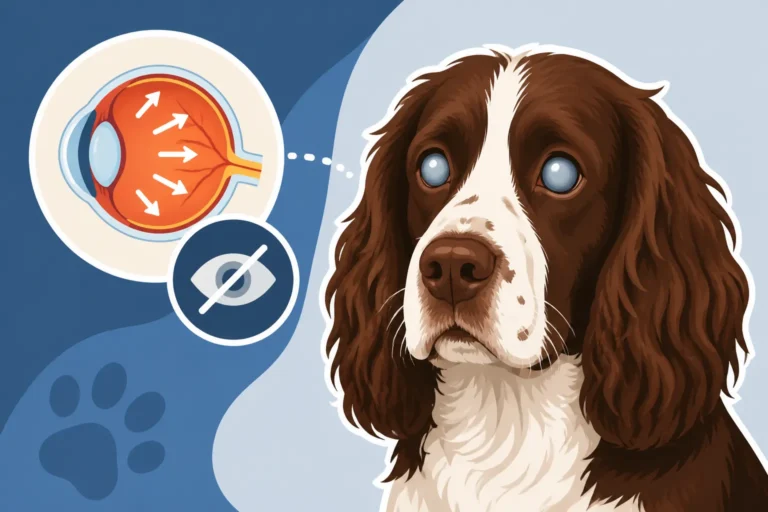
Springer Spaniels are prone to several hereditary eye conditions that can range from mild to severely debilitating. Annual eye examinations by a board-certified veterinary ophthalmologist (ACVO) are crucial. These exams screen for conditions like Progressive Retinal Atrophy (PRA), Retinal Dysplasia, and cataracts. Additionally, a gonioscopy might be performed to check the drainage angle of the eye, which is vital for detecting a predisposition to Primary Glaucoma and the Springer Spaniel That Loses an Eye. The good news is that there are DNA tests available for some forms of PRA, providing an additional layer of certainty. A breeder serious about producing healthy dogs will be diligent about these eye clearances, and you should specifically ask about The Four Eye Diseases a Springer Spaniel Breeder Screens For.
DNA Tests for Inherited Diseases
Modern DNA testing has revolutionized responsible breeding. For English Springer Spaniels, there are two particularly significant genetic conditions to test for:
- Fucosidosis: This is a devastating neurological lysosomal storage disease that is always fatal. It's an autosomal recessive condition, meaning a puppy must inherit a copy of the defective gene from both parents to be affected. There is a definitive DNA test available, making it entirely preventable. No responsible breeder, regardless of line, should be breeding without testing for this. Knowing that Fucosidosis Kills a Springer Spaniel Within Weeks of the First Sign underscores the importance of this simple test.
- Phosphofructokinase (PFK) Deficiency: This is a metabolic disorder affecting red blood cells, leading to exercise intolerance, anemia, and dark urine after strenuous activity. Like Fucosidosis, it's an autosomal recessive trait, and a DNA test exists. Dogs affected by PFK deficiency cannot sustain heavy exercise, which is obviously a major concern for field-bred Springers, but also impacts the quality of life for any active Springer. You'll want to ensure both parents have been cleared of being affected by or carriers for PFK.
Here's a quick summary of essential health tests:
| Health Condition | Type of Test | Why It's Important |
|---|---|---|
| Hip Dysplasia | X-ray (OFA/PennHIP) | Prevents painful joint degeneration and arthritis |
| Elbow Dysplasia | X-ray (OFA) | Prevents painful joint degeneration and arthritis |
| Progressive Retinal Atrophy (PRA) | Eye exam (ACVO) & DNA test | Prevents eventual blindness |
| Retinal Dysplasia | Eye exam (ACVO) | Prevents vision impairment or blindness |
| Glaucoma (Primary) | Gonioscopy & Eye exam (ACVO) | Prevents painful eye pressure leading to blindness, often requiring eye removal |
| Fucosidosis | DNA test | Prevents fatal neurological disease |
| PFK Deficiency | DNA test | Prevents exercise intolerance and severe metabolic issues |
This table highlights the foundational tests. A comprehensive health panel like The DNA Test That Should Precede Every Springer Spaniel Purchase can often cover multiple genetic conditions with one sample.
Finding a Reputable Breeder, Regardless of Type
The bottom line is that a reputable breeder prioritizes the health and welfare of their dogs above all else, whether they are focused on field work, conformation, or simply producing wonderful family companions. The type of Springer Spaniel – field or show – should not be an excuse for skipping health testing. In fact, a good breeder will be transparent and eager to discuss their testing protocols and share results.
When you're searching for a puppy, do your homework. Ask specific questions about health clearances. Don't just accept a verbal assurance; ask to see copies of certificates for the parents. A breeder should be able to provide OFA clearances for hips and elbows, current ACVO eye certifications, and DNA test results for Fucosidosis and PFK deficiency. If they breed field lines, they might emphasize the performance aspect, but they should still have these health records on hand. Conversely, a show breeder might talk about conformation, but health underlies everything.
Be wary of breeders who offer a significant discount on Whether an Untested Springer Spaniel Litter Is Worth Buying because they "don't believe in" or "can't afford" testing. The cost of comprehensive health testing is a small fraction of the lifetime cost of owning a Springer Spaniel, especially if you consider potential vet bills for untreated genetic conditions. A responsible breeder factors these costs into their puppy price because it's part of their commitment to the breed. Remember, proactive screening is always less heartbreaking and often less expensive than treating a preventable disease later on.
Also, ask about their health guarantee. A good breeder will stand behind their puppies and offer a contract that outlines what happens if a genetic health issue arises that wasn't screened for, or that slipped through the cracks. This demonstrates confidence in their breeding program. While pet insurance companies like Healthy Paws can cover unforeseen accidents or illnesses that arise after you bring your puppy home, they generally won't cover conditions that were known or should have been screened for prior to purchase. Therefore, the breeder's commitment to health testing is your first and best line of defense.
Ultimately, the goal is to bring home a healthy, happy English Springer Spaniel. Whether that dog will be flushing pheasants or prancing in a ring, its genetic health foundation should be solid. Look for breeders who are passionate about their dogs and prioritize their well-being, demonstrated through thorough health testing and transparency. The extra effort you put into finding such a breeder will be rewarded with years of joy with your beloved companion. Consider reading more about The Health Tests Both Springer Spaniel Parents Should Have for a deeper dive into specific requirements.
Disclaimer
This article is for general informational purposes only and does not constitute professional advice. Laws, prices and regulations vary by location and change over time. Consult a qualified professional for guidance on your specific situation.