How Britain and America Diverged on Springer Spaniel Type
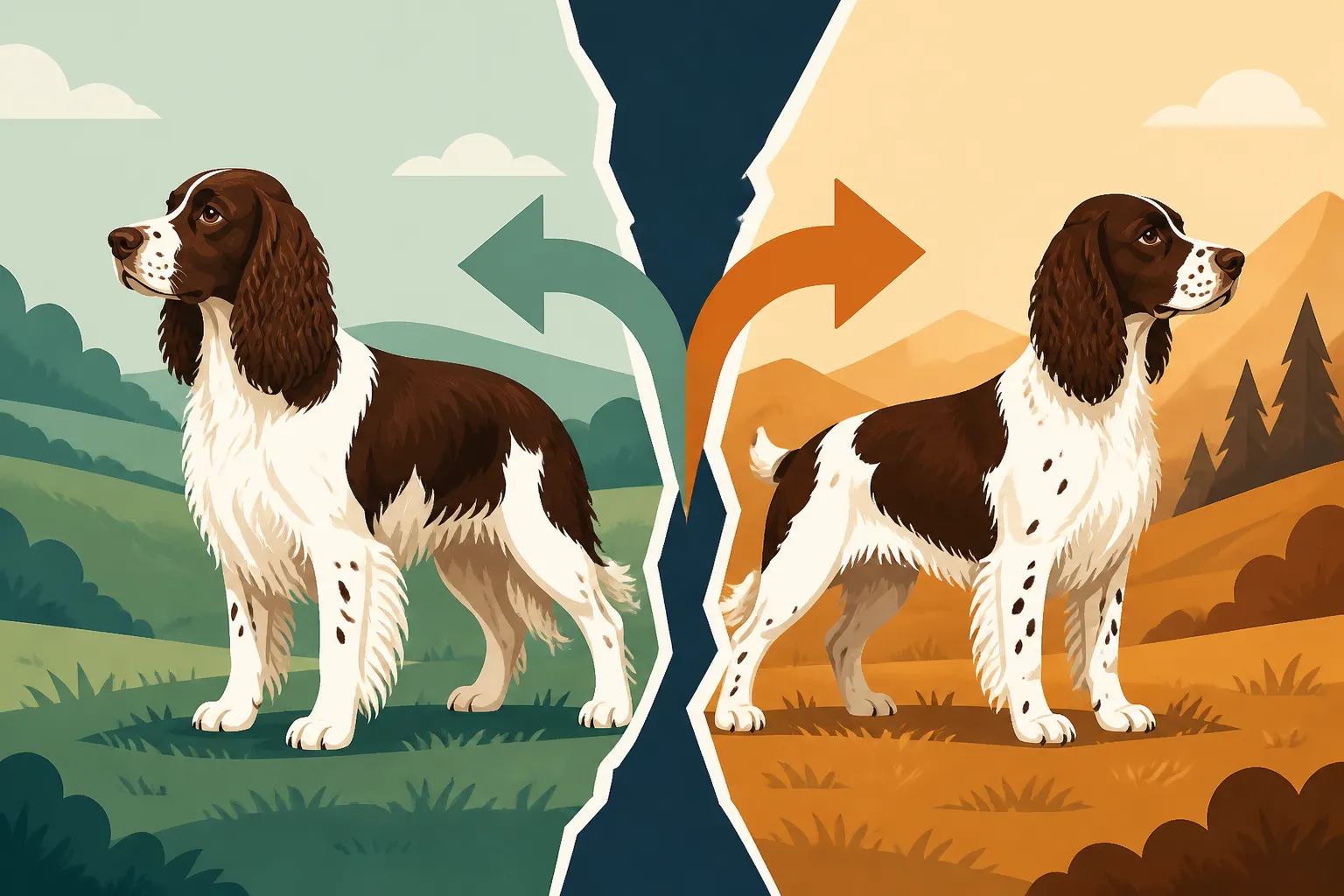
It’s a common scenario: you’re admiring an English Springer Spaniel at the dog park, or perhaps scrolling through photos online, and you notice a stark difference between two dogs both labeled as "Springer." One might be smaller, lighter, with a short, neat coat, while the other is larger, more heavily boned, and adorned with flowing feathering. This isn't just a trick of the light or individual variation; it's a testament to how the English Springer Spaniel breed has diverged significantly between Britain and America over the decades. This guide aims to unravel the fascinating story behind these differences, helping you understand why these beloved dogs, despite sharing a name, can look and act so distinctly.
The Early Days: A Shared Foundation Across the Pond
Before we dive into the divergence, it’s essential to understand that all English Springer Spaniels, regardless of which side of the Atlantic they hail from, share a deep, rich history as gundogs. Their purpose was clear: to "spring" game from cover for hunters. This shared heritage is the bedrock upon which both modern British and American lines are built.
A Common Ancestry for All Springers
The ancestors of today's English Springer Spaniels have been flushing game from the British countryside for centuries. Early spaniels weren't rigidly categorized by breed as we know them today; rather, they were often grouped by their working purpose or size. Larger spaniels that "sprung" game were differentiated from smaller "cocking spaniels" that worked woodcock. This functional division laid the groundwork for what would eventually become the English Springer Spaniel breed. They were valued for their tireless energy, keen nose, and biddable nature, traits that are still hallmarks of the breed today. How Old the Springer Spaniel Is as an English Gundog delves deeper into these historical roots.
Imagine a scene from an old painting: a hunter with a group of eager spaniels, splashing through marshland or crashing through thickets. These dogs, whether larger or smaller, were bred for one thing – putting birds in the air. Their looks were secondary to their ability to perform. This utility-first approach was universal for these working dogs, long before formal breed standards and registrations came into play, ensuring a robust, healthy, and highly capable animal was perpetuated.
The Breed's Establishment and Early Standards
The formal recognition of the English Springer Spaniel as a distinct breed truly began in the early 20th century. The Kennel Club in England officially recognized the breed around 1902, setting a standard that described the ideal physical characteristics and temperament. This was a crucial step, as it created a blueprint for breeders to follow, aiming for consistency in appearance and function. Soon after, the breed made its way to North America, gaining recognition from the American Kennel Club (AKC) in 1910.
Initially, the standards across both countries were very similar, reflecting the common understanding of what an English Springer Spaniel should be. Breeders on both continents were working from essentially the same instruction manual, striving to produce dogs that were true to type. However, even with shared standards, interpretation and local preferences began to subtly influence breeding decisions. Small shifts over time, guided by differing ideals in what constituted "excellence" in the show ring or the field, would eventually lead to the noticeable divergence we observe today.
The Atlantic Divide: Factors Influencing Divergence
The chasm between British and American Springer Spaniel types didn't appear overnight. It was a gradual process, shaped by cultural preferences, the development of specific competitive events, and the natural isolation that comes from breeding on different continents. Each of these factors played a significant role in pushing the two populations down separate paths.
The Rise of Specialized Field Trials
One of the most powerful forces driving the divergence was the distinct evolution of field trials. In America, particularly, field trials for Springer Spaniels developed into highly competitive events focused on specific, fast-paced performance. Dogs were prized for their incredible speed, intense drive, and ability to cover ground quickly, often working far out in front of the handler. This emphasis on extreme athleticism and independence in the field meant that breeders specifically selected for these traits.
Over generations, this selective breeding for field trial success led to a dog that was lighter-boned, with a shorter, harsher coat that wouldn't snag as much in heavy cover, and an almost insatiable desire to hunt. These dogs, often referred to as "field bred" or "working bred" Springers, became finely tuned athletes. Their appearance, while still recognizably a Springer, became secondary to their unparalleled working ability. For a deeper look at the demands of these events, consider How American Field Trials Shaped the Springer Spaniel. This intense focus created a very different dog from its show-ring counterparts.
The Influence of the Show Ring Aesthetic
While field trials shaped one type, the conformation show ring molded another. In both Britain and America, the show ring emphasizes adherence to a written breed standard, focusing on appearance, structure, and gait. However, the interpretation of these standards, and what was considered "ideal," began to differ. British show lines, while still elegant, generally maintained a more moderate look, prioritizing a balanced, substantial dog.
American show lines, on the other hand, began to favor a more dramatic, heavily coated dog with substantial bone and a classic, flowing outline. There was a trend towards dogs that presented a more "glamorous" image in the ring, with ample feathering, a fuller skull, and a powerful, yet refined, presence. This meant breeders of "show bred" Springers selected for these aesthetic qualities. The practicalities of a working coat took a backseat to the visual appeal demanded by judges, leading to dogs with longer, denser coats that required more extensive grooming to maintain their show-ring splendor. The result is a stunning, eye-catching dog, but one whose physical attributes are optimized for beauty over rugged field work. How Show Springer Spaniel Ears Differ is a good example of how subtle aesthetic choices can impact breed type.
Geographical Separation and Limited Gene Flow
It's easy to forget the simple reality of geography when discussing breed divergence. With thousands of miles separating Britain and America, the exchange of breeding stock became less frequent and more challenging over time. While some champion dogs were certainly imported back and forth, it wasn't a constant, widespread practice that maintained a single, unified gene pool.
This geographical isolation meant that breeders in each country were largely working with their own distinct pools of dogs. Once specific traits began to be favored in either the field or show ring on one continent, those traits became more concentrated within that population. Without a consistent influx of genes from the other side of the Atlantic, the subtle differences became more pronounced with each successive generation. It's a natural evolutionary process; isolated populations tend to diverge, especially when there are different selection pressures at play. Think of it like two rivers flowing from the same source, but eventually carving their own unique paths through different landscapes.
Distinctive Traits: What Sets British and American Springers Apart
So, you're probably wondering, what are these actual differences? Beyond general impressions, what specific traits can you look for to distinguish a British-type Springer from an American-type, or a field-bred from a show-bred? The distinctions are quite clear once you know what you're looking for, encompassing both physical appearance and underlying temperament and drive.
Physical Appearance: Form Follows Function (and Fashion)
When comparing a field-bred British Springer to an American show-bred Springer, the visual differences are striking.
Coat: This is often the most noticeable difference. American show-bred Springers typically boast a much longer, denser coat with abundant feathering on their legs, chest, and belly. This coat requires significant grooming to prevent matting and maintain its pristine show-ring look. Field-bred Springers, whether British or American, have a shorter, coarser, and generally less profuse coat. This functional coat is designed for practicality, shedding burrs and drying quickly, minimizing maintenance after a day in the field. How Short a Field Springer Spaniel's Coat Runs gives a better idea of this practical difference.
Build and Bone: American show Springers tend to be more substantial, with heavier bone and a more robust build. They often appear deeper in the chest and broader overall. British field-bred Springers, and often British show Springers too, are generally lighter-boned, more athletic, and appear slightly more refined or "leggy." This leaner build in field dogs is all about agility and endurance, allowing them to navigate dense cover with ease for hours on end.
Head and Expression: While both types have the classic Springer Spaniel gentle expression, there are subtle differences in head shape. American show lines often have a fuller, more sculpted head, sometimes with a slightly squarer muzzle. Field-bred dogs, regardless of origin, tend to have a slightly finer, less "heavy" head, again reflecting a focus on functionality rather than exaggerated features.
Tail: This is a tricky one due to varying docking laws. In many places in the US, tails of working Springers are often docked short. In Britain, tail docking is now largely restricted, so many British-bred Springers, even field lines, will have full tails. However, the set of the tail can also differ, with show lines often carrying their tails more gaily or with a more pronounced curve, while field lines might carry them straighter, especially when working.
Here's a quick comparison table:
| Feature | American Show Springer Spaniel | British Field Springer Spaniel |
|---|---|---|
| Coat | Long, dense, abundant feathering | Shorter, coarser, less feathering |
| Build | More substantial, heavier bone | Lighter, more athletic, less bone |
| Head | Fuller, more sculpted | Finer, less "heavy" |
| Energy Level | High, but often channeled into family life/training | Extremely high, intense working drive |
| Primary Purpose | Conformation showing, family companion | Gundog (hunting, field trials) |
| Grooming Needs | High | Moderate |
Temperament and Working Style: More Than Just Looks
It's not just their looks that differ; their inherent temperaments and working styles have also diverged, largely due to the selective breeding pressures mentioned earlier.
Energy and Drive: Field-bred Springers, whether British or American, are bred for intense, sustained activity. They possess an almost boundless energy and a powerful desire to work. They are often described as "driven" dogs, needing a significant outlet for their physical and mental energy. If not given a job or ample exercise, they can become destructive or anxious. They want to be out there, quartering, finding scent, and bringing back birds. How Much Exercise a Field Bred Springer Spaniel Needs illustrates the commitment required for these dogs.
American show-bred Springers, while still very active and needing daily exercise, generally have a more moderate energy level compared to their field cousins. They are often bred to be excellent family companions first and foremost, with a calmer demeanor indoors. They still possess that wonderful Springer biddability and love of activity, but they might be more content with long walks, fetch in the park, and general family engagement rather than needing to run miles every day or participate in advanced gundog work.
Biddability and Independence: Field-bred dogs are often incredibly focused on their task and can be quite independent in their working style, especially when hot on a scent. They are highly intelligent and quick to learn but require consistent, clear training to channel their drive appropriately. While they are keen to please, their instinct to hunt can sometimes override other commands if not properly ingrained. Why a Springer Spaniel Puts Its Nose to the Ground and Vanishes is a prime example of this strong drive.
Show-bred Springers tend to be exceptionally biddable and eager to please, making them wonderful companions and highly trainable for various dog sports like obedience and agility. Their drive is often more easily managed in a typical pet home, as they are bred for an amiable and cooperative nature that suits living in a family environment.
Navigating the Differences as an Owner
Understanding these divergences is absolutely crucial for anyone considering adding an English Springer Spaniel to their family. Choosing the right type for your lifestyle is the key to a happy partnership.
Choosing the Right Type for Your Lifestyle
This is perhaps the most important takeaway for prospective Springer Spaniel owners. Do not assume all English Springer Spaniels are the same!
For the Active Hunter or Dog Sports Enthusiast: If you're an avid hunter, plan to compete in field trials, or are deeply committed to high-energy dog sports like advanced agility or scent work, a field-bred Springer (British or American lines, with an emphasis on working pedigree) is likely to be your ideal match. These dogs thrive when given a job to do and will excel in environments where their natural instincts are utilized. However, be prepared for their immense energy and training needs. They're not just pets; they're partners in activity. A Field Bred Springer Spaniel Is a Different Dog to Live With truly underscores this point.
For the Active Family Companion: If you're looking for an enthusiastic, loyal, and loving family dog who will enjoy long walks, hikes, daily playtime, and can cuddle up on the couch at the end of the day, an American show-bred Springer or a more moderately bred British pet line might be a better fit. While they still require significant exercise and mental stimulation, their overall intensity tends to be more manageable for a typical household. They are often more suited to homes where they are primarily companions rather than working partners. Which Springer Spaniel Type Suits a Pet Home goes into more detail on this choice.
It's vital to research breeders carefully and discuss your lifestyle and expectations honestly. A reputable breeder will be able to guide you towards the right type of Springer puppy that aligns with your family's needs and activity levels. Don't fall in love with the look of one type if its underlying temperament and energy are going to clash with your daily life.
Understanding Health and Care Considerations
The physical and temperamental differences between the types also translate into variations in their care and potential health concerns.
Grooming Demands: The luxuriant coat of the American show Springer, while beautiful, requires significantly more grooming. Regular brushing (daily or every other day) is essential to prevent mats, especially in the copious feathering. Professional grooming appointments for trimming might also be a regular necessity. In contrast, the shorter, denser coat of a field-bred Springer is much lower maintenance, requiring less frequent brushing, though still benefiting from regular care to remove debris from the field. The Show Springer Spaniel Coat That Adds a Groomer to Your Budget is a good resource for understanding these increased costs and time commitments.
Exercise and Mental Stimulation: As mentioned, field-bred dogs demand much more strenuous and consistent exercise. This means owners must be prepared for long runs, consistent training sessions, and potentially participation in organized dog activities. Without adequate outlets, these dogs can develop behavioral issues like destructive chewing, excessive barking, or anxiety. Show-bred dogs also need daily exercise and mental engagement but are often satisfied with less intense, though still substantial, activity.
Potential Health Considerations: While both types of English Springer Spaniels are susceptible to certain breed-specific health issues, some may be more prevalent or exacerbated by specific physical traits. For example, the heavier coats and ear leathers of show lines might contribute to a slightly higher incidence of ear infections if not meticulously cared for. Joint issues like hip and elbow dysplasia are concerns for both, but the heavier build of some show lines or the intense physical demands on working dogs can play a role in their presentation. Always choose a breeder who performs all recommended health clearances for their breeding stock, regardless of type. The Health Tests Both Springer Spaniel Parents Should Have is an excellent resource for knowing what to ask your breeder. You might even find some reputable brands offering supplements like joint support for canine health on platforms like Chewy, which can be beneficial for active dogs or those prone to joint issues.
Ultimately, whether you lean towards a field-bred dynamo or a show-ring stunner, understanding the historical divergence and its impact on the modern English Springer Spaniel is vital. It allows you to make an informed decision, ensuring that the beautiful, energetic, and loving Springer you bring home is the perfect match for your family's life.
Disclaimer
This article is for general informational purposes only and does not constitute professional advice. Laws, prices and regulations vary by location and change over time. Consult a qualified professional for guidance on your specific situation.