How Old the Springer Spaniel Is as an English Gundog
It’s easy to look at our furry English Springer Spaniel companions today, curled up on the sofa or tearing around the park, and forget just how much history is packed into those floppy ears and wagging tails. Many of us wonder about the true origins of our dogs, especially those breeds so deeply entwined with specific historical roles. If you’ve ever found yourself asking, "How old is this breed really?" then you're tapping into a fascinating lineage that goes back centuries, long before formal breed clubs or kennel registrations existed. This guide will walk you through the rich history of the English Springer Spaniel as an English gundog, exploring its journey from ancient woodland companion to the beloved flushing spaniel we know today.
The Deep Roots of Flushing Dogs in England
When we talk about the English Springer Spaniel, we’re not just talking about a breed; we’re talking about a concept of dog work that stretches back far into England's past. Long before distinct breeds with official names existed, there were "spaniels" – a general term for dogs believed to have originated from Spain, brought to Britain, and quickly adapted to local hunting needs. These weren't the elegant, feathered show dogs we sometimes see today, nor were they the sleek, hard-charging field trial competitors. They were simply dogs, bred for a purpose, evolving alongside the hunting methods of their human partners.
From Hawking to Early Firearms
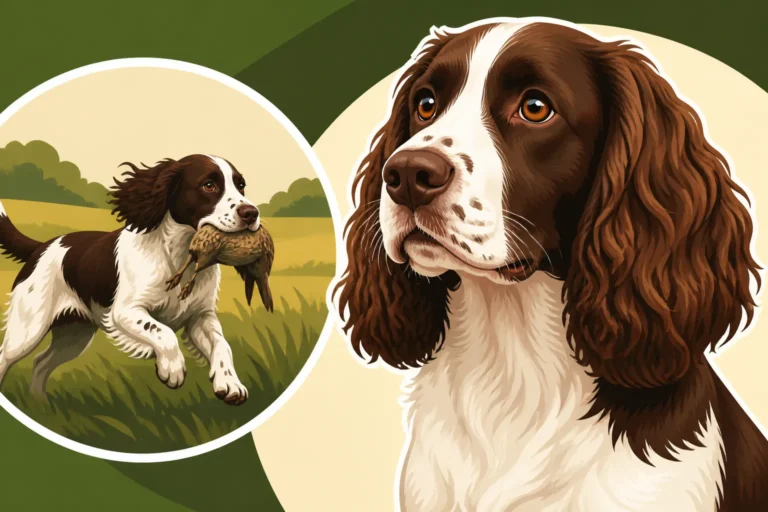
Imagine England centuries ago, a landscape of dense forests and marshy fens. Hunters relied on various methods to put food on the table, often employing nets, bows, and even falcons. This is where the early ancestors of our modern English Springer Spaniel shine. These were intelligent, energetic dogs whose primary role was to "spring" game from its cover. Picture a bird, perhaps a partridge or a pheasant, hidden deep within a thicket. A skilled spaniel would work diligently, quartering the ground back and forth, using its keen nose to locate the bird, and then flush it into the air for the waiting falconer or net-handler. It wasn't about retrieving; it was about finding and flushing.
As technology advanced and primitive firearms began to emerge, the role of these flushing dogs became even more critical. Instead of pushing game into nets, they would now flush birds and small game directly towards the gunner. This required a dog with immense drive, stamina, and a willingness to work close to the hunter, anticipating the flush. This shift marks the true beginning of the spaniel as a "gundog" in the modern sense, partners in the hunt rather than just gatherers for nets.
The Ancient Lineage of Land Spaniels
Historical records, illuminated manuscripts, and tapestries from the Middle Ages frequently depict various types of "spaniels" alongside their human masters. While they weren't yet called "English Springer Spaniels," the description of their work and appearance aligns remarkably well with what we understand about their descendants. These were "land spaniels," distinct from water spaniels, primarily tasked with flushing game on dry ground. They were the original all-terrain vehicles of the hunting world, capable of navigating dense undergrowth and brambles to find hidden birds.
The term "spaniel" itself hints at their likely origins, suggesting a connection to Spain. However, once in England, these dogs were undeniably shaped by the specific demands of the English countryside and hunting traditions. They were selected for traits like courage in thick cover, an exceptional nose, and the relentless desire to find and flush game. This constant selection for working ability meant that while their exact appearance might have varied, their fundamental character as tireless gundogs was deeply ingrained. Their presence is so long-standing that it's difficult to pinpoint an exact "start date," but we can confidently say spaniel-type dogs fulfilling the Springer's role have been integral to English hunting for many centuries.
A Name Born from Function: "Springing" Game
The very name "Springer Spaniel" is a direct nod to the primary function these dogs were bred for in the field. It’s not just a catchy name; it’s a description of their unique and essential role in traditional English hunting. Understanding this function helps us appreciate the drive and energy still inherent in the breed today.
What it Meant to "Spring" Game
To "spring" game means to locate birds or small game hidden in dense cover and, upon finding them, to flush them vigorously into the air or out into the open. Unlike a Pointer, which would indicate game by standing rigid and still, or a Retriever, which would fetch downed game, the Springer's job was all about the explosive flush. Imagine walking through a field of tall grass or a thorny hedgerow. The Springer would quarter back and forth in front of the hunter, nose to the ground, systematically covering the area. When a pheasant or rabbit was detected, the dog would dive in, startling the game and causing it to "spring" up or bolt out. This allowed the hunter a clear shot.
This required a dog with an incredible prey drive, immense stamina, and the ability to work independently yet remain connected to the hunter's pace and direction. The constant motion and intense focus are part of what makes English Springer Spaniels such dynamic and engaging dogs, even for those who never pick up a gun. That instinct to quarter, find, and "spring" is deeply ingrained, explaining why your pet Springer might systematically search your yard for imaginary quarry or joyfully flush squirrels from trees. It’s a powerful echo of their ancestral purpose. Springing Game: What the Springer Spaniel Name Describes
Early Distinctions by Size and Quarry
For a significant period, spaniels in England weren't categorized into the distinct breeds we recognize today. Instead, they were often grouped by their size and the specific type of game they were best suited to hunt. Broadly, there were larger spaniels, which would eventually become the Springers, and smaller spaniels, which would evolve into the Cockers. The distinction was practical: a smaller dog might be better at flushing woodcock from dense thickets, while a larger, more robust dog was needed for pheasants or larger ground game.
It wasn't uncommon for a single litter of spaniel puppies to contain both larger and smaller individuals. Hunters would simply select the puppies that best fit the requirements for their specific hunting needs. A smaller puppy might be earmarked for "cocking" (hunting woodcock), while a larger, more powerful one would be destined for "springing" duties. This fluid classification meant that for centuries, the genetic lines of what we now call English Springer Spaniels and English Cocker Spaniels were intertwined. The focus was purely on functional ability, not on adherence to a breed standard. Why Springer and Cocker Puppies Once Came From One Litter This historical pragmatism highlights how profoundly the breed's development was shaped by its working utility, long before the age of kennel clubs and formal registrations.
The Formal Emergence of the English Springer Spaniel
While spaniel-type dogs had been working the fields of England for centuries, the formal recognition of the "English Springer Spaniel" as a distinct breed is a more recent development. This shift from functional classification to defined breed standards marked a pivotal moment in their history, solidifying their identity and paving the way for the breed we cherish today.
The Crucial Turn-of-the-Century Split
The late 19th and early 20th centuries were a time of great change for many dog breeds, as enthusiasts began to organize and establish formal kennel clubs and breed standards. For spaniels, this meant a clearer delineation between types that had previously been intermingled. The pivotal moment for the English Springer Spaniel came around the turn of the 20th century. Until then, as we discussed, spaniels were largely separated by size, with the larger ones being "springers" and the smaller ones "cockers." There was even a historical weight classification: if a spaniel weighed less than a certain amount, it was considered a Cocker; anything heavier was a Springer.
However, a dedicated group of fanciers and hunters recognized the distinct characteristics and working style of the larger "springing" spaniels. They believed these dogs deserved their own official designation. This led to the significant decision to formally separate the English Springer Spaniel from the Cocker Spaniel. It wasn't just about size anymore; it was about establishing a consistent type and working ability. The Kennel Club in England officially recognized the English Springer Spaniel as a distinct breed in the very early 1900s, solidifying its place among the established gundog breeds. The 1902 Split That Separated Springer From Cocker This act acknowledged centuries of specific development and purpose, granting the breed its own identity.
Establishing the Breed Standard and Field Trials
Once the English Springer Spaniel was formally recognized, efforts began to define a breed standard—a detailed description of the ideal physical characteristics and temperament. This standard aimed to guide breeders in producing consistent, healthy dogs that embodied the best traits of the breed. Simultaneously, the burgeoning world of dog sports and competitions also played a crucial role in shaping the modern English Springer Spaniel.
Field trials, specifically designed to test a gundog's natural hunting abilities, became immensely popular. These trials provided a platform for breeders to showcase their dogs' working prowess and for handlers to hone their training skills. Dogs were judged on their quartering pattern, nose, flushing ability, retrieving, and obedience. This competitive environment reinforced the selective breeding for strong working instincts and trainable temperaments. Through these trials, the English Springer Spaniel truly proved its mettle as an exceptional gundog, capable of performing complex tasks with precision and enthusiasm. The establishment of dedicated breed clubs and the focus on performance through field trials further cemented the English Springer Spaniel's reputation as a top-tier sporting dog, both in Britain and eventually across the globe. The Year the Kennel Club Recognized the Springer Spaniel
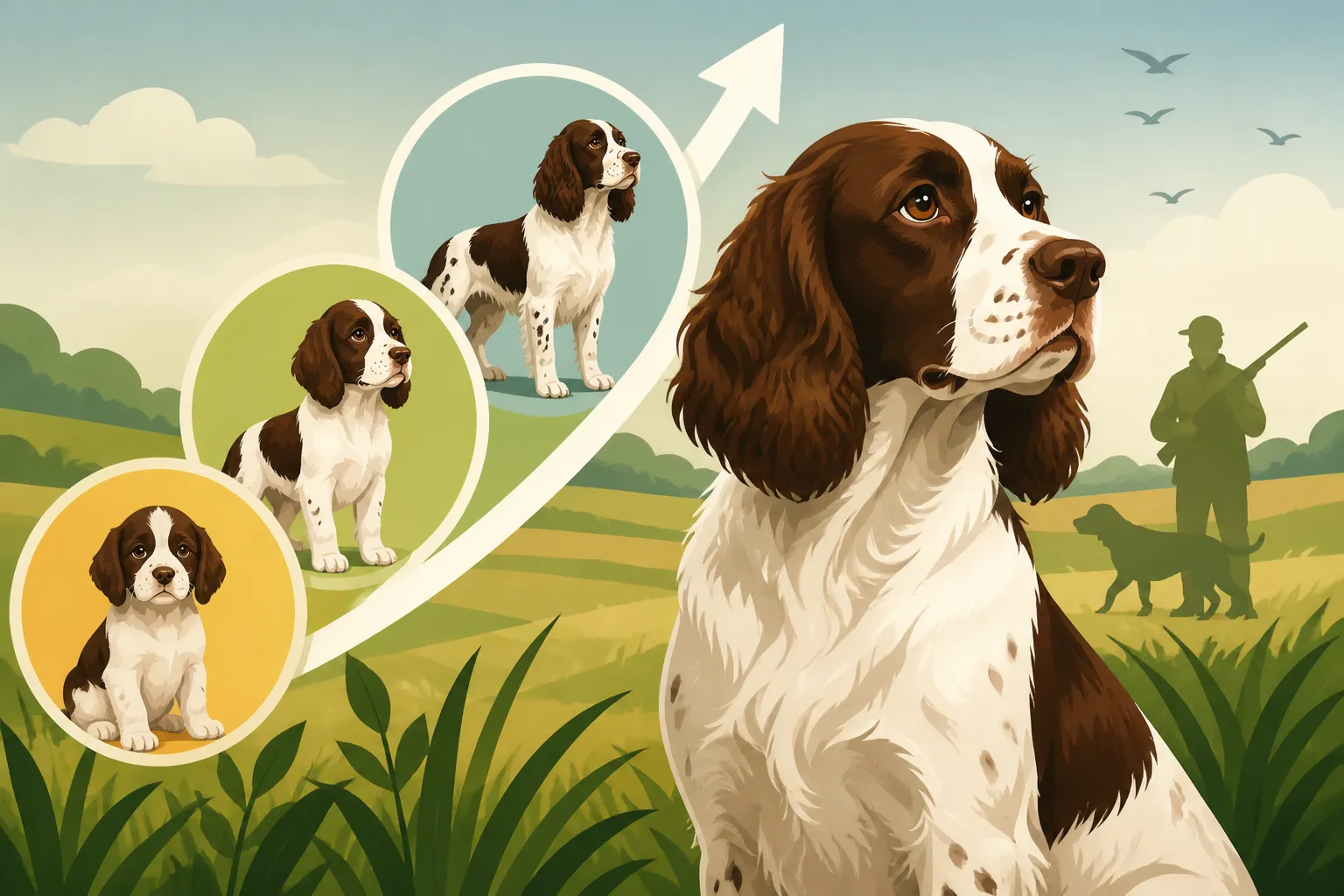
Here’s a simplified look at how the spaniel's role evolved over time:
| Era | Primary Hunting Method | Spaniel Role | Key Development |
|---|---|---|---|
| Pre-Firearms | Nets, Falcons, Bows | Flushing game from cover for capture/kill | Instinctual "springing" behavior for birds/small game |
| Early Firearms | Flintlocks, Muzzleloaders | Flushing game for the gun, working within range | Adaptation to working close with a shooter |
| 19th Century | Advancing Firearms | Specialized flushing, often with retrieving included | More refined working styles, informal size distinctions |
| Early 20th Century | Modern Sporting Arms | Formal recognition as "English Springer Spaniel" | Breed standards, dedicated field trials, breed clubs formed |
An Enduring Legacy in the Field
The journey of the English Springer Spaniel is one of remarkable consistency in purpose, coupled with evolving recognition. Despite centuries of change in hunting practices, the breed has steadfastly maintained its core identity as a dedicated and highly effective gundog, a legacy that continues to define it today.
The Unchanged Instinct of a True Gundog
While the world around them has transformed dramatically, the fundamental instincts that make an English Springer Spaniel a superb gundog remain largely unchanged. The drive to hunt, the keen nose for scent, the tireless energy to cover ground, and the innate desire to please their handler are still the hallmarks of the breed. Even if an English Springer Spaniel never sets foot in a field, that powerful internal engine is still running. These dogs are wired to work, to explore, and to find. This means that a pet Springer, while perhaps not flushing pheasants, still thrives on mental and physical stimulation, whether it's through retrieving a tennis ball, solving a puzzle toy from Chewy, or engaging in scent games in the backyard.
Generations of careful breeding for these working qualities have ensured that the breed's heritage is preserved. Whether from a long line of field trial champions or a beloved family pet, a Springer carries the echoes of countless hunts in its DNA. Their intelligence and eagerness to learn, which made them indispensable to ancient hunters, now make them excellent candidates for modern dog sports, therapy work, or simply being wonderfully engaged family companions. Whether the Springer Spaniel Was Bred to Flush or Retrieve This enduring instinct is a testament to the breed's deep-rooted connection to its origins.
Modern Relevance and Dedication to the Breed's Heritage
Today, the English Springer Spaniel continues to be a highly valued gundog in many parts of the world, particularly in its native England and North America. Field trials and hunting tests remain incredibly popular, offering a challenging arena for dogs and handlers to demonstrate their skills. Breeders dedicated to preserving the working lines often focus intensely on maintaining the health, temperament, and hunting prowess that define the breed. These working Springers are lean, athletic, and possess an almost boundless enthusiasm for their job. You'll often find these dedicated breeders sourcing high-quality kibble or specialized performance food, often readily available through retailers like Chewy, to fuel their active dogs' demanding lifestyles.
Even for those who choose a Springer as a family pet, there's a growing awareness of the breed's working heritage. Owners are encouraged to provide outlets for their Springer's natural abilities, whether through long walks, active games of fetch, or participation in dog sports like agility or obedience. This commitment to engaging their minds and bodies ensures that the modern English Springer Spaniel, regardless of its specific role, lives a fulfilled life that honors its long and distinguished history as an English gundog. Understanding their ancestral job helps owners meet their needs and truly appreciate the magnificent companions they are. Whether a Springer Spaniel Needs a Job to Be Happy This active involvement, from training How Many Weeks of Gundog Training a Springer Spaniel Needs to carefully monitoring their nutritional intake, ensures that the spirit of the ancient land spaniel thrives in the modern English Springer Spaniel.
Disclaimer
This article is for general informational purposes only and does not constitute professional advice. Laws, prices and regulations vary by location and change over time. Consult a qualified professional for guidance on your specific situation.