Why a Springer Spaniel Puts Its Nose to the Ground and Vanishes
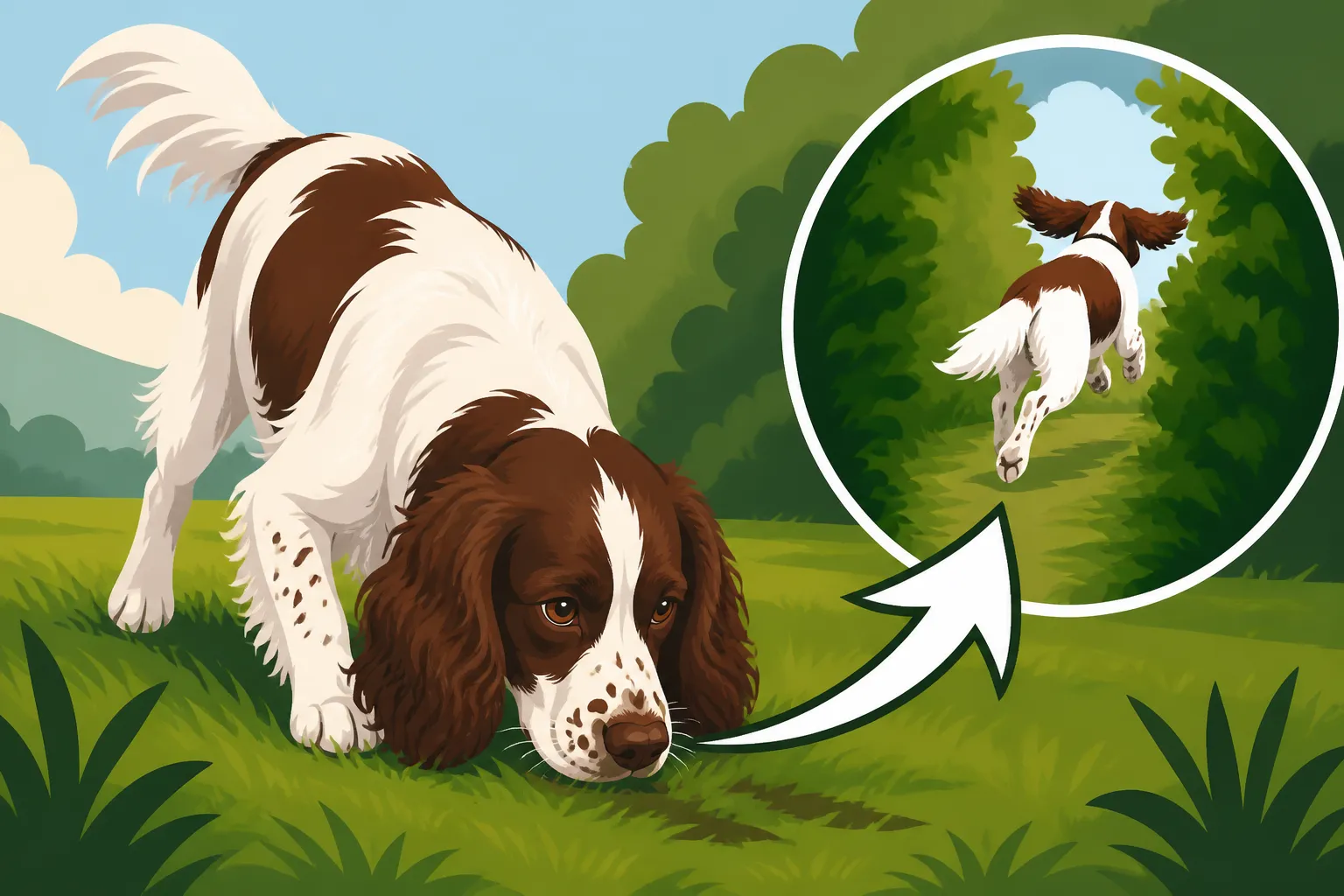
It's a scene many of us Springer Spaniel owners know all too well: one minute your bouncy, happy dog is trotting along, seemingly engaged with you, and the next, their nose hits an invisible tripwire. Their head goes down, their tail starts a frantic wag, and before you can even register what's happening, they're off, a blur of white and liver disappearing into the brush, totally deaf to your frantic calls. This guide is all about understanding why your Springer Spaniel seems to vanish on scent and, more importantly, how we can work with their incredible instincts to keep them safe and connected.
The Unmistakable Power of a Springer Spaniel's Nose
Let's face it, our Springer Spaniels are built for scent work. It’s not just a hobby for them; it’s fundamental to their very being, hardwired into their DNA. When they put that nose to the ground and take off, they're not being disobedient; they're simply being the dog they were bred to be. It can be incredibly frustrating from a human perspective, but understanding the sheer power of their olfactory senses is the first step toward working with them, rather than against them.
Built for Scent: The Science Behind the Superior Sniffer
The nose of an English Springer Spaniel isn't just a cute, wet button on their face; it's a finely tuned biological masterpiece. Compared to our paltry 5 million scent receptors, a dog can have upwards of 300 million. Think about that for a second! It's like comparing a child's crayon drawing to a hyper-realistic IMAX movie – they perceive a world of smells we can barely imagine. Their nasal passages are designed in a way that allows air to flow in and out simultaneously, meaning they can continually sample new scents without interruption.
Beyond the sheer number of receptors, there’s a specialized organ called the vomeronasal organ, or Jacobson's organ, located above the roof of their mouth. This organ is dedicated to detecting pheromones, those invisible chemical signals that tell a dog a wealth of information about other animals – their sex, reproductive status, and even their emotional state. So, when your Springer is snuffling around, they're not just smelling a rabbit; they're reading its entire life story written in scent molecules. It's a level of detail and complexity that completely overpowers our own senses, making it incredibly hard for them to ignore.
An Ancient Instinct: Tracing the Springer's Hunting Heritage
The English Springer Spaniel's purpose, right there in their name, is to "spring" game. For centuries, before reliable firearms and even before dedicated retrieving breeds became common, these dogs were the essential partners for hunters. Their job was to systematically quarter the ground, using that incredible nose to locate hidden game birds like pheasants and partridges, and then flush them out for the hunter to net or shoot. This instinct is deep, deep within them. It’s not a parlor trick; it's a survival trait for their ancestors and the very reason the breed exists.
This history means that their drive to find and follow scent isn't just a learned behavior; it's a fundamental part of their genetic makeup. A modern Springer Spaniel, even one destined for a loving pet home, still carries that powerful blueprint. They are bred to put their nose to the ground, work the wind, and track. Asking a Springer not to follow an interesting scent is like asking a human not to look at a dazzling sunset or listen to their favorite song. It goes against every fiber of their being, and that's why their focus can become so utterly consuming when a prime scent hits them. This powerful instinct is something we discuss more in What Quartering Means in a Springer Spaniel.
Scent as a Dog's World: How They Experience the Environment
For humans, our primary sense is sight. We navigate the world visually, relying on what we see. For a Springer Spaniel, and indeed most dogs, scent is king. It's their primary way of understanding, exploring, and interacting with their environment. Imagine walking into a bustling city square. You take in the sights, the architecture, the people. Your Springer Spaniel, however, is taking in the myriad scents: the residue of every dog that walked there, the faint odor of a dropped hot dog bun from an hour ago, the subtle musk of a squirrel that scurried up a tree yesterday, the fresh urine mark of a passing deer.
Each scent tells a story, a narrative that unfolds with every sniff. While we might see a tree, they smell a communication hub – a "pee-mail" bulletin board where all the local canines have left their messages. When they drop their nose and become utterly absorbed, they're processing an enormous amount of data, piecing together a rich, complex picture of the world that is entirely invisible to us. It’s a completely different way of experiencing reality, and recognizing this helps us appreciate why they get so utterly lost in the moment.
The Irresistible Call of the Scent Trail
Understanding the physiological capability of a Springer Spaniel's nose is one thing, but appreciating the psychological pull of a fresh scent is another. It's not just that they can smell; it's that they are profoundly driven to investigate and follow those scents. This drive is often what leads to the "vanishing act" we discussed earlier, leaving us calling their name into an empty field.
What Makes a Scent "High Value" for a Springer?
Not all scents are created equal in the mind of a Springer Spaniel. Some are merely interesting, a brief sniff before moving on. Others are like a siren song, demanding immediate and sustained attention. Generally, "high-value" scents fall into categories that relate directly to their ancestral purpose or basic biological drives:
- Game Animal Scents: This is the top tier. The fresh scent of a rabbit, pheasant, squirrel, or even deer, is incredibly stimulating. It triggers their prey drive and their instinct to flush. These are the scents that transform a calm dog into a driven hunter in seconds.
- Other Dog Scents: Especially those indicating a dog in season, a dominant dog, or a new dog in the area. These provide crucial social information and can trigger investigative or territorial behaviors.
- Food Scents: Even the faintest whiff of something edible, whether it's an old sandwich crust or a forgotten treat, can be incredibly compelling.
- Novel or Unusual Scents: Sometimes, it's just something new and intriguing – a chemical smell, a unique plant, or even something dropped by a human. Curiosity can be a powerful motivator.
The fresher and more intense the scent, the more compelling it becomes. A warm trail left by a fleeing rabbit, for instance, is like a flashing neon sign saying "FOLLOW ME!" and it’s almost impossible for a Springer to resist.
The Thrill of the Chase: Dopamine and the Reward System
When a Springer Spaniel hits a hot scent, something powerful happens in their brain. It’s not just about finding food or game; it’s about the process itself being inherently rewarding. This is where dopamine comes into play. Dopamine is a neurotransmitter associated with pleasure, motivation, and reward. When a dog is actively engaged in a behavior that taps into their primal instincts, like tracking a scent, their brain releases dopamine. This creates a feedback loop: the act of sniffing and tracking feels good, reinforcing the behavior.
This means that every time your Springer gets to follow a scent trail, they are essentially getting a natural "high." The anticipation of finding whatever left the scent, the intense focus, the mental and physical exertion – it’s all incredibly stimulating and self-rewarding. This internal reward system is far more potent than any treat or verbal praise you might offer in that moment. It's why they can seem to "switch off" from your commands; their brain is literally flooded with the internal rewards of the hunt.
When Instinct Overrides Training: The "Off Switch" Disconnect
This is perhaps the most frustrating aspect for owners: feeling like all your hard work in training goes out the window the moment a compelling scent is encountered. You've spent countless hours on recall, praised them for checking in, used the best treats, but then a squirrel crosses their path, and they're gone. It feels like a betrayal, but it’s rarely intentional disobedience. It's a moment when instinct, amplified by that dopamine rush, simply overrides learned behavior. This phenomenon is often why owners struggle with understanding Why a Springer Spaniel Puts Its Nose to the Ground and Vanishes.
The "off switch" disconnect happens because the instinctual drive is so deeply embedded. While we can train our Springers to respond to commands, those commands are learned behaviors, often requiring conscious thought and effort on the dog's part. The scent trail, however, taps directly into a primal, automatic response. It's like asking a human to rationally discuss their tax returns while standing directly in front of a giant, delicious chocolate cake. For some dogs, the impulse is just too strong to resist, especially if they haven't been consistently trained and conditioned to respond to you even when highly distracted.
Why "Vanishing" Happens: Understanding the Behavior
So, we know their noses are incredible and their drive is powerful. But what actually happens in those moments when your dog seems to dissolve into thin air, leaving you shouting their name to the empty woods? It's a combination of their heightened senses, their physical capabilities, and the inherent differences in how dogs and humans perceive and interact with the environment.
The Tunnel Vision of a Dog on Scent
When a Springer Spaniel is "on scent," it's as if the rest of the world fades away. They enter a state of intense focus, often described as tunnel vision (or perhaps "tunnel smell" would be more accurate!). Their primary sensory input becomes the scent trail. Their ears might still be technically functional, but their brain is prioritizing the olfactory information. The sounds of your voice, the rustling of leaves, even other visual stimuli become secondary, if they're registered at all.
This isn't a deliberate act of ignoring you. It's an almost trance-like state where the scent pathway takes precedence. Their body language tells the story: head down, tail often pumping furiously (a classic Springer trait when excited by a scent), and sometimes their gait changes – a low, focused trot or a frantic dash. During this time, the world shrinks to the immediate vicinity of the scent trail, and you, the owner, can easily fall outside that narrowly focused perception. It's crucial to understand that they're not trying to be naughty; they're simply operating on their most dominant sense.
The Speed and Distance: How Quickly They Cover Ground
One minute they're at your heel, the next they've sprinted across a field and disappeared behind a copse of trees. Springer Spaniels are incredibly athletic and agile dogs, built for covering ground quickly and efficiently in pursuit of game. When they hit a strong scent, that athletic capability kicks in. They don't just amble; they run. And they can cover surprising distances in a very short amount of time, especially when fueled by the thrill of the chase.
This speed is often what catches owners off guard. You might think you have a few seconds to react, but a motivated Springer can put significant distance between themselves and you in the blink of an eye. Factor in dense cover, uneven terrain, or even just a dip in the landscape, and they can disappear from sight almost instantly. This rapid disappearance makes it incredibly difficult to intervene or even get their attention once they've committed to a scent, exacerbating the feeling of them "vanishing." This is why understanding Why a Springer Spaniel Puts Its Nose to the Ground and Vanishes is so crucial.
Lack of Engagement: When You're Not the Most Interesting Thing
Let's be honest, sometimes a warm rabbit trail is just more exciting than us, no matter how much we love our dogs. This isn't a personal affront, but a hard truth about living with a highly instinctual working breed. If your regular walks involve mundane routes, repetitive commands, or lack novelty, the allure of the wild can become incredibly potent. Your Springer's world is rich with sensory input, and if you're not actively competing with that, you can easily become background noise.
This isn't to say you need to be a constant source of entertainment, but it does highlight the importance of being engaging and rewarding. If your dog only gets boring kibble for recall, but the woods offer the thrilling pursuit of a squirrel, the choice is pretty clear from their perspective. We need to consciously make ourselves and our commands consistently more rewarding and interesting than the distractions of the environment. Otherwise, we risk becoming secondary to the infinitely fascinating world of scent and chase.
Preventing the Great Escape: Proactive Strategies
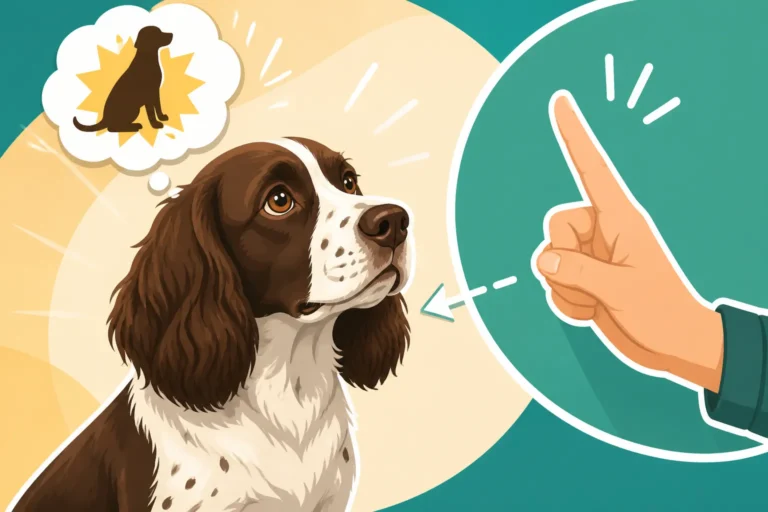
Dealing with a Springer Spaniel's powerful scent drive requires more than just reactive commands when they've already bolted. It demands a proactive approach, building strong foundations, and understanding how to manage their environment and instincts. The goal isn't to extinguish their drive, but to channel it and ensure they always choose to come back to you.
Early Foundations: The Power of Puppy Training
The journey to a reliable recall and a dog that understands boundaries begins the moment you bring your Springer Spaniel puppy home. Don't wait until they're teenagers and their instincts are in full swing. Start early, make it fun, and make it consistent.
- Name Recognition: Ensure your puppy always associates their name with positive things. Say their name, then immediately give a treat or praise. You want their name to be a happy sound, not just a precursor to a command.
- "Come" as the Best Thing Ever: From day one, make coming to you the most rewarding experience possible. Use a happy, inviting voice, make a game out of it, and offer incredibly high-value rewards (tiny bits of cooked chicken, cheese, or their absolute favorite toy). Never, ever call your puppy to you for something unpleasant, like a bath or to scold them. You want "come" to always mean "good things happen here."
- Controlled Environments First: Begin recall training in a quiet, distraction-free environment, like your living room or a securely fenced yard. Gradually introduce more distractions as they become proficient. Don't set them up for failure by letting them off-leash in a high-stimulus environment before they're ready. This is where The First Year With a Springer Spaniel Puppy really sets the stage.
Think of it like building a house. You wouldn't skip the foundation and go straight to the roof. Puppyhood is about laying that solid groundwork, making sure your Springer truly understands what you're asking and, crucially, that obeying you is always worth their while.
Controlled Environments: Long Lines and Secure Spaces
For many Springer Spaniel owners, the long line becomes an indispensable tool. It allows your dog to experience the joy of exploring scents with a degree of freedom, while still giving you control and the ability to prevent them from vanishing. A 30-foot or even 50-foot long line attached to a well-fitting harness (never a neck collar, as a sudden stop could injure their neck) lets them roam, sniff, and quarter, mimicking a working scenario, all while you maintain a physical connection. This is a great way to let your dog explore safely, and a strong advocate for A long line suits a Springer Spaniel.
Using a long line effectively means:
- Active Supervision: Don't just let them drag it. Keep an eye on them, keep the line from tangling, and be ready to step on it or reel them in.
- Practicing Recall on the Line: Call them back, praise, reward, then let them go explore again. This reinforces the recall in a semi-distracted environment.
- Safe Spaces: Prioritize securely fenced areas for off-leash exercise whenever possible. Dog parks can be great, but ensure they are truly secure and that your dog is comfortable with other dogs. Before heading to a new area, do a quick perimeter check for any potential escape routes.
Remember, the goal isn't to restrict them forever, but to build a reliable recall in a variety of environments before granting full off-leash freedom. It's about gradual progression and setting them up for success.
Mental and Physical Stimulation: Tiring Out the Nose and Body
A bored Springer Spaniel is often a mischievous Springer Spaniel, and one with pent-up energy is much more likely to bolt on a scent. These dogs need a lot of physical exercise and mental stimulation.
- Daily Physical Outlet: This isn't just a quick walk around the block. Springers need to run, gallop, and expend energy. Long walks, hikes, fetch sessions, or even swimming can help tire them out physically. A field bred Springer Spaniel, especially, needs ample opportunity to burn off energy. How Much Exercise a Field Bred Springer Spaniel Needs covers this in detail.
- Engaging Their Brain: Since their nose is so powerful, put it to work! Scent games like "find it" (hiding treats around the house or yard), KONG Wobblers, or snuffle mats can provide excellent mental stimulation. These games allow them to use their natural instincts in a controlled and rewarding way, helping to satisfy that inherent drive. Scent Games Tire a Springer Spaniel by engaging their primary sense.
- Structured Training: Regular training sessions, even short ones, keep their minds active and reinforce their connection to you. Learning new tricks, practicing obedience commands, or even exploring dog sports like agility or rally can be incredibly beneficial.
A Springer who is well-exercised and mentally engaged is a happier, calmer dog, and often more attentive to their owner. They're less likely to be desperately seeking out external stimulation because their needs are already being met.
Mastering the Recall: Techniques for Bringing Them Back
Even with the best preventative measures, a Springer Spaniel's instincts are powerful. That's why a rock-solid recall is absolutely paramount. It's not just a convenience; it's a safety measure that could literally save your dog's life. When your Springer disappears on scent, your recall command is your only lifeline.
High-Value Rewards: Making Yourself More Enticing
To compete with the thrill of the chase, your recall reward needs to be irresistible. Plain kibble or a pat on the head often won't cut it when there's a rabbit streaking through the field.
- Know Your Dog's Motivators: What does your Springer absolutely go crazy for? Is it tiny pieces of cooked chicken, cheese, hot dogs, squeaky toys, or a vigorous game of tug? Find their ultimate high-value reward and reserve it only for recall and other critical commands. Don't use it for "sit" or "stay."
- The "Jackpot" Reward: Sometimes, your Springer needs a "jackpot" – a sudden influx of multiple treats, or a super-long session of their favorite game. This creates a powerful positive association with coming back to you.
- Vary Your Rewards: Keep them guessing! Don't always use the same treat or toy. Mix it up to maintain their interest and excitement.
- Make Yourself Exciting: When you call your dog, make yourself sound enthusiastic and happy. Crouch down, open your arms, and make yourself inviting. You want them to feel like coming to you is the best party ever. As discussed in What a Springer Spaniel Will Work For, understanding their motivators is key.
The key is to consistently demonstrate that returning to you is always more rewarding than whatever they might be chasing. This requires dedication and a willingness to be more exciting than the environment.
Whistle Training: A Consistent, Unemotional Cue
For many gundog breeds, including Springer Spaniels, a whistle is a far more effective recall tool than a verbal command.
- Consistency: A whistle produces the exact same sound every time, regardless of your mood, the weather, or how out of breath you are from chasing after them. Your voice, however, can fluctuate wildly.
- Distance: The sound of a whistle carries further than your voice, especially in windy conditions or dense cover.
- Unemotional: Dogs don't associate a whistle with your frustration or anger. It's a clean, consistent cue. If you've been shouting your dog's name in frustration, they might start to associate their name with a negative feeling, making them less likely to return.
- How to Train: Start in a distraction-free environment. Blow your recall whistle (a series of short pips, or a long blast, consistent every time), then immediately give a high-value treat as your dog approaches. Repeat, repeat, repeat. Gradually increase distractions. The dog needs to associate the whistle directly with the reward, not with the act of coming to you first. Teaching a Springer Spaniel Whistle Commands is an invaluable skill.
Many gundog trainers use a specific pattern, like three sharp pips for recall. Whatever you choose, stick to it religiously. The whistle should always be a guarantee of something wonderful.
Emergency Recall: The "Nuclear Option" for Critical Moments
Even with a strong regular recall, it's a good idea to have an "emergency recall" command – a word or phrase that you only use in truly critical situations (like if they're heading towards a road or dangerous animal) and that guarantees the absolute highest possible reward.
- Choose a Unique Word: Pick a word you rarely use, like "COME HERE NOW!" or "SUPER COME!" or even a distinct sound.
- Train with Extreme Value: This command should always result in the most amazing jackpot ever. Think a whole piece of hot dog, or a minute-long game of tug.
- Never Abuse It: The power of the emergency recall lies in its rarity and the guaranteed immense reward. If you use it for mundane situations, it will lose its potency.
- Practice Seldom, but Effectively: You don't want to over-practice this, as its power comes from its novelty. Instead, occasionally test it in a moderately distracting environment, making sure to deliver that ultimate reward.
This "nuclear option" is your last resort, a command that you hope you never have to use, but that you know your dog will respond to without hesitation because it promises the best thing in their entire world. This builds an undeniable trust, crucial for Whether a Springer Spaniel's Recall Can Be Trusted.
Tools and Aids: Supporting Your Training Efforts
Beyond fundamental training techniques, a range of tools and aids can significantly help in managing a scent-driven Springer Spaniel and mitigating the risks associated with their tendency to vanish. These aren't replacements for training but powerful complements.
GPS Trackers: A Safety Net for the Adventurous Spaniel
In today's world, technology offers a fantastic layer of security for owners of adventurous dogs. A GPS tracker, typically a small, lightweight device that attaches to your dog's collar, can be an absolute lifesaver.
- Peace of Mind: Knowing you can pinpoint your dog's location if they do manage to get lost can reduce immense stress and anxiety. These devices often work via a smartphone app, showing you their real-time location.
- Real-Time Tracking: Many modern trackers offer live tracking, allowing you to follow your dog's movements with impressive accuracy, helping you to retrieve them swiftly before they get too far or into danger.
- Activity Monitoring: Some trackers even double as fitness monitors, providing insights into your dog's activity levels, which can be useful for ensuring they're getting enough exercise.
- Geofencing: Many GPS trackers allow you to set up virtual fences (geofences) around safe areas. If your dog crosses this boundary, you receive an immediate alert on your phone.
While a GPS tracker doesn't prevent your dog from running off, it drastically improves your chances of a quick and safe reunion. It's a proactive step that many Springer Spaniel owners consider essential, especially if they regularly hike or explore areas where off-leash freedom might lead to a dog disappearing from sight. It's a wise investment, particularly if you're concerned about Whether a Springer Spaniel Should Wear a GPS Collar.
Electronic Collars: When and How to Use Them Responsibly
Electronic collars (often called e-collars, remote training collars, or sometimes, unfortunately, shock collars) are a controversial tool, and their use should be approached with extreme caution, ethical consideration, and professional guidance. If used incorrectly, they can be detrimental to your dog's well-being and trust. However, in the hands of an experienced, knowledgeable trainer, they can be an effective tool for achieving reliable off-leash control, especially for high-drive breeds like Springer Spaniels.
- Professional Guidance is Essential: Never attempt to use an e-collar without direct, hands-on guidance from a reputable professional gundog trainer or behaviorist who specializes in their ethical use. They are not DIY tools.
- Low-Level Stimulation: When used properly, the goal is typically to use the lowest possible level of stimulation (often a vibration or a very mild sensation) to get your dog's attention, not to punish them. It's about clear communication, not discomfort.
- Conditioning: The dog must first be conditioned to associate the stimulation with a known command (like recall) in a low-distraction environment. Only then can it be gradually introduced in more distracting scenarios.
- Ethical Considerations: Understand the potential downsides. Misuse can lead to fear, anxiety, and a breakdown of trust. It's crucial to weigh the benefits against the risks and ensure it aligns with your personal training philosophy.
For some, an e-collar provides an added layer of communication and safety that can make off-leash work possible where it otherwise wouldn't be. But again, this is a tool that demands expertise and careful consideration. It raises the question Whether an Electronic Collar Belongs on a Springer Spaniel.
Specialized Training Programs and Gear
To really get to grips with a Springer Spaniel's drive, sometimes you need specialized resources.
- Gundog Trainers: A trainer experienced in gundogs understands their instincts intimately. They can provide tailored advice and methods for channeling their scent drive, developing a strong working bond, and building reliable recall in highly distracting environments. They often utilize techniques like force fetch and whistle commands that are invaluable for these breeds.
- Online Training Platforms: Programs like BAXTER & Bella offer comprehensive online training courses that cover everything from puppy basics to advanced obedience. While not specifically gundog focused, their structured approach to positive reinforcement and building engagement can be highly beneficial for laying strong foundational recall and keeping your Springer focused on you. Their step-by-step guidance can be a great starting point for any new owner.
- Training Gear: Invest in quality gear that supports your training. A good gundog whistle, like those from Acme, is crucial. Training bumpers (dummies) for retrieve work engage their natural instincts. A sturdy long line and a comfortable harness are also essential. You can easily find these types of tools on platforms like Amazon, offering a wide variety to suit your needs. Remember, good equipment complements good training. What a Springer Spaniel's Training Bumpers and Whistle Cost is a small price for the benefits they bring to your training routine.
| Tool/Aid | Primary Benefit | Best Use Case | Considerations |
|---|---|---|---|
| Long Line | Controlled freedom, safe recall practice | Open fields, parks, hiking trails | Requires active handling; can tangle |
| Whistle | Consistent, far-reaching recall cue | Any outdoor environment, especially windy/noisy | Requires conditioning; owner must be consistent |
| GPS Tracker | Real-time location tracking, peace of mind | High-distraction areas, large properties | Battery life; subscription fees often apply; doesn't prevent running off |
| High-Value Treats | Strong motivation for recall & obedience | Any training scenario, especially high-distraction | Discover what your dog loves most; don't overuse for low-value commands |
| E-Collar | Enhanced off-leash communication (with training) | Advanced off-leash work, proofing recall | Requires professional guidance & ethical use; highly controversial |
| Scent Games | Mental stimulation, instinct fulfillment | Indoors, securely fenced yard | Needs owner engagement; can be tiring for the dog |
Living with a Scent-Driven Spaniel: Managing Expectations
It's easy to get caught up in the frustration when your Springer Spaniel bolts. But a crucial part of living happily with one of these incredible dogs is to adjust your own expectations and learn to embrace, rather than fight, their inherent nature. They are not generic companion dogs; they are working machines wrapped in a loving, enthusiastic package.
Acceptance and Adaptation: Embracing Their Natural Instincts
The first, and perhaps most important, step is acceptance. Your Springer Spaniel will put its nose to the ground and disappear on scent. It’s not a flaw; it's a feature. They are doing exactly what they were bred to do. Once you accept this, you can move away from frustration and towards proactive management and training.
- Shift Your Perspective: Instead of seeing it as disobedience, see it as an intense expression of their breed's purpose. It’s part of what makes them such fascinating and capable dogs.
- Plan Ahead: If you know your dog has a high prey drive, don't put them in situations where they are likely to fail. Choose secure locations, use a long line, or engage them in other ways.
- Celebrate Their Abilities: Marvel at their incredible nose and their boundless energy. Find joy in watching them work a field (even if it's just your backyard) with that intense focus.
Adapting your routine and approach to suit their instincts will lead to a much happier relationship for both you and your Springer. It's about meeting them where they are and working with their nature.
Channeling Their Drive: Scent Work and Dog Sports
One of the best ways to manage a scent-driven dog is to give them appropriate, structured outlets for their natural abilities. Don't let their instincts only emerge as a "problem" when they bolt after a deer; instead, provide them with a "job" that satisfies those urges.
- Nose Work/Scent Work Classes: These classes are fantastic for Springers! They teach dogs to find specific target odors (like birch or anise) in various environments. It’s incredibly mentally stimulating, tires them out far more than a physical run, and builds a fantastic working relationship with you. Whether a Springer Spaniel Can Be Trained for Detection Work highlights this potential.
- Retrieving Games: Springers are also natural retrievers. Engage them in games of fetch with dummies or balls. If you're interested, you could explore formal gundog training and hunt tests, even if you never intend to hunt. This allows them to use their nose, flush, and retrieve in a controlled environment.
- Tracking: This dog sport involves teaching your dog to follow a human scent trail. It's challenging, incredibly engaging, and a perfect way to harness their olfactory power.
- Agility or Obedience: While not purely scent-based, these sports require intense focus and provide physical and mental challenges that can help tire out a Springer and strengthen their bond with you. Whether a Springer Spaniel Can Do Agility is a common question, and the answer is usually a resounding yes!
Giving your Springer a positive outlet for their instincts not only makes them a more contented dog but also strengthens your bond and improves their responsiveness in other areas. It's about giving their nose a legitimate job to do.
Safety First: Understanding Risks and Staying Prepared
Living with a high-drive, scent-oriented dog means being constantly aware of potential dangers.
- Traffic: A dog on scent will often ignore roads and vehicles. This is perhaps the biggest danger. Always be vigilant near roads, and ensure your recall is impeccable or they are safely leashed.
- Wildlife Encounters: Chasing wildlife can lead to injuries from the animal itself, or your dog getting lost in unfamiliar territory. It can also lead to encounters with larger predators depending on your location.
- Getting Lost: Even in seemingly familiar areas, a dog on a strong scent trail can quickly become disoriented, especially if the trail takes them far afield.
- Legal Consequences: In some areas, allowing your dog to chase wildlife is illegal and can result in fines.
Always carry your phone, ensure your dog has up-to-date ID tags on their collar (and ideally a microchip), and consider that GPS tracker. Be aware of your surroundings and plan your walks strategically, choosing locations that minimize risks while still allowing for appropriate exercise and exploration. A prepared owner is a responsible owner, and knowing the potential pitfalls helps keep your adventurous Springer Spaniel safe.
Disclaimer
This article is for general informational purposes only and does not constitute professional advice. Laws, prices and regulations vary by location and change over time. Consult a qualified professional for guidance on your specific situation.