How Short a Field Springer Spaniel’s Coat Runs
A field-bred English Springer Spaniel often looks noticeably shorter-coated than a show-bred dog, especially across the back and body. That does not mean the coat is smooth or maintenance-free: many still have feathering on their ears, legs, chest, and underside, where burrs and mats can collect. This guide explains what “short” usually means and how to care for the coat.
What a Field Springer Spaniel’s Coat Usually Looks Like
Shorter does not mean smooth or hairless
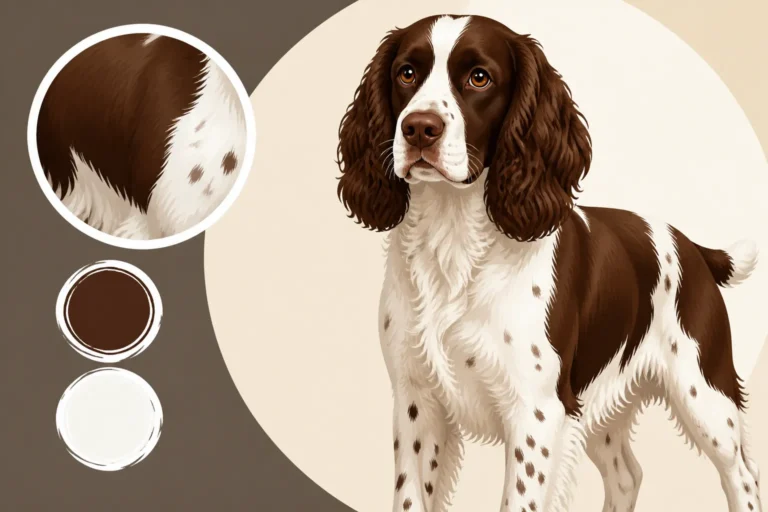
When people describe a field-bred Springer Spaniel as having a short coat, they usually mean the coat lies closer to the body and carries less length and volume than the coat commonly seen on show-bred dogs. The back, shoulders, and sides may look sleek and practical rather than plush. The dog is still recognizably a Springer, not a short-haired breed.
The coat can vary from one field line to another, and even littermates may not look identical. Some dogs have a fairly close coat over most of the body, while others grow more hair around the chest, legs, ears, or tail. Coat length also changes the overall impression: a dog freshly trimmed for work can look much shorter than the same dog after several months of growth.
It helps to think of “field coat” as a tendency, not a guarantee of a particular haircut or exact length. A dog’s inherited coat, age, season, and grooming routine all affect what you see. The contrast between types is real, but it is not an absolute rule; How Different the Two Springer Spaniel Types Look offers useful context for comparing their build and coat as part of the bigger picture.
Where the coat is short and where it may still grow
The close, practical appearance is most noticeable over the torso. On many field-bred dogs, the body coat is less abundant and less fringed than on a heavily coated show-bred Springer. The face and much of the head also tend to look tidy, though the ears can still carry soft hair that catches twigs, seeds, and damp leaves.
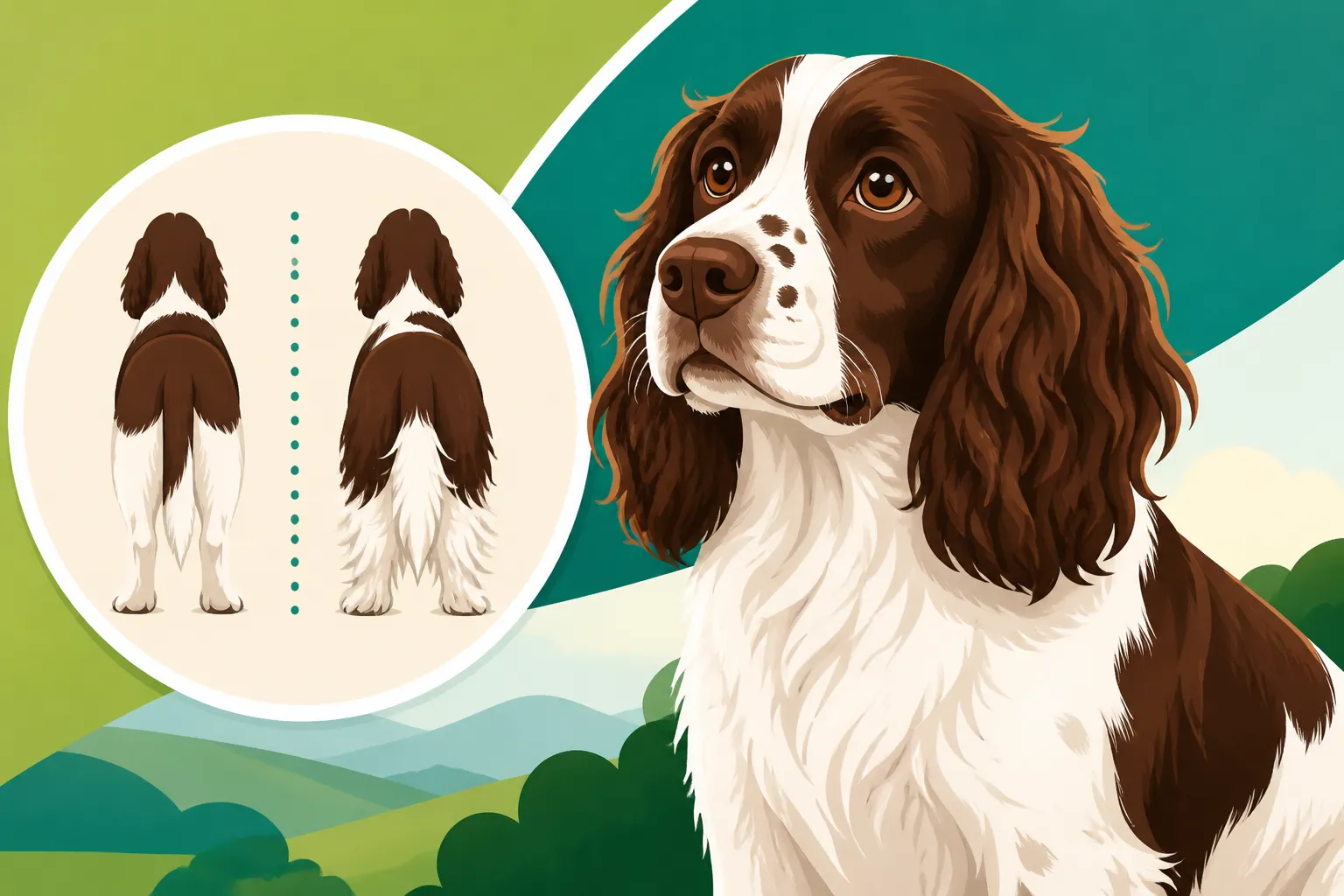
Feathering may remain on the backs of the legs, chest, belly, and tail. How prominent it is varies. One dog may have only a modest fringe, while another has enough hair to pick up brambles after a run through cover. Those areas are worth checking after walks or field work, even if the dog’s back looks almost self-cleaning.
Field coats are often described as coarser or more workmanlike, but texture varies too. A shorter coat can be less prone to tangling than long, abundant feathering without being immune to knots. For a closer look at texture, How a Field Springer Spaniel's Coat Is Coarser explains why a close coat may feel different from the softer, fuller coat some owners expect.
Why field coats are bred and kept practical
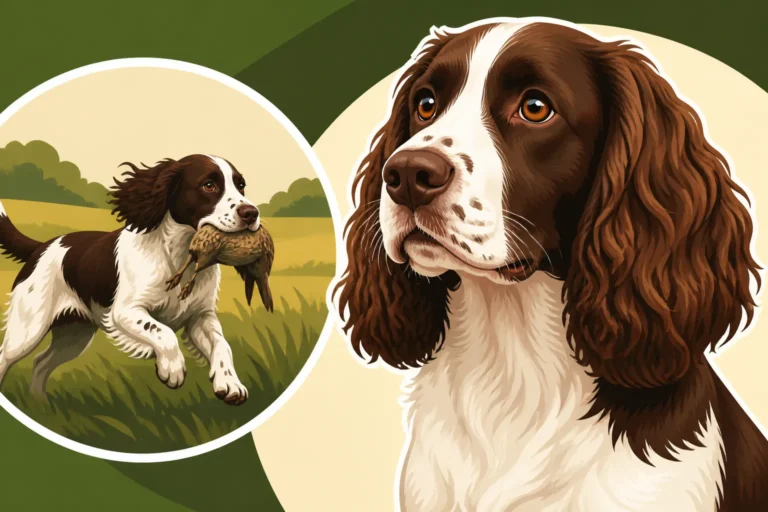
A practical coat makes sense for a dog expected to push through grass, hedges, and woodland cover. Long fringes can catch burrs and debris, and coat that stays damp or tangled can make post-work cleanup more demanding. A closer coat may be easier to inspect and brush after an outing.
That does not mean every field Springer has a naturally short coat because a breeder has deliberately removed hair. Some are simply less heavily feathered by inheritance. Others may be trimmed for comfort and ease of maintenance. Those are different things: a dog’s natural coat and the coat you see after grooming are not always the same.
A shorter coat also should not be mistaken for a coat that needs no care. Field dogs can still shed, develop tangles in feathered areas, and pick up ticks or grass awns. They can also get wet and dirty. Less hair may make some parts of the routine quicker, but it does not remove the need to check the dog from nose to tail.
Field Coat Compared With Show Coat
A practical comparison
The table below describes common tendencies, not fixed standards. Individual dogs can fall outside these patterns, and grooming can make two dogs look more similar or more different than their natural coats would.
| Feature | Field-bred Springer Spaniel | Show-bred Springer Spaniel |
|---|---|---|
| Body coat | Often closer and less abundant | Often fuller and more visibly furnished |
| Feathering | Commonly lighter, but still present on some dogs | Often more noticeable on the ears, chest, legs, and underside |
| Overall impression | Athletic and practical | More profusely coated and styled |
| Grooming focus | Brushing, debris checks, and practical tidying | Brushing, detangling, and more regular coat shaping |
| After cover or water | Check for seeds, burrs, ticks, and damp areas | Check the same areas, with extra attention to longer fringes |
| Variation | Depends on the dog’s line and individual coat | Also varies by line, age, and grooming |
The easiest comparison is usually the body and leg furnishings. A field-bred dog may have a close-looking back and relatively restrained leg feathering; a show-bred dog may have a fuller outline and longer fringes. Still, it is not safe to judge a dog’s breeding from coat length alone. Clipping can change the silhouette, and individual variation can be substantial.
People sometimes assume a field Springer has no feathering at all. That is too broad. A field dog can have enough hair on the ears, legs, or belly to collect plant material, particularly after working through thick cover. The general tendency toward less coat is described in Whether a Field Springer Spaniel Has Less Feathering, but the individual dog in front of you matters more than a label.
What “short coat” does not tell you
Coat length does not reliably tell you how much the dog sheds. Shorter hair may be less conspicuous when it comes off, but shedding still happens, and loose hairs can collect on furniture, clothing, and car seats. Regular brushing helps remove loose hair before it spreads around the house.
Nor does “short” mean the dog is protected from every kind of weather. A coat provides some insulation and protection, but it is not a substitute for common-sense care in cold, wet, or hot conditions. A Springer that has been swimming or working in rain should be dried appropriately, with attention to the ears and skin folds.
The coat is often water-resistant rather than truly waterproof. Its ability to shed moisture varies with coat condition, weather, and how long the dog is exposed. Owners should not assume that a field-bred dog can stay comfortable in wet conditions simply because its coat looks close. Whether a Springer Spaniel's Coat Is Waterproof explains the difference between a protective coat and complete protection from water.
Grooming a Short-Coated Field Springer Spaniel
A simple routine that fits the coat
For many field-bred Springers, grooming is less about maintaining a dramatic outline and more about keeping the coat clean, comfortable, and free of debris. A regular brush-through helps lift loose hair and lets you spot small tangles before they tighten. The backs of the ears, armpits, chest, belly, and backs of the legs deserve particular attention because those are common places for friction and debris to cause trouble.
Use a comb or brush that reaches through the coat without scraping or irritating the skin. Work gently rather than forcing a tool through a knot. If a mat is tight, painful, or close to the skin, ask a groomer or veterinary professional for help instead of cutting blindly with scissors. Skin can be pulled up inside a mat, making an apparently simple snip risky.
Choose tools for the dog’s actual coat, not just the word “field” in its description. A basic brush and comb may be enough for one dog, while another needs a little more help with feathering. Chewy is one place owners may look for general grooming tools, but match the tool to the coat and check that it feels comfortable on your dog. Guidance on the routine itself is also covered in How Often a Field Springer Spaniel Needs Brushing.
Trimming and clipping for work
Some owners keep selected areas tidy so the dog collects less debris or is easier to clean after working. Light, careful trimming may be useful around the feet or in particularly troublesome furnishings, depending on the dog and the owner’s routine. A professional groomer can help determine what is practical without taking away more coat than necessary.
There is no single haircut every field Springer needs. Some are kept close with minimal trimming; others have specific areas tidied periodically. A dog that spends weekends in thick cover may need a different approach from one that mostly walks on open trails. Before asking for a trim, explain how the dog works and which areas are causing difficulty.
Avoid assuming that a very close clip is automatically the safest choice. The coat provides some protection, and taking it down too far can leave skin more exposed to sun, scratches, or rough vegetation. Ask a groomer familiar with sporting breeds to discuss the trade-offs. For more on the decision, see Whether a Working Springer Spaniel Should Be Trimmed for Cover and Whether a Field Bred Springer Spaniel Needs Grooming.
What to check after a walk or a day in cover
A short-coated dog still benefits from a hands-on check after outdoor activity. Run your fingers over the coat and look closely around the paws, between the toes, under the ears, in the armpits, and along the belly. These are places where seeds, burrs, small cuts, and ticks can be easy to miss at a glance.
If the dog has been swimming or walking through wet vegetation, dry the coat and inspect the skin rather than leaving damp areas to sit. Pay attention to persistent scratching, redness, odor, or sensitivity. Those signs can have several causes, so recurring or uncomfortable problems are a reason to speak with a veterinarian rather than simply switching shampoos or trimming more hair.
Longer furnishings can tangle even when the rest of the coat is close. If you find a knot, gently separate it with your fingers or a suitable comb, working from the ends toward the skin. Do not yank at a mat or keep brushing an area that seems painful. Whether a Springer Spaniel's Feathering Mats covers why those small fringes can need more attention than the dog’s short-looking back suggests.
Choosing and Caring for a Field Springer Coat
Look at the actual dog, not only the label
If you are choosing a puppy, ask the breeder what the parents’ coats are like and how much feathering they tend to develop as adults. Photos of adult relatives can be more informative than a puppy’s coat, which may change with maturity. Ask whether the breeder trims the dogs and, if so, which areas are usually tidied. That helps you distinguish a naturally close coat from one that has been groomed short.
If your adult dog is already home, you do not need to compare it constantly with a breed stereotype. Notice where its coat tangles, whether it sheds heavily, how it responds to brushing, and what debris it picks up on your usual walks. A short routine adapted to your dog is more useful than trying to make it match a picture of a field Springer.
For routine supplies, some owners browse Chewy for brushes, combs, and dog-safe grooming products. Use your dog’s coat and skin as the guide, and ask your veterinarian or groomer if you are unsure whether a product is appropriate. Chewy can be a convenient retailer to check for basic supplies, but product choice matters more than the store you buy from.
Keep the routine practical and comfortable
A workable schedule is one you can repeat without turning grooming into a struggle. Brief, calm sessions are often easier than waiting until the dog is muddy, tangled, and impatient. Pair brushing with a relaxed setting, handle the ears and feet gently, and stop if your dog seems uncomfortable. If grooming is stressful, a groomer or trainer can help you build tolerance gradually.
A field Springer’s shorter coat can make care feel simpler, but it is not a promise of effortless maintenance. The main advantage is often less abundant hair to detangle, not an absence of grooming needs. With regular brushing, sensible trimming where appropriate, and a careful check after cover, most owners can keep the coat practical without overcomplicating the routine.
When replacing tools or trying a new grooming product, start with what solves a real problem: a brush that removes loose coat without irritating skin, a comb that reaches the feathering, or a gentle cleanser recommended for your dog’s needs. Chewy is another retailer owners may use to compare these everyday supplies. If a coat change comes with itching, sores, unusual hair loss, or persistent odor, treat that as a health concern rather than a grooming inconvenience.
Disclaimer
This article is for general informational purposes only and does not constitute professional advice. Laws, prices and regulations vary by location and change over time. Consult a qualified professional for guidance on your specific situation.