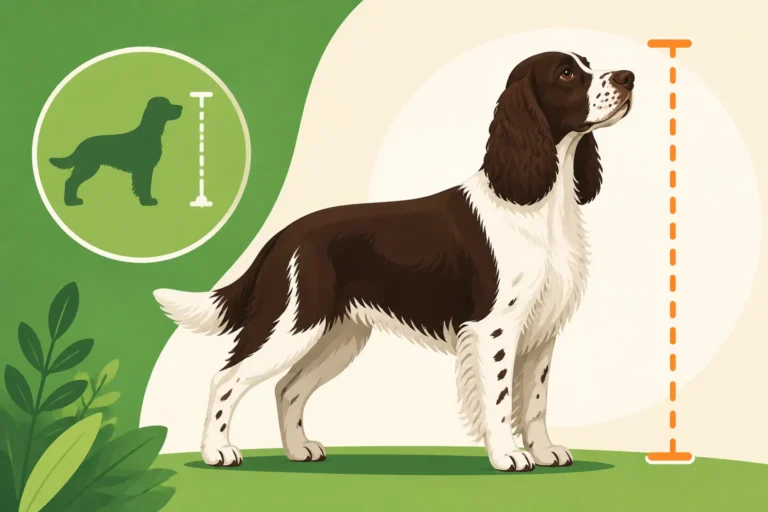
How the FCI Springer Spaniel Standard Differs
The FCI standard can look surprisingly different from the Springer Spaniel descriptions used by American or British kennel organizations, even when they are talking about the same breed. That can leave puppy buyers wondering whether an overseas dog is a different type. This guide explains what the FCI standard emphasizes, how its wording compares with other standards, and what those differences mean in practice.
What the FCI standard is designed to describe
The FCI’s role in defining the breed
The Fédération Cynologique Internationale, usually shortened to FCI, is an international canine organization whose member kennel clubs use breed standards to guide registration and conformation judging. Its English Springer Spaniel standard describes the ideal dog: the structure, coat, movement, and temperament judges should look for in the show ring. It is not a checklist that every individual dog will match perfectly.
The FCI places the English Springer Spaniel among the flushing dogs in its sporting-dog group. That context matters. The breed is not meant to be judged only as an attractive dog with a particular outline; it is a gundog whose body and movement should support work. A standard’s description of balance, soundness, and a weather-resisting coat connects appearance with the dog’s original function.
The FCI standard is used across a network of national kennel organizations, but it does not make dog shows or registration procedures identical everywhere. National clubs may have their own rules, judging customs, and legal requirements. So an FCI standard provides a shared description, not a guarantee that a dog shown in France, Germany, or Italy will be presented or assessed in precisely the same way.
The FCI standard is not a separate Springer Spaniel type
A common source of confusion is the contrast between field-bred and show-bred Springers. The FCI standard describes the breed as a whole; it does not create a separate “FCI Springer Spaniel.” Dogs from working and conformation lines may differ considerably in build, coat, drive, and presentation, but those differences are part of variation within the breed. For context, see How the Field and Show Springer Spaniel Diverged and How Different the Two Springer Spaniel Types Look.
This distinction helps when comparing photographs or breeder descriptions online. A lean, lightly coated working dog and a more heavily feathered show dog may both be English Springer Spaniels, even if one looks quite unlike the other. The standard sets an ideal and a framework for judging; it does not erase the substantial variation that can exist between lines.
Likewise, a standard is not a health guarantee or a promise about a puppy’s future temperament. It describes qualities expected in the breed, but it cannot tell you whether a particular dog will have an easy time settling at home, enjoy field work, or need extra grooming. Those questions call for looking at the individual dog, its parents, and the breeder’s priorities—not just the organization named on a pedigree.
How the FCI standard compares with British and American standards
Similarities in size, outline, and purpose
The FCI, British, and American descriptions share the central picture of an active, balanced, medium-sized spaniel. They all value a dog that is functional and sound, rather than exaggerated in outline. The familiar Springer traits remain recognizable: a practical sporting build, an alert expression, a coat suited to outdoor activity, and movement that should look purposeful rather than labored.
The standards also describe a dog intended to work with people. The Springer is expected to be willing and responsive, not merely decorative. A judge looking at movement and body structure is considering whether the dog’s physical construction fits the breed’s sporting role. That shared foundation is why many Springers bred and shown under different kennel systems still look unmistakably related.
Their differences are often more about how the ideal is worded, organized, or applied than about a fundamentally different breed. A measurement may be expressed in centimeters in an FCI document and inches in an American one. One standard may state a height as an approximate target, while another gives separate figures for males and females. These are not necessarily contradictory descriptions; they can reflect different drafting conventions.
Where wording and emphasis can differ
A comparison of standards is most useful when you read the full description rather than one isolated phrase. For example, the standards may discuss coat texture and feathering in slightly different terms, or give different levels of detail about proportions and movement. A phrase that sounds stricter in one translation may be conveying a similar idea to a broader phrase in another standard.
The FCI standard’s international role also means that it must be usable by judges working across a range of countries and languages. The wording is intended to establish a common reference point, but individual judges still interpret the standard in the ring. National show traditions can influence presentation, grooming, and the features competitors emphasize. That does not automatically mean that a national interpretation has replaced the FCI description.
For a closer comparison, the UK and American documents are worth reading directly alongside the FCI wording: How the UK Springer Spaniel Standard Differs From the AKC's. Keep an eye on whether a difference is a real change in the desired dog, a unit or phrasing difference, or simply an emphasis that matters more in one judging tradition.
| Feature | FCI standard | British and American descriptions | What a buyer should take from it |
|---|---|---|---|
| Breed identity | English Springer Spaniel, classified as a flushing gundog | The same breed, with national organizations publishing their own standards | The FCI does not define a separate international type |
| Size | Gives an approximate height target in metric units | May express height in inches and may specify males and females separately | Compare the stated measurements carefully rather than assuming a major type difference |
| Coat | Describes a functional coat with moderate feathering | Also describes a practical coat, though wording and show presentation can vary | A standard’s ideal coat does not predict exactly how much upkeep an individual dog needs |
| Color | Lists accepted color combinations and markings | National standards may use their own phrasing for accepted colors | Check the exact standard used by the registry where the dog is shown |
| Tail | Allows for variation in docking status in places where practices and laws differ | National rules and laws affect what is permitted and shown | Tail appearance may reflect local law and history, not a different breed |
| Judging | A shared international reference for FCI member organizations | National kennel organizations manage their own shows and registration systems | The standard is a guide, while local rules shape its application |
The visible traits that can cause confusion
Coat, color, and feathering
The FCI standard’s coat description should be understood as a picture of a functional sporting dog, not a grooming instruction for every owner. The Springer’s coat should be suited to activity and weather, with feathering that is part of the breed’s familiar appearance. In real life, coat amount varies. Some dogs carry a more abundant coat, while others have less feathering, especially among lines selected for field work.
Color descriptions can also lead to unnecessary worry when people compare dogs from different countries. A dog’s markings may look unusual to someone who has only seen one type of Springer, but that does not establish that the dog is outside the breed standard. It helps to consult the permitted color description used by the relevant registry. The topic is covered in more detail in Which Colors the Springer Spaniel Standard Allows.
For a prospective owner, the practical question is not only whether a coat matches a show ideal. It is also how that coat will feel to maintain after wet walks, muddy fields, and burr-covered trails. A standard cannot tell you whether a dog’s feathering will mat behind its ears or collect debris after a run. If you are comparing brushes or combs, retailers such as Chewy may be one place to look, but choose tools based on the dog’s actual coat and ask a groomer for guidance if you are unsure.
Tail wording and local rules
Tail descriptions are another area where a standard can be misread. The wording may reflect the history of docking while also accommodating dogs with natural tails. Whether a dog may be docked, shown with a docked tail, or shown with a natural tail depends on the laws and rules that apply in the relevant country and organization. A standard alone does not override local law.
This is particularly important when viewing imported dogs or show photographs from different places. A natural tail does not mean the dog belongs to a different Springer variety, and a docked tail does not establish that a dog comes from a particular working line. The history and present-day variation are explored in Whether a Springer Spaniel's Tail Is Docked in America and Britain's Ban on Docking Springer Spaniel Tails.
For puppy buyers, ask the breeder what is normal and lawful where the litter was bred, and check the rules of the registry where you might show the dog. If you are adopting an adult Springer, tail appearance is simply one physical detail; it is not a reliable shortcut for judging the dog’s health, background, or suitability for your home.
How to use the FCI standard when choosing or evaluating a Springer
Read the standard alongside the dog in front of you
The standard is most helpful as a reference, not as a substitute for meeting a dog. If you are choosing a puppy, ask what the breeder values in their breeding program. Do they prioritize working ability, conformation, temperament, or a balance of these? What are the parents like to live with? How do they behave around people, other dogs, and everyday distractions? Those answers tell you more about the likely experience of living with the dog than a standards document can.
If you are comparing an FCI-registered dog with one registered under another national organization, check the actual registration and pedigree details. The organization’s name can tell you something about the system the breeder uses, but it does not by itself tell you how athletic, calm, heavily coated, or biddable the dog will be. The dog’s line and individual qualities matter.
This is also a good moment to separate show-ring qualities from household needs. A standard may describe a dog that moves soundly and carries a suitable coat, but it cannot promise a particular exercise requirement or guarantee that the dog will be content alone for long stretches. If you are still weighing those lifestyle questions, Whether a Springer Spaniel Suits a First Time Owner offers a separate perspective on what the breed can be like to live with.
Avoid treating every difference as a fault
It is tempting to compare a photograph with a written standard and decide that any visible difference means a dog is poorly bred. In practice, judging requires training and context. A photograph may exaggerate proportions, hide movement, or show a dog at an awkward angle. Grooming can change the apparent outline, and maturity can affect how a young dog looks. A single image is a shaky basis for judging whether a Springer meets a standard.
The same caution applies to coat care and equipment. If a dog has more feathering than you expected, the immediate issue is whether you can manage the grooming routine—not whether the dog is “too showy.” A product retailer such as Chewy can be useful for browsing basic grooming supplies, but a breed standard is not a shopping list, and a coat’s needs are best assessed in person. For people unsure what to buy, a groomer familiar with spaniels can help match tools to coat texture and length.
When you read the FCI document, ask three practical questions: What is the standard describing? Is the difference you notice about the written ideal or a local rule? And does the feature affect the dog’s health, comfort, or the kind of home you can offer? This keeps comparisons grounded. If you are preparing for an active Springer’s routine, Chewy and similar retailers may carry everyday care items, but choosing a dog should rest on temperament, health information, and compatibility—not brand availability.
What the standard cannot tell you
No breed standard can predict the full character of an individual dog. Two puppies from the same litter may differ in confidence, energy, sensitivity, and interest in hunting or retrieving. A standard can describe the breed’s expected general character, but it cannot promise that every dog will express those qualities in the same way.
It also cannot replace careful health questions. Ask about health screening relevant to the parents and the breed, and request clear explanations of results. A dog may be beautifully presented and closely resemble the written ideal while still requiring the same thoughtful health and temperament assessment as any other puppy.
Finally, the FCI standard is one useful way to understand what the breed is meant to be. It helps make sense of the shared Springer outline across countries, while revealing why details such as measurement conventions, tail rules, coat presentation, and judging traditions can look different. Read it as a common reference point—not as proof that all Springer Spaniels should look identical.
Disclaimer
This article is for general informational purposes only and does not constitute professional advice. Laws, prices and regulations vary by location and change over time. Consult a qualified professional for guidance on your specific situation.