The Weight a Female Springer Spaniel Should Hold
It can feel like a guessing game sometimes, looking at your beautiful female English Springer Spaniel and wondering if her weight is truly in that sweet spot for optimal health and happiness. With their lively dispositions and that luscious feathering, it's easy to miss subtle changes or simply not know what "ideal" really looks like for her. This comprehensive guide is here to demystify the ideal weight for a female Springer Spaniel, helping you confidently assess her condition and keep her thriving throughout her life.
Understanding the Ideal Weight for a Female Springer Spaniel
Figuring out the "perfect" weight for any dog, let alone a female Springer Spaniel, isn't as simple as checking a number on a chart. These aren't static models; they're dynamic, active companions with individual needs and unique characteristics. We need to look beyond just the scale to understand what true health in terms of weight means for your girl.
Why "One Size Fits All" Doesn't Work
One of the biggest misconceptions we have as dog owners is that there's a single, magic number on the scale that every dog of a particular breed should hit. With English Springer Spaniels, this is especially untrue because we essentially have two distinct types: the field-bred Springer and the show-bred Springer. These two types, while sharing the same breed standard, have diverged significantly over the decades.
A field-bred female Springer is typically leaner, more athletic, and has a less dense coat. She's built for endurance and agility in the field, meaning her body mass will naturally be lower, and her musculature more defined. Think of a long-distance runner versus a powerlifter – both are athletes, but their ideal body compositions are vastly different. Her structure will often be lighter-boned, designed for sustained effort without carrying excess bulk. Her overall appearance will be one of functional fitness.
On the other hand, a show-bred female Springer Spaniel tends to be heavier-boned, more substantial in build, and carries a much thicker, longer coat. While still active and possessing the classic Springer zest, their conformation is geared towards the show ring, which often favors a more "solid" look. This doesn't mean they should be overweight, but their frame naturally carries more mass. Their feathering can also cleverly disguise a few extra pounds, making it harder to spot weight gain without a hands-on assessment. So, a healthy weight for a show-bred female might appear higher on the scale than for her field-bred counterpart, but both could be equally fit within their respective types. This is also why looking up The Weight a Male Springer Spaniel Should Hold won't directly apply, as females generally weigh less.
The Importance of Body Condition Score Over Scale Weight
Given the variations between field and show lines, and even within those lines, relying solely on a number from the bathroom scale can be misleading. A much more accurate and universally accepted method is the Body Condition Score (BCS). This system is a hands-on and visual assessment that evaluates the amount of fat cover and muscle mass your dog possesses, rather than just their raw weight. It typically uses a scale of 1 to 9, where 1 is emaciated, 9 is obese, and 4-5 is considered ideal.
Think of it like this: if you stood two women of the same height on a scale, and one was a dedicated marathon runner and the other a sedentary individual, they might weigh the same, but their body compositions would be drastically different. The marathon runner would have lean muscle and less fat, while the sedentary person might have more fat and less muscle. The scale alone wouldn't tell you who was healthier. The BCS offers a much clearer picture of your Springer's actual physical condition, helping you determine if she's carrying too much, too little, or just the right amount of padding. It's a skill every owner should learn, as it empowers you to make proactive adjustments to her diet and exercise before problems arise.
Typical Weight Ranges for Adult Females
While we emphasize BCS, it's still helpful to have a general idea of what healthy weight ranges look like for female English Springer Spaniels. These ranges, however, should always be interpreted with the understanding that individual variations exist due to genetic background, bone structure, and muscle mass.
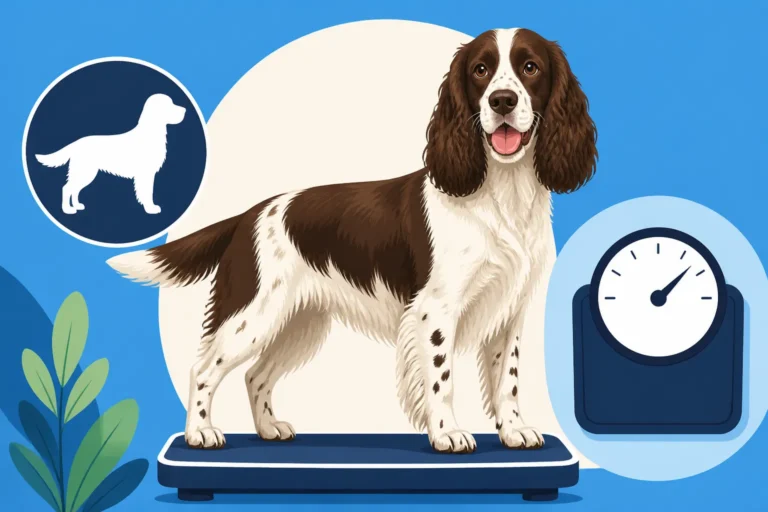
Generally, an adult female English Springer Spaniel can fall anywhere between 40 to 50 pounds (approximately 18 to 23 kg). A field-bred female, being more finely built, might be at the lower end of this spectrum, potentially even a pound or two below if she's exceptionally lean and active. She would still exhibit all the signs of a healthy BCS at 38-40 pounds. Conversely, a show-bred female with her more substantial bone structure and often denser coat could comfortably sit closer to the 48-50 pound mark, or even a little above, and still be in prime condition. Remember, the key is the feel and look of her body, not just the number. It's crucial to check with your vet for what they consider ideal for your specific dog, taking into account her heritage and individual build. For instance, How Much a Female Springer Spaniel Weighs delves into this in more detail.
| Body Condition Score | Description | Visual Cues | Palpation Cues |
|---|---|---|---|
| 1-3 (Underweight) | Ribs, vertebrae, pelvic bones easily visible | Severe waist tuck, no body fat, obvious bony areas | No fat felt, ribs feel sharp, prominent backbone |
| 4-5 (Ideal) | Ribs easily felt, slight waist tuck, abdomen tucked | Ribs not visible but easily felt, defined waist | Minimal fat, smooth feel over ribs, firm muscle |
| 6-7 (Overweight) | Ribs difficult to feel, loss of waist | Ribs felt with pressure, slight or no waist tuck | Layer of fat over ribs, broad back, some fat on tail |
| 8-9 (Obese) | Ribs, vertebrae, pelvic bones covered by fat | No waist, broad back, pendulous abdomen | Heavy fat layer, difficult to feel ribs, extensive fat deposits |
How to Assess Your Female Springer Spaniel's Body Condition
Moving beyond the scale and into a practical assessment is paramount. You'll want to get hands-on and really feel your dog's body, as their lovely coats can be quite deceptive. Regular checks will help you notice changes quickly and adjust accordingly, whether she needs to lose a little or gain some healthy mass.
The Rib Test: A Hands-On Approach
The rib test is perhaps the most fundamental way to gauge your Springer's body condition. It's simple, requires no special equipment, and can be done during your regular petting sessions. Start by placing both of your palms flat on her side, just behind her shoulder blade. Gently run your fingers along her rib cage, applying light pressure.
What you're aiming for is to easily feel each individual rib, much like feeling the knuckles on your hand, without having to press hard. There should be a thin layer of fat and muscle covering them, so they shouldn't feel sharp or prominent like speed bumps directly under the skin. If you can see her ribs without even touching, she's likely underweight (BCS 1-3). If you have to dig to find them, or can't feel them at all beneath a cushiony layer, she's carrying too much weight (BCS 6+). An ideal scenario (BCS 4-5) is where you can feel the ribs distinctively, but they don't protrude. This takes a little practice, but once you know what's normal for your individual dog, it becomes second nature. This is a far more reliable indicator than simply How Much a Female Springer Spaniel Weighs.
The Tummy Tuck and Waistline Check
After the rib test, move your assessment to her waistline and abdomen. These areas provide crucial visual cues about her body condition. Stand directly above your Springer as she stands naturally, looking down at her back. An ideal female Springer Spaniel should have a noticeable "waist" — an indentation or curve inward between her last rib and her hips. This waistline shouldn't be overly dramatic, nor should it be absent. If her sides run straight from her ribs to her hips, or worse, bulge outwards, she's definitely overweight.
Next, crouch down to her side level and look at her profile. Her abdomen should tuck up nicely from the bottom of her rib cage to her hind legs, creating an elegant line. It shouldn't hang low or appear saggy. This "tummy tuck" indicates that she doesn't have excess fat accumulation in her abdominal area. If her belly appears distended or hangs down, that's another strong sign of being overweight. A field-bred Springer will often have a more pronounced tuck than a show-bred one, but both should have one. Getting a clear view of her silhouette, especially after a swim or if her coat is damp, can be very revealing. You might find it useful to check out Feeling for a Springer Spaniel's Ribs Under Feathering for more specific pointers on this.
Recognizing the Signs of Being Under or Overweight
Being able to visually and physically identify when your Springer is outside her ideal weight range is critical for her long-term health.
Signs of being underweight:
- Visible Bones: Her ribs, hip bones, and vertebrae are easily seen without much effort.
- Sunken Flanks: The area between her ribs and hips looks hollow or severely tucked in.
- Lack of Energy (sometimes): While Springers are naturally energetic, a significant drop in stamina or appearing lethargic could indicate insufficient nutrition.
- Poor Coat Condition: A dull, dry, or sparse coat can sometimes be a sign of inadequate caloric intake or underlying health issues.
- Muscle Wasting: You might notice a loss of muscle mass, particularly over her hindquarters or back.
Signs of being overweight:
- Ribs Difficult to Feel: You have to press firmly to locate her ribs under a layer of fat.
- No Waistline or Bulging: Looking down from above, there's no indentation between her ribs and hips, or she looks barrel-shaped.
- Sagging Abdomen: Her belly hangs low or is distended, without that athletic tuck.
- Fat Deposits: You might feel fatty pads over her hips, at the base of her tail, or around her neck.
- Reduced Stamina: She tires more quickly during walks, struggles to jump, or is generally less enthusiastic about play.
- Reluctance to Move: She might be slower to get up, or avoid stairs and long walks.
- Heavy Panting: Even with minimal exertion, she might pant heavily.
- Increased Snoring: Excess weight can contribute to respiratory issues.
If you suspect your Springer is underweight or significantly overweight, a visit to your veterinarian is the best next step. They can help rule out any underlying medical conditions and provide a tailored plan for healthy weight gain or loss. Addressing issues like Arthritis in an Older Springer Spaniel becomes much more challenging if a dog is carrying extra weight.
Factors Influencing a Female Springer Spaniel's Weight
So, you've assessed your female Springer, and maybe you've realized she's a little off her ideal. Don't worry, it's a common discovery! Understanding why her weight might fluctuate is the first step toward bringing her back into balance. Several factors play a significant role, and often, it's a combination of them.
Activity Level and Lifestyle
This is arguably the most impactful factor in a Springer Spaniel's weight, especially given the breed's natural energy. A female Springer Spaniel bred from field lines, living in a working home and spending hours training or hunting weekly, will naturally burn an incredible amount of calories. Her body is a furnace, constantly processing fuel to maintain her high energy output. For such a dog, it's often more about ensuring she's getting enough high-quality calories to sustain her lean muscle mass and energy levels without becoming underweight. How Much a Working Springer Spaniel Should Eat would be very different from a pet Springer.
Conversely, a show-bred female Springer, while still requiring daily exercise, typically isn't working for hours on end in dense cover. If she's primarily a cherished family pet, enjoying leashed walks and yard play, her caloric needs will be significantly lower. The danger here is overfeeding based on generic guidelines or not recognizing that her activity level, while seeming "active" to a human, might not be enough to offset a rich diet. Even a well-loved pet Springer can gain weight if her lifestyle doesn't demand significant calorie expenditure. A classic scenario is the weekend warrior Springer who gets a burst of intense activity one day but is sedentary the rest, and is fed consistently for the highest activity level. Balance is key.
Diet and Nutrition Choices
What and how you feed your female Springer Spaniel directly impacts her weight. It's not just about the amount of food, but also the quality and type.
Quality of Food: A diet rich in high-quality protein and appropriate fats supports muscle mass and provides sustained energy. Cheaper foods often contain more fillers, which can lead to overfeeding in an attempt to provide adequate nutrition, or contribute to feeling less satisfied. Brands like Ollie and Chewy offer a range of premium and fresh food options that prioritize high-quality ingredients, which can be beneficial for managing weight because dogs often feel more satiated with less volume.
Portion Control: This is where many owners unintentionally go wrong. "Eyeballing" portions or simply refilling the bowl when it's empty can easily lead to overfeeding. Even a small handful of extra kibble each day can add up to significant weight gain over weeks and months, especially for a dog whose metabolism slows down with age. Using a measured scoop or a kitchen scale to accurately portion out her meals twice a day is crucial. Always follow the feeding guidelines on your chosen dog food bag, but remember these are starting points and often cater to a more active dog; you'll need to adjust based on your dog's individual metabolism and activity. Don't forget to account for treats in her daily caloric intake, as those little extras can be surprisingly calorie-dense. Checking How Much a Pet Springer Spaniel Should Eat can give you a baseline.
Age and Hormonal Changes
A female Springer Spaniel's body changes significantly throughout her life, and these changes can directly affect her ideal weight and how easily she gains or loses it.
Puppyhood: As a puppy, she's growing rapidly, and her energy demands are immense. Overfeeding during this crucial period can lead to excessive growth rates, which can put strain on developing joints and potentially contribute to issues like hip dysplasia later in life. Conversely, underfeeding can stunt her growth. It's a delicate balance. The Age a Springer Spaniel Stops Growing is an important milestone, as her caloric needs will shift once she reaches maturity.
Adulthood: Once she's fully grown, typically around 12-18 months, her metabolism will settle. This is often when owners accidentally let their dogs gain weight, continuing puppy-level feeding or not adjusting for a slight decrease in puppy-like boundless energy. Maintaining an ideal weight during her prime adult years is critical for preventing health problems.
Spaying/Neutering: If your female Springer Spaniel is spayed, you'll need to be extra vigilant. Spaying often leads to hormonal changes that can slow metabolism and increase appetite, making weight gain a common side effect. Many vets recommend reducing caloric intake by 20-30% after spaying to prevent this. It's vital to monitor her closely and adjust her food portions accordingly. How a Springer Spaniel's Appetite Changes After Neutering can provide more specific insights.
Senior Years: As your Springer enters her golden years, her activity levels will naturally decline. Even if she still enjoys her walks, she likely won't have the same intensity as her younger self. Her metabolism will also slow down further, and she might start to lose muscle mass, making it easier for fat to accumulate. Adjusting her diet to a senior formula, reducing portion sizes, and ensuring she still gets gentle, consistent exercise are key to Caring for a Springer Spaniel Past Nine and maintaining a healthy weight in her twilight years.
Maintaining a Healthy Weight for Life
Achieving and maintaining a healthy weight for your female Springer Spaniel is a lifelong commitment, but one that pays dividends in her health, happiness, and longevity. It involves a holistic approach that considers her activity, diet, and regular health checks.
Crafting an Appropriate Exercise Routine
Exercise is not just about burning calories; it's about building and maintaining healthy muscle mass, supporting joint health, and providing essential mental stimulation for this intelligent and active breed. The type and amount of exercise your female Springer needs will largely depend on whether she's a field or show line, and her individual temperament.
A field-bred female will thrive on vigorous, varied activity. Think long, off-leash hikes in safe, open areas, retrieval games (she loves to retrieve!), swimming, or even participating in dog sports like agility or dock diving. They are naturally wired to quarter and hunt, so engaging these instincts is important. Two brisk 30-minute walks on a leash might be enough for some breeds, but for a field Springer, it's often barely a warm-up. Aim for at least 60-90 minutes of dedicated, high-intensity exercise daily, broken into sessions. She also benefits greatly from mental challenges, which can be just as tiring as physical exertion.
A show-bred female still needs plenty of activity, but might be content with slightly less intensity. Long walks, retrieving in the yard, and interactive play sessions are still essential. While she may not have the relentless drive of a field Springer, she still possesses that strong spaniel desire to work and explore. Around 45-60 minutes of active exercise daily, coupled with mental games, is a good baseline. Remember, even if she's a "pet" dog, she still has a working dog's heritage. A bored Springer is often a destructive Springer, and physical activity helps manage that energy. Consider exploring The Daily Routine a Springer Spaniel Actually Needs for more tailored guidance.
Feeding Strategies for Weight Management
Once you know what her ideal body condition looks and feels like, your feeding strategy becomes a powerful tool.
Accurate Measurement: Ditch the scoop that came with the bag – it's often inaccurate. Invest in a digital kitchen scale to weigh her kibble, or at least a standard measuring cup. Even a quarter-cup difference per meal can add up to pounds over a year. Feed two meals a day to help regulate her metabolism and avoid excessive hunger.
Choosing the Right Food: Look for dog foods with high-quality protein as the first ingredient. If your Springer is very active, a performance or active dog formula might be appropriate, but be wary of these for less active dogs as they are calorie-dense. For a less active or older female, a "weight management" or "senior" formula can be helpful, as these often have reduced calories and fat while maintaining essential nutrients. Consider brands like Ollie, known for fresh, human-grade ingredients, which can often be more satisfying and nutrient-dense, potentially leading to eating less volume. Many owners also find good options on Chewy for a wide variety of specific dietary needs.
Treats in Moderation: Treats are not evil, but they must be factored into her daily caloric intake. Opt for low-calorie options like plain green beans, carrot sticks, or small pieces of lean cooked meat. If you're doing a lot of training, break treats into tiny, pea-sized pieces. Products available on platforms like Amazon offer a vast selection of low-calorie training treats.
Slow Feeders: If your Springer is a vacuum cleaner with her food, a slow feeder bowl can help her feel fuller on the same amount of food by making her work for it. This also aids digestion and prevents gulping.
Regular Veterinary Check-ups and Monitoring
Your veterinarian is your most valuable partner in your Springer Spaniel's health journey. Regular check-ups are not just for vaccinations; they're an opportunity for a professional assessment of her overall health, including her weight and body condition.
During these visits, your vet can accurately score her BCS, discuss any concerns you have, and rule out medical conditions that might be affecting her weight. Sometimes, an unexplained weight gain or loss can be the first sign of an underlying health issue, such as thyroid problems or other metabolic disorders. This is particularly important for this breed, as Whether a Springer Spaniel Gets Hypothyroidism is a known concern that can impact weight.
Beyond formal visits, you should be regularly performing your own rib and waist checks. Make it part of your weekly grooming routine. If you notice a change, don't wait for the annual check-up. Proactive adjustments to her diet and exercise plan, in consultation with your vet, can prevent minor weight fluctuations from becoming significant health problems. Remember, a healthy weight means a happier, more active, and potentially longer life for your cherished female Springer Spaniel.
Disclaimer
This article is for general informational purposes only and does not constitute professional advice. Laws, prices and regulations vary by location and change over time. Consult a qualified professional for guidance on your specific situation.