Feeling for a Springer Spaniel’s Ribs Under Feathering
It's incredibly common for English Springer Spaniel owners to wonder if their beloved dog is carrying a few extra pounds, or perhaps too few, especially when all that glorious feathering and thick double coat makes it nearly impossible to tell just by looking. You might glance at them and think, "They look perfectly fine, just a little fluffy!" but a visual check alone can be seriously misleading. This guide is here to walk you through a simple, effective, hands-on method to accurately assess your Springer's body condition, ensuring they stay at a healthy weight for a long, active life.
The Challenge of Assessing a Springer Spaniel's Weight
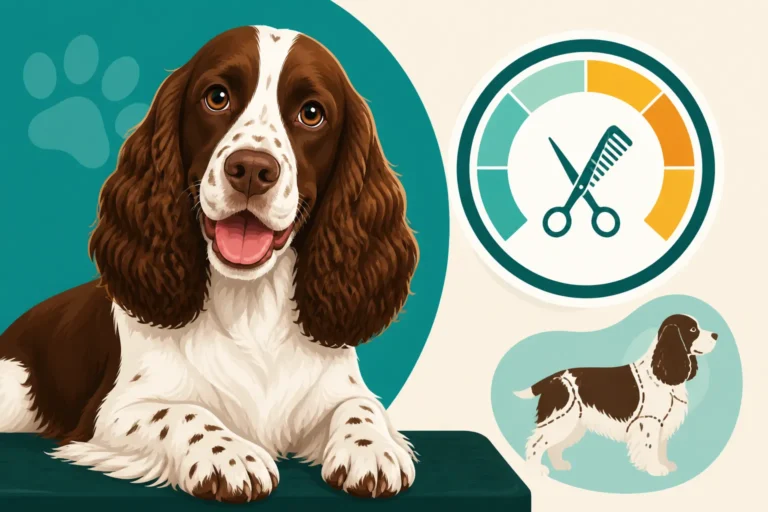
Springers are magnificent dogs, known for their boundless energy and that beautiful, flowing coat. But that very coat, while a hallmark of the breed, can be a master of deception when it comes to judging their body condition. It's easy to fall into the trap of thinking a thick-coated dog is a healthy-weighted dog, when in reality, they could be significantly over or underweight beneath all that fluff.
Why Feathering Makes It Tricky
Let's be honest, those long, silky feathers that adorn their legs, chest, and belly are absolutely stunning, but they also act like a canine cloak. What looks like a robust, well-muscled chest might actually be a layer of fat hidden beneath deep fur. Many owners, myself included, have had that moment at the vet where the doctor feels along their dog's side and gives a slightly concerned look, prompting us to realize our visual assessment was way off. It's a frustrating reality that our eyes can deceive us when it comes to our Springers' true physique. The dense undercoat, particularly on show-bred lines, only adds to this illusion, creating a uniform, seemingly solid silhouette that masks any subtle changes in their shape.
The sheer volume of hair can make a dog appear larger than they are, giving the impression of a well-filled-out frame even when excess fat might be accumulating. Conversely, a thinner Springer might not look alarmingly skinny because their coat still provides some bulk, concealing ribs that are too prominent. This visual deception is why simply looking at your dog from above or the side isn't enough; you really need to get your hands on them and feel what's going on underneath.
The Importance of Regular Weight Checks Beyond the Scale
While a good set of scales at home or the vet's office provides a numerical value, it doesn't tell the whole story about body condition. Weight alone doesn't differentiate between healthy muscle mass and unhealthy fat deposits. For an active breed like the English Springer Spaniel, maintaining an ideal body condition is absolutely critical for their long-term health and mobility. A Springer spaniel that is carrying too much weight, even just a few extra pounds, puts undue strain on their joints, exacerbating conditions like Hip Dysplasia in a Springer Spaniel or contributing to Arthritis in an Older Springer Spaniel much earlier in life.
Beyond joint health, excess weight can contribute to a host of other issues, including heart disease, diabetes, and even impact their ability to perform tasks if they are a working dog. If your Springer experiences conditions like PFK Deficiency, where overexertion can lead to a crisis, an optimal weight is crucial for management. Being underweight also carries its own risks, indicating potential nutritional deficiencies, underlying illness, or simply not enough fuel for their energy demands. Regular, hands-on body condition checks empower you to catch these subtle changes early, allowing you to adjust their diet and exercise regimen proactively. It's all about ensuring your Springer can run, jump, and "spring" through life comfortably.
The Hands-On Method: Feeling for Those Ribs
So, how do you get past the fluffy exterior and truly understand your Springer's body condition? The answer is simple: use your hands. This "rib check" technique is a time-tested method that veterinarians and experienced dog handlers use to get an accurate read on a dog's fat reserves. It's much more reliable than just looking, especially with a breed like the English Springer Spaniel.
The "Rib Check" Technique, Step by Step
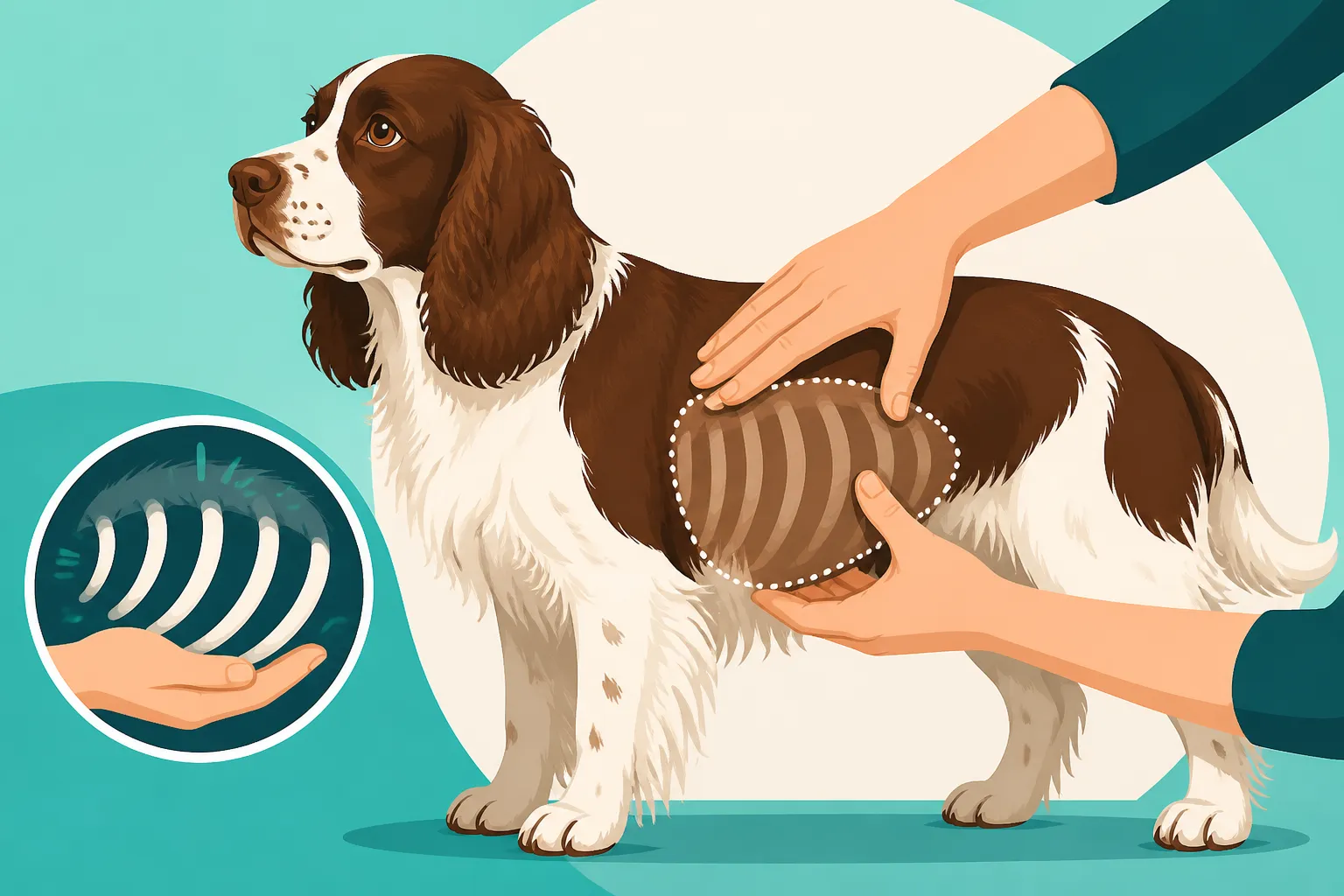
Performing the rib check is quite straightforward, and it should become a regular part of your grooming or petting routine. First, find a quiet moment when your Springer is relaxed and comfortable, perhaps while you're giving them a good scratch or after a walk. Start by placing both of your hands flat against their rib cage, one on each side, just behind their front legs. You want to use the flat of your fingers, not just your fingertips. Now, gently run your hands along their sides, applying mild pressure, similar to how you'd gently rub your own stomach or chest.
As you do this, you're looking for a specific sensation. Ideally, you should be able to feel each individual rib bone distinctively, almost like feeling the knuckles on the back of your hand when your hand is relaxed and open. There should be a slight, thin layer of muscle and fat covering them, but you shouldn't have to press hard to locate them. They should be easily palpable, but not sharply protruding or visible through the coat. If you run your hand over your own knuckles with your fingers extended, that's roughly the feel you're going for – defined, but not painfully sharp.
What an Underweight Springer Spaniel Feels Like
If your Springer is underweight, when you perform the rib check, you'll find that their ribs feel much more prominent and sharply defined than they should. You might even be able to see their ribs easily, especially when they're wet or lying down, even through a decent amount of feathering. The sensation will be more like feeling the knuckles on your closed fist – very distinct and bony, with little to no cushioning. You might also notice their hip bones and spine feeling much more angular and sharp to the touch.
An underweight Springer Spaniel could be a sign of several things. Perhaps they're a particularly active field-bred dog, and their caloric intake isn't matching their energy output, even if you think you're feeding them enough, check out How Much a Working Springer Spaniel Should Eat. Or, it could indicate an underlying health issue, such as parasites, dental problems, or other medical conditions that affect nutrient absorption or appetite. If you suspect your Springer is underweight, it's always best to consult your veterinarian to rule out any health concerns and discuss appropriate dietary adjustments. They might benefit from a higher calorie diet or more frequent meals.
What an Overweight Springer Spaniel Feels Like
On the flip side, if your Springer Spaniel is carrying too much weight, feeling their ribs will be a much more difficult task. When you run your hands along their side, you'll have to press down quite firmly before you can even begin to discern the individual ribs, and even then, they might feel indistinct, as if covered by a thick, soft cushion. This cushion is, unfortunately, excess fat. The sensation will be more akin to pressing on the palm of your hand – soft and yielding, with no clear bone definition.
An overweight Springer will often lack a discernible waistline when viewed from above and may have little to no "tuck up" in their abdomen when viewed from the side. This extra weight, especially for a breed as active as the Springer, can lead to numerous health problems. Beyond joint issues like Arthritis in an Older Springer Spaniel and worsening Hip Dysplasia in a Springer Spaniel, it can contribute to a decrease in stamina, making them less enthusiastic about walks or play. You might notice them panting more easily, moving more slowly, or generally seeming less vibrant. This is why addressing excess weight proactively is so important for their quality of life. Services like Ollie, which offer customized meal plans, can sometimes help fine-tune portions and ingredients to aid in healthy weight loss, or you might find specialized weight-management foods available through retailers like Chewy.
Beyond the Ribs: A Full Body Condition Score
While the rib check is a fantastic starting point, a comprehensive body condition assessment involves looking at other areas of your Springer's physique. Combining these observations gives you a more complete picture of their health and allows you to make informed decisions about their care.
Checking the Waistline and Tummy Tuck
Once you've felt the ribs, the next crucial step is to get a visual and tactile assessment of their waistline and abdominal tuck. Ask your Springer to stand squarely. Now, look down at them from directly above. An ideal Springer should have an obvious "hourglass" shape, where the body narrows slightly behind the rib cage before flaring out again at the hips. If their silhouette looks more like a straight line from ribs to hips, or even bulges out, that's a strong indicator of excess weight.
Next, crouch down and look at your Springer from the side. You should see a distinct "tuck up" where their abdomen rises from the bottom of the rib cage towards their hind legs. It shouldn't be a dramatic greyhound-like tuck, but certainly not a straight, sagging line either. A good tuck indicates a lean, athletic build, characteristic of a healthy Springer. If their belly hangs low or is parallel to the ground, they're likely carrying too much weight around their middle. Remember, The Weight a Male Springer Spaniel Should Hold and The Weight a Female Springer Spaniel Should Hold can vary, but the body condition remains key.
Palpating the Spine and Hip Bones
Just as you felt for the ribs, gently run your hands along your Springer's spine, from their neck down to their tail. You should be able to feel the individual bumps of the vertebrae with light pressure, but they shouldn't feel sharp or jagged. There should be a thin layer of muscle and fat over them, providing a smooth, but still palpable, contour. If the spine feels prominent and bony, with no discernible covering, it could indicate an underweight dog. Conversely, if you can barely feel the spine and it feels like a soft, padded ridge, your Springer is likely overweight.
Similarly, move your hands to their hips. The two hip bones (iliac crests) should be easily palpable but not sharply protruding. They should have a slight covering of muscle and fat, feeling rounded rather than pointed. If they're difficult to find, buried under a layer of fat, your dog is likely overweight. If they stick out sharply and feel very angular, your dog is too thin. These checks, combined with the rib assessment, provide a comprehensive picture. For a detailed look at maintaining a healthy body, you might want to read Keeping a Springer Spaniel at a Working Weight.
The Role of a Veterinarian and Body Condition Scoring Charts
While these hands-on checks are excellent for home monitoring, your veterinarian is your best resource for a professional body condition assessment. Vets use a standardized tool called a Body Condition Scoring (BCS) chart, which typically ranges from 1 (emaciated) to 9 (morbidly obese), with 4 or 5 being the ideal. They consider all the points we've discussed – ribs, waistline, abdominal tuck, spine, and hip bones – to give a precise score.
Don't hesitate to ask your vet during your Springer's annual check-up to perform a BCS and discuss it with you. They can offer tailored advice based on your dog's specific needs, age, and activity level, helping you create a feeding plan or exercise regimen to reach and maintain that ideal score. They can also rule out any underlying medical reasons for weight fluctuations. Many pet food brands, often found on sites like Amazon or Chewy, also provide simplified BCS charts on their packaging or websites, which can be a helpful visual aid for at-home monitoring.
Maintaining a Healthy Weight for Your Springer Spaniel
Keeping your English Springer Spaniel at an optimal weight isn't a one-time fix; it's an ongoing commitment that involves careful attention to their diet, exercise, and regular monitoring. It's about finding that sweet spot where they're lean, strong, and full of the vibrant energy Springers are known for, without being either too heavy or too thin.
Tailoring Diet to Activity Level
This is perhaps the most critical component, and it's where many owners struggle, especially when their Springer's activity level changes or if they're not a working dog. A field-bred Springer Spaniel, constantly active, will have vastly different caloric needs than a show-bred Springer who enjoys leisurely walks and cuddles on the sofa. How Much a Working Springer Spaniel Should Eat can be significantly more than How Much a Pet Springer Spaniel Should Eat. It's not just about the quantity, but also the quality and type of food. High-quality dog foods, often found at retailers like Chewy, offer formulations specifically designed for active dogs with higher protein and fat content, or for less active dogs needing fewer calories.
For working Springers, ensuring they get enough fuel for their demanding days is key. For those living a more leisurely life, portion control is paramount. It’s easy to overfeed, especially with treats. If you're concerned about your dog's weight, consider measuring their food precisely rather than just scooping. Some owners find that fresh food services like Ollie can help immensely, as they provide pre-portioned meals based on your dog's exact caloric needs, age, and activity level, taking much of the guesswork out of feeding. Don't forget that How a Springer Spaniel's Appetite Changes After Neutering can also impact their dietary needs, often requiring a reduction in calories.
Exercise: The Other Half of the Equation
You simply cannot talk about a Springer Spaniel's weight without talking about exercise. These dogs were bred to work all day in the field, flushing game and retrieving. They need a significant amount of physical activity to thrive, both mentally and physically. A well-exercised Springer is a happier, healthier Springer, and one less likely to accumulate excess weight. Daily long walks, vigorous games of fetch, swimming, or even activities like agility can help burn calories and build lean muscle. A bored Springer might also be an anxious or destructive Springer, so consistent exercise is beneficial all around.
Even if your Springer isn't a working gun dog, they still possess that innate drive and stamina. Integrating varied forms of exercise, including mental stimulation through training or puzzle toys, will keep their metabolism ticking and their muscles toned. Remember, consistency is key. Short, infrequent bursts of activity won't cut it for this energetic breed. Getting them out, moving, and exploring is not just good for their waistline, it's essential for their overall well-being.
Regular Monitoring and Adjustments
Weight management is a dynamic process. Your Springer's needs will change throughout their life based on age, activity level, season, and health status. What worked when they were a boisterous two-year-old might lead to weight gain when they're a more sedate senior. This is why regular monitoring is so crucial. Make the "rib check" a weekly or bi-weekly habit. Pay attention to how their body condition feels, not just how their weight registers on a scale.
Be prepared to make adjustments to their food portions or exercise routine as needed. If you notice the ribs becoming harder to feel, it's time to reduce their food slightly and perhaps add a bit more activity. If they're too prominent, consult your vet and consider increasing their intake. This proactive approach, coupled with guidance from your veterinarian, will ensure your Springer Spaniel maintains a healthy weight, allowing them to enjoy a long, active, and joyful life by your side. For more insights on this, you might find Taking Weight Off a Springer Spaniel That Is Not Working or What Changes in an Old Springer Spaniel's Care helpful reads.
| Body Condition Score | Rib Palpation Description | Visual Cues (Typical) | Action Needed |
|---|---|---|---|
| Too Thin (1-3) | Ribs easily visible and feel sharp with no fat covering; spine and hip bones prominent. | Ribs, spine, hip bones often visible. Severe abdominal tuck. | Consult vet, increase caloric intake, monitor for underlying health issues. |
| Ideal (4-5) | Ribs easily palpable with a slight fat covering (like back of hand); not visible but felt without pressing hard. | Obvious waistline, visible abdominal tuck. Coat smooths over ribs but doesn't hide them entirely. | Maintain current diet and exercise. |
| Overweight (6-7) | Ribs palpable only with significant pressure; covered by a noticeable fat layer. | Waistline less distinct or absent. Abdominal tuck reduced. May appear blocky. | Reduce caloric intake, increase exercise. Monitor carefully. |
| Obese (8-9) | Ribs very difficult or impossible to feel due to thick fat layer; spine and hip bones also obscured. | No waistline or abdominal tuck. Body appears round or pendulous. Heavy fat deposits over back and tail base. | Consult vet for a comprehensive weight loss plan, including diet adjustments and controlled exercise regimen. |
Disclaimer
This article is for general informational purposes only and does not constitute professional advice. Laws, prices and regulations vary by location and change over time. Consult a qualified professional for guidance on your specific situation.