The Weight a Male Springer Spaniel Should Hold
It's incredibly common for English Springer Spaniel owners to ponder whether their beloved boy is carrying the right amount of weight. With their glorious feathering and often boundless energy, it can be deceptively tricky to tell what's "just right" beneath all that beautiful coat. This guide aims to clear up the confusion, helping you understand the ideal weight range for a male Springer Spaniel and, more importantly, how to accurately assess your dog's condition to ensure he's as healthy and happy as possible.
Understanding the Breed Standard for a Male Springer Spaniel's Weight
When we talk about an "ideal weight," it's easy to get caught up in specific numbers on a scale. However, for a breed like the English Springer Spaniel, the official breed standards often provide a range, and it's essential to understand that these are guidelines, not rigid rules carved in stone. Individual dogs can and do vary, even within the same litter.
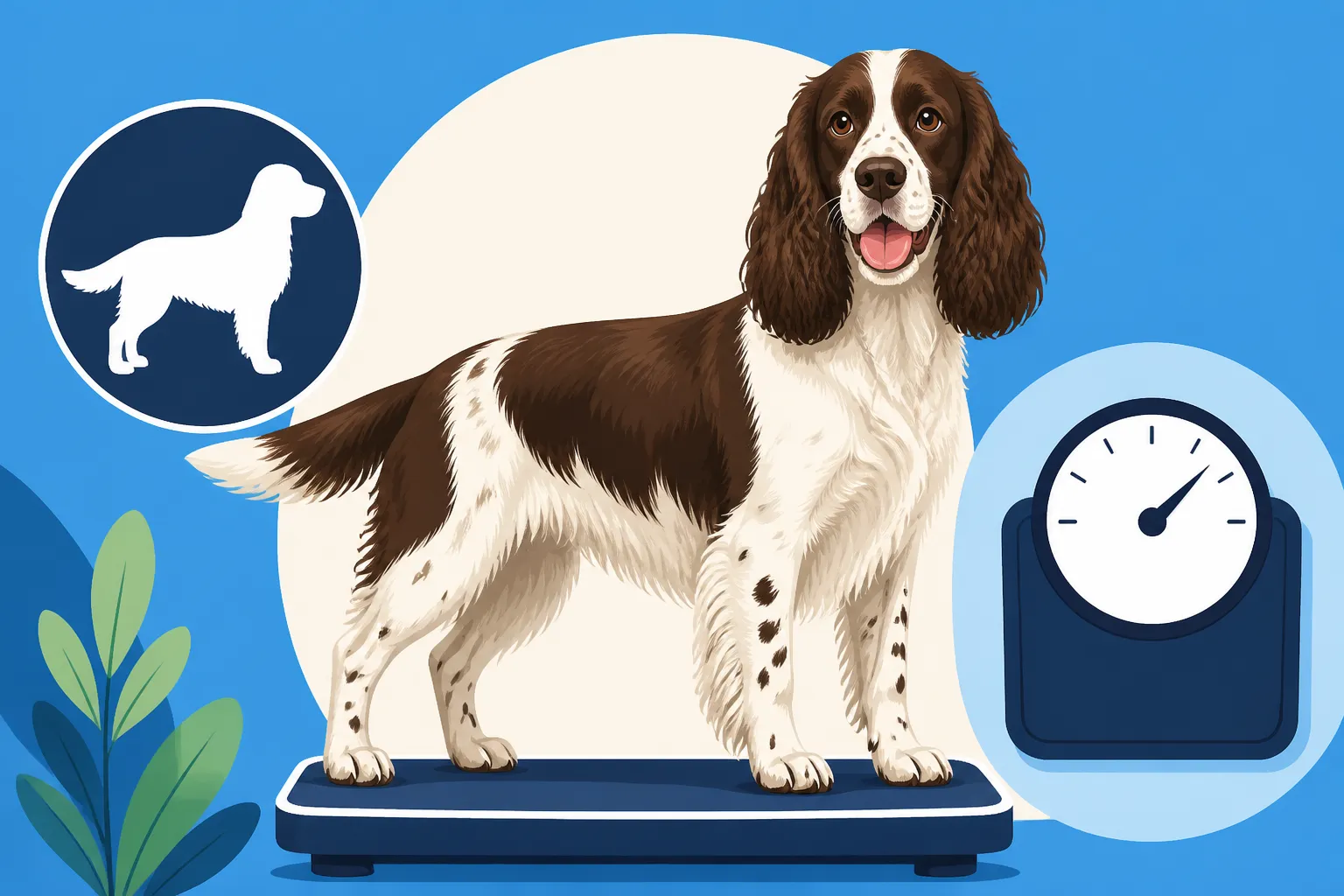
Most breed standards, such as those recognized by the American Kennel Club (AKC) or the Kennel Club (UK), describe a male Springer Spaniel as being between 19 and 20 inches tall at the shoulder, with a weight typically falling between 45 and 55 pounds. Some standards might stretch this a little, perhaps up to 60 pounds, but generally, that 45-55 pound window is what most breeders and enthusiasts aim for.
It's crucial to remember that this breed, perhaps more than almost any other, has really Two Breeds Registered as One: the Field and Show Springer Spaniel. This historical divergence means there are two distinct types: the field-bred Springer Spaniel and the show-bred Springer Spaniel. A field-bred dog, often built for endurance and agility in the hunting field, will typically be leaner, with less bone and a more athletic, "rangy" build. They might naturally sit at the lower end of that weight range, even appearing almost slender. Conversely, a show-bred Springer often possesses a heavier bone structure, a more substantial body, and a denser coat. These dogs might comfortably carry a few more pounds and still be perfectly fit and healthy, often residing at the higher end of the standard weight range. Expecting a field-bred dog to look like a show dog, or vice-versa, is a common pitfall that can lead to misjudging their ideal weight.
Factors Influencing a Male Springer Spaniel's Weight
While breed standards provide a good starting point, many factors contribute to where your individual male Springer Spaniel's healthy weight will actually fall. It's never just about a number; it's about the whole picture of the dog in front of you.
Genetics and Individual Variation
Beyond the general distinction between field and show lines, individual genetics play a massive role. Just like in people, some dogs are simply built differently. You might have two male Springer Spaniels, both from excellent lines and both healthy, yet one is naturally more compact and muscular, while the other is taller and more finely boned. These inherent differences mean that a 50-pound dog might be perfectly healthy and lean, while another 50-pound dog might be carrying too much weight for his particular frame, or even be underweight. Looking at the parents and knowing the general build of the dog's lineage can give you some clues, but ultimately, you're assessing your dog.
Age and Life Stage
A male Springer Spaniel puppy will naturally fluctuate in weight as he grows. They go through gangly phases, growth spurts, and periods where they seem to fill out. A healthy adult weight is usually achieved around 18 months to 2 years of age, though some might continue to mature physically up to three years. The Age a Springer Spaniel Finishes Growing can vary slightly. As they transition into senior years, typically starting around age seven or eight, their metabolism can slow down, or conversely, health issues might cause weight loss. It's a journey, not a static state.
Activity Level and Lifestyle
This is perhaps the single biggest determinant of a Springer's appropriate weight. A male Springer Spaniel bred for field work and regularly out hunting, running trials, or engaging in intense daily exercise will naturally maintain a leaner, more muscular physique. Their caloric needs are higher, and their bodies are optimized for performance. How Much a Working Springer Spaniel Should Eat will be significantly different from How Much a Pet Springer Spaniel Should Eat.
A Springer who lives primarily as a companion, even with daily walks, might not burn the same amount of calories. If their diet isn't adjusted to their activity, weight gain can creep up surprisingly fast. It’s not about judging their lifestyle, but about making sure their input (food) matches their output (exercise). A show Springer, even if not actively showing, might still need a good deal of exercise to stay fit, but perhaps not the same sustained, high-intensity work as a field dog.
Diet and Nutrition
The type and amount of food your Springer eats directly impacts his weight. Feeding high-quality, balanced nutrition is key, but portion control is paramount. Many owners are guilty of overfeeding, often unknowingly. Those extra treats, table scraps, and slightly-too-generous scoops of kibble add up quickly for an active breed. Even with the best intentions, it's easy to misjudge. Discussing specific brands, many high-quality options exist on platforms like Chewy or specialized fresh food services like Ollie, which can help ensure balanced nutrition, but the amount is still up to you. An owner could buy the best food from Amazon, but if they feed too much, weight gain is inevitable.
Underlying Health Conditions
Sometimes, an unexpected change in weight can signal a hidden health issue. Conditions like Signs a Springer Spaniel's Thyroid Has Failed (hypothyroidism) can lead to weight gain despite no change in diet or exercise. Conversely, dental problems, internal parasites, or other illnesses could cause weight loss. Joint pain, such as Arthritis in an Older Springer Spaniel, might lead to decreased activity, which then contributes to weight gain. If your Springer's weight changes significantly and inexplicably, a vet visit is always warranted.
How to Assess Your Male Springer Spaniel's Body Condition
The scale can tell you a number, but it doesn't tell you if that number is healthy for your dog. This is where learning to assess your male Springer's Body Condition Score (BCS) becomes invaluable. It's a hands-on, visual approach that gives you a much better understanding of his true physical state, even under a thick coat.
Many owners struggle with this, especially with Springers! Their beautiful, flowing feathering can easily mask a few extra pounds or even hide a dog who's a bit too thin. You feel his coat, and everything seems fine, but a proper assessment requires getting your hands on him.
The Rib Test
This is the golden rule. Run your hands along your Springer's sides, over his rib cage.
- Ideal Condition: You should be able to easily feel his ribs, like running your fingers over a Venetian blind, without having to press hard. There should be a slight layer of fat over them, but no thick padding.
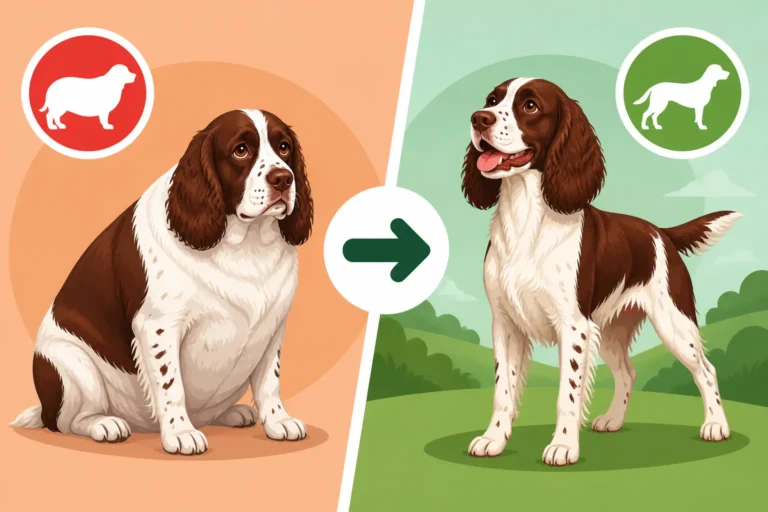
- Overweight: If you have to press firmly to feel the ribs, or can't feel them at all, he's likely carrying too much weight. This is a common situation for many pet Springers. Feeling for a Springer Spaniel's Ribs Under Feathering can be a real skill to develop.
- Underweight: If his ribs are very prominent and easily visible even without pressing, he's probably too thin.
The Waist Tuck
Look at your Springer from the side.
- Ideal Condition: His abdomen should tuck up slightly from the bottom of his rib cage to his hind legs, creating a graceful curve.
- Overweight: If his belly sags or forms a straight line from chest to hind legs, he's likely overweight. No visible tuck means he's probably carrying too much fat.
- Underweight: An exaggerated tuck, where his flanks look hollow, suggests he's underweight.
The Overhead View
Look down at your Springer from directly above him.
- Ideal Condition: You should see a distinct waist behind his ribs, creating an hourglass figure. It won't be as dramatic as some short-haired breeds, but it should be noticeable.
- Overweight: If he looks wide, like a barrel, or his sides bulge out, with no discernible waist, he's overweight. It's tough, but sometimes you really have to How to Spot a Heavy Springer Spaniel Under Feathering.
- Underweight: If his waist is severely pinched in and his hip bones are very prominent, he's too thin.
Here's a simplified Body Condition Score (BCS) table to help you:
| Score (1-5) | Description | Ribs | Waist Tuck | Overhead View |
|---|---|---|---|---|
| 1 | Emaciated | Ribs, spine, pelvic bones easily visible | Severe abdominal tuck, prominent bones | Severe hourglass, prominent hip bones |
| 2 | Underweight | Ribs easily palpable, minimal fat | Obvious tuck, visible bones | Pronounced hourglass |
| 3 | Ideal | Ribs easily palpable with slight fat | Clear tuck, smooth transition from ribs | Well-proportioned hourglass |
| 4 | Overweight | Ribs difficult to feel, heavy fat cover | Little or no tuck, abdomen straight | Broad back, little to no waist definition |
| 5 | Obese | Ribs not palpable, massive fat deposits | No tuck, distended abdomen, sagging belly | Very broad, no waist, rolls of fat visible |
Aim for a BCS of 3. If you're unsure, your veterinarian is the best resource to help you accurately assess your dog's condition.
Maintaining a Healthy Weight for Your Male Springer Spaniel
Achieving and maintaining a healthy weight for your male Springer Spaniel is an ongoing commitment, but it's one of the most important things you can do for his long-term health and vitality. It's about balance, consistency, and a keen eye for detail.
Smart Dietary Management
The foundation of weight control lies in what goes into his bowl. Start by using a high-quality dog food appropriate for his life stage and activity level. If he's a highly active field dog, he'll need a different caloric density than a companion Springer. Always measure his food. Don't eyeball it; invest in a proper measuring cup. Divide his daily allowance into two meals to help manage his hunger.
It’s often those little extras that derail a diet. Be mindful of treats and table scraps. They add calories quickly, and many commercial treats are surprisingly high in fat. If you're using treats for training, choose low-calorie options or use small pieces of his regular kibble. If you prefer fresh food, services like Ollie offer pre-portioned meals, which can be fantastic for portion control, though you still need to ensure the caloric intake matches his needs. Many owners find great food options on Chewy or Amazon, but again, the responsibility for portion control rests squarely with you.
Sometimes, Springers seem to have a bottomless pit for a stomach. The Springer Spaniel That Inhales Its Dinner is a common sight! Using a slow-feeder bowl or puzzle feeder can help him feel more satisfied and slow down his eating, preventing bloat and aiding digestion.
Adequate and Appropriate Exercise
Springer Spaniels are active dogs, full stop. Even a show-bred Springer needs significant exercise. For a field-bred dog, "adequate" means a lot! They thrive on purposeful activity that engages both their body and mind. Daily long walks are a bare minimum. Incorporate activities like fetch, swimming, hiking, or even canine sports like agility or scent work. A male Springer Spaniel who is bored or under-exercised is more likely to become overweight and can also develop behavioral issues. How Much Exercise a Field Bred Springer Spaniel Needs will be more intense and sustained than How Much Exercise a Show Bred Springer Spaniel Needs, but both require a commitment to regular, vigorous activity.
Remember to tailor the exercise to his age and condition. An older Springer with Arthritis in an Older Springer Spaniel will need gentle, consistent exercise like swimming or short, frequent walks rather than intense runs to avoid stressing his joints. What Changes in an Old Springer Spaniel's Care often includes adjusting exercise routines.
Regular Health Monitoring and Vet Check-ups
Routine veterinary visits are essential for weight management. Your vet can accurately assess his body condition, weigh him, and discuss any concerns you might have. They can also rule out any underlying medical conditions that might be contributing to weight gain or loss, such as a slow thyroid. Don't hesitate to ask your vet for a realistic weight target and feeding plan. They are your best partner in keeping your Springer healthy.
Keep an eye on any subtle changes in your Springer's activity level, appetite, or general demeanor. A sudden drop in energy could mean he's feeling unwell or simply needs a diet adjustment. Also, be aware that How a Springer Spaniel's Appetite Changes After Neutering is a common scenario, as metabolism often slows, requiring a caloric adjustment to prevent weight gain.
By being diligent with diet, committed to exercise, and attentive to his overall health, you can help your male English Springer Spaniel maintain a healthy weight and enjoy a long, active, and happy life by your side.
Disclaimer
This article is for general informational purposes only and does not constitute professional advice. Laws, prices and regulations vary by location and change over time. Consult a qualified professional for guidance on your specific situation.