Whether Rage Syndrome Is Epilepsy in a Springer Spaniel
It’s truly devastating when your sweet, loving English Springer Spaniel suddenly turns aggressive, seemingly without warning, leaving you stunned, hurt, and often fearful. This isn't just a dog being "naughty" or "dominant"; it's a terrifying phenomenon known as Rage Syndrome. Many owners grapple with the question of whether these episodes are a form of epilepsy, desperately seeking answers and understanding. This guide will delve deep into the complex nature of Rage Syndrome, exploring its connection to seizure activity and what it means for your beloved companion.
Understanding Rage Syndrome: More Than Just "Bad Behavior"
The term "Rage Syndrome" itself can be startling, but it accurately describes the sudden, explosive, and often unprovoked bursts of aggression that some Springer Spaniels, and a few other breeds, experience. It's not a gradual build-up of frustration or a learned behavioral problem; it's an abrupt switch, like flipping a light. One moment, your dog might be cuddling on the couch, and the next, they are lunging, biting, and showing intense aggression toward family members or even objects. This isn't your dog being "bad"; it's something fundamentally different and deeply unsettling.
The Terrifying Reality of Sudden Onset Aggression
Imagine your cheerful Springer Spaniel, tail wagging, suddenly freezing, pupils dilating, and an almost glassy, vacant stare taking over their eyes. This precedes an explosion of aggression that can last moments or a few minutes, often directed at the closest person or object, then just as quickly, it's over, and they might even appear confused or sleepy. This sudden onset aggression is a hallmark of Rage Syndrome. Owners often report that their dog seems to "come back" from the episode with no memory of what happened, sometimes even seeking comfort. This cyclical, unpredictable nature is what makes it so terrifying and difficult to manage. It's a stark contrast to typical aggression, which usually has clear triggers and body language cues leading up to it. If you've witnessed this, you know the profound fear and confusion it instills. For more insight into these episodes, read about What Sudden Onset Aggression Looks Like in a Springer Spaniel.
Why It's Not "Dominance" or "Training Issues"
In the past, many cases of Rage Syndrome were mistakenly attributed to dominance or a lack of training, leading to inappropriate and often counterproductive "corrections" that only exacerbated the problem. We now understand that this isn't about your dog trying to be the "alpha" or simply refusing to listen. The sudden, unprovoked nature, the trance-like state, and the subsequent confusion strongly suggest a neurological rather than a purely behavioral origin. This understanding is crucial because it shifts the focus from punishment to medical investigation and management. It helps owners shed the guilt and self-blame, recognizing that they are dealing with a medical condition, not a poorly behaved pet. The reality of Whether Rage Syndrome in Springer Spaniels Is Real is that it's a recognized, albeit complex, condition.
The Overlap with Epilepsy: What Science Says
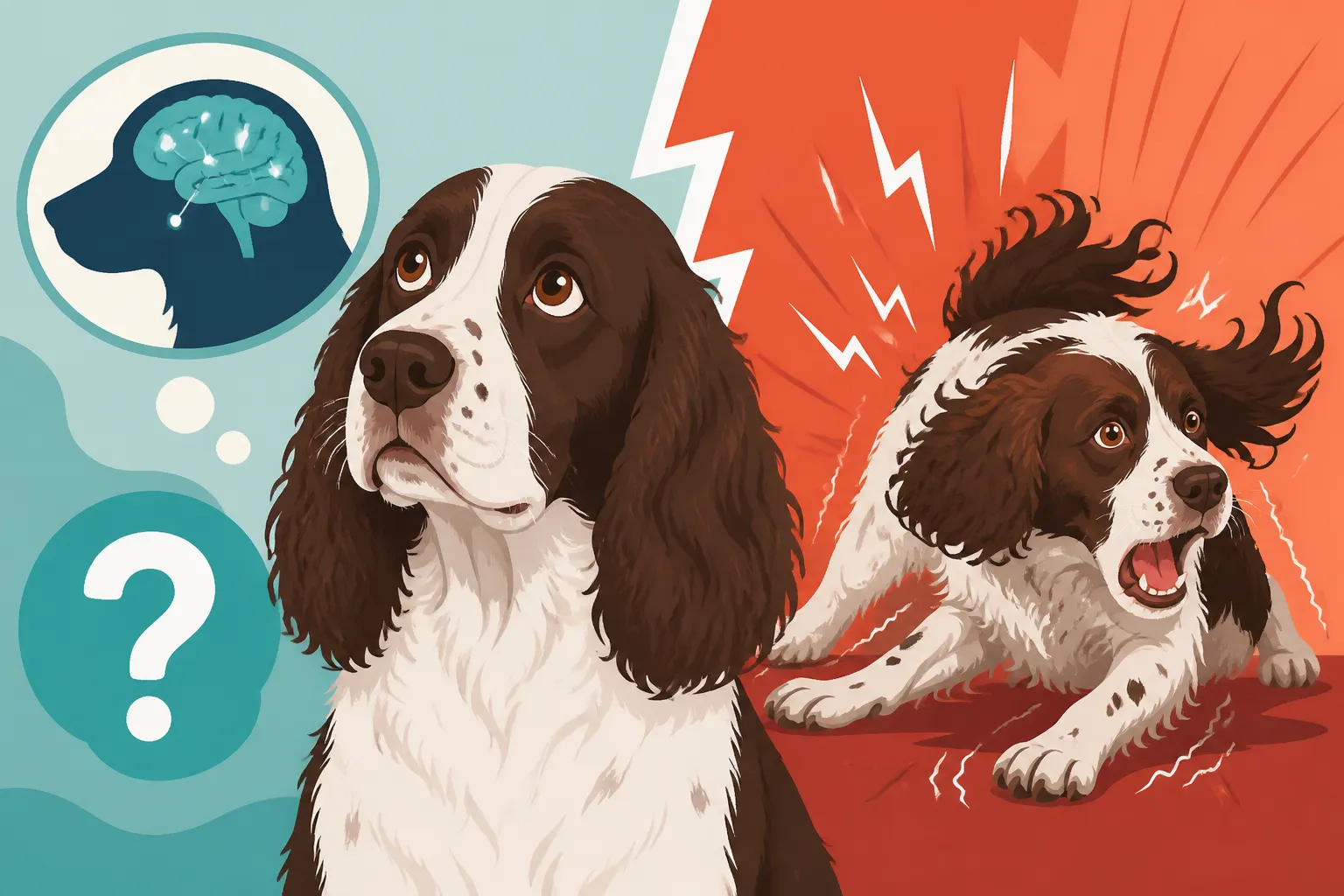
This brings us to the core question: is Rage Syndrome a form of epilepsy in Springer Spaniels? The answer is nuanced, but the scientific community increasingly acknowledges a strong link between these sudden aggressive outbursts and seizure activity, particularly focal seizures. While it doesn't always present as the classic "grand mal" seizure most people associate with epilepsy, many researchers and veterinary neurologists classify Rage Syndrome as a type of behavioral or complex partial seizure, often originating in the temporal lobe of the brain.
Distinguishing Rage Episodes from Generalized Seizures
When most people think of epilepsy, they picture a dog collapsing, convulsing uncontrollably, drooling, and losing bladder control. This is known as a generalized, or grand mal, seizure. Rage Syndrome, however, presents quite differently. Instead of physical convulsions, the seizure activity manifests as extreme, uncharacteristic aggression. The dog might not lose consciousness in the traditional sense, but their behavior is clearly not under their voluntary control. They may have a fixed stare, dilated pupils, and be unresponsive to commands, even seemingly "seeing through" you. This distinction is critical for both diagnosis and treatment.
Let's look at a quick comparison:
| Feature | Typical Generalized Seizure | Rage Syndrome (Behavioral Seizure) |
|---|---|---|
| Primary Manifestation | Convulsions, loss of consciousness, drooling, urination | Sudden, explosive aggression, biting, attacking |
| Consciousness | Generally lost | Altered consciousness, trance-like, unresponsive |
| Onset | Often sudden, can have pre-seizure aura | Abrupt, out-of-character, no clear environmental trigger |
| Duration | Usually minutes | Seconds to a few minutes |
| Post-Episode Behavior | Disorientation, confusion, exhaustion | Confusion, drowsiness, sometimes immediate return to normal |
| Physical Symptoms | Muscle rigidity, paddling, jaw chomping | Fixed stare, dilated pupils, often no physical convulsions |
The Neurological Basis: Focal Seizures and Brain Activity
Modern veterinary neurology points to focal seizures as a strong candidate for the underlying cause of Rage Syndrome. Focal seizures, sometimes called partial seizures, originate in a specific part of the brain and can cause a wide variety of symptoms, depending on which brain region is affected. When the area controlling emotional responses and aggression is involved, such as parts of the temporal lobe or limbic system, the seizure can manifest as a sudden, intense behavioral change like a rage episode.
While a definitive genetic marker for Rage Syndrome linked specifically to epilepsy is still under research, the familial tendency for this condition in certain Springer Spaniel lines, as discussed in Whether Rage Syndrome Runs in Springer Spaniel Lines, suggests a hereditary component, much like other forms of idiopathic epilepsy. It's believed to be a polygenic trait, meaning multiple genes might contribute, or a complex interaction between genetics and environmental factors. Further research using advanced brain imaging and electroencephalograms (EEGs) is ongoing to pinpoint the exact brain abnormalities and electrical disturbances during these episodes.
Seeking a Diagnosis and Ruling Out Other Causes
Diagnosing Rage Syndrome is rarely straightforward and can be a frustrating, lengthy process for owners. Because there isn't a single definitive test that screams "Rage Syndrome," veterinarians must embark on a journey of elimination, ruling out other potential causes of sudden aggression or behavioral changes. This often involves a comprehensive battery of tests and specialist consultations.
The Diagnostic Journey for a Springer Spaniel
The first step usually involves a thorough physical exam and a detailed history from the owner, focusing on the nature, frequency, duration, and triggers (if any) of the aggressive episodes. Your vet will want to know everything: when did it start, what exactly happens, how does your dog behave before and after, and what does the aggression look like? Video recordings of episodes, if safe to obtain, can be incredibly helpful for a vet to observe the behavior firsthand.
Following this, a battery of blood tests will likely be recommended. This includes a complete blood count, biochemistry panel, and often a thyroid panel. Why the thyroid? Because conditions like hypothyroidism can sometimes manifest with behavioral changes, including aggression. It’s important to consider Whether a Springer Spaniel's Thyroid Should Be Checked for Aggression as part of a comprehensive workup. These tests help rule out metabolic diseases, organ dysfunction, infections, or hormonal imbalances that could be contributing to the problem.
Conditions Often Mistaken for Rage Syndrome
Beyond metabolic issues, several other conditions can mimic Rage Syndrome, making accurate diagnosis a challenge. Pain, particularly chronic or severe pain from conditions like arthritis, hip dysplasia, or even dental issues, can make a dog react aggressively when touched or approached. A thorough orthopedic and neurological exam is crucial. Brain tumors, inflammatory brain diseases, or other structural abnormalities in the brain can also cause sudden behavioral shifts or seizures. This might necessitate advanced imaging like an MRI of the brain, a procedure that can be quite costly but is often essential for a definitive diagnosis. It's during these diagnostic stages that a robust pet insurance policy, like those offered by Healthy Paws, can become an invaluable asset, helping to alleviate the financial burden of extensive testing and specialist consultations.
Electroencephalograms (EEGs), which measure electrical activity in the brain, can be useful for diagnosing epilepsy. However, performing an EEG on a conscious, potentially aggressive dog is difficult, and abnormalities may not be present between episodes. While an EEG can provide insights, as explored in Whether an EEG Diagnoses Springer Spaniel Rage, it's not always a straightforward diagnostic tool for Rage Syndrome. Ultimately, diagnosis often involves a combination of ruling out other causes, observing the characteristic symptoms, and a presumptive diagnosis based on response to anti-seizure medication.
Managing Life with a Springer Spaniel Prone to Rage Episodes
Once a diagnosis of Rage Syndrome, or sudden onset aggression suspected to be a form of focal seizure, is reached, the focus shifts to management. This is a lifelong commitment that requires patience, consistency, and a deep understanding of your dog's condition. The goal is to reduce the frequency and intensity of episodes and ensure the safety and quality of life for both your dog and your family.
Treatment Approaches and What to Expect
The primary treatment for Rage Syndrome often involves anticonvulsant medications, similar to those used for other forms of epilepsy. Medications like phenobarbital, potassium bromide, levetiracetam (Keppra), or zonisamide can help stabilize brain activity and reduce the likelihood of these aggressive outbursts. It's often a process of trial and error to find the right medication or combination of medications and the correct dosage that works best for your individual dog. This can take time, and close monitoring by your veterinarian is essential. Discussing Whether Medication Controls a Springer Spaniel's Rage with your vet is a critical step in developing a management plan.
Beyond medication, behavioral modifications focused on trigger avoidance are paramount. While Rage Syndrome episodes are often described as "unprovoked," some dogs may have subtle triggers, such as being startled, approached while sleeping, or encountering specific situations. Learning to identify and minimize these potential triggers can be a crucial part of management. This might mean establishing safe zones for your dog, avoiding crowded environments, or teaching family members specific interaction protocols. A behaviorist can also offer invaluable guidance; understanding What a Behaviorist Costs a Springer Spaniel Owner can help you budget for this essential support.
Owner Support and Quality of Life Considerations
Living with a dog affected by Rage Syndrome takes an immense emotional toll on owners. The fear, the unpredictability, and the potential danger can create a stressful home environment. It's crucial for owners to seek support, whether through online communities, support groups, or counseling. Understanding that you are not alone in this struggle can make a huge difference.
Ensuring your dog’s quality of life is also paramount. While the condition can be terrifying, many dogs with Rage Syndrome can lead fulfilling lives with proper management. Regular vet check-ups are vital to monitor medication efficacy and potential side effects. These ongoing veterinary costs, including specialist visits and prescription refills, can add up significantly over time. This is where pet insurance, like Healthy Paws, really shines, by offering financial peace of mind. Healthy Paws can cover a significant portion of eligible vet bills for chronic conditions, helping you provide the best possible care without constant worry about the expense. Proactive health management, including considering The DNA Test That Should Precede Every Springer Spaniel Purchase for future puppies, can help reduce the incidence of genetic conditions.
In severe cases, or when aggression cannot be controlled, owners may face the heartbreaking decision of Knowing When an Old Springer Spaniel Has Had Enough. This is a deeply personal and agonizing choice that should always be made in consultation with your veterinarian and potentially a veterinary behaviorist, considering the dog's suffering, the safety of others, and the overall quality of life. The emotional and financial commitment to managing Rage Syndrome is significant, highlighting once again the value of comprehensive pet insurance plans from providers like Healthy Paws, which can help ensure you don't have to compromise on care due to cost. Remember, you're doing your best for your loyal companion, and that's what truly matters.
Disclaimer
This article is for general informational purposes only and does not constitute professional advice. Laws, prices and regulations vary by location and change over time. Consult a qualified professional for guidance on your specific situation.