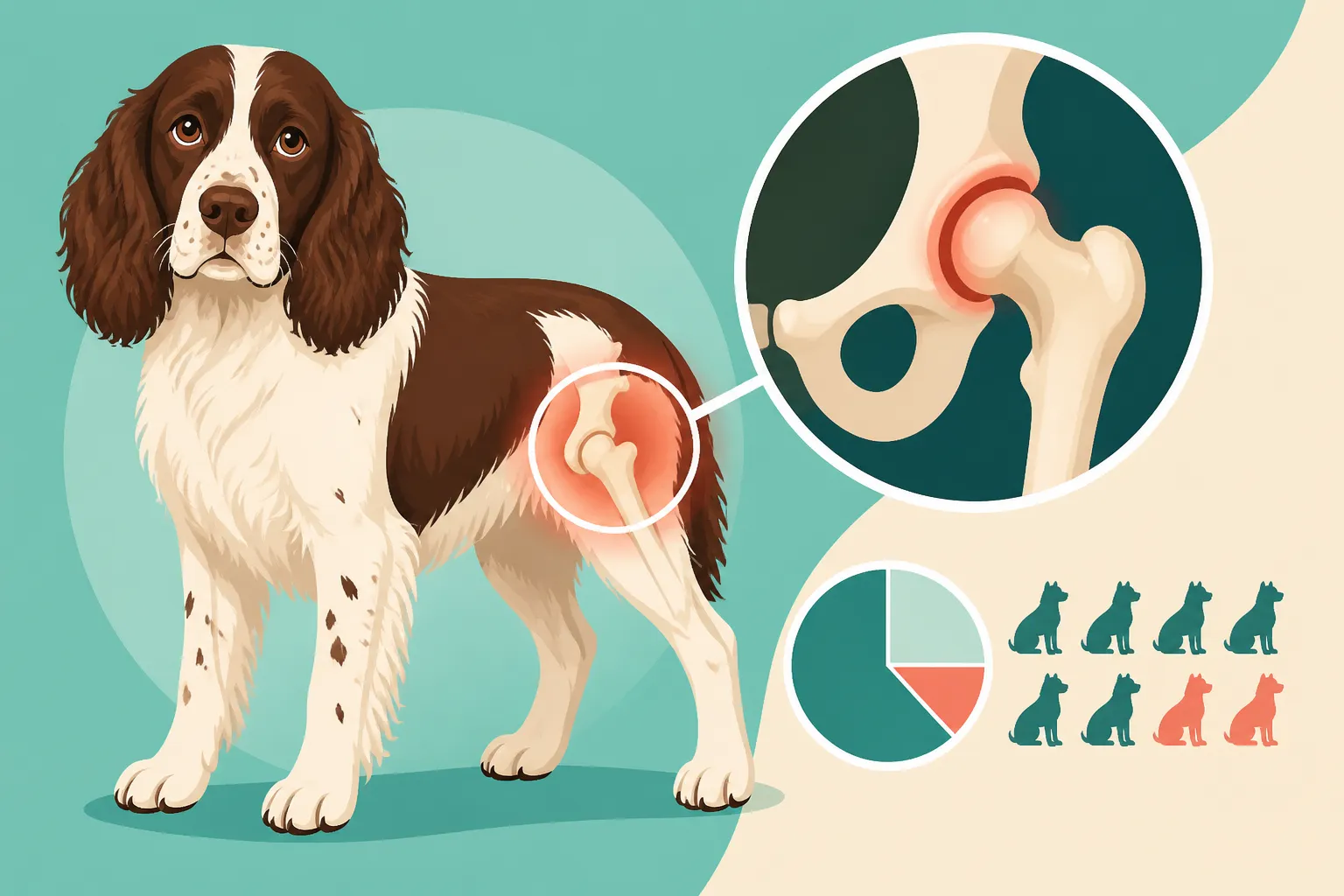
How Common Hip Dysplasia Is in Springer Spaniels
It’s truly disheartening to see your spirited English Springer Spaniel, a breed known for its boundless energy and joy, start showing signs of discomfort or reluctance in their movements. You might notice a subtle limp after a long walk, a hesitation before jumping into the car, or a general stiffness that just wasn't there before. These moments can fill you with worry, making you wonder if something serious is going on with their joints. This guide is here to help you understand hip dysplasia in Springer Spaniels, how common it actually is, what to look for, and the best ways to support your beloved companion.
Understanding What Hip Dysplasia Means for Your Springer Spaniel
Hip dysplasia is one of those veterinary terms that sounds intimidating, and frankly, it can be a significant concern for many dog owners, especially those with active breeds like our Springer Spaniels. At its core, hip dysplasia is a developmental condition where the hip joint doesn't form correctly. Instead of the femur (thigh bone) sitting snugly and smoothly within the acetabulum (the hip socket), it fits loosely. Over time, this poor fit causes the bones to grind against each other, leading to degeneration, pain, and ultimately, arthritis.
Imagine a ball-and-socket joint that isn't quite a perfect fit; instead of gliding effortlessly, it rubs and scrapes. This friction damages the cartilage, stretches the surrounding ligaments, and leads to bone spurs forming as the body tries to stabilize the unstable joint. This continuous wear and tear is what causes the chronic pain and lameness we often associate with hip dysplasia. It’s not just a passing ache; it's a structural issue that progressively worsens without intervention.
The Genetic Roots of Hip Dysplasia
While environmental factors like diet, exercise, and rapid growth can influence the severity of hip dysplasia, the primary culprit is genetics. This condition is polygenic, meaning multiple genes contribute to its inheritance. If a Springer Spaniel has parents with hip dysplasia, or even carriers of the genes, their offspring are at a significantly higher risk of developing the condition. This is why responsible breeders go to great lengths to screen their breeding stock. They understand that passing on these genes is detrimental to the future health of the breed and heartbreaking for future owners. Choosing a puppy from health-tested parents can significantly reduce your chances of dealing with this painful condition. For a deeper dive into overall health screening, you might find our article on The DNA Test That Should Precede Every Springer Spaniel Purchase very useful.
Environmental Factors That Influence Severity
Even with impeccable genetics, how a puppy is raised can play a role in how severe hip dysplasia manifests. Rapid growth spurts in puppies, often fueled by diets too high in calories or protein, can put excessive stress on developing joints. Over-exercising a young, still-growing Springer Spaniel with activities like repetitive jumping, long runs on hard surfaces, or too much stair climbing can also exacerbate a predisposition to hip dysplasia.
Conversely, keeping a puppy lean, feeding a balanced diet appropriate for large breed growth, and providing controlled, age-appropriate exercise can help mitigate the severity of the condition in dogs that are genetically predisposed. It’s all about supporting healthy, steady growth without putting undue strain on vulnerable joints. It's a delicate balance, and sometimes, despite all your best efforts, genetics will still have the final say.
How Common Is Hip Dysplasia in Springer Spaniels?
This is the question that weighs heavily on the minds of many Springer Spaniel owners and prospective buyers. The truth is, English Springer Spaniels are susceptible to hip dysplasia, though perhaps not to the same degree as some of the giant breeds. Canine hip dysplasia is a well-documented issue across many dog breeds.
According to data compiled by the Orthopedic Foundation for Animals (OFA), which registers and certifies canine orthopedic health, English Springer Spaniels have a certain prevalence rate for hip dysplasia. Looking at their statistics, historically, about 14-15% of English Springer Spaniels screened through OFA were found to have dysplastic hips. This figure comes from a significant number of evaluations over many years, providing a robust dataset. It's not the highest among breeds, but it's certainly not negligible, indicating it's a condition owners should be aware of and breeders should actively work to minimize. For context, some breeds like Bulldogs or Pugs have much higher rates, while others like Borzoi or Greyhounds have much lower rates.
Interpreting OFA Statistics
The OFA database is a fantastic resource, but it's important to understand what the numbers mean. Dogs submitted for OFA certification are typically done by responsible breeders who are actively trying to improve their lines. This means the overall prevalence in the general Springer Spaniel population could be higher, as many dogs from less scrupulous breeders might never be screened. Conversely, it could also mean that dogs with obvious signs of hip issues might not be submitted, potentially skewing the "normal" rate a bit.
Despite these nuances, the OFA statistics provide the most reliable insight we have into the breed's orthopedic health. They highlight that hip dysplasia is a real and present concern within the English Springer Spaniel breed, making it crucial for owners to be informed and for breeders to continue their health testing efforts. Understanding Whether a Springer Spaniel's Hip Score Predicts Arthritis is also a key part of interpreting these results.
Comparing Field vs. Show Lines
You might wonder if there's a difference in prevalence between field-bred and show-bred Springer Spaniels. While concrete, universally accepted statistics specifically breaking down hip dysplasia rates by these two distinct lines are hard to come by, anecdotal evidence and general breed health discussions often suggest that both lines can be affected. However, some argue that field lines, often bred more for working ability and soundness over aesthetic conformation, might tend to have a slightly lower incidence due to the intense demands placed on their physical structure. Dogs that can't work due to bad hips are naturally culled from breeding programs.
Show lines, while still requiring soundness, sometimes prioritize certain physical traits that could, if taken to extremes, indirectly influence joint health. However, many dedicated show breeders are just as committed to health testing as their field counterparts. The key takeaway is that neither line is entirely immune, and health testing remains paramount regardless of a dog's lineage or intended purpose. This dedication to soundness is also why you'll want to ensure that The Health Tests Both Springer Spaniel Parents Should Have are always completed before committing to a puppy.
Recognizing the Subtle and Obvious Signs
One of the most frustrating aspects of hip dysplasia is that its symptoms can vary widely in severity and onset. Some Springer Spaniels might show signs as young puppies, while others might not develop noticeable issues until their senior years. Being attuned to both the subtle and overt clues your dog might be giving you is crucial for early detection and intervention.
Early Warning Signs in Puppies and Adolescents
It's heartbreaking to think of a young, playful Springer Spaniel suffering, but hip dysplasia can indeed manifest early. In puppies as young as 4-6 months, you might observe a "bunny hopping" gait, where both hind legs move together when running, rather than independently. They might also struggle to rise from a lying position, seem reluctant to go up or down stairs, or show a general unwillingness to play as vigorously as their littermates.
Another common early sign is a decrease in activity level or an unusual stiffness after exercise, especially after a period of rest. They might also exhibit lameness in one or both hind legs, which can be intermittent. If you gently feel their hips, they might react with pain or discomfort. It's easy to dismiss these as growing pains or temporary soreness, but persistent or worsening symptoms in a young dog warrant a veterinary visit immediately. If you're observing these symptoms, you may want to look into Whether a Limping Springer Spaniel Puppy Needs X Rays to get an accurate diagnosis.
Common Symptoms in Adult Springer Spaniels
For adult Springer Spaniels, the signs often become more pronounced as the joint degeneration progresses and arthritis sets in. You might notice:
- Lameness or limping: This can range from mild to severe, and often worsens after exercise or in cold, damp weather.
- Difficulty rising or lying down: They might grunt or visibly struggle to get comfortable.
- Reluctance to jump: They might hesitate before jumping into the car, onto furniture, or even over small obstacles.
- Stiffness in the hindquarters: Particularly noticeable after resting.
- Decreased activity or exercise intolerance: They might tire more quickly on walks or refuse to participate in games they once loved.
- "Swaying" gait: Their hindquarters might sway noticeably as they walk.
- Loss of muscle mass in the hind legs: Due to favoring the affected limb and reduced use.
- Enlarged shoulder muscles: As they shift weight forward to compensate for hindquarter pain.
- Pain response: They might yelp, nip, or pull away if you touch their hips or try to manipulate their legs.
Sometimes, these signs can be confused with other conditions, like Elbow Dysplasia in a Springer Spaniel or even neurological issues, so a proper diagnosis from a veterinarian is essential. Don't self-diagnose; always consult with a professional.
Diagnosis, Treatment, and Long-Term Care for Hip Dysplasia
If you suspect your Springer Spaniel might have hip dysplasia, the good news is that there are many ways to diagnose and manage the condition, significantly improving their quality of life. Early detection often leads to more effective management strategies.
The Diagnostic Process
Your veterinarian will start with a thorough physical examination, observing your dog's gait, palpating their joints, and assessing their range of motion and pain response. They may try to elicit specific pain responses by manipulating the hips, often called the Ortolani sign or Barden's sign, which indicate joint laxity.
The definitive diagnosis, however, comes from X-rays. Your vet will take specific radiographic views of your dog's hips, often requiring sedation to get clear, precisely positioned images. These X-rays allow the vet to visualize the hip joint's structure, identify any laxity, degeneration, or signs of arthritis. OFA certification for breeding dogs also relies on these specific X-ray views, evaluating the conformation and health of the hip joints. The radiographs are then graded according to a standardized system.
Management Strategies and Treatment Options
Treatment for hip dysplasia depends entirely on the severity of the condition, the dog's age, and the presence of associated arthritis. There are generally two main avenues: conservative (medical) management and surgical intervention.
Conservative Management: This is often the first approach, especially for mild to moderate cases, or for dogs who are not surgical candidates.
- Weight Management: Keeping your Springer Spaniel lean is perhaps the single most impactful thing you can do. Excess weight puts immense strain on already compromised joints.
- Controlled Exercise: Low-impact activities like swimming, short walks on soft surfaces, and physical therapy exercises can strengthen muscles around the joint without causing further damage. Avoid high-impact activities, jumping, or long runs on hard pavement.
- Medication:
- NSAIDs (Non-Steroidal Anti-Inflammatory Drugs): Medications like carprofen (Rimadyl), meloxicam (Metacam), or firocoxib (Previcox) are commonly prescribed to reduce pain and inflammation.
- Pain Relievers: Other pain medications, sometimes combined with NSAIDs, might be used for more severe pain.
- Joint Supplements: Glucosamine, chondroitin, MSM, and Omega-3 fatty acids can help support cartilage health and reduce inflammation. Look for reputable brands like Nutramax's Dasuquin or Cosequin. For more specific advice, our guide on Joint Supplements for a Springer Spaniel can offer insights.
- Physical Therapy & Rehabilitation: Techniques like hydrotherapy (underwater treadmill), therapeutic exercises, massage, and cold laser therapy can significantly improve muscle strength, flexibility, and comfort.
Surgical Intervention: For severe cases, especially in young dogs, surgery might be recommended to correct the anatomical defect or alleviate pain.
- Triple Pelvic Osteotomy (TPO) or Double Pelvic Osteotomy (DPO): These procedures are typically performed on young dogs (under 10-12 months) before significant arthritis has developed. They involve cutting the pelvic bone and rotating segments to improve the fit of the femoral head in the socket.
- Femoral Head Ostectomy (FHO): This surgery involves removing the head of the femur. It creates a "false joint" where scar tissue forms, reducing bone-on-bone friction. It's often recommended for smaller dogs or those with severe pain where other options aren't feasible.
- Total Hip Replacement (THR): This is the most effective surgical option for eliminating pain and restoring normal function, but it's also the most expensive and involves significant recovery. An artificial hip joint replaces the diseased one, similar to human hip replacements. It's usually reserved for dogs with severe, debilitating hip dysplasia where conservative measures have failed.
The Role of Pet Insurance and Long-Term Outlook
Dealing with hip dysplasia can be financially taxing. Diagnostic X-rays, medications, ongoing joint supplements, physical therapy, and especially surgery can quickly add up. This is where pet insurance, like a policy from Healthy Paws, can be an absolute lifesaver. Early enrollment, before any symptoms of hip dysplasia appear, is crucial as most policies consider pre-existing conditions. Having a good pet insurance plan can ease the burden of these costs, allowing you to focus on getting your Springer Spaniel the best care possible.
The long-term outlook for a Springer Spaniel with hip dysplasia varies. With early diagnosis and proper management, many dogs can live comfortable, active lives, albeit with modifications. Consistent weight management, appropriate exercise, and a tailored medication regimen are often key. As your Springer ages, especially past nine, the condition might progress to severe Arthritis in an Older Springer Spaniel, requiring adjustments to their care. Our article on Caring for a Springer Spaniel Past Nine provides helpful strategies for senior dog care that become increasingly relevant.
Remember, every dog is an individual. What works for one may not work for another. Close collaboration with your veterinarian is essential to developing the most effective and compassionate care plan for your cherished Springer Spaniel.
Preventing Hip Dysplasia and Promoting Joint Health
While you can't change your Springer Spaniel's genetics, there's quite a lot you can do to reduce the risk of hip dysplasia developing or lessen its severity, and to promote overall joint health throughout their life. It all starts even before you bring your puppy home.
Choosing a Responsible Breeder
This is, without a doubt, the most critical step in preventing genetic conditions like hip dysplasia. A responsible breeder will rigorously health test their breeding stock for a variety of genetic conditions relevant to Springer Spaniels, including hip and elbow dysplasia, as well as eye conditions and certain genetic diseases. They should be able to provide OFA (Orthopedic Foundation for Animals) or PennHIP certifications for both parent dogs, showing scores for their hips and elbows.
Don't be shy about asking for these documents. A reputable breeder will be proud to share them and explain their breeding philosophy. Avoiding breeders who don't test, or who make excuses for not doing so, is paramount. Remember, Whether an Untested Springer Spaniel Litter Is Worth Buying is a question with a clear answer: usually not, as you're taking a significant gamble on your future dog's health. While no guarantee exists, choosing a puppy from health-tested parents significantly stacks the odds in your favor for a healthy, sound dog.
Nurturing Healthy Growth in Puppies
Once you bring your Springer Spaniel puppy home, you have a vital role in supporting their musculoskeletal development.
- Appropriate Diet: Feed a high-quality, large-breed puppy food formulated for slow, steady growth, rather than rapid growth. These diets usually have carefully balanced calcium and phosphorus levels. Avoid free-feeding and ensure your puppy maintains a lean body condition.
- Controlled Exercise: Resist the urge to over-exercise your energetic Springer puppy. While they need mental and physical stimulation, avoid forced, high-impact activities like long runs, excessive jumping, or agility training until their growth plates have closed (typically around 12-18 months). Plenty of supervised playtime in the yard, short walks, and mental games are ideal. Activities like swimming are excellent low-impact exercises that build muscle without stressing joints.
- Soft Surfaces: Encourage play on softer surfaces like grass or carpet, rather than concrete or asphalt, which can be jarring on developing joints.
- Avoid Stairs: Limit stair climbing for very young puppies, especially if they are prone to bounding up and down, as this puts stress on hips and elbows.
Maintaining Optimal Weight and Muscle Throughout Life
The advice to keep your dog lean doesn't stop after puppyhood; it's a lifelong commitment. An overweight Springer Spaniel, even one without genetic hip issues, is far more prone to developing arthritis and other joint problems. Regular exercise, tailored to your dog's age and physical condition, is also crucial for maintaining strong muscles that support the hip joints. This is particularly important if you have a working Springer Spaniel, as you need to balance their drive with joint protection. You might want to consider Whether a Working Springer Spaniel Wears Out Its Joints and how to best support them.
Table: Hip Dysplasia Symptom Checklist
| Symptom Category | Early/Mild Signs (Puppies/Adolescents) | Advanced/Severe Signs (Adults) |
|---|---|---|
| Gait & Movement | Bunny hopping, reluctance to jump/climb stairs | Obvious lameness, swaying gait, difficulty rising/lying |
| Activity Level | Decreased play, tiring easily | Exercise intolerance, complete refusal to move |
| Pain & Discomfort | Stiffness after rest, subtle limping | Yelping, snapping when touched, visible pain |
| Physical Changes | None visible | Muscle atrophy in hindquarters, enlarged shoulders |
| Behavioral Changes | Mild irritability, seeking comfort | Aggression due to pain, withdrawal |
By staying vigilant, working with a responsible breeder, and providing excellent care, you give your Springer Spaniel the best possible chance for a life filled with happy, comfortable movement.
Disclaimer
This guide is intended for informational purposes only and should not be taken as professional veterinary advice. Always consult with a qualified veterinarian for any health concerns or before making decisions about your pet's care.