Whether Rage Syndrome Runs in Springer Spaniel Lines
It's absolutely heartbreaking and frankly terrifying when your beloved English Springer Spaniel, a breed known for its sunny disposition and unwavering loyalty, suddenly and unpredictably snaps. One moment they're cuddling on the couch, the next they're a whirlwind of teeth and fury, leaving you shocked and confused. This guide will delve deep into the perplexing question of whether the notorious "Rage Syndrome" truly runs in Springer Spaniel lines, exploring the genetics, realities, and what you can do.
Understanding Rage Syndrome: What It Is (and Isn't)
Before we can even begin to discuss if Rage Syndrome runs in Springer Spaniel lines, we first need to get a clear picture of what this condition actually entails. It's not just "being aggressive"; it's a very specific, and thankfully rare, behavioral disorder that is often misunderstood and misdiagnosed. Many forms of aggression exist in dogs, from fear-based to resource guarding, but true Rage Syndrome has distinct characteristics that set it apart.
The Sudden Onset and Unpredictable Nature
The hallmark of true Rage Syndrome, sometimes referred to as Sudden Onset Aggression, is its abruptness and lack of discernible trigger. Imagine a serene morning, your Springer Spaniel is curled at your feet, perhaps getting a gentle pat, and then, without warning, their eyes glaze over, their body stiffens, and they launch into an attack. There's no growl, no warning nip, no posturing – just an instant, explosive aggression that seems to come from nowhere. These episodes are often short-lived, lasting only a few seconds or minutes, but they are incredibly intense. The dog might appear disoriented or confused immediately afterward, as if coming out of a trance, often showing signs of remorse or bewilderment. This "unpredictability" is what makes it so different from other forms of aggression, where you can usually identify a trigger or a sequence of escalating behaviors. Learning What Sudden Onset Aggression Looks Like in a Springer Spaniel can help you discern these nuances.
What makes it particularly terrifying for owners is that the dog often appears to be "not themselves" during these episodes. The dog might not respond to commands, and their gaze can seem vacant or distant. This profound shift in personality, even for a brief period, is deeply unsettling and leads many owners to wonder if their dog is truly "aware" or in control during the event. It's a truly chilling experience, leaving families grappling with fear, sadness, and the desperate hope for answers.
Differentiating True Rage from Other Aggression
This is where things get tricky, and why a proper veterinary and behavioral evaluation is absolutely crucial. Many aggressive behaviors are mistakenly labeled as "Rage Syndrome." For example, a dog that guards its food, toys, or even its owner, and snaps when approached, is displaying resource guarding. A dog that bites when scared or cornered is exhibiting fear aggression. A dog that is constantly irritated by children and eventually nips is showing irritation aggression. These are all serious issues that require intervention, but they are not Rage Syndrome.
True Rage Syndrome is characterized by a lack of typical warning signs (growling, barking, stiffness before the lunge), a seemingly absent trigger, and the disoriented state following the attack. It's often thought to be a neurological issue, akin to a seizure, rather than a learned behavior or a personality flaw. Therefore, any dog exhibiting sudden, unprovoked aggression needs a thorough medical workup to rule out underlying health problems that could be causing pain, discomfort, or neurological impairment. For instance, sometimes a Springer Spaniel's thyroid needs to be checked for aggression, as hormonal imbalances can significantly impact temperament. It’s also vital to understand Whether Rage Syndrome in Springer Spaniels Is Real as some people still doubt its existence as a distinct condition.
To help illustrate the differences, consider this table:
| Characteristic | True Rage Syndrome | Common Aggression Types (Fear, Resource Guarding) |
|---|---|---|
| Warning Signs | Typically absent (no growl, bark, or body language) | Usually present (growling, snarling, stiff posture, air snaps) |
| Trigger | Seemingly absent, unpredictable | Clear triggers (approaching food, fear-inducing situation, pain) |
| Post-Episode State | Disoriented, confused, possibly remorseful | Aware, may remain tense or defensive |
| Duration | Very short, explosive bursts (seconds to minutes) | Can be sustained, reactive to ongoing trigger |
| Motivation | Believed to be neurological/seizure-like | Fear, dominance, pain, resource protection, learned behavior |
| Eyes | Often described as "glassy" or "vacant" | Pupils may be dilated, but direct, focused gaze |
The Genetic Link: Does it Run in Lines?
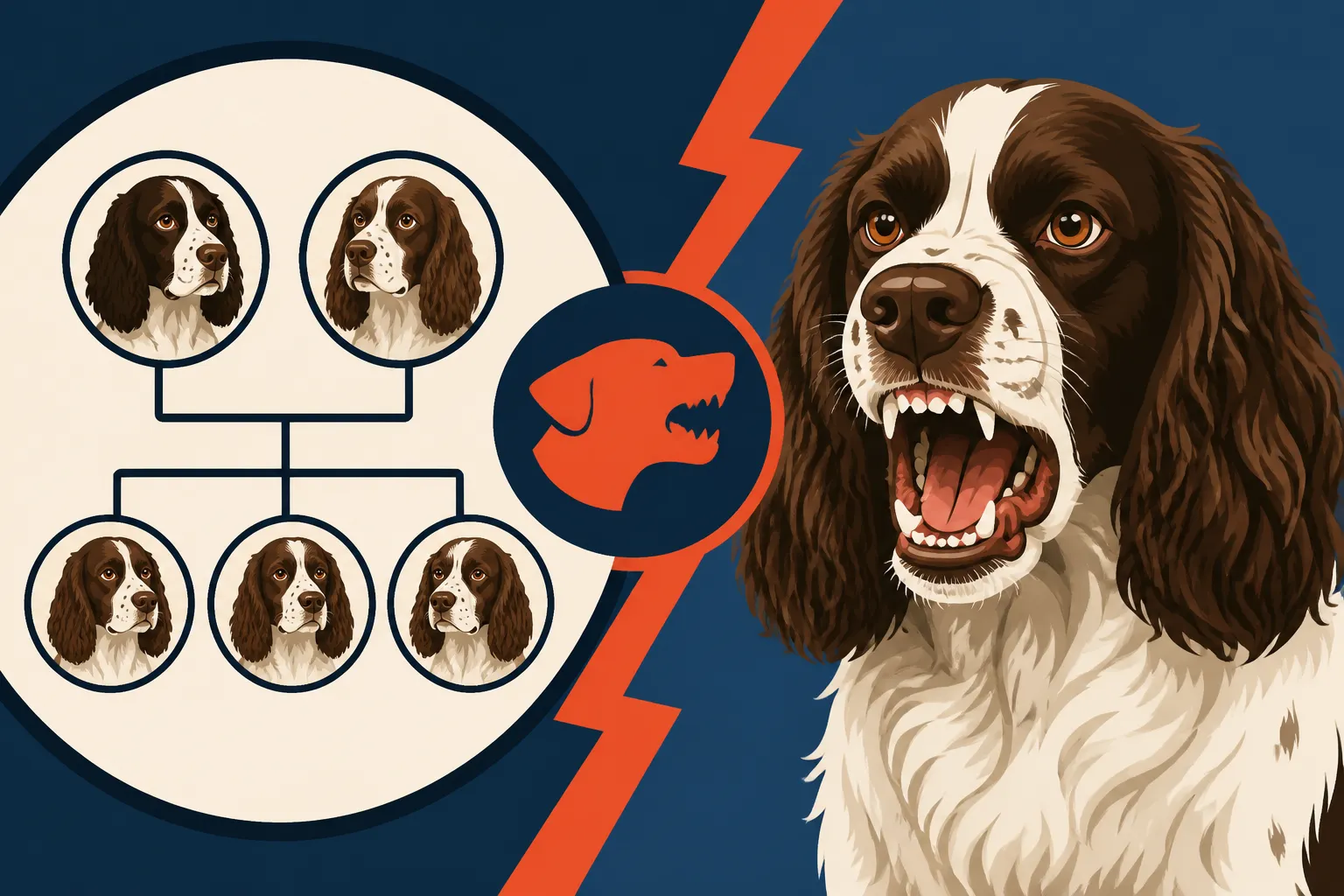
This is the million-dollar question for many worried Springer Spaniel owners and prospective buyers. The idea that a condition as frightening as Rage Syndrome could be inherited is deeply unsettling. While it's certainly not as straightforward as a single gene disorder like some other canine diseases, the anecdotal evidence and scientific pursuit suggest there might be a genetic component at play.
Historical Observations and Anecdotal Evidence
For years, breeders and owners of English Springer Spaniels have shared hushed stories and observations about certain lines producing dogs with inexplicable aggression. These were not dogs from poor breeding situations or those that lacked socialization; often, they came from reputable kennels with otherwise excellent temperaments. The common thread seemed to be a sudden, unprovoked aggression that appeared to defy conventional behavioral explanations. These anecdotal accounts, while not scientific proof, have been persistent enough to fuel the belief that Rage Syndrome has a hereditary basis, particularly within the Springer Spaniel breed.
These observations often point to specific family trees, where several dogs across generations displayed similar patterns of sudden, explosive aggression. This led many in the breeding community to be wary of certain bloodlines, even if a definitive genetic marker couldn't be identified. It created a shadow of doubt over otherwise healthy and well-tempered dogs from those same lineages, making ethical breeders incredibly cautious.
The Search for a Genetic Marker
The scientific community has been keenly aware of these anecdotal reports, and there's been an ongoing effort to understand the genetic underpinnings of Rage Syndrome. It's often hypothesized to be a form of "idiopathic aggression," meaning aggression with no known cause, and many researchers believe it's a complex, polygenic trait – meaning multiple genes, possibly interacting with environmental factors, contribute to its expression. Unlike a simple recessive gene like those causing conditions that lead to PFK Deficiency and the Springer Spaniel That Collapses After Exercise or Fucosidosis Kills a Springer Spaniel Within Weeks of the First Sign, finding the specific genetic combination for Rage Syndrome is much harder.
While a definitive "Rage Syndrome gene test" doesn't exist in the way we have tests for other genetic conditions, research continues. Scientists have looked at markers associated with neurotransmitter imbalances, brain structure abnormalities, and even forms of epilepsy, as some theories suggest Rage Syndrome could be a type of partial seizure activity. The complexity of brain chemistry and behavior means that isolating a single culprit is incredibly challenging. What this means for owners and breeders is that there isn't a simple DNA test you can run that will tell you definitively if a dog carries the genes for Rage Syndrome. It remains a diagnosis based on clinical observation and the exclusion of other medical or behavioral causes.
Breed Predisposition and Springer Spaniels
It’s often said that Springer Spaniels are more prone to Rage Syndrome than other breeds. Is this true, or is it merely a perception? The truth is, it's a bit of both, intertwined with the breed's distinct characteristics and history.
Why Springer Spaniels Seem More Affected (Perception vs. Reality)
There's a strong perception that English Springer Spaniels are overrepresented in cases of Rage Syndrome. This isn't entirely unfounded; historically, more cases have been documented or suspected in Springers compared to many other breeds. However, it's important to consider why this might be. Firstly, Springers are a popular breed, especially in working lines, meaning there are simply more of them, which could lead to a higher number of cases without necessarily indicating a higher percentage of affected individuals.
Secondly, the breed's energetic, sometimes intense nature, combined with a strong working drive, can sometimes be misinterpreted. A highly driven, frustrated, or poorly socialized Springer Spaniel can exhibit aggressive behaviors that are mistaken for Rage Syndrome. Their enthusiasm and boundless energy, if not properly channeled, can lead to frustration, which in some individuals, might manifest as aggression. When these incidents occur, the "Rage Syndrome" label can unfortunately be applied too readily, leading to an exaggerated perception of its prevalence within the breed. The truth is, any dog can exhibit aggression, and it's essential to rule out common behavioral and environmental factors before concluding it's the more rare and devastating Rage Syndrome.
Are Certain Springer Lines More Susceptible?
Despite the lack of a definitive genetic test, the strong anecdotal evidence among experienced breeders and veterinarians suggests that certain lines of English Springer Spaniels may indeed be more susceptible to Rage Syndrome. This doesn't mean every dog from a particular line will be affected, but rather that the predisposition, or the genetic "ingredients" for the condition, seem to be more concentrated in some pedigrees. It’s a bit like certain families having a higher incidence of a particular illness; it doesn't mean everyone in the family will get it, but the risk is elevated.
This susceptibility is often discussed more openly within the field-bred Springer community, where high drive and intensity are prized traits. Sometimes, the same genetic factors that contribute to exceptional working ability—like extreme focus, boldness, and tenacity—might, in rare combinations or under specific circumstances, also increase the risk for neurological dysregulation that underlies Rage Syndrome. Breeders who have encountered Rage Syndrome in their lines often make difficult, but ethical, decisions to remove affected dogs and their close relatives from their breeding programs, even in the absence of a direct genetic test. They rely on careful pedigree research and open communication with other breeders to try and avoid perpetuating these challenging traits. When considering a puppy, asking a breeder about the health history and temperament of their lines, including any incidence of aggression, is a critical step, alongside ensuring they perform The Health Tests Both Springer Spaniel Parents Should Have.
Responsible Breeding Practices and Mitigation
Given the potential genetic component and the severity of Rage Syndrome, responsible breeding practices are absolutely paramount. Breeders hold a significant responsibility in trying to minimize the incidence of such devastating conditions within the breed.
The Role of Health Testing and Pedigree Review
While there isn't a specific DNA test for Rage Syndrome, responsible breeders still engage in extensive health testing and thorough pedigree review as part of their commitment to the breed's well-being. This involves screening for known inherited conditions like hip and elbow dysplasia, eye diseases such as Progressive Retinal Atrophy in a Springer Spaniel and primary glaucoma, and metabolic disorders like PFK deficiency and Fucosidosis. While these don't directly test for Rage Syndrome, a commitment to overall health testing demonstrates a breeder's dedication to producing sound, healthy dogs. For example, The DNA Test That Should Precede Every Springer Spaniel Purchase might cover several conditions, but not Rage Syndrome specifically.
More importantly regarding Rage Syndrome, ethical breeders meticulously research the temperaments of all dogs in their pedigrees, going back several generations. They speak with other breeders, past puppy owners, and even trainers to gather as much information as possible about the behavioral history of their lines. Any instance of unexplained, sudden aggression in a parent, grandparent, or sibling would be a red flag, prompting careful consideration about breeding decisions. It's about transparency and continuous learning within the breeding community. They understand that a healthy body alone isn't enough; a sound mind is just as vital. Even if pet insurance, like that offered by Healthy Paws, can help manage costs related to unexpected health issues, preventing them through careful breeding is always the ideal.
Ethical Considerations for Breeders
The ethical considerations for breeders regarding Rage Syndrome are immense. If a breeder has a dog that exhibits confirmed Rage Syndrome, or if multiple dogs in their lines show suspicious, unprovoked aggression, the most ethical decision is often to remove those dogs and potentially their close relatives from the breeding program. This is a difficult choice, as these dogs might be otherwise outstanding in terms of conformation, working ability, or other desirable traits. However, the potential for passing on such a devastating condition outweighs any other benefits.
Ethical breeders prioritize temperament and health above all else. They are transparent with prospective puppy buyers about any known health or behavioral concerns in their lines and are willing to discuss the possibility of conditions like Rage Syndrome openly. They understand that the long-term health and reputation of the breed depend on these tough choices. This commitment ensures that they are constantly working towards The Push to Breed Springer Spaniels for Temperament, aiming for stable, predictable companions. Responsible breeders are also careful about Whether a Springer Spaniel Litter Is Tested Before Breeding for other conditions, further indicating their dedication.
Living with a Dog Suspected of Rage Syndrome
If you suspect your Springer Spaniel might be exhibiting signs of Rage Syndrome, it's an incredibly challenging and emotionally draining situation. It's vital to remember that this isn't your fault, nor is it the dog's fault in the traditional sense of misbehavior. This is a potential medical condition that requires careful management and professional guidance.
Management Strategies and Safety Protocols
The absolute top priority when living with a dog suspected of Rage Syndrome is safety – for yourself, your family, and any other animals. This often means implementing strict management strategies. Muzzling the dog, especially during times when episodes are more likely (if any pattern is observed, though often there isn't), or when visitors are present, becomes a non-negotiable safety measure. Supervised interactions, keeping the dog separated from children or other pets, and avoiding any potential triggers (if they can be identified, even anecdotally) are critical.
Confining the dog to a secure area when unsupervised, or when you cannot actively monitor them, is another crucial step. Some owners choose to keep their dog on a leash even within the home to maintain control. It's a heartbreaking reality, as it can feel like a betrayal of the loving bond you share, but it's essential to prevent tragic accidents. The question of Whether a Springer Spaniel With Rage Can Be Kept is a deeply personal and difficult one, often requiring extensive consultation with professionals. These types of ongoing challenges are precisely why many owners consider pet insurance. While Healthy Paws, for instance, focuses on accidents and illnesses, the need for extensive diagnostics and potential long-term medication for behavioral conditions highlights the value of such plans for unexpected health needs.
The Importance of Veterinary and Behavioral Support
Facing suspected Rage Syndrome is not something you should ever attempt to navigate alone. The very first step is an immediate and thorough veterinary examination. Your vet will perform a complete physical, neurological exam, and blood tests to rule out any underlying medical causes for the aggression, such as pain, thyroid issues, or other neurological conditions. They might also suggest advanced diagnostics like an MRI or an EEG to look for brain abnormalities or seizure activity, as Whether Rage Syndrome Is Epilepsy in a Springer Spaniel is a key differential diagnosis. These tests can be expensive, and this is where a comprehensive pet insurance policy can be incredibly helpful, easing the financial burden during a stressful time.
Following a clear bill of health from the vet, or in conjunction with medical treatment for an underlying cause, a referral to a board-certified veterinary behaviorist is crucial. These specialists are uniquely qualified to differentiate between true Rage Syndrome and other forms of aggression, develop a comprehensive management plan, and explore potential medication options. For some dogs, anti-anxiety medications or anti-epileptic drugs can help to reduce the frequency and intensity of episodes. You might wonder Whether Medication Controls a Springer Spaniel's Rage, and while it's not a cure, it can often make a significant difference in managing the condition, improving the quality of life for both the dog and the family. This comprehensive support team is essential for making informed, compassionate decisions about your Springer Spaniel's future.
Disclaimer
The information provided in this article is for educational purposes only and is not a substitute for professional veterinary advice. If you suspect your English Springer Spaniel is experiencing Rage Syndrome or any other behavioral or health issue, please consult with a qualified veterinarian or a board-certified veterinary behaviorist immediately. Do not attempt to diagnose or treat your dog based solely on information found online.