Whether a Springer Spaniel Is Soft to Correction
It's incredibly frustrating and disheartening when you're trying to train your spirited Springer Spaniel, and instead of responding, they seem to shrink, shut down, or even become more anxious. Many owners quickly realize that the traditional, harsher correction methods often recommended for other breeds just don't work with these sensitive souls. This guide will delve into the unique temperament of the English Springer Spaniel, exploring why they are often considered "soft" to correction, how different training approaches impact them, and how to build a strong, trusting relationship through positive reinforcement.
Understanding the Springer Spaniel Temperament: Why "Soft" Matters
English Springer Spaniels are renowned for their cheerful dispositions, boundless energy, and an almost insatiable desire to please their people. They are intelligent, eager to learn, and thrive on companionship. However, this same sensitivity that makes them such loving, devoted family members also means they often react very differently to correction than some other breeds might. They're not being stubborn; they're simply built differently.
The Eager-to-Please Nature
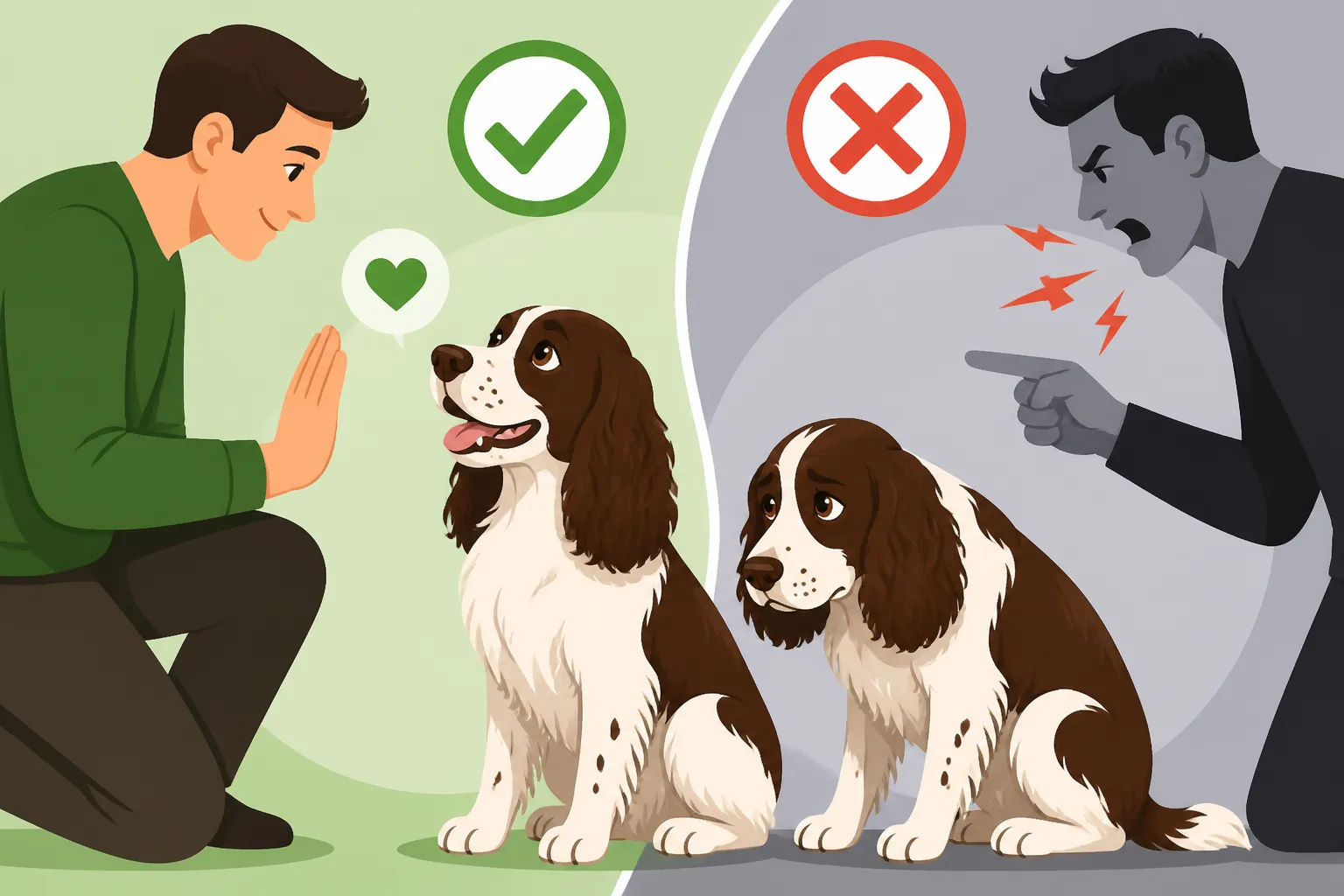
From the moment they open their eyes, Springer Spaniels are wired to connect with and respond to their human counterparts. They gaze at you with those soulful eyes, ready for the next adventure or cuddle session. This inherent desire to please is a fantastic asset in training, but it also means they are deeply attuned to your moods and reactions. A harsh tone, a firm reprimand, or even just a frustrated sigh can register as a significant upset in their world, far more so than it might for a more thick-skinned dog. They genuinely want to do the right thing, and when they feel they've failed or displeased you, it can be quite distressing for them. This is often why owners notice Why Shouting Sets a Springer Spaniel Back so dramatically.
The Impact of Early Experiences
A Springer Spaniel's early life experiences, both with their mother and siblings, and then with their first human family, significantly shape how they respond to training. Puppies learn a great deal from their littermates and mother about social cues and boundaries. A gentle nip from a sibling or a firm but not aggressive correction from mom teaches them appropriate behavior. When they come into our homes, we become their primary teachers. If those early lessons involve harsh corrections, the puppy can quickly become timid or anxious, associating learning with fear rather than positive interaction. Conversely, a confident, well-socialized pup who has learned appropriate boundaries through gentle guidance is often more resilient.
The Impact of Harsh Corrections on a Springer Spaniel
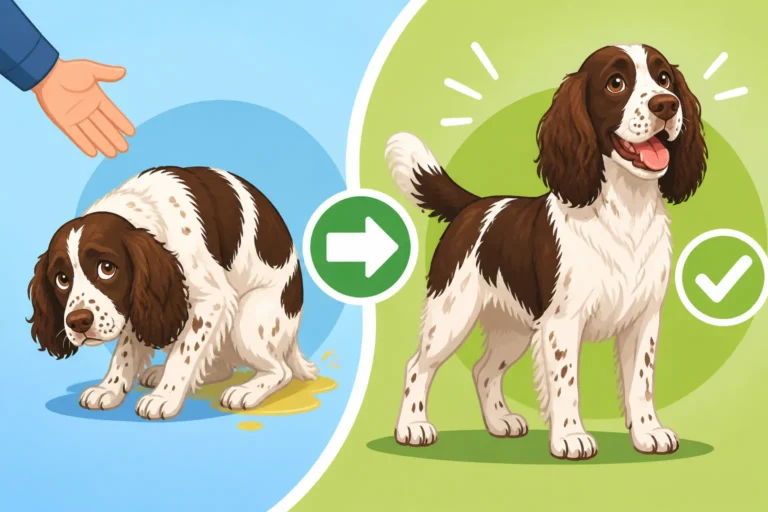
Using forceful or punitive methods with a Springer Spaniel often backfires, leading to a host of behavioral issues that are far more difficult to resolve than the original problem. Their sensitive nature means they absorb negative interactions deeply, and these experiences can erode trust, foster fear, and suppress their natural zest for life. It's a sad sight to see a once-bouncy Springer turn hesitant.
Fear, Anxiety, and Shut Down
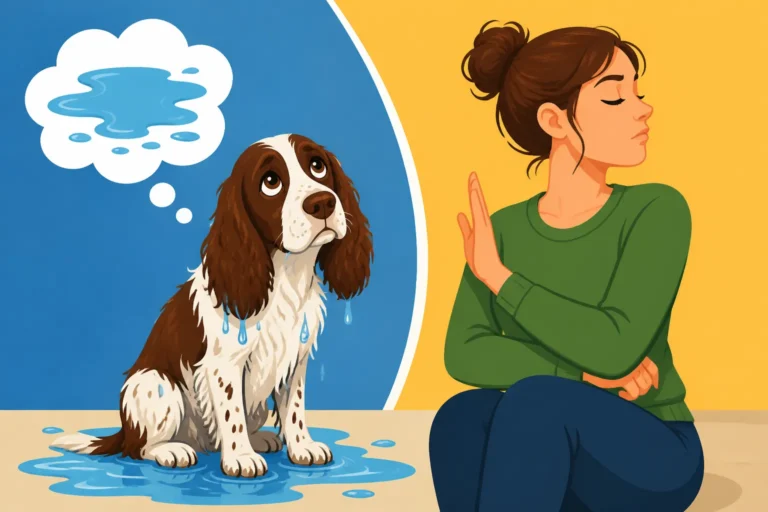
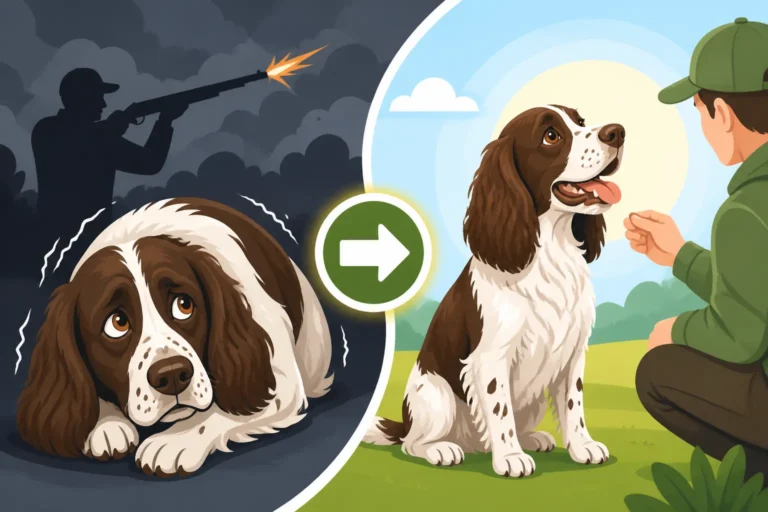
When a Springer Spaniel is subjected to harsh corrections – whether it's yelling, physical punishment, or even overly intimidating body language – they don't necessarily learn what you want them to do. Instead, they learn to fear you, or to fear the situation that led to the correction. A dog that is constantly reprimanded for pulling on the leash, for example, might not learn to walk politely; instead, they might learn to anticipate punishment every time the leash comes out, leading to stress, leash reactivity, or a refusal to walk at all. This fear can manifest as genuine anxiety, leading to trembling, hiding, or even aggression born of fear. In some cases, a Springer will completely "shut down," becoming unresponsive and withdrawn, which is a clear sign that the training method is causing significant emotional distress. If you've ever seen The Soft Springer Spaniel That Shuts Down If You Shout, you know how heartbreaking this can be.
Damaged Trust and Relationship Breakdown
The bond with your Springer Spaniel is built on trust, respect, and positive shared experiences. When harsh corrections become part of the training routine, that trust can be severely damaged. Your dog might start to avoid eye contact, hesitate to approach you, or even become wary of your hands. They might stop offering behaviors because they're afraid of making a mistake and being corrected. This isn't just about making training harder; it fundamentally changes the relationship you have with your dog. You want your Springer to see you as a benevolent leader and a source of comfort and joy, not as someone to be feared. A healthy relationship is crucial for A Springer Spaniel in a House With Children to ensure everyone feels safe and happy.
Suppressed Behaviors vs. Learned Behaviors
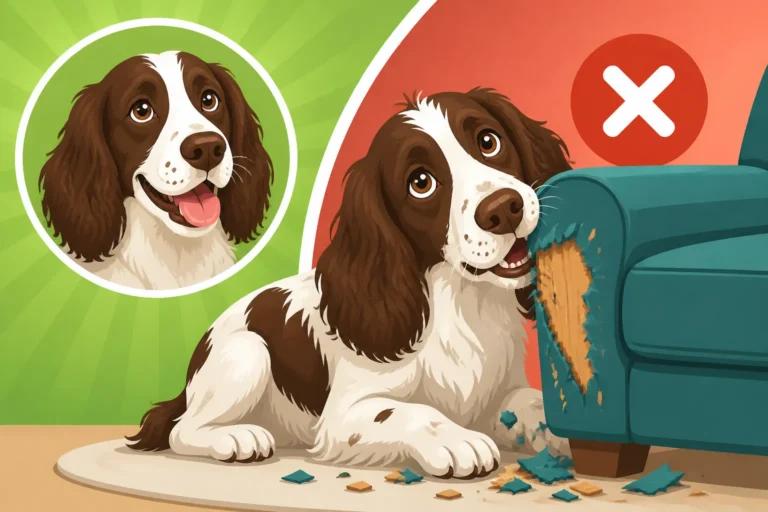
It’s easy to mistake a suppressed behavior for a learned one. For instance, if you loudly scold your Springer for jumping, they might stop jumping when you are present because they associate jumping with your anger. However, they haven't actually learned an alternative, polite greeting behavior. The jumping instinct is still there, and they might jump on guests when you're not around, or revert to jumping when the fear of correction subsides. True learning involves understanding what to do, not just what not to do. Springer Spaniels are intelligent dogs; they need to be shown the right path, not just blocked from the wrong one. Whether a Springer Spaniel Remembers a Harsh Word is a question that often comes up, and the answer is usually yes, they remember the feeling.
Effective Training Methods for Sensitive Springer Spaniels
Given their sensitive nature, the most effective training methods for English Springer Spaniels are those rooted in positive reinforcement, clear communication, and consistency. These approaches build confidence, strengthen your bond, and genuinely teach your dog desired behaviors without breaking their spirit.
The Power of Positive Reinforcement
Positive reinforcement is about rewarding desired behaviors, making it more likely your dog will repeat them. For a Springer Spaniel, this means using things they love – tasty treats, enthusiastic praise, a favorite toy, or a game of fetch – to mark the moment they do something right. If you want your Springer to sit, lure them into a sit and immediately reward them. If you want them to walk nicely on a leash, reward every step they take without pulling. This method encourages your dog to actively think and offer behaviors, making learning a fun and engaging process. It builds their confidence because they are constantly succeeding and being rewarded, rather than being afraid of failure. Many online training platforms, such as BAXTER & Bella, are built entirely around these gentle, effective methods, providing a structured way to teach your dog without harshness. Knowing What a Springer Spaniel Will Work For is key to making this successful.
Clear Communication and Consistency
Springer Spaniels thrive on routine and predictability. They need clear, consistent communication from their owners to understand what is expected of them. This means using consistent commands, hand signals, and rewarding criteria. If one family member asks for a "sit" and another for "sit down," it can be confusing. Similarly, if sometimes pulling on the leash is tolerated and other times it's corrected, your Springer won't understand the rules. Consistency across all family members and in all environments helps your Springer feel secure and confident in their understanding of the world. This approach also requires patience, as some concepts take longer to grasp. A good way to track progress is to use a consistent training schedule, whether daily short bursts or dedicated longer sessions.
| Training Method | Description | Impact on Springer Spaniel | Why it Works |
|---|---|---|---|
| Positive Reinforcement | Rewarding desired behaviors with treats, praise, toys. | Builds confidence, strengthens bond, eagerness to learn, high motivation. Less stress and anxiety. | Dog associates actions with positive outcomes, making them eager to repeat the behavior. Fosters a love of learning. |
| Lure and Reward | Using a treat to guide the dog into a desired position, then rewarding. | Gentle, clear guidance. Prevents frustration. Dog learns without physical manipulation or force. | Physically shows the dog what to do, making it easy for them to succeed. Immediate reward reinforces the exact behavior. |
| Redirection | Interrupting an unwanted behavior and immediately guiding to an appropriate one. | Teaches an alternative behavior. Less focus on "no," more on "yes." | Replaces an undesirable habit with a desirable one. Avoids confrontation while still managing behavior. |
| Management | Preventing opportunities for unwanted behaviors to occur. | Reduces practice of bad habits. Builds successful experiences. | Sets the dog up for success by removing temptations (e.g., using a long line to prevent chasing). |
| Shouting/Physical Correction | Yelling, hitting, leash jerks, intimidating body language. | Fear, anxiety, shut down, damaged trust, aggression. Suppression of behavior, not true learning. | May temporarily stop a behavior due to fear, but does not teach an alternative. Can severely damage the dog's emotional well-being and relationship. |
Incorporating Tools and Techniques
While the core philosophy is positive reinforcement, certain tools and techniques can aid in training a sensitive Springer Spaniel. A clicker, for instance, can be an incredibly precise marker for good behavior, telling your dog exactly the moment they did something right, followed immediately by a reward. Long lines are invaluable for teaching reliable recall in open spaces without risking your Springer vanishing on a scent trail; this allows you to practice without relying on harsh corrections if they don't come back immediately. You can find excellent quality long lines on platforms like Amazon. Head halters or front-clip harnesses can be helpful for managing a strong puller without causing discomfort or requiring jerks on the leash. These tools are all about managing the environment and communicating effectively, rather than relying on force. Whether an Electronic Collar Belongs on a Springer Spaniel is a topic many trainers have strong opinions on, but for sensitive Springers, gentle alternatives are usually preferred.
Recognizing Stress and Shut Down in Your Springer Spaniel
It's crucial for any Springer Spaniel owner to be able to read their dog's body language and recognize the signs of stress, fear, or "shut down." Because these dogs are so eager to please, they might try to endure discomfort or fear, but their body will still give cues that they are struggling. Missing these cues can unintentionally lead to escalating problems and a broken spirit.
Subtle Signs of Discomfort and Stress
Springers, like many dogs, communicate largely through their body language. When they are uncomfortable or stressed, they might display a range of subtle signals before outright fleeing or becoming aggressive. Look for:
- Lip licking: Not just after eating, but quick, repetitive licks when there's no food around.
- Yawning: Also not due to tiredness, but as a calming signal in stressful situations.
- Panting: When not hot or after exercise.
- Head turns or averting gaze: Your dog might turn their head away from you or avoid direct eye contact, especially if they anticipate a correction.
- Excessive sniffing: Suddenly very interested in the ground, even when there's nothing there.
- Low body posture: Cowering, tucking their tail, or trying to make themselves smaller.
- Ears flattened back: This is a clear sign of unease or fear.
- "Whale eye": When you can see the whites of their eyes, a sign of anxiety.
These are all attempts by your Springer to cope with a situation they find uncomfortable or to signal that they are feeling stressed. Ignoring these signals can push them further into distress.
Signs of "Shut Down"
"Shut down" is a more severe form of stress response where a dog essentially gives up trying to cope and becomes unresponsive. This is often mistaken for "being calm" or "finally listening," but it's a dangerous misinterpretation. A dog in shut down isn't learning; they're simply trying to disappear emotionally. Signs include:
- Lack of response: Your dog doesn't react to cues, treats, or environmental stimuli.
- Stiff, frozen posture: They might stand or sit rigidly, not moving, almost like a statue.
- Empty gaze: Their eyes might seem glazed over or unfocused.
- No tail wagging: Even usually happy-go-lucky Springers will have a still, low-set tail.
- Appearing "dull" or "depressed": Their usual sparkle and enthusiasm are gone.
If your Springer Spaniel reaches this state, it means the training environment or method is severely overwhelming them. You need to immediately stop what you're doing, remove them from the situation, and re-evaluate your approach. A Springer Spaniel that is shutting down is not having a positive learning experience, and continuing will only further damage their trust and well-being. Whether a Springer Spaniel Sulks After a Correction is a milder form of this disengagement.
When to Seek Professional Help for Training Challenges
Sometimes, despite your best efforts with positive reinforcement, you might encounter training hurdles that feel insurmountable. This is not a sign of failure on your part or your Springer's; it simply means it's time to bring in an expert. Professional trainers and behaviorists can offer tailored advice, fresh perspectives, and advanced techniques.
Identifying Persistent Behavioral Issues
You've been consistent, patient, and used positive reinforcement, but your Springer is still struggling with a particular issue. Perhaps they have severe separation anxiety, exhibit unmanageable reactivity on leash, or have persistent house-training accidents despite being house-trained. Or maybe their natural drive, typical for a Springer, is manifesting in ways you can't manage, like excessive chasing or difficulty settling. These are all situations where a qualified professional can make a huge difference. Don't wait until the problem feels entirely out of control. The sooner you seek help, the easier it usually is to address the issue. For instance, if you have a very drivey A Field Bred Springer Spaniel Is a Different Dog to Live With, professional guidance can be invaluable.
Finding the Right Professional
Not all dog trainers are created equal, and it's especially important to choose wisely for a sensitive breed like a Springer Spaniel. Look for trainers who:
- Are certified and use positive reinforcement methods: Certifications from organizations like the Certification Council for Professional Dog Trainers (CCPDT) or the Karen Pryor Academy (KPA) are good indicators. Ask about their philosophy and how they handle corrections. Avoid anyone who suggests punitive tools like prong collars or electronic collars for a sensitive dog. Whether a Prong Collar Belongs on a Springer Spaniel is a good question to ask.
- Have experience with sporting breeds or spaniels: While general knowledge is good, someone familiar with the specific traits and drives of Springers will understand their nuances better.
- Offer one-on-one consultations or small group classes: This allows for personalized attention to your dog's specific needs and temperament.
- Emphasize building your relationship with your dog: Good trainers teach you how to communicate effectively and build a stronger bond.
A reputable trainer will observe your dog, discuss your concerns, and develop a customized plan. They should be transparent about their methods and willing to explain the "why" behind their techniques. Organizations like BAXTER & Bella also offer comprehensive online programs and support from certified trainers, which can be a great resource for learning how to apply positive methods effectively from the comfort of your home.
Benefits of Professional Guidance
Working with a professional trainer offers numerous benefits beyond just fixing a specific behavior. They can help you:
- Understand your Springer's unique motivations: A good trainer can decipher why your dog is behaving a certain way, addressing the root cause rather than just the symptom.
- Learn advanced training techniques: Beyond basic cues, they can teach you how to proof behaviors in distracting environments, manage high-drive situations, or tackle complex issues like resource guarding.
- Build your confidence as a handler: Learning from an expert empowers you to be a more effective, confident, and compassionate leader for your Springer.
- Strengthen your bond: Through successful, positive training, your relationship with your Springer will deepen, fostering mutual respect and enjoyment.
Remember, seeking professional help is a sign of a responsible and dedicated owner. It’s an investment in your Springer Spaniel's well-being and your shared future. Whether a Springer Spaniel Needs a Gundog Trainer might be a specific consideration if you're interested in field work, as that often requires specialized expertise to channel their natural instincts.
Disclaimer
This article is for general informational purposes only and does not constitute professional advice. Laws, prices and regulations vary by location and change over time. Consult a qualified professional for guidance on your specific situation.