Whether Ignoring a Springer Spaniel Stops the Puddles
It’s utterly heartbreaking and frustrating when your beloved Springer Spaniel, who is usually so full of joy and enthusiasm, greets you with a little puddle of pee. You might have heard the advice to simply ignore them, hoping that if you don't make a big fuss, the behavior will just stop. But let me tell you, it's rarely that simple, and often, ignoring a dog that's exhibiting submissive urination can actually make the problem worse or leave the root cause completely unaddressed. This guide will walk you through why ignoring isn't a silver bullet for those unwelcome puddles, what's really going on with your Springer Spaniel, and practical, empathetic steps you can take to help them feel more secure and confident.
Understanding What Drives Submissive Urination in Springer Spaniels
When a Springer Spaniel pees during greetings or when they feel anxious, it's not a deliberate act of defiance or a lack of house training. It's almost always an involuntary response, rooted in their emotional state. They're not trying to be "bad"; they're communicating their feelings, usually a mix of excitement, appeasement, or fear.
The Nuances of Submissive and Excitement Urination
In the world of dog behavior, we often categorize these involuntary peeing incidents into two main types: submissive urination and excitement urination, though they frequently overlap, especially in a breed as sensitive and enthusiastic as a Springer.
Submissive urination is typically a sign of appeasement. Your Springer might feel intimidated, unsure, or even slightly fearful in a situation, and the urination is an involuntary signal that says, "I'm no threat, please don't hurt me." This can happen during direct eye contact, when someone leans over them, or when they are scolded. Imagine a scenario where a new visitor comes to your home. They might be boisterous, approaching your Springer too quickly, or perhaps leaning down with a hand outstretched. Your dog, sensing an overwhelming presence, might drop their head, flatten their ears, tuck their tail, and then, a small puddle appears. It’s their way of trying to de-escalate a perceived threat, even if the visitor means no harm. For more on the specifics, check out Why a Springer Spaniel Pees When Greeted.
Excitement urination, on the other hand, often occurs when your Springer Spaniel is simply overwhelmed with joy or anticipation. This is incredibly common in high-energy, people-oriented breeds like Springers. Think about coming home after a long day at work. Your dog is thrilled to see you, wiggling, leaping, and perhaps letting out a stream of happy barks. All that emotion can relax their bladder muscles, and out comes the pee. It's not about fear here, but pure, unadulterated happiness that they can’t quite contain. It’s important to remember that neither of these behaviors is a conscious choice, which is why punishment or harsh scolding will only make things infinitely worse.
Common Triggers for These Puddles
Identifying the specific triggers for your Springer Spaniel's urination is the first step toward finding a solution. These triggers can be varied and sometimes subtle.
Often, it's the way we interact with them. Direct, intense eye contact can be perceived as confrontational by a sensitive dog. Leaning over them, reaching quickly, or loud voices can also trigger an appeasement response. For a dog that's already a little shy, these actions can feel overwhelming. Consider your own body language. Are you approaching your dog directly, bending right over them, or are you offering a more sideways, relaxed approach? Are children in the house perhaps being a bit too boisterous in their greetings? Your Springer Spaniel may be extra sensitive to these things.
Other triggers include overly enthusiastic greetings from people, even if well-meaning. Guests who don't understand canine body language might unknowingly contribute to the problem. Even the presence of new objects or unfamiliar environments can sometimes provoke anxiety leading to submissive peeing. A new crate, a loud appliance, or even a sudden change in routine can be enough to unsettle a sensitive Springer. Furthermore, rough handling or verbal reprimands, even if for unrelated behaviors, can erode a dog's confidence and increase the likelihood of submissive displays. Remember, a Springer Spaniel is often a very "soft" dog that can shut down if shouted at, as discussed in The Soft Springer Spaniel That Shuts Down If You Shout.
Why "Ignoring" Isn't the Magic Solution You Might Hope For
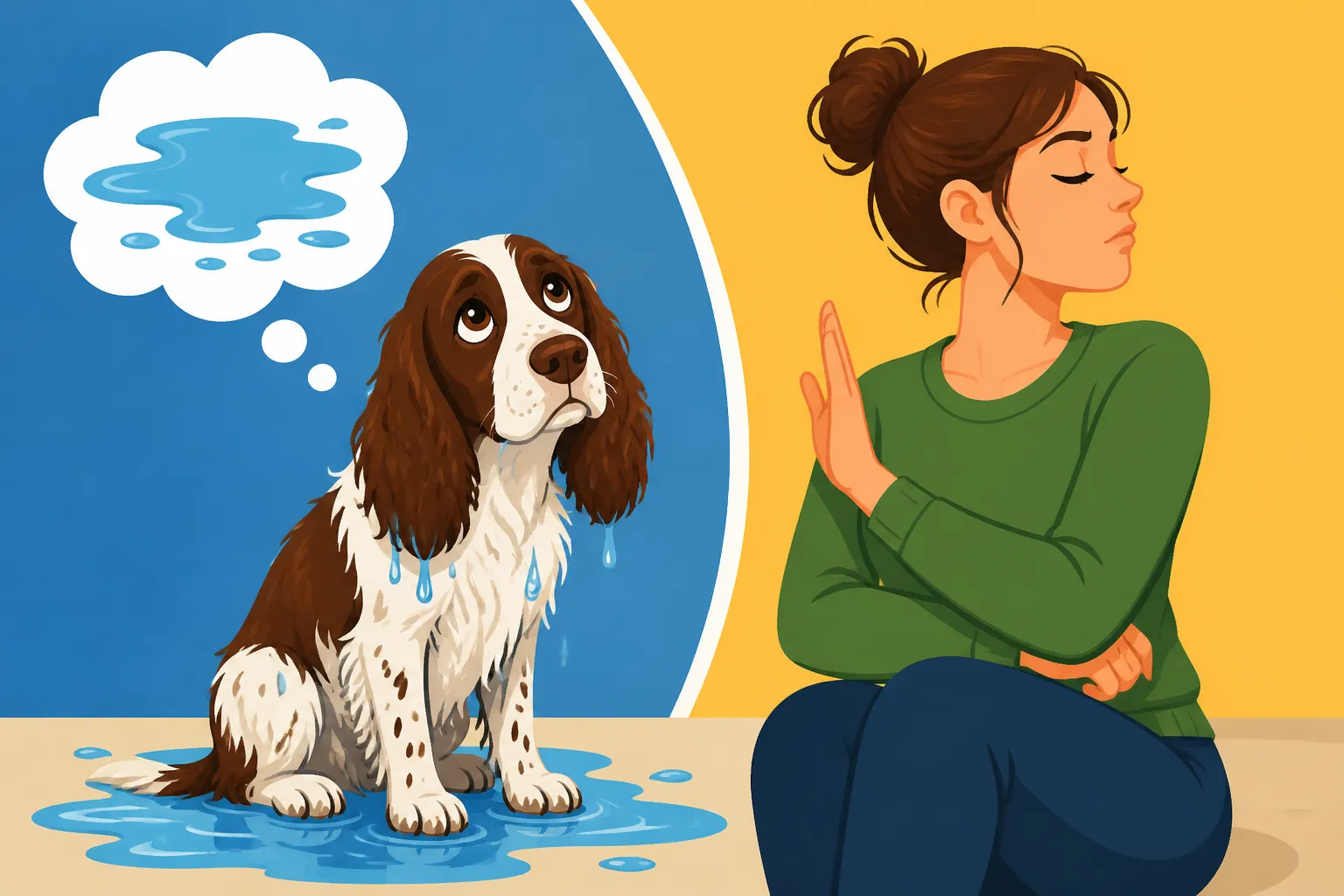
The advice to "just ignore them" when they pee often comes from a good place, intending to prevent reinforcement of the behavior. However, with submissive or excitement urination, it's usually not about seeking attention, so ignoring them often misses the point entirely and can even be detrimental.
The Pitfalls of Simply Turning Your Back
When you ignore a dog that’s peeing out of submissiveness or excitement, you’re essentially ignoring their emotional state. They aren't trying to manipulate you; they're communicating an internal experience. If it's appeasement urination, ignoring them might exacerbate their anxiety or fear. They may interpret your lack of interaction as further rejection or disapproval, making them even more insecure, which in turn can lead to more urination. Imagine feeling scared and trying to signal "I'm not a threat," only for the person to turn their back. It wouldn't make you feel safer, would it?
For excitement urination, ignoring might reduce some of the hyper-arousal in the short term, but it doesn't teach them an alternative, appropriate way to express their joy. It simply cuts off the interaction without offering a solution. Plus, for a dog that thrives on interaction like a Springer Spaniel, being ignored can be deeply confusing and upsetting. They live for your presence and attention. While a calm demeanor is certainly helpful, outright ignoring can create a distance when what they truly need is gentle guidance and reassurance.
The Problem Isn't Seeking Attention, It's an Involuntary Response
The core issue here is that submissive and excitement urination are largely involuntary. Your Springer Spaniel isn't thinking, "Oh, if I pee, my human will give me attention!" Instead, their bladder simply releases because of heightened emotional states—either overwhelming joy or acute stress.
Consider the biological mechanism: when a dog is highly aroused (whether positively or negatively), certain physiological responses occur. Adrenaline spikes, muscle tension might change, and sometimes, bladder control is momentarily lost. This is akin to a human child wetting themselves when extremely scared or laughing too hard. It’s not intentional. Therefore, treating it like a behavior your dog is choosing to perform for attention is a misunderstanding of the problem. Your Springer Spaniel is likely feeling confused and perhaps even ashamed after an incident, not empowered by getting your attention. This is why positive reinforcement and building confidence are far more effective than trying to punish or ignore what isn't a conscious act.
Effective, Empathetic Strategies to Manage the Puddles
Instead of simply ignoring your Springer Spaniel, which can create more problems than it solves, we need to address the underlying emotional state and teach them more appropriate ways to manage their excitement or insecurity. It's about building confidence and managing the environment.
Creating Calm and Predictable Greetings
The way you greet your Springer Spaniel can make a huge difference. High-pitched voices, frantic petting, or dramatic entrances can send their excitement levels soaring, making those puddles almost inevitable.
Instead, aim for calm. When you first arrive home, try to keep your own energy low. Avoid immediate eye contact or bending over your dog. Instead, turn slightly sideways, keep your hands to yourself for a moment, and speak in a soft, even tone. Let your Springer come to you. If they jump, gently turn your back until all four paws are on the floor. Once they are calm, you can offer a gentle, low-key pet under the chin or on the chest, rather than over the top of their head. Sometimes, sitting down on the floor to greet them can make you less imposing and help them relax. This helps to reduce the feeling of being overwhelmed. For guests, instruct them to do the same: ignore the dog initially until the dog is calm, then greet them gently at their level. This isn't ignoring the dog, but ignoring the unwanted excited behaviors while still providing presence. Think about having a small mat or dog bed near the door where your dog can go for a moment when guests arrive, giving them a designated place to settle before interactions begin.
Building Confidence and Security
Many instances of submissive urination stem from a lack of confidence. A secure, self-assured Springer Spaniel is less likely to feel the need to offer appeasement signals.
One of the best ways to build confidence is through consistent, positive training. Enroll in a basic obedience class using positive reinforcement methods. Teaching your Springer commands like "sit," "stay," and "down" gives them a job and a sense of purpose, which can be incredibly empowering. Even simple tricks, when taught with kindness and rewards, can boost their self-esteem. Consider an online puppy class from a reputable source like BAXTER & Bella, even if your dog isn't a puppy. These programs often emphasize positive reinforcement and building a strong bond, which are key to confidence.
Exposure to new, positive experiences in a controlled manner also helps. Take your Springer Spaniel to quiet parks, introduce them to calm, friendly dogs, and let them explore new scents. Always ensure these experiences are positive and never overwhelming. If your dog shows any signs of stress, remove them from the situation gently. You want them to associate novelty with good feelings, not fear or anxiety. Regular, appropriate exercise, as discussed in How Much Exercise a Field Bred Springer Spaniel Needs or How Much Exercise a Show Bred Springer Spaniel Needs, also helps release pent-up energy that can contribute to excitement urination.
Management Techniques to Minimize Incidents
While you're working on the underlying behavior, you can also implement practical management strategies to reduce the frequency of accidents.
One of the simplest is to take your Springer Spaniel out for a potty break just before anticipated exciting events, like guests arriving or your return home after being out. This ensures their bladder is empty, making accidental leaks less likely. You might also consider using a baby gate to create a barrier when guests first arrive, allowing your dog to see and hear without being directly in the fray. This gives them a chance to calm down before interacting directly.
For dogs prone to excitement peeing, having a designated "greeting area" with easy-to-clean flooring can be helpful. Place a washable rug or a few towels down. When an incident does occur, clean it up with an enzymatic cleaner (you can find many effective options on Amazon) to eliminate odors and prevent your Springer from being drawn back to the spot. Remember, never scold or punish your dog for an accident, as this will only increase their anxiety and potentially worsen the problem. Focus on prevention and positive redirection.
Here's a quick guide to do's and don'ts for submissive and excitement urination:
| Action | Do | Don't |
|---|---|---|
| Greeting Style | Be calm, speak softly, avoid direct eye contact, approach sideways. | Rush in, use high-pitched voices, lean over, or engage in frantic petting immediately. |
| Body Language | Sit or crouch down, offer a hand for sniffing, pet under the chin/chest when calm. | Loom over your dog, make intense eye contact, reach quickly over their head. |
| Potty Breaks | Take your dog out before exciting events (guests, your arrival). | Assume they'll hold it, wait for an accident to occur. |
| Confidence Building | Engage in positive reinforcement training, teach tricks, gentle socialization. | Punish mistakes, scold for accidents, force interactions they're uncomfortable with. |
| Environmental Management | Use baby gates, create an easy-to-clean greeting area, use enzymatic cleaners. | Ignore the environment's role, rely solely on behavior modification, use harsh cleaners. |
| Guest Interaction | Instruct guests to ignore initially, then greet calmly at dog's level. | Allow guests to overwhelm the dog, let them make a big fuss immediately. |
| Post-Accident Response | Clean calmly with enzymatic cleaner. | Scold, yell, rub their nose in it, or show anger. |
When to Seek Professional Help and Medical Considerations
While many cases of submissive or excitement urination can be managed with the strategies above, sometimes the problem is deeper, or it might be indicative of a physical issue. Knowing when to call in the experts is crucial for your Springer Spaniel's well-being.
Ruling Out Medical Causes
The very first step when dealing with any sudden or persistent house-soiling issue, including submissive urination, is a visit to your veterinarian. It’s absolutely essential to rule out any underlying medical conditions that could be causing or contributing to the problem.
Urinary tract infections (UTIs) are a common culprit and can make it difficult for your Springer Spaniel to control their bladder, especially when excited or stressed. Other possibilities include bladder stones, kidney issues, or even hormonal imbalances. Your vet can perform a urinalysis, blood tests, and possibly imaging to check for these conditions. If your dog is older, conditions like cognitive dysfunction or weakened bladder muscles could also play a role. It’s a simple fact that you can’t train away a medical problem, so getting a clean bill of health from your vet is the foundational step. The question of Whether a Springer Spaniel's Submissive Urination Is Medical is always the first one to answer.
Consulting a Certified Professional Dog Trainer or Behaviorist
If medical causes have been ruled out, and you're still struggling to make progress, it’s time to call in a professional. A certified professional dog trainer or a veterinary behaviorist has the expertise to assess your Springer Spaniel's specific situation and develop a tailored plan.
A good trainer or behaviorist will observe your dog's behavior, ask detailed questions about their history, your routine, and the specific triggers for urination. They can help you identify subtle body language cues you might be missing and teach you effective communication strategies. They'll use positive, force-free methods to build your dog's confidence and teach them appropriate coping mechanisms. They might suggest specific confidence-building exercises, desensitization techniques for triggers, or even recommend certain tools or products. For instance, sometimes a structured online training program, like those offered by BAXTER & Bella, can supplement in-person sessions by providing consistent, foundational guidance that reinforces good habits and builds a dog's self-assurance. Remember that investing in a professional can seem like a lot, but the peace of mind and improvement in your dog's quality of life are truly priceless, as covered in What a Behaviorist Costs a Springer Spaniel Owner. They can help you navigate the nuances and ensure you're not making things worse with well-intentioned but misguided approaches.
Disclaimer
This article is for general informational purposes only and does not constitute professional advice. Laws, prices and regulations vary by location and change over time. Consult a qualified professional for guidance on your specific situation.