What a Springer Spaniel Will Work For
If you've ever owned a Springer Spaniel, you know they're bundles of enthusiasm, intelligence, and often, pure, unadulterated chaos! But beneath that whirlwind of energy lies a highly motivated, eager-to-please companion, if you know what truly lights their fire. The frustration often comes when our methods don't quite click with their innate drives, leaving both dog and owner feeling a bit lost. This guide is all about peeling back the layers to understand what makes a Springer Spaniel tick, and how to harness that motivation for a happy, well-trained dog.
Tapping into the Springer Spaniel's Innate Drives
Springer Spaniels aren't just pets; they're working dogs, bred for centuries to partner with humans in the field. This heritage means they come pre-programmed with a set of instincts that, once understood, become your greatest assets in training. Trying to ignore or suppress these drives is like trying to hold back the tide – frustrating for everyone involved. Instead, we want to channel them.
The Power of Scent and Prey Drive: Their Hunting Heritage
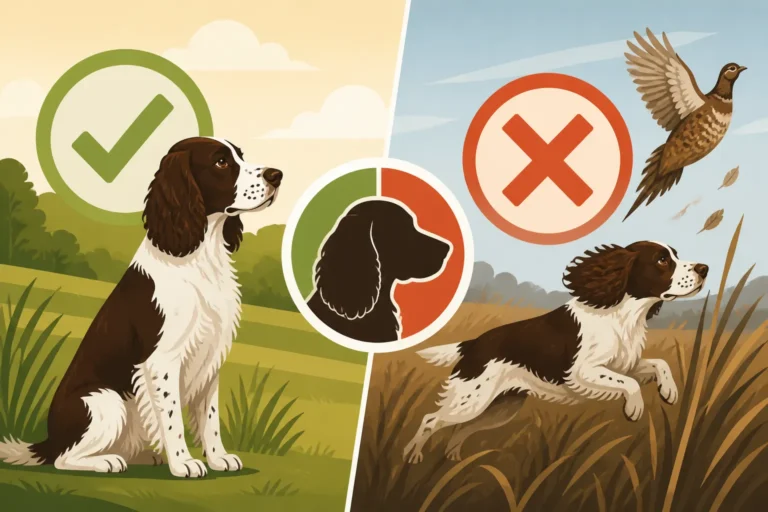
Let's be honest, a Springer Spaniel's nose is probably more powerful than yours, and they're not afraid to use it! Their ancestors were developed to "spring" game from dense cover for hunters, and that intense focus on scent and the thrill of the chase is deeply ingrained. If you've ever seen your Springer suddenly lock onto an invisible trail in the park, ears down, tail flagging, ignoring all your calls, you've witnessed this prey drive in action. It's not defiance; it's instinct.
This doesn't mean your pet Springer needs to hunt pheasants, but it does mean that games involving scent work or retrieving are incredibly motivating. Think about how much they love to find that hidden treat, or chase a dummy you've thrown. This isn't just "fun" for them; it's fulfilling a deeply ingrained purpose. Using their nose in training, whether it's hiding toys, scattering kibble, or even formal scent detection games, will tap into a primal satisfaction that other motivators just can't touch. When you want to engage their minds and bodies, remember that their nose is their superpower, and giving them a job to do with it is often the best reward in itself. Why a Springer Spaniel Puts Its Nose to the Ground and Vanishes is an article that delves deeper into this fascinating aspect of their behavior.
The Eager-to-Please Nature: A Foundation for Cooperation
Despite their independent working nature, Springer Spaniels are, at heart, people-pleasers. They thrive on connection and approval from their humans. This isn't to say they don't have their own stubborn streak or get caught up in their own world sometimes, especially when a good scent comes along! But fundamentally, they want to do things with you and for you. This desire to please is a massive advantage in training, making them generally highly biddable and responsive to positive reinforcement.
This means that your genuine praise, a happy tone of voice, and even just your approving gaze can be incredibly powerful motivators. While food and toys are excellent tools, don't underestimate the value of simply telling your Springer they're "a good dog!" with enthusiasm. They read our emotions incredibly well. A strong, positive relationship built on trust and mutual respect will make them far more willing to work with you, even when the distractions are high. This inherent desire to cooperate is why many find them such a joy to train, even for complex tasks. It's less about dominance and more about partnership.
Unleashing Their Boundless Energy: Exercise as a Motivator
If there's one thing almost every Springer Spaniel owner can agree on, it's that these dogs have energy. Lots of it. A Springer Spaniel who hasn't had enough physical and mental exercise isn't just bored; they're often frustrated and restless, making them incredibly difficult to motivate for training. Think of it like trying to get a toddler to sit quietly for a lesson after they've been cooped up all day. It's not going to happen gracefully.
For a Springer, a good run, a solid retrieve session, or an engaging walk where they can sniff and explore isn't just a physical outlet; it's a mental reset. A tired Springer is a happy, calm, and much more receptive Springer. Therefore, meeting their significant exercise needs is a foundational motivator for any other kind of training you want to do. If they're bouncing off the walls, the best "reward" you can offer them before a training session might just be a chance to burn off some steam. This is especially true for field-bred Springers, whose drive to move and work is immense. How Much Exercise a Field Bred Springer Spaniel Needs and How Much Exercise a Show Bred Springer Spaniel Needs offer excellent insights into their activity requirements.
The Spectrum of Rewards: Beyond Just Treats
When we talk about motivating dogs, most people immediately think of treats. And yes, treats are fantastic! But a truly well-motivated Springer Spaniel responds to a much broader range of rewards. Understanding this spectrum and knowing when to use which type of reward can make your training incredibly effective and keep your Springer engaged long-term.
High-Value Food Rewards: Fueling Focus and Enthusiasm
Let's not downplay the power of a good treat. For many Springer Spaniels, food is a primary motivator, especially when learning new behaviors or working in distracting environments. The key is to use high-value treats. What's high-value? It's whatever your specific Springer goes absolutely crazy for. This might be small pieces of cooked chicken, cheese, hot dogs, or specially formulated soft training treats. Kibble might work in a quiet living room, but it's probably not going to cut it when there's a squirrel scampering by.
Using high-value treats helps your Springer understand that performing the desired action leads to something truly wonderful. It creates a strong positive association. Just remember to keep treats small to avoid overfeeding and ensure they can be gobbled quickly without breaking focus. Varying the treats you use can also keep things interesting; sometimes it's the element of surprise that adds to the value. And for those really tough training moments, like recall around other dogs, don't be afraid to pull out the super high-value stuff—even a tiny lick of peanut butter (xylitol-free, of course!) can work wonders.
Toy-Based Motivation: Tapping into Play and Retrieve Drive
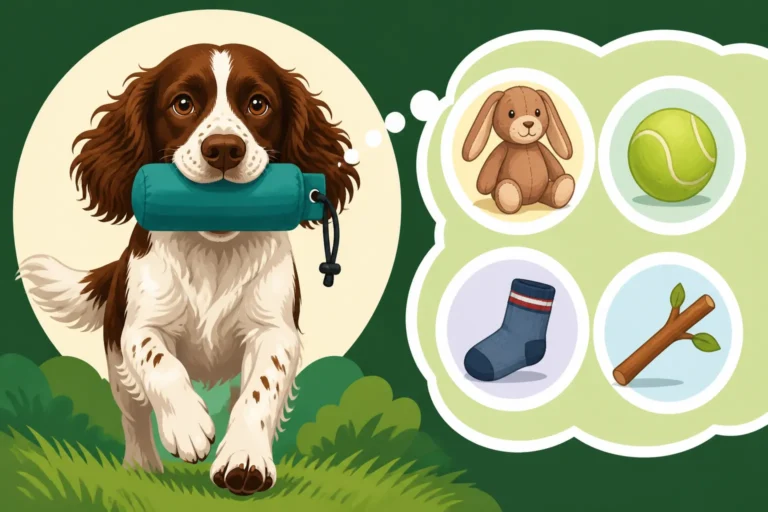
Beyond food, many Springer Spaniels are profoundly motivated by toys, especially those that cater to their retrieve drive. The joy of chasing, catching, and bringing back a favorite ball or bumper can be just as, if not more, rewarding than a treat for these dogs. This is particularly true once a behavior is already learned and you're looking to build speed, enthusiasm, or work drive. A quick game of fetch after a successful "stay" can reinforce the behavior powerfully.
The type of toy matters. Some Springers love squeaky toys, others prefer soft plushies, and many are obsessed with tennis balls or canvas dummies. Experiment to find what truly excites your dog. Interactive play with you, where the toy is part of a shared experience, is often far more motivating than just leaving toys lying around. Think tug-of-war (with rules!), fetch, or even hide-and-seek with a favorite toy. Using toys also helps teach impulse control, as they learn that polite behavior (like sitting before the throw) earns them access to their beloved toy. What a Springer Spaniel Retrieves is a great resource if you're looking to understand this drive more deeply. You can find a huge variety of durable toys perfect for retrieving on Amazon.
Praise, Affection, and Environmental Rewards: The Subtle Boosters
While food and toys are often the most overt motivators, never underestimate the power of your praise, affection, and even access to environmental rewards. A genuinely happy "Good dog!" delivered with enthusiasm, a quick scratch behind the ears, or a belly rub can mean the world to a Springer Spaniel. These aren't just secondary; they build the bond and make training a positive, collaborative experience.
Environmental rewards are also incredibly effective and often overlooked. For a dog that loves to sniff, being allowed to investigate a particularly interesting patch of grass after a good heel is a huge reward. For a water-loving Springer, a quick dip in the creek after a successful training session is pure bliss. The opportunity to play with another dog, or simply getting to walk through a stimulating area, can also serve as powerful motivators. These rewards help connect the desired behavior to something naturally enjoyable for the dog, making the learning more organic and less reliant on constant external reinforcement. The goal, ultimately, is for your dog to find the act of working with you inherently rewarding.
Here's a quick overview of different motivators and their typical use:
| Motivator Type | Examples | Best Use Cases | Pros | Cons |
|---|---|---|---|---|
| Food | Cooked chicken, cheese, soft treats | New behaviors, high distraction, building enthusiasm | High impact, easy to deliver, universal appeal | Can lead to weight gain, dog might become "food only" driven |
| Toys | Balls, squeaky toys, tug ropes, dummies | Building drive, reinforcing known behaviors, play | High engagement, taps into prey drive, builds bond | Not all dogs are toy-motivated, can be messy |
| Praise | Enthusiastic "Good dog!", verbal cues | Continuous reinforcement, subtle corrections, bond | Always available, builds relationship, lightweight | Less impactful than food/toys for new/difficult behaviors |
| Affection | Belly rubs, ear scratches, gentle pats | Relationship building, calming, after successful tasks | Strengthens bond, provides comfort, positive association | Can be distracting, not always practical during active training |
| Environment | Walk in new area, sniff patch, swim | Reinforcing calm behavior, "life rewards", enrichment | Highly natural, deeply satisfying, reduces reliance | Requires planning, may not be suitable for all training steps |
Crafting Engaging Training Sessions
Knowing what motivates your Springer is only half the battle; knowing how to present that motivation effectively is the other. It's about making training an enjoyable, exciting, and rewarding activity for both of you, rather than a chore. This requires a bit of thoughtful planning and creativity.
Variety is the Spice: Keeping Training Fresh and Exciting
Imagine eating the same meal every day, or doing the same exercise routine over and over. You'd get bored, right? Your Springer Spaniel is no different! Repetition is crucial for learning, but monotonous training sessions can quickly lead to disengagement and a lack of motivation. To keep your Springer enthusiastic, you need to introduce variety.
This doesn't mean changing the core commands every day. Instead, vary the way you practice them. Change the location: train in the kitchen one day, the park the next, then a friend's yard. Change the distractions: start in a quiet room, then move to an area with mild distractions, eventually working up to busy environments. Vary the rewards: sometimes it's chicken, sometimes a game of fetch, sometimes just a quick cuddle. You can also mix up the types of exercises: a few obedience commands, then a short scent game, followed by some retrieves. This keeps your Springer guessing and excited about what's next, preventing burnout and keeping their problem-solving brains active. Whether a Springer Spaniel Gets Bored Easily is a good read on how these dogs crave mental stimulation.
Short, Sweet, and Successful: Optimizing Session Length
Springer Spaniels are intelligent, but their attention spans, especially when young, aren't endless. Long, drawn-out training sessions are often counterproductive. They lead to frustration for both dog and owner, reduce engagement, and can actually make your Springer less motivated to train in the future. The key is to keep sessions short, frequent, and always end on a high note.
Aim for 5-10 minute sessions, a few times a day, especially for puppies or when teaching something new. For adult dogs, you might extend this to 15-20 minutes, but always be mindful of their focus. The goal is to get a few successful repetitions of a behavior, reward generously, and then stop before they get bored or make a mistake. Ending a session while your Springer is still eager and successful builds their confidence and ensures they look forward to the next session. It's better to have several short, positive interactions throughout the day than one long, tedious one. This approach reinforces that training is fun and rewarding, not a test they might fail. How Many Repetitions a Springer Spaniel Needs and Whether Short Sessions Suit a Springer Spaniel elaborate on effective session length.
Choosing the Right Environment: Minimizing Distractions, Maximizing Focus
The environment where you train plays a huge role in your Springer Spaniel's ability to focus and, therefore, their motivation. Starting in an overly stimulating environment is like trying to learn to read in the middle of a rock concert—it's just too much! When introducing new commands or working with a young dog, begin in a quiet, familiar space with minimal distractions. Your living room, a quiet backyard, or a calm corner of the house are ideal.
As your Springer masters a command in a low-distraction setting, you can gradually introduce more challenging environments. This process, often called "proofing," helps generalize the behavior so your dog performs it reliably anywhere. If you notice your Springer becoming overwhelmed or distracted, it's a sign that the environment is too challenging for their current skill level. Simply scale back to a calmer area. Remember, success breeds motivation. If they're constantly failing because of distractions, their motivation will wane. Setting them up for success by managing the environment is a crucial part of keeping them engaged and eager to learn. This is especially true when dealing with their powerful nose; a field full of interesting scents can easily override your cues.
Navigating Motivational Roadblocks
Even the most enthusiastic Springer Spaniel can hit a wall. Distractions, frustration, or plain old boredom can derail training efforts and make you question if your dog even understands you. But these roadblocks aren't signs of a bad dog; they're opportunities to re-evaluate your approach and find new ways to connect and motivate.
Overcoming Distractions: When the World is More Interesting
This is a classic Springer Spaniel challenge, isn't it? Their highly tuned senses, especially their nose, mean that the world outside is often far more captivating than anything you're asking them to do. A rustling leaf, a distant squirrel, another dog, or a compelling scent can instantly turn your perfectly obedient dog into a deaf, oblivious explorer. This isn't personal; it's just their genetics shining through.
Overcoming distractions requires a systematic approach. First, ensure your rewards are high-value enough to compete with the distraction. If your dog loves boiled chicken, that's often a better bet than kibble when facing a mild distraction. Second, manage the environment by gradually increasing exposure to distractions, as mentioned earlier. Start far away from the distracting element and slowly get closer as your dog shows focus. Third, teach a strong "leave it" command and practice it relentlessly. Finally, remember that consistency is key. Every time your dog chooses you over a distraction, even for a moment, reinforce it heavily. Tools like a long line can give you control while practicing recall in distracting environments, ensuring safety and preventing self-rewarding chasing behaviors. Consider checking out BAXTER & Bella for structured online courses that often include modules on handling distractions with positive reinforcement.
Dealing with Over-Arousal and Frustration: Channeling Intensity
Sometimes, a Springer Spaniel's high drive and enthusiasm can tip into over-arousal or frustration. This might manifest as excessive barking, jumping, nipping, or simply becoming too "amped up" to think clearly. It often happens when they're too excited about a reward or task, or if they're struggling to understand what's being asked of them, leading to frustration. A dog in this state isn't learning; they're just reacting.
The trick here is to recognize the signs early and help them calm down. Take a break. Engage in a calming activity like a sniff walk or a short session of settled petting. Teach them an "off switch" command, like "settle" or "find your mat," and reward calm behavior. If frustration is stemming from misunderstanding, break the task down into smaller, easier steps. Use luring or shaping to guide them, making it impossible for them to fail. Sometimes, even using a different type of reward—switching from a high-energy toy to a calming chew, for instance—can help manage their intensity. Remember, you want to channel their intensity, not stifle it. Whether a Springer Spaniel Sulks After a Correction is a good read if you've noticed your Springer becoming withdrawn during training.
Addressing Boredom and Burnout: Rekindling the Spark
A bored Springer Spaniel is a destructive Springer Spaniel, or at the very least, an unmotivated one. If training feels repetitive, if their energy isn't being met, or if they're constantly doing the same thing, they can quickly lose interest. This isn't defiance; it's a sign that you need to shake things up. Burnout can also happen if training sessions are too long, too frequent, or consistently challenging without enough success.
To rekindle the spark, inject novelty and fun. Introduce new games like scent games (Whether Scent Games Tire a Springer Spaniel), explore new walking routes, or try a completely different dog sport like agility or flyball. Puzzle toys, especially those you can load with their meal, can provide excellent mental stimulation and reduce mealtime boredom. Maybe it's time for a new type of treat or a novel toy. For Springers who love to work, consider exploring actual gundog training or obedience trials to give them a "job." If you suspect burnout, give them a few days off from formal training, focusing instead on just fun and bonding activities. When you resume, keep sessions even shorter and ensure they're overflowing with success and high-value rewards. Whether a Springer Spaniel Needs a Job truly underscores how important purposeful activity is for these dogs.
Motivation Across the Springer Spaniel Divide: Field vs. Show
It’s a tale as old as time for the English Springer Spaniel: the significant divide between field-bred and show-bred lines. While they are technically the same breed, years of selective breeding for different purposes have created two distinct types, each with their own nuances in terms of what truly motivates them. Understanding these differences is absolutely crucial for effective training and a happy life together.
The Field Springer: Driven by Instinct and Purpose
Field-bred Springer Spaniels are, first and foremost, athletes and working partners. They are bred for stamina, speed, intelligence, and an intense desire to find and retrieve game. Their motivation often stems directly from fulfilling these innate drives. When you see a field Springer, you're looking at a dog whose ancestors were bred to cover ground tirelessly, push through dense cover, and respond instantly to handler commands in a high-distraction environment.
What truly motivates a field Springer is the opportunity to work. This means retrieving, using their nose, and covering ground. For them, a training session that simulates a hunt – even with bumpers or training dummies – is inherently rewarding. They often respond strongly to movement, the sound of a whistle, and the thrill of the chase. While food and praise are still valuable tools, the ultimate reward for many field Springers is the chance to "do their job." If you have a field Springer, think about how you can incorporate these elements into their daily life. Long walks where they can quarter (search) naturally, extensive retrieve sessions, and even formal gundog training will tap into their deepest motivations. They thrive on having a purpose, and a bored field Springer is a recipe for destructive behavior or intense anxiety. How a Field Bred Springer Spaniel Differs in Drive is essential reading for anyone with this type of Springer.
The Show Springer: Responding to Connection and Engagement
Show-bred Springer Spaniels, while still possessing the core instincts of the breed, have been selectively bred for conformation, temperament, and an appearance that conforms to the breed standard. While they still love to run and retrieve, their drives are often less intense and channeled differently than their field-bred cousins. They are often described as having a slightly calmer demeanor, though "calm" is a relative term for a Springer!
Show Springers are often deeply motivated by their bond with their human. They thrive on attention, affection, and interactive play. For them, a training session might be motivated by the joy of spending focused time with you, the praise they receive, and the comfort of your presence. While they still appreciate a good game of fetch, the intensity of their prey drive might not be as all-consuming. They can excel in obedience, rally, and even some agility, not necessarily because of an overwhelming drive for the "task" itself, but because it's an activity they get to do with you. Food rewards, especially in the show ring, are crucial for maintaining focus and enthusiasm. Environmental rewards like a pleasant walk or meeting new people might also be particularly motivating for a show Springer who enjoys social interaction. Understanding this nuanced difference helps you tailor your approach to what truly speaks to your individual dog's heart.
Disclaimer
This article is for general informational purposes only and does not constitute professional advice. Laws, prices and regulations vary by location and change over time. Consult a qualified professional for guidance on your specific situation.