What a Springer Spaniel Retrieves
One of the most defining characteristics of an English Springer Spaniel is their boundless enthusiasm for retrieving, but many new owners quickly discover this isn't just about a casual game of fetch in the backyard. It's a deeply ingrained instinct that shapes their behavior, training, and even how they interact with their world. This guide will help you understand the nuances of the Springer Spaniel's retrieving drive, from its historical roots to practical training methods and common challenges, ensuring you can harness this incredible trait for a happy, well-adjusted companion.
The Deep-Seated Drive: Understanding the Springer Spaniel's Retrieve Instinct
If you've ever watched a Springer Spaniel, you've likely seen that glint in their eye when something moves, whether it's a thrown toy, a fluttering bird, or even a leaf caught in the wind. This isn't just curiosity; it's the manifestation of centuries of selective breeding for a specific purpose. Their entire being is often oriented around finding, flushing, and bringing things back. It's a core part of their identity as a breed.
A History of "Bringing Back"
The English Springer Spaniel's history is steeped in partnership with humans, primarily in the role of a gundog. Their name itself, "Springer," refers to their historical job of "springing" or flushing game from dense cover for hunters. But a critical, often overlooked, part of that job was the retrieve. Before retrievers became a distinct class of gundog, spaniels were expected not only to find and flush but also to bring back downed game. This meant they needed to be reliable, careful with the game (known as having a "soft mouth"), and willing to deliver it directly to the hunter.
This isn't some arbitrary skill tacked onto their job description; it was essential for successful hunting. Imagine a hunter needing to recover a pheasant from thorny brambles or cold water. A good spaniel would dive in, retrieve the bird, and return it unscathed. This ancestral role has been hardwired into their DNA, making the retrieve much more than just a playful activity. It's a deeply satisfying fulfillment of their inherent purpose, even for modern Springers who may never see a real pheasant.
What Fuels the Retrieve: More Than Just a Game
For your Springer, retrieving isn't just about chasing. It's a complex behavior driven by a combination of instinct, prey drive, and a strong desire to please. When you throw a bumper or a ball, their brains light up with the thrill of the chase, the scent of the object, and the satisfaction of "catching" it. But beyond that primal thrill, there's a significant social component. Delivering the item back to you strengthens their bond and fulfills their innate desire to cooperate.
Think about it from their perspective: you're part of a team. You throw, they retrieve, and everyone is happy. This positive feedback loop reinforces the behavior, making it incredibly self-rewarding. For a Springer, bringing something back is often a profound expression of love and partnership. It's why they might follow you around the house with a favorite toy, not necessarily wanting to play fetch, but simply wanting to offer it to you, a gesture of sharing their "bounty." Understanding this inherent drive helps us appreciate why they often carry things in their mouth constantly – it's their way of interacting with their world and their people.
Natural vs. Trained: The Spectrum of Retrieve Skills
While the desire to retrieve is often natural in a Springer Spaniel, the skill of retrieving is a spectrum that ranges from raw instinct to highly polished gundog work. Some Springer puppies will naturally pick up a toy and bring it back to you from a very young age. This is the raw instinct at play – they instinctively pick up an object and return to their pack leader (you!).
However, there's a vast difference between a puppy who brings a toy to your feet and a fully trained gundog who can perform a [Blind Retrieve] (finding game they didn't see fall) from a considerable distance, over obstacles, and on command. Training refines this natural instinct, adding control, precision, and reliability. It teaches them to hold objects gently (a "soft mouth"), to deliver directly to hand, and to ignore distractions. Without guidance, that natural instinct can lead to an enthusiastic but chaotic retrieve, where they might run off with the object, play "keep away," or even damage what they've retrieved. The key is to nurture that natural drive while shaping it into a useful, dependable skill.
Varieties of Retrieval: From Playtime to Professional Work
The word "retrieve" can mean vastly different things depending on the context. For a Springer Spaniel, it can encompass everything from a casual game in the living room to highly specialized work in the field. Understanding these distinctions helps you appreciate the versatility of the breed and tailor activities to your dog's individual drive and your aspirations.
Everyday Fetch: The Joy of Bringing Back a Toy
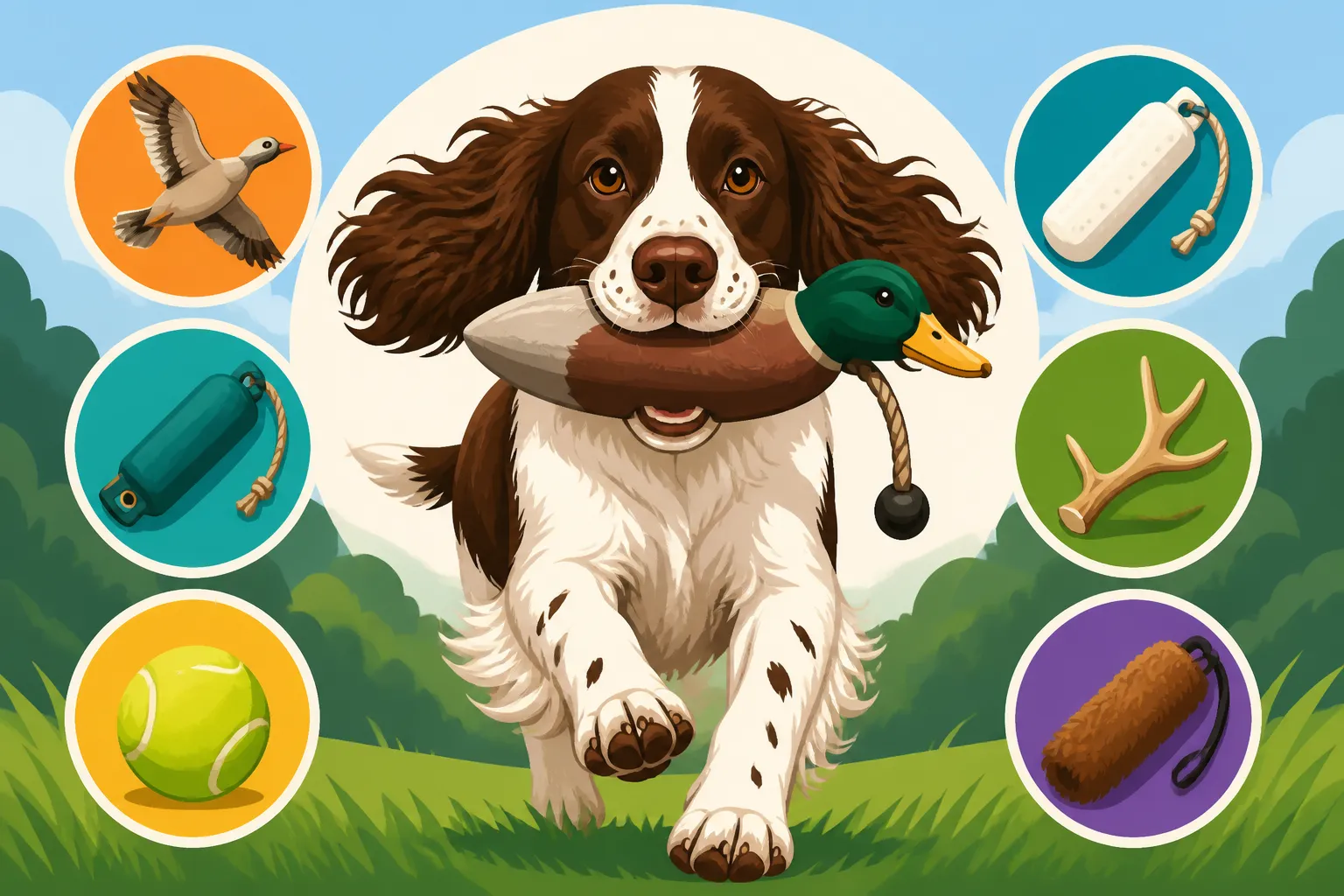
For most pet Springer Spaniels, retrieving primarily means playing fetch. This could involve a tennis ball, a squeaky toy, or even a well-chewed plushie. This casual form of retrieving is invaluable for exercise, mental stimulation, and strengthening the bond between dog and owner. A good session of fetch can burn off a significant amount of a Springer's seemingly endless energy. They thrive on the repetition, the chase, and the satisfaction of bringing the item back for another throw.
It's a beautiful thing to witness: the dog's focus as you raise your arm, the explosive launch as the object sails through the air, and the joyful return with tail wagging. These simple games are vital for their well-being. However, even "everyday fetch" can be improved with a little structure. Teaching a reliable "drop it" command and making sure they understand that bringing the toy back to you (not just to the general vicinity) is part of the game will make these sessions much more enjoyable for both of you. You might find that even just Whether Fetch Satisfies a Springer Spaniel for their daily needs depends on their individual drive; for some, it's a great start, for others, it's barely a warm-up!
Gundog Retrievals: Marked, Blind, and Water Work
For those with working-bred Springers or an interest in gundog activities, retrieving takes on a much more serious and complex dimension. This is where the breed's historical purpose truly shines.
- Marked Retrieves: This is perhaps the most fundamental gundog retrieve. The dog watches game or a training dummy fall (the "mark") and is then sent to retrieve it. It requires strong marking ability, good memory, and the discipline to wait for the command rather than rushing out. Training starts with simple, visible retrieves and gradually introduces more challenging scenarios, like multiple falls or longer distances.
- Blind Retrieves: This is where the retrieve becomes an art form. In a blind retrieve, the dog is sent to an area where they did not see game fall. They must rely entirely on the handler's directions (whistle commands and hand signals) to navigate to the target. This demands incredible trust, focus, and responsiveness from the dog. Imagine sending your Springer across a field, over a fence, and into thick cover purely by pointing and blowing a whistle – it's a testament to their intelligence and willingness to work. You can read more about this in Whether a Springer Spaniel Does Blind Retrieves.
- Water Work: Many Springer Spaniels absolutely adore water, and retrieving from ponds, lakes, or rivers is a natural extension of their gundog role. Water retrieves add another layer of challenge, dealing with currents, cold, and the increased physical exertion. A well-trained water retriever will hit the water with enthusiasm, locate the object, and return efficiently. Special floating bumpers and dummies, often found on platforms like Amazon, are essential for this type of training.
These advanced retrieves require consistent, patient training, often starting with The First Year With a Springer Spaniel Puppy and building up progressively.
Competitive Retrieves: Hunt Tests and Field Trials
Beyond practical hunting, competitive events allow Springer Spaniel owners to showcase their dogs' retrieving prowess.
- Hunt Tests: Organizations like the AKC (American Kennel Club) and UKC (United Kennel Club) host hunt tests that simulate realistic hunting scenarios. Dogs are judged against a standard, not against other dogs. Handlers and dogs work together to demonstrate their ability to mark falls, perform blind retrieves, honor other dogs' retrieves, and work cover effectively. Earning titles like Junior Hunter, Senior Hunter, and Master Hunter in these events is a huge accomplishment and a testament to the dog's natural abilities and the handler's training skill.
- Field Trials: Field trials are the pinnacle of competitive gundog work, where dogs compete head-to-head. They are judged on their speed, style, marking ability, nose, and, of course, their retrieving and delivery. Field trials are incredibly demanding and require an exceptional dog and handler team. The pressure is immense, and dogs must perform flawlessly under challenging conditions. These events are often a fantastic way to see the true potential of the working Springer Spaniel. It's a world where What a Springer Spaniel Retrieves becomes a highly refined performance art, and where dogs are expected to handle live game expertly.
Cultivating the Retrieve: Training Your Springer Spaniel
While Springers often have a strong natural inclination to retrieve, turning that raw desire into a reliable, consistent skill requires structured training. It's a journey that builds confidence, refines technique, and strengthens the partnership between you and your dog.
Starting Young: Puppy Foundations for Retrieving
The best time to start fostering a good retrieve is during puppyhood. Even before formal obedience, you can lay the groundwork. Begin by simply encouraging play with toys. Toss a soft toy a short distance and praise profusely when your puppy picks it up. Don't worry if they don't bring it all the way back at first; celebrate any interaction with the toy.
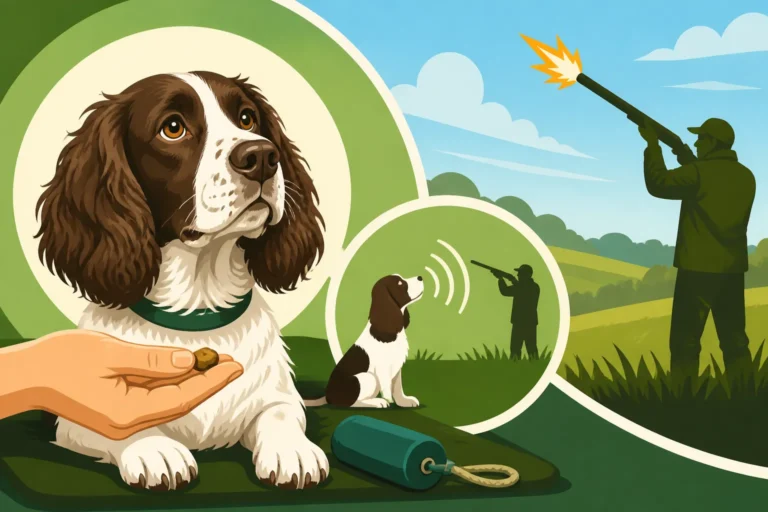
Once they're happily picking up and mouthing toys, start gently coaxing them back to you. Make exciting noises, crouch down, or even turn and walk away a few steps to encourage them to follow. When they get close, offer a treat in exchange for the toy. This is known as a "positive exchange" and teaches them that giving up the toy leads to good things. Never chase your puppy to get the toy back, as this can quickly turn into a frustrating game of "keep away." Many online puppy programs, like those offered by BAXTER & Bella, include early games and exercises that naturally build a strong retrieve foundation without pressure. They often guide you through these early stages, ensuring a positive experience. Remember, The First Year With a Springer Spaniel Puppy is crucial for shaping their future behavior.
Building Blocks: From Short Tosses to Complex Scenarios
Once your Springer puppy reliably brings back a toy, you can start building on that foundation. This isn't about rushing, but about gradually increasing difficulty while maintaining enthusiasm.
- Introduce a "Hold" Command: Before you demand a "drop it," teach "hold." Place a retrieve dummy gently in their mouth and praise them for holding it for a few seconds. Gradually extend the time. This helps develop a "soft mouth" and prevents them from immediately dropping or chewing the item.
- Formalizing the Retrieve: Start with short, controlled tosses. Have your dog sit, throw the dummy, and then give a clear "fetch" or "retrieve" command. When they return, command "sit," then "hold," and finally "give" or "drop." Reward with praise and a treat. The use of specific training equipment, like canvas or plastic bumpers available on Amazon, can help dogs differentiate between play toys and training tools.
- Increasing Distance and Distractions: Gradually lengthen the distance of your throws. Then, introduce mild distractions. Perhaps throw the dummy near another dog (who is under control) or in a slightly busier area. The goal is for your Springer to focus on your command and the retrieve, regardless of what else is happening. This is also where you might explore Whether a Springer Spaniel Needs a Gundog Trainer for more advanced techniques.
- Introducing Different Terrains: Once they're solid on land, introduce water, tall grass, or uneven ground. These variations build confidence and problem-solving skills.
- Multi-Marks and Blinds: For advanced work, begin with two marked retrieves, then progress to three. Only when they are proficient with marked retrieves should you even consider starting Whether a Springer Spaniel Marks a Fall and later Whether a Springer Spaniel Does Blind Retrieves, where the dog is sent for an unseen dummy based on your direction alone. This requires precise Teaching a Springer Spaniel Whistle Commands and hand signals.
Whistle and Hand Signals: Communicating the Retrieve
For effective and advanced retrieving, especially in gundog work, voice commands simply aren't enough. Whistles and hand signals become the primary language. A whistle carries further, cuts through wind and cover, and is less likely to convey human emotion than your voice.
- The "Stop" Whistle: A single pip or a series of short pips usually means "stop" or "sit." This is foundational for controlling your dog at a distance, particularly important for blind retrieves where you need them to stop and look to you for direction.
- The "Come In" Whistle: A rapid series of pips often means "come back." This helps call them back efficiently, especially if they've overshot a retrieve or are distracted.
- Hand Signals: These are used in conjunction with the stop whistle to direct your dog. An arm pointed left or right indicates the direction to travel, an arm raised above the head means "stop" or "sit," and a sweep of the arm might mean "hunt that area."
Start teaching these commands in a low-distraction environment. Pair the whistle or signal with a known verbal command, then gradually fade the verbal cue. For example, say "sit" while blowing your stop whistle, then reward. Over time, the whistle alone will elicit the desired response. Consistent practice, even for short sessions, is key for a Springer, as How Fast a Springer Spaniel Learns but also benefits from repetition. This investment in communication will pay dividends, whether you're in the field or just calling them back at the park.
Overcoming Obstacles: Common Retrieving Challenges
Even with their innate drive, Springer Spaniels can encounter challenges in their retrieving journey. It's important to approach these issues with patience, understanding, and consistent training rather than frustration.
The "Hard Mouth" or Damaging Retrieves
One of the most concerning issues for any retriever owner, especially those involved with gundog work, is a "hard mouth." This occurs when a dog grips retrieved items too tightly, chews on them, or otherwise damages them. For a hunter, this means ruined game. For a pet owner, it means shredded toys or slobber-soaked, mangled treasures.
The root cause can vary. Sometimes it's excitement and a lack of impulse control. Other times, it might stem from a lack of proper "hold" training or being allowed to chew on retrieve dummies. To address it, go back to basics with "hold" exercises. Practice holding a dummy, starting with very short durations and extending gradually. Reward calm, gentle holding. If they start to chew, gently correct them with a firm "no" and restart the exercise. Use objects that are difficult to chew or less appealing for chewing, such as rigid plastic dummies, initially. You might also want to ensure that Whether a Springer Spaniel Has a Soft Mouth is a trait you reinforce during training, as it's critical. If the issue is severe or persistent, consulting a professional gundog trainer is highly recommended, as they can employ specific techniques to correct a hard mouth.
The "Keep Away" Game and Refusal to Release
It's a classic scenario: you throw the toy, your Springer bounds off, retrieves it… and then dances just out of reach, tail wagging, initiating a frustrating game of "keep away." Or perhaps they simply run past you and refuse to come back with the object. This is typically a communication breakdown and often rooted in the dog learning that "giving up the toy" means "fun ends."
To fix this, you need to teach a rock-solid "give" or "drop it" command.
- Start with two toys: When your dog has one toy, tempt them with a second, equally exciting toy. As they drop the first to get the second, say "drop it" and praise them. Pick up the first toy and repeat. This teaches them that giving up one toy leads to another, or something equally rewarding.
- Positive Exchange: Always offer a reward immediately after they drop the item. This could be a high-value treat, another quick throw, or even enthusiastic praise. The goal is to make "giving it back" more rewarding than keeping it.
- No Chasing: Absolutely do not chase your dog when they play keep away. This only reinforces the game. Instead, turn your back, walk away, or ignore them for a moment. Often, they will come to you, confused, and offer the toy. That's your moment to praise and reward.
- Long Line Control: For dogs prone to running off, a long line (like those available on Amazon) can be an invaluable tool. It allows you to maintain physical control during retrieves, ensuring they can't practice the "keep away" game. When they retrieve, gently reel them in and practice your "drop it." This ensures success and builds good habits.
Losing Focus: The Distracted Retriever
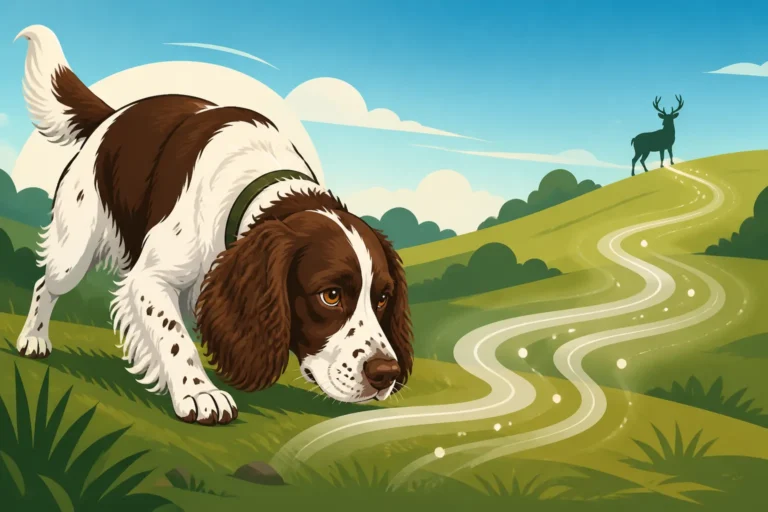
A Springer Spaniel's nose is a powerful tool, but it can also be a significant distraction, especially in busy environments. A common challenge is a Springer who gets easily distracted by scents, sights, or sounds on the way to or from a retrieve. They might veer off to investigate a squirrel, sniff a particularly interesting patch of grass, or greet another dog, completely forgetting their original mission. This is where Why a Springer Spaniel Puts Its Nose to the Ground and Vanishes becomes a real issue.
Addressing distraction requires building focus and proofing commands in increasingly distracting environments:
- Start in Low-Distraction Areas: Ensure your Springer has a solid retrieve in your quiet backyard or living room before moving to more stimulating places.
- Gradual Increase in Distraction: Slowly introduce distractions. Start with a quiet park at an off-peak hour, then maybe a slightly busier time, eventually progressing to areas with other dogs or people.
- Short Sessions and High Rewards: Keep training sessions short and highly rewarding. If your dog is struggling, make the task easier. End on a success.
- Consistency is Key: Every time you send your dog for a retrieve, ensure they complete the task without distraction. If they get distracted, gently guide them back to the task or shorten the distance.
- Utilize Whistle Commands: As mentioned, a whistle can be a powerful tool to regain focus. A sharp "stop" whistle can make them pause, allowing you to give further direction or recall them.
- "Leave It" Command: A strong "leave it" command is invaluable. Teach your dog to ignore tempting distractions on the ground or in the environment when you give this cue. This is part of general impulse control training that will benefit all aspects of their lives.
The Retrieve Beyond the Field: Integrating Into Daily Life
While the gundog aspects of retrieving are fascinating and deeply ingrained, the retrieve instinct isn't just for hunters or competitors. It can be a wonderful, enriching part of your Springer Spaniel's everyday life, providing mental stimulation, physical exercise, and a unique way to bond.
Practical Applications: Helping Around the House
A well-trained retrieving Springer Spaniel can be surprisingly helpful around the house! Their desire to pick up and carry things can be channeled into practical "chores" that provide mental engagement and a sense of purpose. Imagine your Springer bringing you the morning newspaper (if you still get one!), fetching your slippers, or even picking up their own toys and putting them in a basket.
Teaching these tasks is an extension of their basic retrieve training. You'd start by teaching them to retrieve specific items by name. For example, "Fido, get your rope toy!" Once they reliably bring the item, you can chain behaviors together: "Fido, get your rope toy and put it in the basket." Always make it a fun game with plenty of praise and rewards. Not only does this offer mental enrichment, but it also reinforces that their retrieving skills are valued and useful, deeply satisfying their inherent nature to be a working partner.
Mental Stimulation and Bond Building
For a breed as intelligent and energetic as the Springer Spaniel, mental stimulation is just as important as physical exercise. Retrieving, even simple games of fetch, provides a fantastic outlet for their minds. They have to process where the object landed, navigate to it, remember to bring it back, and understand your commands. This active mental engagement helps prevent boredom, which can often lead to destructive behaviors like chewing furniture or excessive barking.
Beyond the mental workout, retrieving is a powerful tool for bond building. When you and your Springer work together on a retrieve, you're engaging in a shared activity that draws on their core instincts and your leadership. The communication, the teamwork, and the mutual enjoyment strengthen your relationship immensely. Every successful retrieve is a moment of shared triumph, reinforcing trust and understanding. It's an affirmation of your partnership, where they feel valued and understood, fulfilling their desire to be useful and close to you. This is a great way to meet their need for Whether a Springer Spaniel Needs a Job, even if that "job" is just bringing back the frisbee.
Safe Retrieving Practices for Health and Longevity
While retrieving is generally a healthy activity, it's crucial to practice safely to prevent injuries and ensure your Springer can enjoy it for years to come.
- Warm-Up and Cool-Down: Just like human athletes, dogs need to warm up before intense retrieving sessions and cool down afterward. A brisk walk before fetch and a slower walk after can help prevent muscle strains.
- Appropriate Surfaces: Avoid retrieving on hard, unforgiving surfaces like concrete or asphalt, which can be tough on joints and paws. Grass, dirt, or sand are much gentler. Be mindful of extreme temperatures; hot pavement can burn paws, and icy conditions can lead to slips and falls.
- Age and Fitness Level: Adjust the intensity and duration of retrieving based on your dog's age and fitness. A young puppy shouldn't be asked to make long, high-impact retrieves, and an older dog with arthritis might need shorter, gentler sessions. Arthritis in an Older Springer Spaniel is a real concern, so adapt their activities accordingly.
- Safe Equipment: Use appropriate retrieving dummies or toys. Avoid sticks, which can splinter and cause severe internal injuries. Choose toys that are durable and too large to be swallowed. Check toys regularly for wear and tear. If your Springer chews on things, avoid small, easily ingestible pieces.
- Hydration: Always have fresh water available, especially during energetic retrieving sessions. Dehydration can quickly become a serious issue.
- Post-Activity Checks: After any retrieving session, particularly if you've been in tall grass, woods, or water, always perform a thorough check of your dog. Look for ticks, burrs, thorns, or any minor cuts or abrasions. Pay special attention to their ears, paws, and undercarriage. This routine is part of After the Hunt: Checking a Springer Spaniel Over Nose to Tail even if they're just playing in the park.
By being mindful of these practices, you can ensure your Springer Spaniel enjoys their retrieving for their entire The Twelve to Fourteen Years a Springer Spaniel Lives.
| Type of Retrieve | Description | Primary Skills Involved | Common Setting | Training Focus |
|---|---|---|---|---|
| Casual Fetch | Throwing a ball or toy for your dog to bring back for play. | Enthusiasm, basic recall, willingness to drop. | Backyard, dog park, living room. | Encouraging return, "drop it" command, fun. |
| Marked Retrieve | Dog watches an object fall and is sent to retrieve it. | Marking skill, memory, patience (steadiness). | Field, park, open area. | Steadiness to throw/shot, straight lines, delivery to hand. |
| Blind Retrieve | Dog is sent to an unseen fall, relying on handler's directions. | Trust in handler, whistle/hand signals, focus. | Complex terrain, dense cover. | Directional control, stop whistle, long-distance work. |
| Water Retrieve | Retrieving an object from water. | Swimming ability, confidence in water, focus. | Ponds, lakes, gentle rivers. | Water confidence, efficient entry/exit, delivery. |
| Forced Retrieve | Teaching a reluctant dog to pick up and carry objects on command. | Obedience, physical manipulation, repetition. | Controlled training environment. | Overcoming aversion, building confidence, positive association. |
Disclaimer
This article is for general informational purposes only and does not constitute professional advice. Laws, prices and regulations vary by location and change over time. Consult a qualified professional for guidance on your specific situation.