How to Introduce a Springer Spaniel to Gunfire
One of the most nerve-wracking parts of owning a Springer Spaniel, especially if you plan to hunt or participate in field events, is the moment you introduce them to gunfire. Many owners fear "ruining" their dog, turning a keen prospect into a gun-shy wreck. This guide is here to walk you through a gentle, systematic approach to ensure your Springer Spaniel develops a positive association with loud noises, building confidence rather than fear, and truly thriving in the field or anywhere bangs might occur.
Understanding Your Springer Spaniel's Core Traits
Springer Spaniels are renowned for their eagerness, intelligence, and a deep desire to please their owners. They are typically bold and enthusiastic, but like all breeds, individuals can vary widely in their sensitivity. You might have a naturally boisterous Springer who hardly blinks at a sudden loud noise, or one who is incredibly soft and startles easily. Recognizing your specific dog's temperament is the very first step in a successful introduction to gunfire.
Innate Instinct vs. Individual Temperament
While the English Springer Spaniel was literally bred for flushing game and retrieving shot birds, implying a natural tolerance, and even excitement for, loud noises, it's a huge misconception that every Springer Spaniel will be inherently gun-proof. Genetics certainly play a role in a dog's general nerve and confidence, but individual experiences and upbringing are just as crucial. Some lines are bred specifically for field work and may have a stronger predisposition to handling noise, but even within these lines, you'll find variations.
Think of it like this: your Springer might have the genetics for an amazing nose, but they still need to be taught how to use it effectively in a hunting scenario. The same goes for gunfire. Their ancestors might have bounded towards falling game with glee, but your specific dog needs careful guidance to ensure they don't develop an aversion. A "soft" Springer, for example, might shut down if exposed too suddenly or harshly to loud sounds, impacting all future training. We've talked before about The Soft Springer Spaniel That Shuts Down If You Shout, and that same sensitivity can apply to unexpected loud noises.
The Role of Early Socialization and Exposure
Early socialization, far beyond just meeting other dogs and people, is paramount. This means exposing your Springer Spaniel puppy to a variety of sounds, sights, and experiences in a positive, controlled manner from a young age. This isn't about exposing them to gunfire at eight weeks old – absolutely not! It's about building a foundation of confidence in a noisy world.
Think about everyday sounds: vacuum cleaners, doorbells, construction noises from a distance, the clatter of pots and pans. If a puppy learns that these everyday sounds are nothing to fear and are often followed by something pleasant (a treat, a game, cuddles), they develop resilience. This broad desensitization to general noise prepares them mentally for more specific, louder sounds down the line. A confident, well-adjusted dog is much less likely to react negatively to a new loud stimulus than a sheltered, anxious one.
Building a Solid Foundation Before Bangs
Before you even think about introducing the sound of a gun, you need to ensure your Springer Spaniel has a rock-solid foundation in basic obedience and a strong positive association with you and their training. This isn't just about control; it's about building trust and creating a happy, engaged dog who looks to you for direction.
Essential Obedience Commands
Your Springer Spaniel needs to respond reliably to core commands in a variety of environments, even with distractions. "Sit," "stay," "come" (a truly reliable recall), and "heel" are non-negotiable. These commands create a predictable structure for your dog and allow you to manage their behavior effectively during training. Imagine trying to introduce gunfire to a dog that bolts at the slightest distraction – it would be a disaster.
A solid "come" is especially vital. When you begin sound introduction, you'll want to be able to call your dog to you, reward them, and demonstrate that you are their safe harbor. A dog that is confident in its obedience and in your leadership is more likely to trust you when new, potentially startling, experiences arise. Many excellent online resources, like those offered by BAXTER & Bella, can help you build these foundational skills with positive, engaging methods.
Desensitization to General Noises
This is where the real work begins, long before a gun is ever involved. You want to make loud, sudden noises a non-event, or even better, a signal for something wonderful. Start by intentionally introducing a variety of unexpected, loud sounds at a very low volume and at a significant distance from your dog. This could be clapping hands, dropping a metal pan, or using a sound effects app on your phone with sounds like fireworks, thunder, or even specific gunshots.
Begin with the sound barely audible, maybe in another room with the door closed, while your dog is happily engaged in a favorite activity, like eating dinner or playing with a chew toy. The key is that they notice the sound but are not startled by it. If they glance up, simply continue what you’re doing and give them a treat or praise. Over days and weeks, gradually increase the volume or decrease the distance, always watching for any signs of anxiety. If your dog shows fear, you’ve gone too fast. Go back to a lower volume or greater distance. You can find a wide array of sound effect recordings on platforms like Amazon to help with this controlled desensitization.
Positive Associations and Environment
Every step of this desensitization process must be paired with something incredibly positive. High-value treats, their absolute favorite toy, enthusiastic praise, or a short, fun game of retrieve are all excellent rewards. The goal is for your Springer Spaniel to associate the sound with good things happening. If a loud clap means a yummy piece of chicken, they quickly reframe their perception of the noise.
Crucially, choose a calm, familiar environment where your dog feels safe and relaxed. Your backyard, a quiet field they know well, or even inside your home are good starting points. Avoid highly distracting or overwhelming locations during initial sound introductions. The more secure they feel, the more open they will be to new experiences. Remember, you want to set them up for success, not overwhelm them. Understanding What a Springer Spaniel Will Work For will give you an edge in finding the best motivators for your dog during these sessions.
The Gradual Introduction to Gunfire
Once your Springer Spaniel is comfortable with general loud noises and has a strong obedience foundation, you can begin the specific introduction to gunfire. This must be a slow, methodical process, always prioritizing your dog's comfort and confidence.
Starting with Low-Volume Sounds at a Distance
Do not start with a shotgun right next to your dog. That's a recipe for disaster. You need to begin with the lowest possible volume of "gun-like" sound, at the greatest possible distance.
Consider this progression:
- Cap gun: A child's cap gun is an excellent starting point. The sound is sharp but relatively quiet.
- Starting pistol/blank pistol: These produce a louder bang than a cap gun but without the force of actual ammunition.
- .22 caliber rifle or pistol (with blanks): Still relatively mild, especially compared to larger gauges.
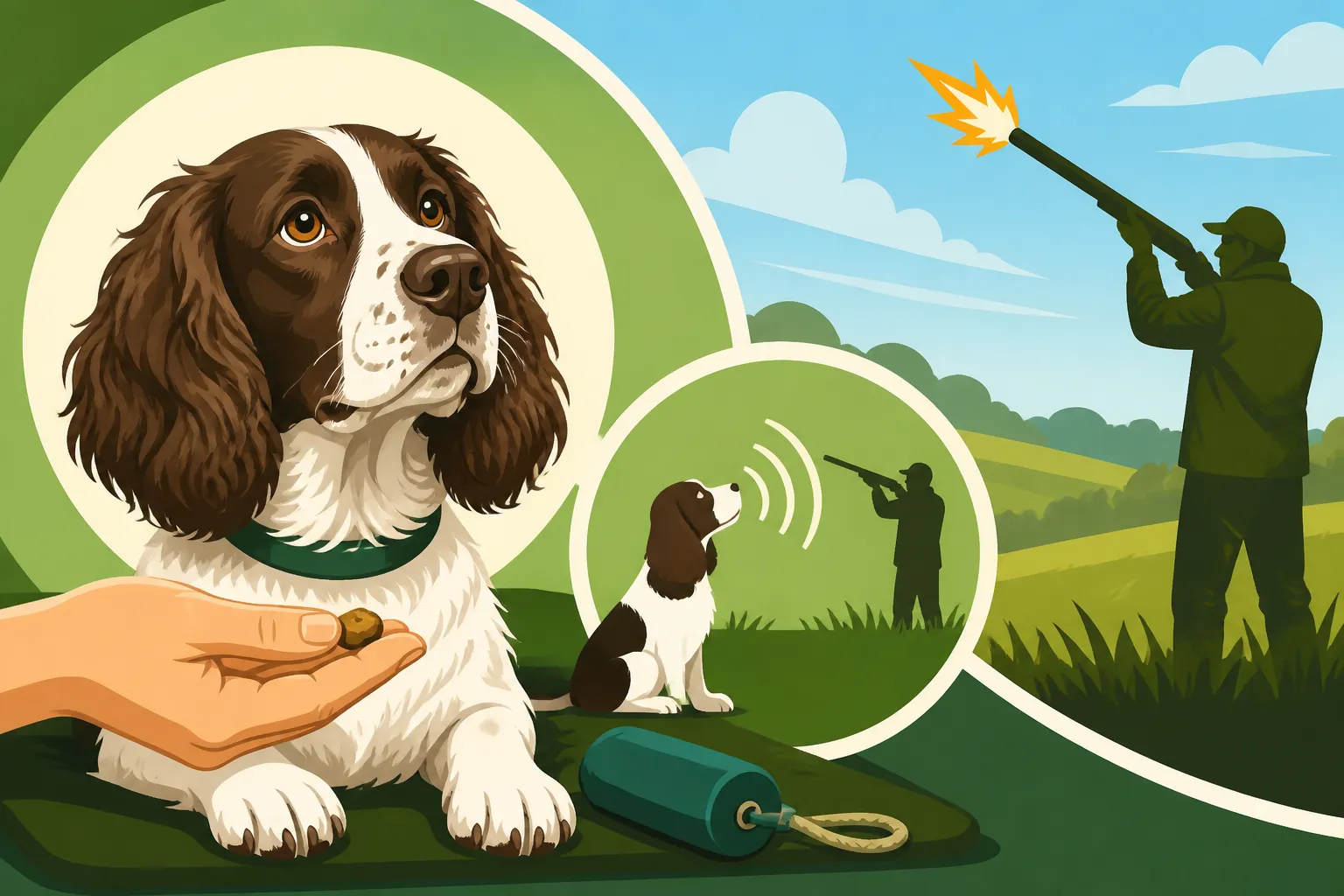
Have a helper take the cap gun or starter pistol far away – at least 100-200 yards, or even further if needed – while you engage your Springer Spaniel in a fun activity like fetching a bumper or playing tug. As your dog is retrieving, the helper fires one shot. Watch your dog's reaction. Did they flinch? Did they ignore it? Did they look towards the sound with curiosity? The ideal reaction is curiosity or indifference. If they show any fear, you’ve gone too fast and need to increase the distance or reduce the volume even further.
Maintaining Positive Reinforcement and Observation
Every time the sound occurs, it must be immediately followed by a positive experience. If your dog hears a distant pop and continues retrieving, praise them lavishly and throw another bumper. If they seem curious, call them to you with enthusiasm and give a high-value treat. The goal is to build an unshakeable connection: "Bang = good things happen!"
Never force your dog closer to the sound or scold them if they react negatively. Your job is to make this a choice for them. If they flinch or try to run, stop the session immediately. End on a positive note, even if it means going back to just playing without any sound. Pushing a fearful dog will only deepen their fear and create a truly gun-shy animal. Observing their body language – tail tucked, ears back, cowering, wide eyes – is paramount. This goes for all training, as a Springer Spaniel learns quickly, but can also pick up negative associations just as fast. How Fast a Springer Spaniel Learns directly impacts how quickly these experiences shape their behavior.
Increasing Volume and Proximity Gradually
Once your Springer Spaniel is consistently showing no negative reaction to the distant, low-volume sound, you can begin to very, very slowly either decrease the distance or increase the volume of the sound. This should happen over several sessions, not all at once. Perhaps your helper moves 20 yards closer, or you switch from a cap gun to a starter pistol while maintaining the original distance.
Here's a sample progression, but always adjust based on your dog's individual response:
| Phase | Sound Source | Distance (Approximate) | Dog's Activity | Desired Reaction |
|---|---|---|---|---|
| 1. Baseline | Cap Gun (single pop) | 150-200+ yards | Playing, eating, focused on you | Indifferent/Curious |
| 2. Closer | Cap Gun | 100-150 yards | Playing fetch, short retrieves | Engaged, unbothered |
| 3. Steadier | Starter Pistol | 150-200 yards | Retrieving a bumper, short obedience drills | Focused on task |
| 4. Louder | Starter Pistol | 75-100 yards | Retrieving with enthusiasm, rewarded | Enthusiastic, no fear |
| 5. Nearer | .22 Blank Pistol | 50-75 yards | Active field work, rewarded by retrieves | Drives towards fall |
| 6. Integration | Shotgun (distance) | 100-150 yards | Retrieving, steadying to shot | Remains steady/eager |
Always ensure your helper is positioned downwind if possible, so the sound travels directly without being distorted by wind. Keep sessions short and positive, ending before your dog gets bored or tired. If you feel stuck or unsure, consider investing in professional gundog training; understanding What Gundog Training Costs a Springer Spaniel Owner might help you budget for expert guidance.
Common Pitfalls and Advanced Tips
Even with the best intentions, introducing gunfire can present challenges. Knowing what to look for and how to react can make all the difference.
Recognizing and Addressing Fear
It’s heartbreaking to see a dog scared, and a gun-shy Springer Spaniel is not only unable to participate in field sports but can also be fearful of other loud noises in everyday life. If your dog shows any of the following signs of fear:
- Cowering, tail tucked between legs
- Trembling or shaking
- Panting excessively when not hot or exercising
- Lip licking or yawning (displacement behaviors)
- Trying to escape or hide
- Refusing to eat treats or engage in play
- Urinating or defecating
- Barking or lunging out of fear
… you have pushed too far. Stop the session immediately. Do not console or coddle them excessively, as this can inadvertently reinforce the fear. Instead, calmly remove them from the situation, let them decompress, and then go back to a much lower level of sound or greater distance in the next session. If the fear is persistent or severe, do not hesitate to seek help from a professional positive reinforcement trainer or a veterinary behaviorist. They can provide tailored strategies and, if necessary, discuss Whether Medication Helps a Springer Spaniel's Separation Anxiety, although this is a different context, the principle of professional intervention for severe anxiety applies. Ignoring these signs is how a dog becomes definitively Whether a Springer Spaniel Is Gun Shy.
The Importance of a Controlled Environment
When introducing gunfire, control is your best friend. Choose locations where you can manage distractions and ensure safety. This means:
- No unexpected noises: Avoid areas with heavy traffic, other people shooting, or sudden loud construction.
- Secure boundaries: Ensure your dog cannot bolt and escape if startled. A long line can be a valuable tool in these early stages, allowing freedom of movement while maintaining control. Whether a Long Line Suits a Springer Spaniel is a relevant consideration here.
- Familiarity: Start in places your dog knows and feels comfortable, gradually moving to new, safe areas as their confidence grows.
Never surprise your dog with a shot. Always keep them engaged, preferably retrieving or focused on you. The idea is to have the shot occur as part of a positive, predictable sequence, not as a random, startling event.
Moving to Live Fire and Field Scenarios
Once your Springer Spaniel is completely comfortable with the sound of a blank pistol or .22 at a reasonable distance, you can transition to actual shotgun fire, again starting at a significant distance. The goal is to eventually have them work happily and confidently near the gun.
For field work, the next step involves teaching your dog to be "steady to shot" – meaning they don't break (run out to retrieve) until given a command. This is crucial for safety and effective hunting. The sound of the shot should become a signal that a bird is down, and their job is about to begin, but they wait for your release. This is where topics like Whether a Springer Spaniel Should Be Steadied to Shot become vital parts of their training. They should be focused on the fall of the bird, not the sound of the gun. This advanced training also incorporates teaching them Teaching a Springer Spaniel to Stay in Range, ensuring they work cooperatively with the hunter.
Remember, every dog is an individual. What works quickly for one Springer Spaniel might take longer for another. Patience, consistency, and a deep understanding of your dog's temperament are your greatest assets in making them a confident, enthusiastic partner in the field.
Disclaimer
This article is for general informational purposes only and does not constitute professional advice. Laws, prices and regulations vary by location and change over time. Consult a qualified professional for guidance on your specific situation.