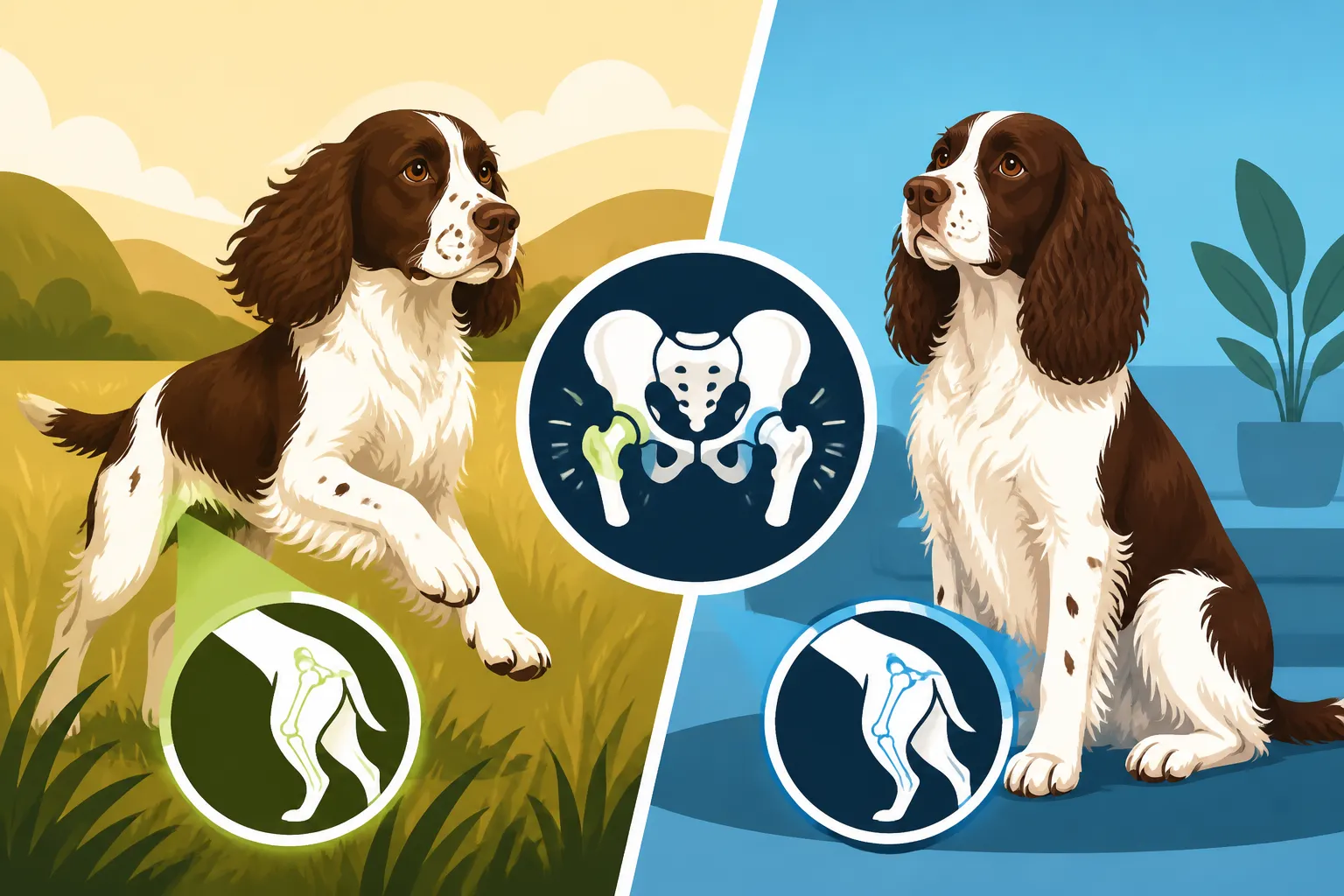
Whether Field Bred Springer Spaniels Have Better Hips
It’s a frustrating reality for any dog owner: you want to do everything right, especially when it comes to bringing a healthy puppy into your home. With English Springer Spaniels, a common concern that often pops up is hip dysplasia, and you might hear whispers that field-bred lines are inherently healthier in this regard than their show-bred cousins. This guide will dive deep into that question, separating fact from anecdote to help you understand hip health across both types of Springers and make informed decisions for your furry family member.
Understanding Hip Dysplasia in Springer Spaniels
Hip dysplasia is one of those phrases that can send a shiver down any dog owner's spine, and for good reason. It’s a complex, debilitating condition that affects the hip joints, causing everything from mild discomfort to severe lameness. For a breed as active and joyful as the Springer Spaniel, healthy hips are absolutely crucial to their quality of life. Without them, their ability to run, jump, and "spring" through the field or park is severely compromised, and that's heartbreaking for everyone involved.
What Exactly is Hip Dysplasia?
At its core, hip dysplasia is a malformation of the hip joint. Instead of the femur (thigh bone) fitting snugly into the acetabulum (hip socket), there's a looseness or laxity. Over time, this poor fit causes the bones to rub and grind, leading to degenerative joint disease, bone spurs, and ultimately, severe arthritis. Imagine trying to run with a loose ball-and-socket joint – it’s painful, inefficient, and only gets worse with constant friction. This isn’t something that happens overnight; it’s a progressive condition that often starts with subtle changes in a growing puppy. You might not see outward signs until much later, which is why early screening is so vital.
Genetic Factors and Inherited Risk
While environmental factors like diet, exercise, and rapid growth can influence the expression of hip dysplasia, the underlying predisposition is largely genetic. It’s not a simple dominant or recessive gene; rather, it’s a polygenic trait, meaning multiple genes are involved. This complexity makes breeding out hip dysplasia a significant challenge. Even parents with excellent hip scores can, theoretically, produce offspring with dysplasia if they carry the wrong combination of genes. This is why a breeder's long-term commitment to health testing and selecting for multiple generations of sound hips is so much more important than just looking at the parents' scores. When you're looking into adding a Springer to your family, understanding The DNA Test That Should Precede Every Springer Spaniel Purchase can provide a broader picture of health, but specifically for hips, phenotypic evaluation like X-rays are paramount.
Signs and Symptoms to Watch For
Recognizing hip dysplasia early can make a big difference in managing the condition and maintaining your dog's comfort. Some of the common signs include reluctance to run, jump, or climb stairs, a "bunny hopping" gait (where both back legs move together), limping, stiffness, and difficulty getting up after resting. You might notice a decrease in activity level or an unusual swaying walk. In puppies, these signs can be very subtle, sometimes just a slight hesitation or an unusual puppy clumsiness. For older dogs, it can manifest as Arthritis in an Older Springer Spaniel, making their once active lives a painful struggle. Always keep an eye on how your dog moves, especially after exercise or prolonged rest.
Comparing Hip Health: Field-Bred vs. Show-Bred Springer Spaniels
The English Springer Spaniel is fascinating because it's essentially two distinct types — field-bred and show-bred — existing under one breed standard, a divide that has grown over The Seventy Year Gene Pool Divide Inside One Springer Spaniel Breed. This separation often leads to discussions about various health differences, including hip quality. Many people believe that field-bred Springers, due to their emphasis on athleticism and working ability, naturally possess better hips. But is this perception truly reflected in the data?
The "Field vs. Show" Divide and Physical Differences
Field-bred Springer Spaniels are bred primarily for their working prowess in the field – their drive, scenting ability, biddability, and endurance. They tend to be lighter-boned, with shorter coats, and a more streamlined physique, built for agile movement and stamina during long days of hunting. Their appearance is secondary to their function.
Show-bred Springer Spaniels, on the other hand, are bred to conform to a specific breed standard set by kennel clubs, focusing on appearance, structure, and gait as judged in the show ring. They often have heavier bone, fuller coats, and a somewhat different conformation, which some argue might put more stress on their joints. The emphasis is on elegant movement, but sometimes the sheer mass and heavier set can be a factor in joint health. The question then becomes, do these physical and breeding priorities translate into measurable differences in hip health?
Historical Breeding Practices and Selection Pressures
Historically, working dogs were culled or simply didn't thrive if they couldn't perform their duties, creating a natural selection pressure for sound structure, including healthy hips. A dog with bad hips couldn't quarter a field all day or retrieve game effectively. This "survival of the fittest" mentality implicitly favored dogs with functional soundness.
In the show ring, while soundness is also a component of good conformation, the pressures can sometimes diverge. Breeders might prioritize certain aesthetic traits that, inadvertently, don't always align with optimal functional joint health. However, it's crucial to understand that reputable breeders in both camps are increasingly vigilant about health clearances. Many show breeders are just as committed to producing healthy dogs as field breeders, recognizing that a dog with poor health will not truly embody the breed standard or lead a happy life. The generalization that one "type" is inherently better isn't always fair or accurate.
OFA and PennHIP Data: What the Numbers Say
When we talk about objective hip health, we often look at evaluations from organizations like the Orthopedic Foundation for Animals (OFA) or PennHIP. These organizations provide standardized methods for assessing hip joint quality through X-rays. While specific public aggregate data breaking down hip scores by "field" versus "show" type across the entire Springer Spaniel population isn't always readily available or easy to interpret due to various registration methods and self-reporting, we can make some inferences based on breed-wide statistics.
The OFA data for English Springer Spaniels, when viewed broadly, shows that a significant percentage of the breed is dysplastic or borderline. This indicates that hip dysplasia remains a concern for the breed as a whole, regardless of whether a specific line leans more towards field or show type.
What we often find is that breeders who consistently test their dogs, irrespective of their chosen "type," tend to produce healthier offspring. The discipline of regular health clearances, and the commitment to only breeding dogs with acceptable hip scores, is a far more reliable indicator of hip health than the "field-bred" or "show-bred" label alone.
Here's a simplified look at what responsible breeders aim for in hip evaluations:
| Trait/System | Goal for Breeding Stock (OFA) | Goal for Breeding Stock (PennHIP) | Implications for Buyer |
|---|---|---|---|
| Hip Joint Quality | Excellent, Good, or Fair | DI (Distraction Index) below breed average, preferably 0.3-0.5 or lower | Indication of genetic predisposition to healthy hips. |
| Breeder Practice | X-ray dogs at 24+ months, register results with OFA | X-ray dogs at 16+ weeks, register results with PennHIP | Breeder is proactive in screening; provides transparency. |
| Genetic Diversity | Not directly measured by hip scores, but good practice | Not directly measured by hip scores, but good practice | Responsible breeders consider genetic diversity alongside hip health. |
| "Field" vs. "Show" | Good scores are paramount, regardless of type | Good scores are paramount, regardless of type | Focus on individual dog's scores, not just type. |
This table highlights that reputable breeders, whether their focus is field or show, use these tools to make informed breeding decisions. The key takeaway is to prioritize breeders who perform and share these results, rather than relying on broad generalizations about lines. You should always ask for documentation of The Health Tests Both Springer Spaniel Parents Should Have, including hip evaluations.
Navigating Responsible Breeding and Health Clearances
When you’re looking for a Springer Spaniel puppy, it's easy to get caught up in the excitement, but taking the time to understand breeding practices and health clearances is crucial. This is where you can truly influence the likelihood of bringing home a puppy with sound hips, far more so than simply choosing a "field" or "show" type. The term "responsible breeder" is thrown around a lot, but it really boils down to transparency, dedication, and a deep understanding of genetics and health in their specific lines.
Why Clearances Matter More Than "Type" Alone
It's tempting to think that a field-bred dog, by virtue of its working lineage, is automatically healthier. While field breeders often prioritize functional soundness, this doesn't automatically mean every field-bred dog has perfect hips, nor does every show-bred dog have bad ones. The truth is, both types of Springer Spaniels can suffer from hip dysplasia. What truly matters is the individual breeder's commitment to health testing and making informed breeding choices. A breeder who routinely screens their breeding stock for hip dysplasia, as well as other common Springer Spaniel ailments like eye diseases and genetic disorders, is a much better bet than one who relies solely on their dogs' "type" or reputation. For example, Whether an Untested Springer Spaniel Litter Is Worth Buying is a question that highlights the importance of these clearances. Skipping them is a huge red flag.
What to Ask a Breeder
When speaking with a prospective breeder, don't be shy about asking direct questions about hip health. A good breeder will welcome your questions and be eager to provide documentation. Here's what you should inquire about:
- Hip Clearance Documentation: Ask to see the OFA or PennHIP certificates for both parents of the litter. Don't just take their word for it. OFA certificates are public records, often searchable online.
- Generational Clearances: Inquire about the hip health of the parents' parents and even grandparents. A strong history of good hips across generations is a much more powerful indicator than just two clear parents.
- Breeding Philosophy: Ask how they select their breeding stock, specifically regarding hip health. Do they breed only "Excellent" or "Good" rated dogs? Do they consider PennHIP distraction index scores?
- Litter Screening: While hips aren't typically X-rayed until 24 months for OFA final certification, some breeders might perform preliminary X-rays on puppies if concerns arise, though this is less common for general screening.
- Health Guarantee: Understand their health guarantee thoroughly. Does it cover hip dysplasia? For how long? What are the terms if a puppy develops the condition?
A responsible breeder will not just breed two healthy-looking dogs; they will delve into the pedigree, understanding potential genetic risks and striving to improve the breed's health with each generation. They should also be able to explain What OFA Hip Certification Costs a Springer Spaniel Breeder as part of their investment in producing healthy puppies.
Understanding Hip Scoring Systems
There are a few primary systems used worldwide to evaluate canine hips, and understanding them can help you interpret a breeder's documentation:
- Orthopedic Foundation for Animals (OFA): This is the most common system in the United States. Dogs are X-rayed at 24 months or older, and radiologists evaluate the films, assigning a rating of Excellent, Good, Fair (all considered passing for breeding), Borderline, or Dysplastic (Mild, Moderate, Severe). Breeders aim for Excellent, Good, or Fair.
- PennHIP: This system, developed at the University of Pennsylvania, can be done as early as 16 weeks of age and measures hip laxity (looseness), which is a precursor to hip dysplasia. It provides a Distraction Index (DI) score, ranging from 0 to 1, where lower numbers indicate tighter hips and a lower risk of dysplasia. A dog with a DI score below the breed average is generally considered desirable for breeding. PennHIP is often seen as a more proactive screening tool because it can be done earlier and provides a quantitative measure of laxity.
- British Veterinary Association (BVA) / Kennel Club (KC) Hip Score: Common in the UK, this system involves scoring nine different features of each hip, with a total score ranging from 0 to 106 (0 being perfect, 106 being worst). Breeders aim for a score below the breed's median score.
Each system has its merits, but the most important thing is that some recognized, objective hip evaluation has been done on the breeding pair, and the results are favorable. Don't fall for "vet checked" as a substitute for official hip scores. A routine vet check isn't the same as a specialized hip evaluation designed for breeding purposes.
Supporting Your Springer Spaniel's Hip Health
Even with the most diligently bred puppy, supporting their hip health throughout their life is vital. Genetics load the gun, but environment pulls the trigger. Your role as an owner significantly impacts how well your Springer Spaniel's hips hold up, regardless of whether they are field-bred or show-bred.
Early Life Care and Prevention
The first year of a Springer Spaniel's life is critical for joint development. Rapid growth can exacerbate any underlying genetic predisposition to hip dysplasia.
- Controlled Exercise: Avoid excessive, high-impact exercise in puppies, especially jumping and long runs on hard surfaces. Let them play, but don't force them into strenuous activities before their growth plates have closed (around 12-18 months). Over-exercising a young Springer can put undue stress on developing joints.
- Appropriate Nutrition: Feed a high-quality, large-breed puppy food formulated for slow, steady growth. Avoid overfeeding, which leads to rapid weight gain and can put extra stress on immature joints. Consult your vet on the best diet for your growing puppy to ensure they get the right balance of nutrients without excess calories.
- Safe Environments: Ensure puppies have good traction on floors to prevent slipping and splaying of legs, which can stress hips. Consider puppy playpens on carpeted areas or using rugs on slippery surfaces.
These seemingly small choices in their formative months can have lasting effects on their joint health.
Lifestyle Management and Exercise for All Ages
As your Springer Spaniel matures, maintaining a healthy lifestyle is key.
- Consistent, Moderate Exercise: Regular, appropriate exercise helps maintain muscle mass around the hips, providing natural support and stability. This is especially true for field-bred Springers who need a good outlet for their energy, but even show-bred companions thrive on activity. Hiking, swimming, and retrieving are excellent options. Swimming is particularly beneficial as it's non-weight bearing, strengthening muscles without joint impact.
- Weight Management: Keeping your Springer Spaniel at a lean, healthy weight is perhaps the single most impactful thing you can do for their joint health. Excess weight puts tremendous strain on hips and can accelerate the progression of arthritis. Talk to your vet about what a healthy body condition score looks like for your dog and adjust food intake accordingly. It's often debated Whether a Springer Spaniel's Hip Score Predicts Arthritis, but we know for sure that extra weight certainly contributes to it.
- Warm-ups and Cool-downs: Just like human athletes, dogs benefit from warming up before strenuous activity and cooling down afterward. A short walk before a retrieving session can prepare their muscles and joints.
Nutritional Support and Weight Management
Beyond their regular diet, certain supplements can be beneficial, especially as your Springer ages or if they show early signs of joint discomfort.
- Joint Supplements: Glucosamine, chondroitin, MSM, and omega-3 fatty acids are popular choices for joint support. Brands like Healthy Paws often cover the prescription medications for these conditions, but preventative supplements are often an out-of-pocket expense. Discuss with your veterinarian which Joint Supplements for a Springer Spaniel might be appropriate for your individual dog.
- Anti-inflammatory Diets: Some dogs benefit from diets rich in anti-inflammatory ingredients. This might involve special veterinary diets or incorporating fresh foods known for their anti-inflammatory properties. Always discuss dietary changes with your vet to ensure nutritional balance.
Veterinary Care and Treatment Options
Regular veterinary check-ups are essential for monitoring joint health. Your vet can perform physical examinations, discuss any changes you've noticed, and recommend further diagnostics if needed.
- Early Diagnosis: If hip dysplasia is suspected, your vet may recommend X-rays to get a clear picture of the joint condition. Early diagnosis allows for more proactive management strategies.
- Treatment Pathways: Depending on the severity, treatment options can range from conservative management (pain medication, anti-inflammatories, physical therapy) to surgical interventions. Surgical options include Femoral Head Ostectomy (FHO) or Total Hip Replacement (THR) for severe cases.
- Pain Management: For dogs with developing arthritis, various medications (NSAIDs), injections (such as Librela or Adequan), and alternative therapies (acupuncture, cold laser therapy) can help manage pain and improve mobility. Investing in pet insurance from providers like Healthy Paws can be a real lifesaver here, as chronic conditions like hip dysplasia often require ongoing medication, supplements, and potentially expensive procedures, all of which add up quickly over a dog's lifespan. Healthy Paws can help ease the financial burden of these long-term care needs, allowing you to focus on your Springer's comfort and well-being. Knowing What Changes in an Old Springer Spaniel's Care often includes planning for these kinds of health challenges.
The distinction between field-bred and show-bred Springer Spaniels for hip health is less about an inherent superiority of one over the other, and far more about the diligence and responsible practices of individual breeders. Your best bet for a Springer Spaniel with sound hips, regardless of whether you desire a working companion or a show ring star, is to choose a breeder who prioritizes comprehensive health testing, transparency, and generations of healthy lineage. Then, combine that excellent start with a lifetime of dedicated care, thoughtful exercise, and proper nutrition, and you’ll give your beloved Springer the best chance at a long, active, and pain-free life.
Disclaimer
This article is for general informational purposes only and does not constitute professional advice. Laws, prices and regulations vary by location and change over time. Consult a qualified professional for guidance on your specific situation.