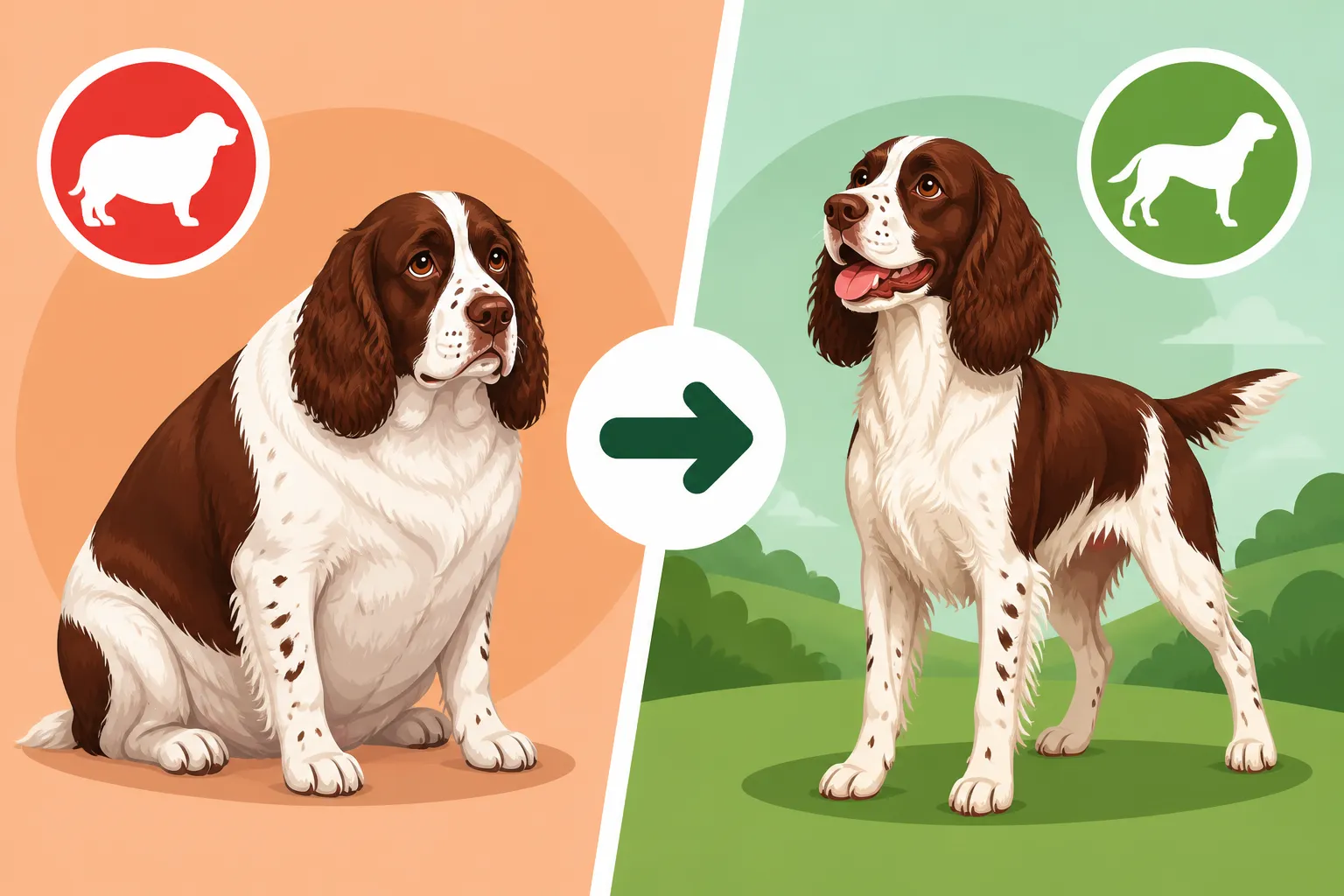
Taking Weight Off a Springer Spaniel That Is Not Working
It's incredibly frustrating when your active, energetic English Springer Spaniel starts to carry a bit too much weight, especially if they're not actively working or getting the intense exercise they once did. You love your dog, you want them to be healthy, but those extra pounds can creep on surprisingly fast, leading to concerns about their joints, energy levels, and overall well-being. This guide is here to walk you through understanding why your Springer might be gaining weight and, more importantly, how to safely and effectively help them shed those pounds and get back to a healthier, happier self.
Understanding Why Your Springer Spaniel Gained Weight
It's easy to feel a little guilty when you notice your Springer getting a bit round in the middle, but please know you're not alone. Weight gain in non-working or less active dogs is a super common issue, and with Springer Spaniels, it can be particularly tricky because they're bred with such incredible drive and a hearty appetite! Their bodies are literally designed for movement and burning calories, so when that changes, the pounds can pile on.
The Energy Equation: Activity Levels vs. Calorie Intake
Think about it: a Springer Spaniel, whether field or show bred, carries generations of instinct to be active. They were originally bred to "spring" game, to work tirelessly for hours in the field, flushing birds and retrieving. That kind of work burns a phenomenal amount of calories. So, when your beloved companion transitions from a life of intense activity – perhaps hunting season is over, or they're retired from field trials, or maybe they just didn't get a working 'job' in the first place – their calorie requirements drop dramatically.
The problem often arises because their appetite doesn't always get the memo! You might be feeding them the same amount of food they ate when they were younger, more active, or even the same amount that a working dog of their size needs. Their bodies, however, are now storing those excess calories as fat. It's like trying to fuel a high-performance sports car with regular gas – you might get away with it for a bit, but eventually, things will slow down, and there could be long-term issues. We often see pet Springer Spaniels who are loved to bits but simply don't have the outlet for the energy they consume. They might get a good walk or two a day, which is great, but it's often not enough to balance the higher calorie diets formulated for active breeds.
Sneaky Calories: Treats, Table Scraps, and Training Rewards
This is where a lot of us fall short, myself included! We adore our dogs, and giving them treats feels like a natural way to show affection. A little biscuit here, a chew stick there, a piece of cheese when they look at you with those pleading eyes during dinner prep – it all adds up faster than you'd believe. What might seem like a small indulgence to us can represent a significant percentage of their daily caloric intake, especially for a dog that's no longer highly active.
Imagine your Springer gets three small training treats during a quick obedience session, a dental chew after breakfast, and a bite of toast crust from your plate. Each of those items, individually, might not seem like much. But if you were to look at the calorie count for each, you'd be shocked. Many commercial dog treats are surprisingly high in calories, and human food often contains fats and sugars that are completely unnecessary for your dog and contribute directly to weight gain. This isn't about being mean; it's about being mindful. Every single calorie counts when you're trying to manage a dog's weight, and these "sneaky calories" are often the biggest culprits.
Age and Metabolism: The Slowing Down Factor
Just like humans, as our canine companions age, their metabolism tends to slow down. An older Springer Spaniel isn't going to burn calories at the same rate they did as a rambunctious two-year-old. They might be less inclined to chase a ball for extended periods, or their walks might become shorter and more sedate. This natural decline in activity, coupled with a slower metabolism, creates a perfect storm for weight gain if their diet isn't adjusted accordingly.
It's a tough pill to swallow when you realize your once tireless companion is starting to show their age, but acknowledging this physiological change is crucial for their health. The Age a Springer Spaniel Counts as a Senior is typically around eight or nine years old, and this is often when you might notice them start to slow down. Continuing to feed them a diet designed for a younger, more active dog will almost certainly lead to excess weight. Their bodies simply can't process it in the same way anymore. Ignoring this aspect means they'll carry extra weight on aging joints, potentially exacerbating conditions like arthritis and reducing their overall quality of life.
Crafting a Realistic Weight Loss Plan for Your Springer
Okay, so we understand why your Springer might have packed on a few pounds. Now, let's talk about the action plan. It's not about quick fixes or drastic changes, but rather a consistent, thoughtful approach that prioritizes their health and happiness. Remember, slow and steady wins the race when it comes to canine weight loss.
Re-evaluating the Diet: Quantity and Quality
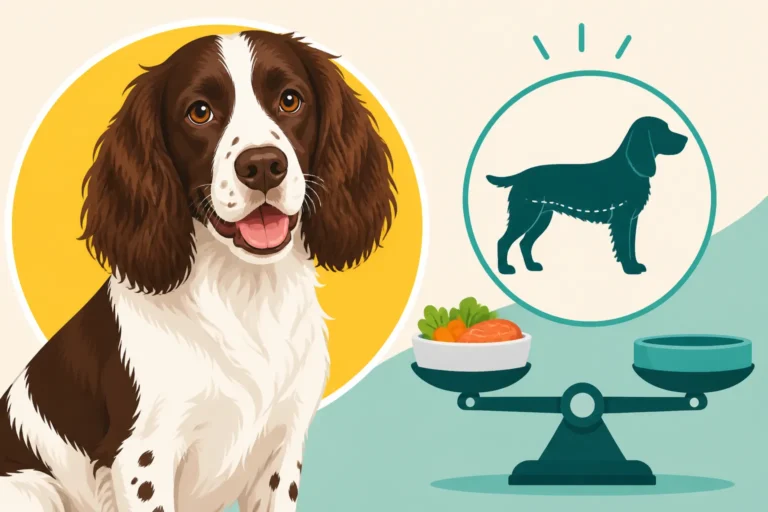
This is probably the most impactful change you can make. The food bowl is often the biggest lever we have. Your first step should be an honest assessment of what and how much you're currently feeding.
Start by consulting your veterinarian. They can help you determine your Springer Spaniel's ideal weight, which is crucial. You don't want to aim for an arbitrary number, but rather a healthy body condition score. Once you have that target weight, you can work backward to calculate appropriate calorie intake. Many dog food brands provide feeding guidelines based on ideal adult weight, not current weight, so be careful here! If your vet recommends a specific caloric intake, use that as your baseline.
Next, consider the type of food. Many excellent dog food companies offer "weight management" or "light" formulas. These foods are typically lower in calories and fat but higher in fiber, which helps your dog feel full without overeating. Look for brands that prioritize whole ingredients and don't rely heavily on fillers. You'll find a wide variety of options available on retailers like Chewy or Amazon, making it easy to compare ingredients and nutritional information. Some owners also consider fresh food options, such as those offered by Ollie, as they can be precisely portioned and often contain fewer processed ingredients. Transitioning slowly to a new food over a week or two will help prevent stomach upset.
For example, if your 50-pound Springer should ideally be 45 pounds, you'd calculate their food portions based on the calorie needs for a 45-pound dog. This might mean significantly reducing their current intake. It's vital to measure their food precisely with a kitchen scale or a dedicated measuring cup, rather than just eyeballing it. A typical mistake is to simply scoop what 'looks right,' which can vary wildly. Don't be afraid to read How Much a Pet Springer Spaniel Should Eat to get a clearer picture of appropriate portions.
Strategic Exercise: Low Impact, High Consistency
While your Springer might not be working sheep or flushing pheasants daily, they still need regular physical activity. The key here is "strategic" and "consistent," especially if they have joint issues or are older. Intense, sporadic exercise can do more harm than good.
Focus on activities that are gentle on their joints but still get their heart rate up. Longer, brisk leash walks are fantastic. Aim for at least two good walks a day, gradually increasing the duration and pace as your dog's fitness improves. Instead of one quick jaunt around the block, try a solid 30-45 minute walk. If you have access to safe, calm water, swimming is an excellent low-impact exercise that works all their muscles without stressing joints. Just be mindful of their ears – Whether a Springer Spaniel's Ears Should Be Checked Weekly is a good read, as their drop ears are prone to infections, especially after swimming. Always dry their ears thoroughly after water activities.
Short, supervised sessions of fetch in the yard can also be beneficial, but don't overdo it. Stop before they're completely exhausted. The goal is consistent, daily movement, not Olympic-level training. Even a slow, meandering walk where they can sniff and explore can be great mental stimulation and contribute to calorie burning. If your Springer is a show bred type, remember that How Much Exercise a Show Bred Springer Spaniel Needs is still significant, even if less intense than their field-bred cousins. Think about incorporating activities like short hikes on even terrain or even indoor games during bad weather. Engaging their minds with scent work or puzzle toys can also burn energy and keep them stimulated.
Smart Snacking: Healthier Alternatives and Controlled Portions
Those "sneaky calories" we talked about? We're going to tackle them head-on. Treats don't have to disappear entirely, but they need to be re-thought.
First, consider what you're using for training rewards. Instead of high-calorie store-bought treats, use a portion of your dog's daily kibble allowance. If you're doing a training session, simply set aside a handful of their regular food for that purpose. This way, you're not adding extra calories, just redistributing them. This is an excellent way to continue training, even helping them learn new whistle cues or Whether a Springer Spaniel Learns Hand Signals, without derailing their diet.
Second, embrace healthy, low-calorie alternatives. Many vegetables make fantastic dog treats. Carrots, green beans (plain, unsalted), cucumber slices, and small pieces of apple (without seeds) are often enthusiastically accepted by Springer Spaniels. Always introduce new foods slowly and in small quantities to avoid digestive upset, and ensure they are safe for dogs. A small baby carrot has significantly fewer calories than a commercial dog biscuit.
Here’s a quick comparison of typical treats:
| Treat Type | Example | Estimated Calories (per item/small portion) | Notes |
|---|---|---|---|
| Commercial Dog Biscuits | Milk-Bone Original Small | 20-30 | Varies widely by brand and size |
| Soft Chewy Treats | Training Bites | 5-15 | Often palatable but can add up quickly |
| Dental Chews | Greenies Small | 25-70+ | Can be a significant calorie source; check label |
| Cheese Cube (1/2 inch) | Cheddar | 30-50 | High in fat and calories, use sparingly |
| Peanut Butter (1 tbsp) | Jif Creamy | ~95 | Very high calorie, avoid for weight loss |
| Plain Cooked Chicken | 1 cubic inch | ~15-20 | Good protein, low fat |
| Baby Carrot | 1 whole | ~4 | Crunchy, low calorie |
| Green Bean (cooked) | 1 bean | ~1 | Very low calorie, good fiber |
| Apple Slice | Small wedge | ~10 | Natural sugars, use in moderation |
Always measure or weigh even these healthier options. It's about conscious choices, not just cutting treats out entirely.
Overcoming Common Weight Loss Challenges
Even with the best intentions, helping your Springer Spaniel lose weight isn't always a straightforward journey. You're bound to hit a few bumps in the road, and that's perfectly normal. The key is to anticipate these challenges and have strategies ready.
The Begging Brigade: Managing a Food-Motivated Springer
Springer Spaniels are notoriously good at looking pitiful. They've perfected the art of the soulful stare, the gentle paw nudge, and the whimper that suggests they're absolutely starving, even if they just ate. This can be incredibly hard to resist, especially for family members who aren't as clued into the weight loss plan.
Consistency is your biggest weapon here. Everyone in the household needs to be on the same page. If one person gives in to the begging, it undermines all the hard work everyone else is doing. Educate your family about the health implications of excess weight for your Springer. Instead of giving in, try redirecting their attention. When they start begging, engage them in a short play session, give them a designated chew toy, or practice a command they know for praise rather than a treat.
Also, avoid leaving food unsupervised on counters or tables. Springers are clever and opportunistic, and a quick snatch of unattended food is a calorie bomb you didn't account for. Feed them their meals in a quiet area, away from the hustle and bustle, and pick up any uneaten food after 15-20 minutes to discourage grazing.
Plateauing and Patience: When Progress Stalls
You've been diligent, your Springer has been losing weight steadily, and then… nothing. The scale doesn't budge for a week or two, or even longer. This is known as a plateau, and it's incredibly common in both human and canine weight loss. It can be disheartening and make you feel like giving up, but don't!
A plateau usually means your dog's metabolism has adjusted to the lower calorie intake, or that they've hit a natural resting point. It doesn't mean your plan isn't working, it just means you might need to tweak it. This is a good time to re-evaluate:
- Are you still being precise with food measurements? Even a slight drift can make a difference.
- Have activity levels genuinely increased? Maybe your walks have become routine and your dog is no longer being challenged.
- Are there any hidden calories? Double-check those "healthy" treats, or any accidental table scraps.
- Is there an underlying medical issue? While less common, sometimes a medical condition like hypothyroidism can make weight loss difficult. If you're truly stuck, a visit to your vet for a check-up is always a good idea. Setting money aside for these Setting Money Aside for a Springer Spaniel's Vet Bills is a wise habit to ensure you can address any health concerns proactively.
Patience is paramount. Weight loss is a marathon, not a sprint. Celebrate small victories, like increased energy or better mobility, even if the scale isn't moving as fast as you'd like.
Monitoring and Adjusting: The Long Game
Helping your Springer Spaniel achieve and maintain a healthy weight is a continuous process, not a one-and-done event. Regular monitoring and willingness to adjust your plan are essential for long-term success.
Aim to weigh your Springer every week or two, preferably at the same time of day. Keep a simple journal or use an app to track their weight, food intake, and exercise. This data will be invaluable in identifying what's working and what needs to change.
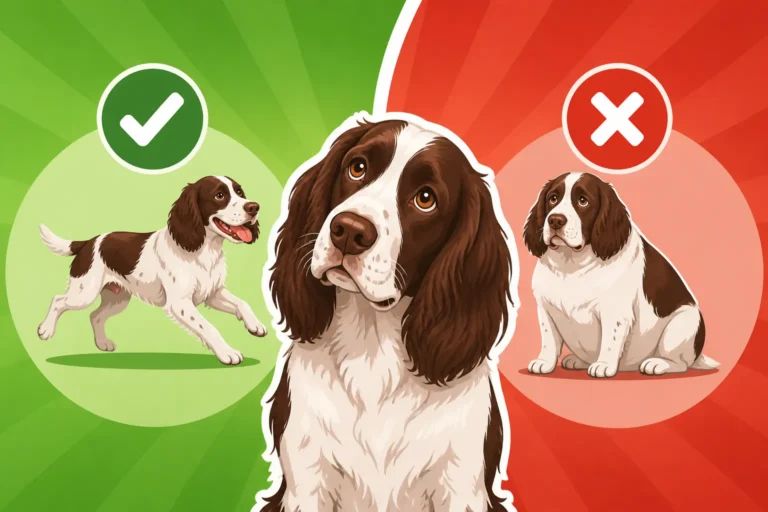
Beyond the scale, learn to assess their body condition. You should be able to easily feel their ribs under a thin layer of fat without pressing hard. From above, they should have a discernible "waist" where their body tapers in after the rib cage. When looking from the side, their belly should tuck up slightly, not hang low. It can be tricky with a Springer's feathered coat, but Feeling for a Springer Spaniel's Ribs Under Feathering is a skill worth developing. If you can't easily feel their ribs, or if their waist is absent, they likely still have weight to lose.
As they lose weight and their activity levels improve, you might find you need to adjust their food intake slightly to maintain their ideal weight. The goal isn't to keep them on a super restrictive diet forever, but to find the right balance of calories and activity that keeps them lean and healthy for years to come. This ongoing commitment will ensure your beloved Springer Spaniel enjoys a long, active, and happy life by your side.
Disclaimer
This article is for general informational purposes only and does not constitute professional advice. Laws, prices and regulations vary by location and change over time. Consult a qualified professional for guidance on your specific situation.