Whether a Springer Spaniel Can Have Light Eyes
A Springer Spaniel with pale-looking eyes can prompt an understandable worry: is that just a harmless shade, a puppy’s changing eye color, or a sign of a health problem? This guide explains what eye colors are typical, when light eyes may be unusual, how to tell iris color from cloudiness, and when it is worth booking a veterinary eye check.
What eye color is typical in an English Springer Spaniel
Breed standards favor dark eyes
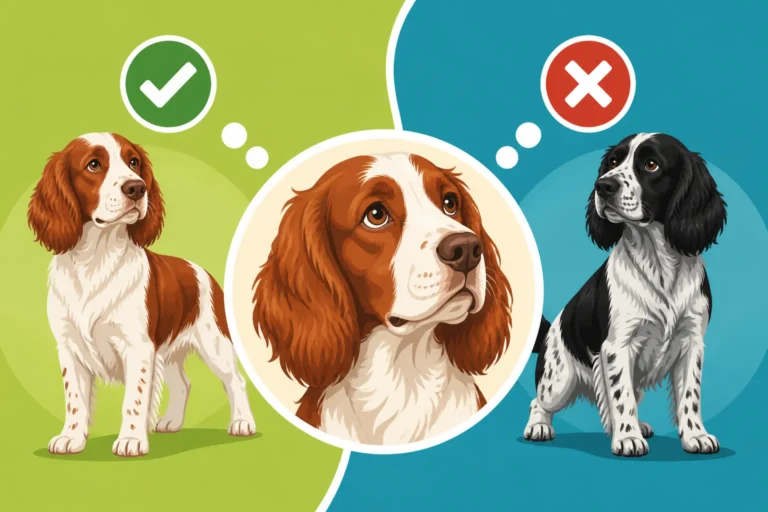
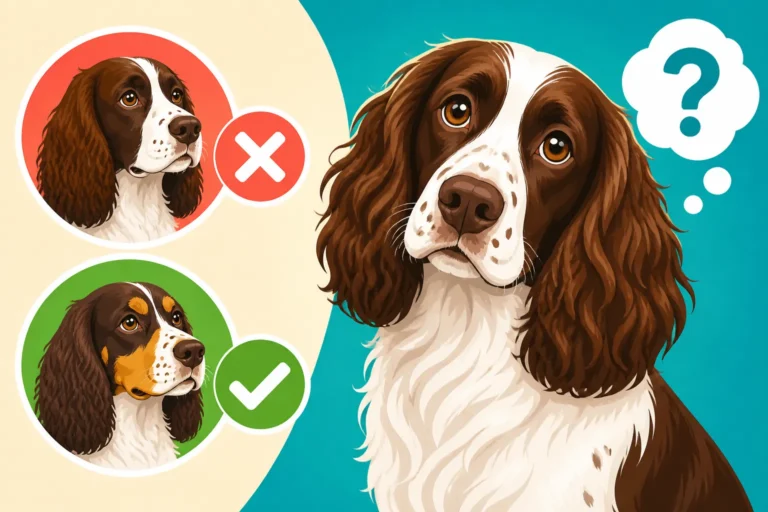
English Springer Spaniels are generally expected to have dark eyes, though the exact shade can vary with coat color and the wording of the breed standard used. In broad terms, a black-and-white dog is expected to have very dark brown eyes, while a liver-and-white dog may have dark hazel eyes. The preferred effect is a dark, expressive eye that suits the dog’s overall coloring.
That does not mean every Springer Spaniel’s irises are identical. Hazel can look lighter or warmer in bright sunlight than it does indoors, and a close-up photograph may make an eye seem paler than it is. There can also be normal variation between individual dogs. For a fuller look at coat and color terms, see The Colors a Springer Spaniel Comes In and Which Colors the Springer Spaniel Standard Allows.
The important distinction is between a naturally lighter iris and a new change in the eye’s appearance. A dog born with evenly colored hazel irises is a different situation from a dog whose eye has recently become cloudy, blue-white, red, or noticeably different from the other eye.
Light eyes may be unusual without proving anything on their own
A Springer Spaniel with light brown or amber-looking eyes may fall outside the preferred appearance described in some breed standards. That is a matter of conformation and breed type, not automatically a medical diagnosis. Eye color by itself also cannot establish whether a dog is purebred, whether its breeder followed responsible practices, or whether the dog has an eye disease.
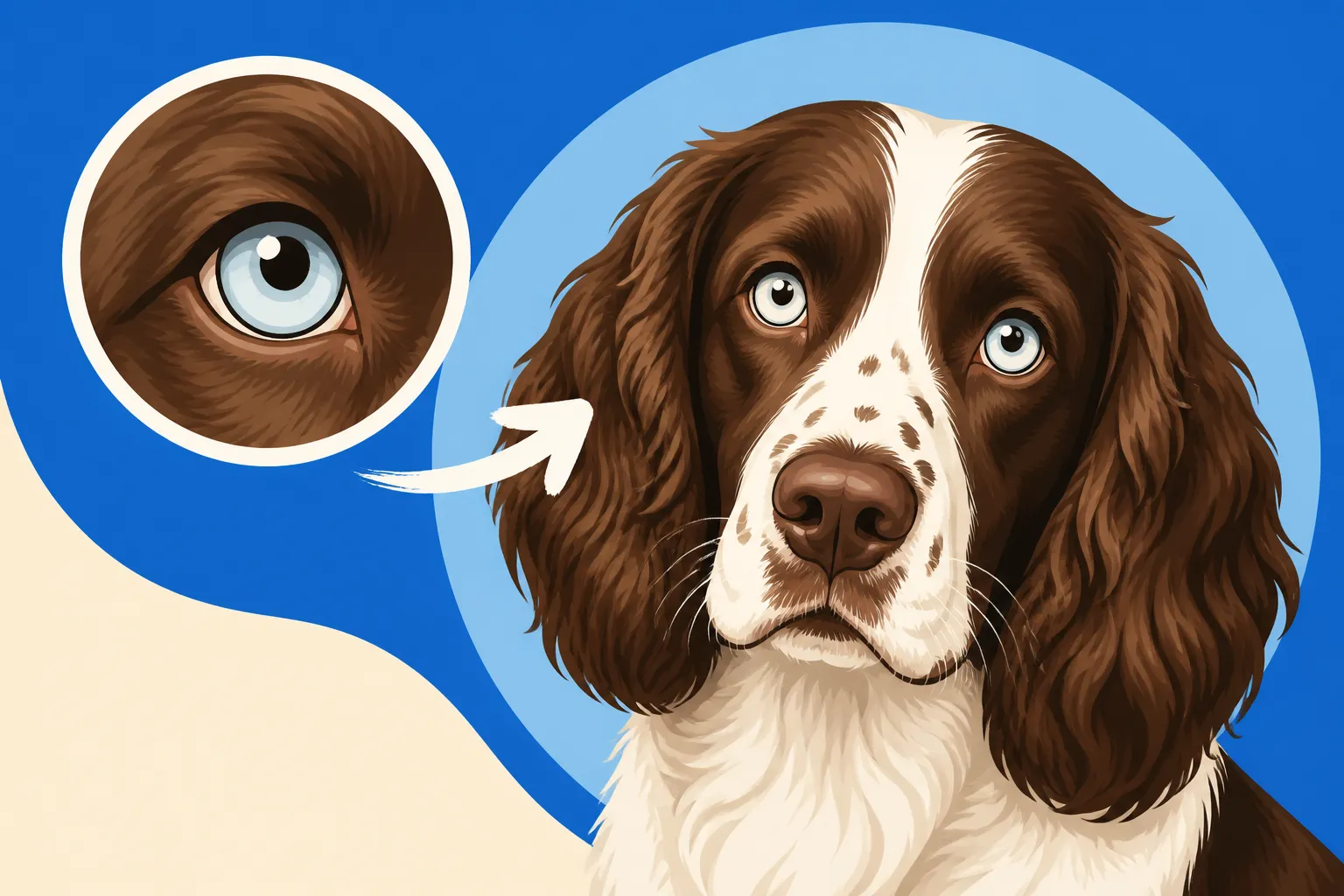
Very pale eyes, bright blue eyes, or eyes of two different colors are less typical in the breed. If a dog has an unusual eye color, consider the whole picture: the dog’s age, coat, family history, other physical features, and whether the color has been stable over time. An unusual shade can be worth discussing with a veterinarian or knowledgeable breeder, but it should not be treated as a diagnosis.
If you are choosing a puppy, ask what eye checks have been done and whether the parents have relevant health records. A puppy’s appearance is only one small part of the decision. The Four Eye Diseases a Springer Spaniel Breeder Screens For explains why eye-health screening matters beyond simply looking at eye color.
Why a Springer Spaniel’s eyes may look lighter
Puppy eye color can change as the dog matures
Newborn puppies have closed eyes, and their eye color develops as they grow. Early puppy eyes can appear bluish or grayish before pigmentation becomes more established. The color may shift over the first weeks of life, so a very young puppy’s eyes do not always show the shade they will have later.
By the time you meet a puppy, its eye color may already be changing, but it can still be difficult to judge the final shade from a single visit or photo. Lighting, camera exposure, and reflections can make a dark iris look lighter, especially when the puppy is near a window or outdoors. Ask the breeder whether the color has changed and whether both eyes look clear and similar.
Eye color is not a substitute for a proper examination. A puppy’s eyes should be assessed for health, not just photographed for appearance. If you want to understand what is normally checked at that stage, read Whether a Springer Spaniel Puppy's Eyes Are Checked at Eight Weeks. If you are unsure whether a puppy’s eyes look normal, request a veterinary assessment rather than relying on a picture.
Lighting and reflections can change how dark an eye appears
A hazel iris may look almost black in a dim room, then appear lighter brown in direct sunlight. Reflections can also create a pale spot that looks like a change in the eye, particularly in phone photos. This is why it helps to compare both eyes in consistent, soft lighting rather than judging from a flash photograph.
Try observing your dog near a window without direct sun, then again in ordinary indoor light. Look at the colored part of the eye, not the bright reflection on its surface. If the iris itself is evenly colored and the eye’s clear surface remains transparent, the change may simply be lighting or the natural shade of the dog’s eyes.
A photo can still be useful for tracking a change. Take one from the same distance and in similar lighting, and note the date. If one eye appears different from the other, or if a pale appearance persists in ordinary light, show the photos to your veterinarian. A picture can help explain what you noticed, but it cannot replace an examination.
Haze or a blue-white cast is not the same as a light iris
The iris is the colored ring around the pupil. The cornea is the clear outer surface over the front of the eye, and the lens sits deeper inside. A cloudy or blue-white appearance may come from a problem affecting a clear structure, rather than from the iris being naturally light.
Pay attention to whether the eye looks clear and bright or as if a film has formed over it. Other warning signs include squinting, tearing, redness, discharge, rubbing at the face, a sudden change in pupil size, or bumping into furniture. A dog may also seem uncomfortable in bright light or reluctant to have its face touched.
A sudden cloudy appearance, especially with pain, redness, or a change in vision, should be treated as urgent. Primary glaucoma is one condition that can cause a painful, rapidly changing eye, although only a veterinarian can determine the cause. Learn more in How Primary Glaucoma Blinds a Springer Spaniel and Whether a Springer Spaniel's Glaucoma Is Painful. Do not assume a newly blue-looking eye is simply an unusual color.
| What you notice | What it may mean | Sensible next step |
|---|---|---|
| Evenly colored hazel or light-brown iris that has looked the same over time | Natural individual variation or an appearance affected by coat and lighting | Mention it at a routine veterinary visit if you remain unsure |
| Puppy’s eyes look bluish or grayish and are gradually changing | Eye pigment may still be developing | Ask the breeder or veterinarian about the puppy’s age and eye checks |
| Both eyes look lighter only in bright light or photos | Reflections, exposure, or lighting may be affecting the appearance | Compare in soft, consistent light |
| A new cloudy, blue-white, red, or painful appearance | A problem affecting the eye may be present | Contact a veterinarian promptly |
| One eye changes, or the dog squints, tears, rubs, or seems to see poorly | Possible eye irritation or disease | Arrange veterinary advice; seek urgent care for sudden or severe signs |
When light eyes deserve a veterinary check
Changes that happen suddenly need prompt attention
A stable, naturally light iris is usually less concerning than a change that appears over hours or days. If your Springer Spaniel’s eye suddenly looks cloudy, blue-white, red, swollen, or painful, call your veterinary clinic for advice. Do not wait for a routine appointment if the dog is squinting, pawing at the eye, avoiding light, or seeming unable to see normally.
Eye problems can be uncomfortable and some can worsen quickly. Avoid putting human eye drops, leftover pet medication, or home remedies into the eye unless your veterinarian specifically directs you to do so. A product that is appropriate for one cause may be unsuitable for another, and some treatments can make the situation worse if used without an examination.
If your veterinarian prescribes medication, follow the instructions for that specific diagnosis and ask how to give it safely. Chewy Pharmacy may be an option for filling a prescription authorized by your veterinarian, but confirm the medication and directions with the clinic. Chewy should not be used as a substitute for an examination when a dog has sudden eye changes or pain.
Routine exams can help establish what is normal for your dog
At a routine appointment, your veterinarian can examine the eyes and record what they look like when healthy. That baseline is useful if you later notice a change. You can ask whether the iris color appears normal, whether the surface is clear, and whether there are any signs that justify a more detailed eye examination.
Some eye diseases do not cause obvious signs at first. If your dog has a family history of eye problems, a breeder has raised a concern, or you are considering breeding, ask whether a veterinary eye examination or specialist assessment is appropriate. The need for screening depends on the dog’s circumstances; simply having light eyes does not automatically mean that a special test is required. See Whether a Springer Spaniel Needs a Yearly Eye Exam for more on ongoing eye checks.
A simple home observation can help between appointments. Once a week, take a moment to look at both eyes in good, even light. Notice whether they are clear, whether the pupils look similar, and whether your dog is comfortable. You do not need to touch the eye or shine a bright light into it. If you notice a change, write down when it began and whether it is affecting one or both eyes.
What to do if your Springer Spaniel has light eyes
For a healthy dog with stable eye color
If your dog has always had lighter brown or hazel eyes, both eyes look clear, and there are no signs of discomfort or vision trouble, mention the color at the next regular appointment. You can also compare it with the breed standard if you are interested in showing, but remember that a standard describes preferred appearance rather than diagnosing health.
If you have recently adopted an adult Springer Spaniel and do not know the dog’s history, ask the veterinarian to check the eyes as part of a general health examination. Bring any records the rescue or previous owner provided. A vet can assess clarity, comfort, and vision concerns; a breeder or breed expert can help explain how the dog’s appearance compares with the standard.
If the conversation leads to a prescribed eye medication, use only the product and instructions recommended for your dog. Chewy can be one possible place to check for a veterinarian-authorized prescription, but the clinic remains the right place to ask whether treatment is needed and how long to continue it.
For a puppy or a dog with a new change
For a puppy, ask the breeder what they have observed and whether the puppy has had an eye examination. Make sure the answer includes more than “the eyes look fine in photos.” Ask whether the eyes are clear, whether both appear similar, and whether a veterinarian has checked the puppy. If the breeder cannot answer, arrange an examination with your own veterinarian.
For an adult dog with a new change, take a photo in ordinary lighting and note when you first saw it. Then contact your veterinary clinic and describe the change, along with any squinting, redness, tearing, discharge, rubbing, or behavior changes. If the eye looks painful or vision seems affected, ask for prompt guidance rather than waiting to see if the color returns to normal.
Chewy may be useful for fulfilling a prescription after the veterinarian has examined your dog and approved treatment. It is not a safe way to choose eye drops based only on a light or cloudy appearance. The practical rule is straightforward: stable iris color can be discussed at a routine visit; a sudden change in the eye’s clarity, comfort, or vision needs veterinary attention.
Disclaimer
This article is for general informational purposes only and does not constitute professional advice. Laws, prices and regulations vary by location and change over time. Consult a qualified professional for guidance on your specific situation.