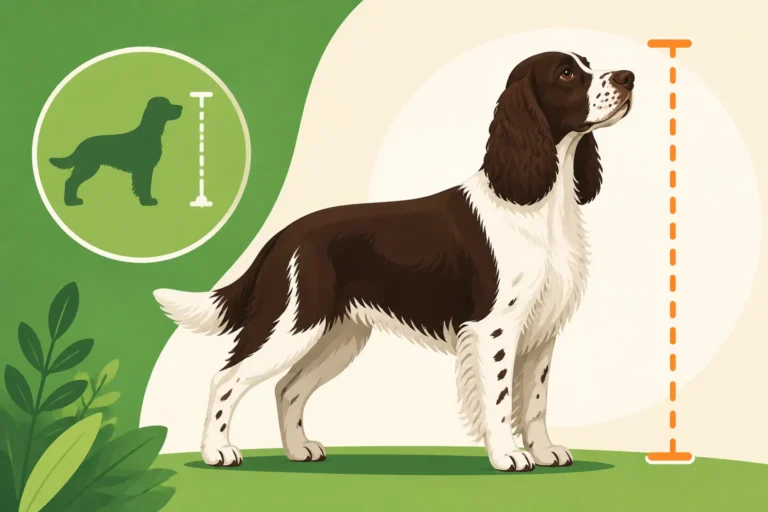
Whether One Springer Spaniel Can Be Registered as Both Types
When a breeder describes a puppy as “field type” or “show type,” it can sound as though the two Springer Spaniels need different registration papers. Usually, it doesn’t work that way: registries generally record the dog as an English Springer Spaniel, while field and show describe breeding emphasis, appearance, and the activities people pursue with the dog. Here’s how to tell registration apart from type, titles, and event eligibility.
What field type and show type mean
They describe breeding emphasis, not separate breeds
Field-bred and show-bred English Springer Spaniels are commonly understood as two broad types within the same breed. Field lines have generally been selected for hunting and field work, while show lines have been selected with conformation and the breed standard in mind. Those priorities can influence a dog’s build, coat, energy, and working style, but they do not automatically create separate breeds in a registry.
The differences can be noticeable. A field-bred dog may have a leaner outline and a shorter, more practical coat, while a show-bred dog may have more coat and a look more familiar from the show ring. But those are tendencies, not a reliable way to determine registration. A dog’s appearance alone does not tell you what registry it belongs to, what its pedigree says, or which events it can enter.
If you’re trying to understand how the types developed, How the Field and Show Springer Spaniel Diverged gives useful background. For a closer look at the range of visible differences, see How Different the Two Springer Spaniel Types Look. The important point for registration is that “field” and “show” are usually descriptions of a dog’s background or purpose—not separate breed names printed on two different registration certificates.
The same breed can have very different lines
It’s understandable to assume that such different-looking dogs must be registered as different types. Breed populations can diverge over generations when breeders consistently prioritize different traits. Yet a registry may continue to recognize them under one breed name. In that case, a field-bred Springer and a show-bred Springer can both be registered English Springer Spaniels even if they come from distinct breeding communities.
That doesn’t mean the two kinds are identical in temperament, exercise needs, or coat care. A high-drive working dog may need more structured activity than a dog from show lines, and a coat with heavier feathering may need more frequent brushing and trimming. These practical differences are worth discussing with a breeder, but they don’t necessarily change the breed name on the registration record. For a broader explanation, Two Breeds Registered as One: the Field and Show Springer Spaniel explores how one registered breed can contain these distinct types.
The types also aren’t sealed off from one another. Breeders may choose to cross field and show lines, though their reasons and breeding goals vary. A puppy’s likely qualities depend on its parents, relatives, and the breeder’s selection—not simply on a “field” or “show” label. The Breeders Still Crossing the Two Springer Spaniel Types and Whether the Two Springer Spaniel Types Interbreed offer more context on that subject.
How registration differs from type and titles
Registration records breed identity and pedigree
A registration certificate is not a ranking of a dog’s working ability or show quality. It generally records information such as the dog’s registered name, breed, identifying details, and ancestry, according to the rules of the registry that issued it. The exact process and paperwork depend on the country and organization, so check the relevant registry’s official requirements if you’re registering a puppy, importing a dog, or transferring ownership.
If the certificate names the dog as an English Springer Spaniel, that does not necessarily mean the registry has assigned it to a separate “field” or “show” category. The breeder may use one of those terms when describing the puppy’s lineage or likely purpose, while the registry records the breed as a whole.
| Term | What it usually describes | Does it automatically change the registered breed? |
|---|---|---|
| English Springer Spaniel | The breed recorded by a registry | It is the breed name on the record |
| Field-bred | Breeding emphasis associated with field work | No |
| Show-bred | Breeding emphasis associated with conformation | No |
| Field or show title | An achievement earned under an event organization’s rules | No |
| Event eligibility | Whether a dog meets an event’s entry requirements | It may affect which events the dog can enter, but it is not the same as breed registration |
A breeder’s advertisement, pedigree notes, or description may give valuable information, but it is not a substitute for the actual registration record. If the distinction matters to you, ask for the registered names of both parents and the registry paperwork available for the litter. You can then confirm what the documents say instead of relying on a shorthand label.
Titles and event records are separate from breed registration
A Springer Spaniel may earn achievements in field events, conformation shows, or other activities, depending on the organizations and rules involved. Those achievements can appear in a pedigree or be associated with a dog’s registered name. They tell you something about what the dog or its relatives have accomplished; they do not ordinarily turn the dog into a different breed or a separately registered type.
This distinction is useful when reading a pedigree. A title may suggest that a dog has been evaluated or competed in a particular setting, but it doesn’t prove that every puppy from that line will have the same aptitude. Nor does the absence of a title necessarily mean a dog cannot work or show. A dog may simply have been bred for a different purpose, trained privately, or never entered in competition.
Similarly, event entry rules are not the same thing as registration rules. Each event organization determines its own requirements. If you hope to compete, check the current rules for the specific event and registry rather than assuming that a field-bred or show-bred label settles eligibility. For an illustration of how type and event context can differ, read How a Show Springer Spaniel Fares in a Hunt Test and How a Field Springer Spaniel Fares in the Ring.
Can a registry record one Springer Spaniel as both types?
Usually, there is no dual-type registration to apply for
For many owners, the direct answer is that a Springer Spaniel is registered as the breed, not simultaneously as “field type” and “show type.” If a registry does not maintain separate type categories, there is no second type designation to add. The dog may still have a mixed background, be suited to more than one activity, or compete in different settings if it meets the relevant rules.
The phrase “registered as both types” can also mean a few different things. Someone might be asking whether one dog can have both field and show ancestry, whether it can enter both kinds of events, or whether it can hold achievements in both. Those are different questions from whether a registry prints two type classifications on the certificate. Ask the breeder or registry which meaning applies before making a decision based on a vague promise of “dual registration.”
If a seller says a puppy is registered as both field and show, request clarification in writing. Ask which registry issued the paperwork, what exact designation appears on it, and whether the claim refers to ancestry, event eligibility, titles, or simply the breeder’s description. That small conversation can prevent confusion later, especially if you’re choosing a puppy for hunting, conformation, or life as a companion.
Registries and countries can use different procedures
Registration is not one worldwide system. Organizations may have different records, transfer processes, event rules, and terminology. A dog recorded with one organization may need to meet specific requirements to be recorded with another, especially if the dog was imported. That is a question about registry procedures, not proof that field and show are separate varieties with automatic dual status.
If you have a particular dog in mind, start with the paperwork rather than broad assumptions. Check the name of the registry, the breed listed, the registered names of the parents, and any recorded titles. If the dog is imported or its papers come from a different country, contact the registry where you intend to compete or register the dog and ask what documentation it accepts.
Also separate a registry’s breed classification from the descriptions breeders use informally. One breeder may call a line “working,” another may say “field,” and another may emphasize show ancestry. Those terms can be helpful shorthand, but they may not be standardized labels. Whether Any Registry Separates the Two Springer Spaniel Types is a useful next read if you want to explore how registry practices relate to the divide.
What to ask before choosing a puppy
Confirm the paperwork and the breeder’s meaning
Before placing a deposit, ask the breeder to explain exactly what “field,” “show,” or “both” means in the litter’s description. Ask to see the parents’ registered names and available pedigree information, and confirm which registry will handle the puppies’ registration. A responsible breeder should be able to explain the distinction without implying that a marketing phrase is an official category when it is not.
It also helps to ask what the breeder means by a puppy being suitable for a particular job. If you want a dog for hunting, ask about the parents’ work, their temperaments, and what kind of training support the breeder expects a puppy to need. If you want to show, ask about conformation goals and the puppy’s likely coat-care routine. If you mainly want a family companion, be candid about your schedule and activity level rather than assuming one type will automatically be easy to live with.
Consider the day-to-day reality as well as the paperwork. A field-bred dog may have substantial drive, while a show-bred dog may still need regular exercise and mental engagement. Either way, plan for brushing, ear checks, and routine supplies. Owners who are getting a coat-care kit together can compare brushes and grooming basics at retailers such as Chewy, while taking care to choose tools that suit the individual dog’s coat.
Make a decision based on the dog you want to live with
Registration alone won’t tell you whether a particular Springer Spaniel is a good match. Meet the puppy’s relatives if possible, talk to the breeder about adult dogs from previous litters, and ask what the puppies are like in everyday settings. A quiet afternoon at home, an exciting walk, and a training session can reveal different sides of a dog’s personality.
If you are drawn to a show-bred Springer because you expect a calmer dog, ask the breeder how the adults settle indoors and what they need to stay content. If you are drawn to a field-bred dog because you want to hunt, ask what level of training and daily engagement the breeder considers appropriate. Neither label replaces a thoughtful discussion about the individual puppy and the household it will join.
You can also make a practical checklist: verify the registry and breed listed on the paperwork; clarify any type labels; review parent and pedigree information; check event rules if you plan to compete; and discuss health, temperament, grooming, and exercise with the breeder. For routine care after bringing a puppy home, Chewy can be one option for comparing everyday items such as a brush, crate supplies, or cleanup essentials. The label on the registration paper is only one part of preparing for life with the dog.
The clearest takeaway is that field and show usually describe Springer Spaniel types or breeding emphasis, not two separate registrations for one dog. A Springer can have varied ancestry and may take part in different activities, but what appears on its registration and what it can enter depend on the registry and event rules involved. If you’re unsure, ask for the exact paperwork and confirm the organization’s requirements directly.
Disclaimer
This article is for general informational purposes only and does not constitute professional advice. Laws, prices and regulations vary by location and change over time. Consult a qualified professional for guidance on your specific situation.