Whether a Springer Spaniel’s Glaucoma Is Painful
It’s truly heartbreaking to see our beloved Springer Spaniels in any kind of discomfort, and when it comes to their eyes, the worry can feel overwhelming. Many of us have heard of glaucoma in dogs, but a big question that often keeps us up at night is whether our furry friends are truly suffering. This guide aims to clear up that painful uncertainty, delving deep into whether a Springer Spaniel's glaucoma is painful and how we can best support them through it.
Understanding Glaucoma in Springer Spaniels
Glaucoma is a serious, often sudden, and incredibly painful eye condition where the pressure inside the eye (intraocular pressure, or IOP) increases beyond normal levels. This elevated pressure damages the optic nerve and retina, leading to vision loss and, if left untreated, complete blindness. For a breed like the English Springer Spaniel, known for its keen sight and energetic nature, a condition that threatens their vision and causes significant pain is particularly distressing.
The Underlying Mechanism of Glaucoma
Imagine a delicate balance in the eye, where fluid is constantly produced and drained. In a healthy eye, this fluid, called aqueous humor, flows freely, maintaining a steady, healthy pressure. Glaucoma happens when this drainage system goes awry. Either too much fluid is produced, or more commonly, the drainage angle — the area where the fluid exits the eye — becomes blocked or compromised. This blockage causes the fluid to build up, like a clogged sink, leading to a rapid and dangerous rise in intraocular pressure. This pressure pushes against the sensitive structures inside the eye, including the optic nerve, which transmits visual information to the brain. The constant, crushing pressure causes nerve cells to die, leading to irreversible vision loss.
Primary Glaucoma's Specific Impact on Springer Spaniels
Unfortunately, Springer Spaniels are genetically predisposed to a form of the disease called primary glaucoma, specifically primary angle-closure glaucoma (PACG). This means their eyes are inherently built with a narrow or abnormally formed drainage angle, making them more susceptible to blockages. This isn't something that happens due to an injury or other illness; it's written in their genes. Because of this genetic component, if one eye develops primary glaucoma, there's a very high chance the other eye will follow suit, often within months to a couple of years. The sudden onset of intense pain is often the first, alarming sign for owners, as the pressure can spike dramatically in a very short amount of time. If you've ever wondered about specific risks, you might find more insights in our article on Primary Glaucoma and the Springer Spaniel That Loses an Eye.
Why Immediate Action Matters
When your Springer Spaniel develops glaucoma, every minute counts. The longer the intraocular pressure remains elevated, the more damage it inflicts on the optic nerve and retina, and the more severe the pain. It’s not just a matter of preserving vision, which is critically important, but also of alleviating intense suffering. A rapid diagnosis and immediate initiation of treatment are vital to try and save sight and, at the very least, to manage the pain effectively. Delaying treatment, even for a few hours, can mean the difference between maintaining some vision and complete, irreversible blindness. This is why recognizing the early signs and rushing to the vet is paramount. The journey often involves urgent care, as detailed in How Primary Glaucoma Blinds a Springer Spaniel.
Recognizing the Signs of Pain
One of the hardest parts of dealing with glaucoma in your Springer Spaniel is trying to understand the extent of their pain. Unlike humans, dogs can't tell us when they have a splitting headache or pressure behind their eyes. However, they do show us through a variety of subtle and obvious cues if we know what to look for. It’s critical to be hyper-aware, especially with a breed as stoic and eager to please as a Springer.
Subtle Behavioral Cues of Discomfort
Sometimes the pain is a low, throbbing ache, or it might be building up slowly. In these instances, your Springer Spaniel might not cry out, but they will show changes in their behavior. They might become a little more withdrawn, less enthusiastic about playtime or walks, or simply seem a bit "off." You might notice them rubbing their face or eyes on furniture or pawing at their face more often than usual. They could be reluctant to open their eyes fully in bright light (a symptom called photophobia) or blink excessively. Some dogs might become slightly irritable or snap if their head is touched, even gently, which is very out of character for the typically sweet-natured Springer. A sudden decrease in appetite or a change in their sleeping patterns can also be subtle indicators that something isn't right.
Obvious Physical Indicators of Ocular Pain
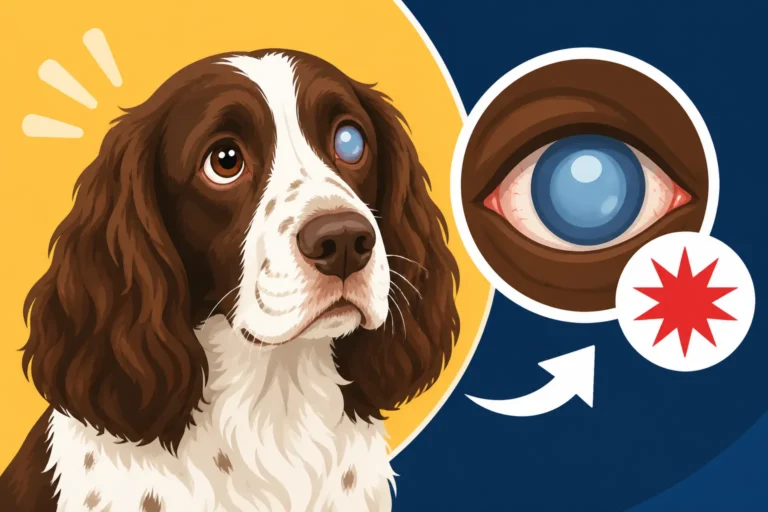
When the pressure becomes severe, the signs of pain become much more pronounced and distressing. Your Springer Spaniel might hold the affected eye completely shut or squint intensely. The eye itself can look noticeably different: the white part might appear very red and inflamed, or you might see cloudiness or a bluish tint to the cornea (the clear outer layer of the eye). The pupil might be dilated and unresponsive to light, or it might be irregular in shape. The eye could also appear larger or bulging, especially when compared to the healthy eye. If you gently feel around the eye area, your dog might flinch or show clear signs of pain. They might be visibly lethargic, refuse to eat, and even whine or cry. These are emergency signs and require immediate veterinary attention. You might be interested in our article on Whether a Springer Spaniel's Glaucoma Comes On Suddenly for more on how quickly these symptoms can appear.
The Importance of Regular Eye Checks
Given the Springer Spaniel's predisposition to primary glaucoma, regular eye examinations are not just recommended, they're essential. This includes a thorough ophthalmic exam by your veterinarian, which often involves measuring the intraocular pressure using a tonometry device. Early detection can literally save your dog's sight and prevent immense pain. Breeders often screen for eye conditions, and understanding the tests involved can be found in resources like The Four Eye Diseases a Springer Spaniel Breeder Screens For. Even if your dog seems perfectly fine, a baseline reading of their eye pressure can be incredibly valuable for future comparisons. This proactive approach can help catch the subtle beginnings of glaucoma before it becomes a full-blown crisis, ensuring your dog lives a more comfortable life. Knowing Why a Springer Spaniel Needs a Gonioscopy can also be crucial for understanding their risk factors.
Here's a quick reference table for recognizing signs of glaucoma pain:
| Category | Subtle Signs | Obvious Signs |
|---|---|---|
| Behavioral | Reduced activity, lethargy | Whining, crying, reluctance to move |
| Rubbing face/eyes, pawing at face | Avoiding touch to head, snapping | |
| Decreased appetite, changes in sleep | Constant squinting or holding eye shut | |
| Mild irritation or withdrawal | Hiding, shivering | |
| Ocular | Squinting in bright light (photophobia) | Redness of the white part of the eye (sclera) |
| Excessive blinking | Cloudy or bluish cornea | |
| Mild tearing | Dilated, unresponsive, or irregularly shaped pupil | |
| Slight dullness in eye appearance | Enlarged or bulging eyeball | |
| Visible blood vessels in the eye (episcleral injection) |
Managing Pain and Treatment Options
Once glaucoma is diagnosed, the immediate priority is to reduce the intraocular pressure and alleviate the intense pain. Treatment is multifaceted, often starting with emergency medical interventions and potentially progressing to surgical solutions, followed by long-term management strategies. It's a journey that requires commitment and close collaboration with your veterinary ophthalmologist.
Immediate Medical Interventions for Pressure Relief
When your Springer Spaniel is rushed to the vet with a glaucoma crisis, the first line of defense is usually medication aimed at rapidly reducing the eye pressure. This typically involves a combination of topical eye drops and sometimes oral medications. Common eye drops include prostaglandin analogs (like latanoprost), which increase the outflow of aqueous humor, and carbonic anhydrase inhibitors (like dorzolamide), which reduce fluid production. Oral medications, such as diuretics (like methazolamide or mannitol), might also be administered in severe cases to quickly draw fluid out of the eye. These medications work fast to bring the pressure down, which in turn helps relieve the severe pain. However, these are often temporary solutions to stabilize the eye and buy time for more definitive treatment planning. Our article on Whether Eye Drops Save a Springer Spaniel's Sight provides more detailed information on their efficacy.
Surgical Approaches for Glaucoma Management
While medications are crucial for immediate relief, they often aren't a long-term cure for primary glaucoma. Many Springer Spaniels with glaucoma will eventually require surgery. The type of surgery depends on whether the goal is to preserve vision or simply to manage pain in an eye that has already lost its sight.
For eyes with salvageable vision, procedures like gonioimplantation (inserting a tiny shunt to improve drainage) or laser cyclophotocoagulation (destroying part of the fluid-producing tissue) may be considered. These aim to improve fluid outflow or reduce fluid production to keep the pressure manageable.
However, if the eye is already blind and painfully distended, options shift towards pain relief and comfort. Enucleation (surgical removal of the eye) is a common and often compassionate choice, as it completely eliminates the source of pain. Another option is evisceration with intraocular prosthesis, where the contents of the eye are removed and a silicone ball is implanted to maintain the eye's cosmetic appearance, while still eliminating the painful pressure. Deciding on surgery is a big step, and discussing all options with your vet ophthalmologist is crucial. It’s also worth considering how a condition like this impacts your finances, and pet insurance providers like Healthy Paws can be a real lifesaver when facing expensive surgeries and ongoing treatments.
Long-Term Pain Management Strategies
Even after initial treatments or surgery, managing a Springer Spaniel with glaucoma can be an ongoing process. If vision is partially preserved, they will likely need daily eye drops for the rest of their lives to maintain stable pressure. Regular follow-up appointments with a veterinary ophthalmologist are essential to monitor eye pressure and overall eye health. For dogs who have lost vision in one or both eyes, pain management might include occasional anti-inflammatory medications, especially if they experience flare-ups.
Beyond medication, adapting their home environment is key to their comfort. This could involve maintaining a consistent furniture layout, using baby gates to block off stairs, or even using scent markers to help them navigate. Providing a safe, predictable environment reduces stress and physical bumps, which can indirectly contribute to their overall well-being. This comprehensive, lifelong approach helps ensure your dog remains as comfortable and happy as possible.
Living with a Glaucoma-Affected Springer Spaniel
Adjusting to life with a Springer Spaniel affected by glaucoma, especially if they lose vision, can be challenging for both you and your dog. But with patience, love, and practical adjustments, your dog can continue to lead a full and happy life.
Adapting Your Home for Vision Impairment
If your Springer Spaniel has lost some or all of their vision due to glaucoma, their world fundamentally changes. Your home, which was once familiar, now presents new challenges. The key is consistency and safety. Try to keep furniture in the same places so your dog can build a mental map of their surroundings. Block off stairs with sturdy baby gates to prevent falls. Consider using textured mats or different scents at doorways to help them identify rooms. For dogs with complete blindness, verbal cues become incredibly important – teach them "step up," "watch out," "stop," and "find your bed." Always speak to them before approaching, so you don't startle them. A gentle touch and a reassuring voice can make a world of difference. You'll be surprised how quickly they adapt, often relying more on their incredible sense of smell and hearing. Our post on Whether a Blind Springer Spaniel Copes at Home offers more tips.
Ongoing Monitoring and Quality of Life
Living with glaucoma means a commitment to ongoing care. Regular veterinary check-ups, often with a specialist ophthalmologist, are non-negotiable. These appointments allow the vet to monitor eye pressure, assess overall eye health, and adjust medications as needed. Even if an eye has been removed, the other eye still needs diligent monitoring, especially if it's also at risk for primary glaucoma. Many owners find a long-term plan crucial, and services like Healthy Paws pet insurance can help manage the financial aspect of these frequent vet visits and lifelong medication needs, ensuring you can provide the best care without constant worry about costs.
Beyond the medical, continually assess your dog's quality of life. Are they still engaging with the family? Do they enjoy walks (perhaps on a leash in familiar, safe areas)? Are they eating and sleeping well? It's important to remember that a blind dog can still have a wonderful life, especially with a devoted owner. However, if chronic pain persists despite all efforts, or if their overall well-being severely declines, you may need to have difficult conversations with your vet about their comfort and future.
Emotional Support for Your Dog (and Yourself)
This journey isn't just physically taxing for your Springer Spaniel; it's emotionally taxing for both of you. Your dog will pick up on your stress, so try to remain calm and reassuring. Give them extra cuddles, praise, and gentle reassurance. Maintain routines as much as possible, as predictability provides comfort. They are still the same loving, happy-go-lucky Springer, even if their vision is compromised.
It's also okay for you to feel overwhelmed, sad, or frustrated. Caring for a dog with a chronic, painful condition is a heavy burden. Reach out to friends, family, or online support groups for owners of blind or glaucoma-affected dogs. Sharing experiences and advice can be incredibly validating and helpful. Remember, you're doing an amazing job advocating for your furry family member and providing them with the best possible life. Caring for a dog through their later years, as explored in Caring for a Springer Spaniel Past Nine, often brings new challenges, and glaucoma can certainly be one of them.
Disclaimer
The information provided in this article is for general educational purposes only and is not a substitute for professional veterinary advice. If you suspect your Springer Spaniel has glaucoma or any other health concern, please consult with a qualified veterinarian immediately for diagnosis and treatment. Early intervention is critical for conditions like glaucoma.