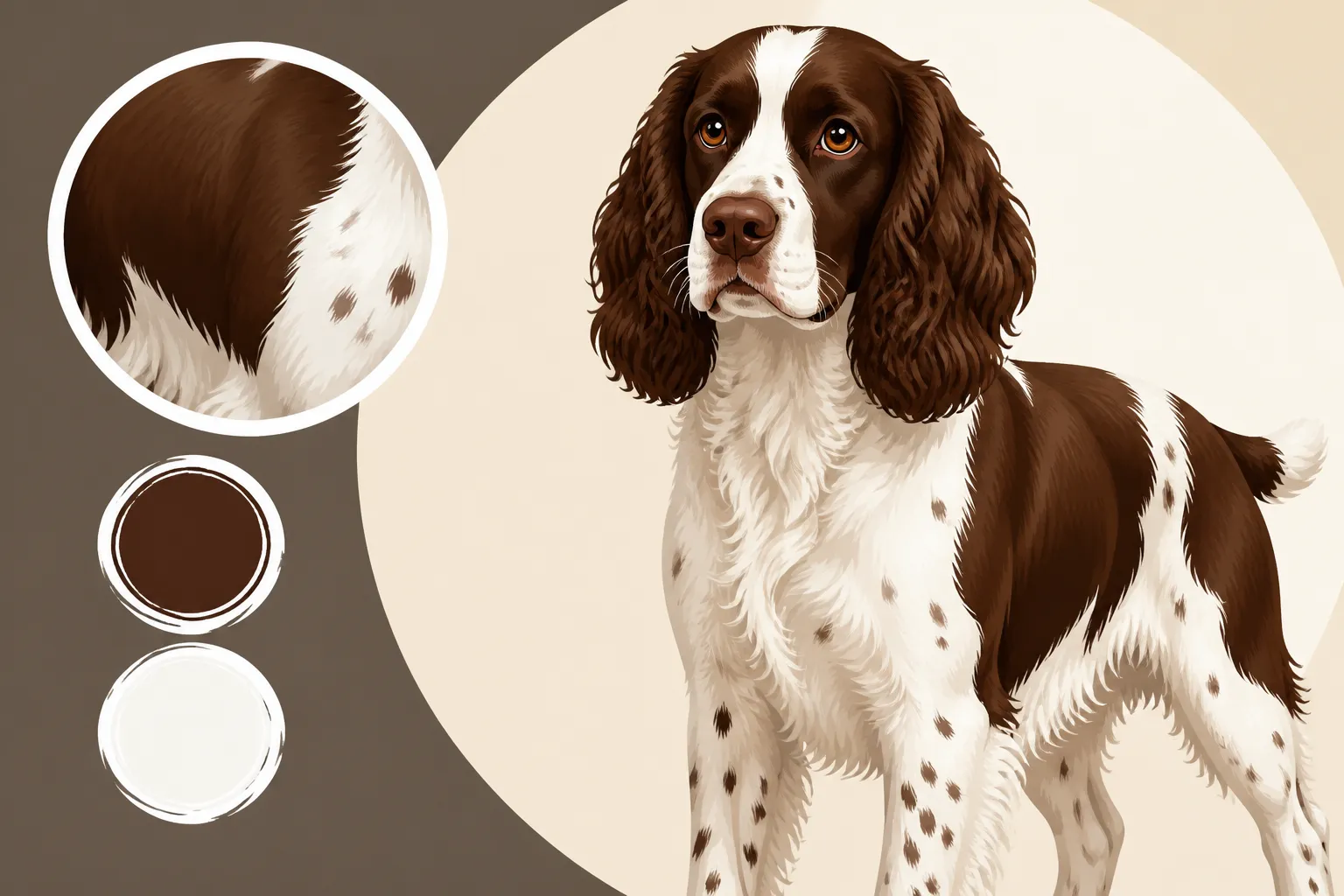
What Liver and White Looks Like on a Springer Spaniel
A liver and white English Springer Spaniel has rich brown patches or ticking against a white coat, but the exact pattern can look very different from one dog to another. If you are comparing puppies, trying to name your dog’s markings, or wondering whether a brown nose is part of the picture, this guide explains what the color looks like and how it changes.
What liver and white means on a Springer Spaniel
The two colors in the coat
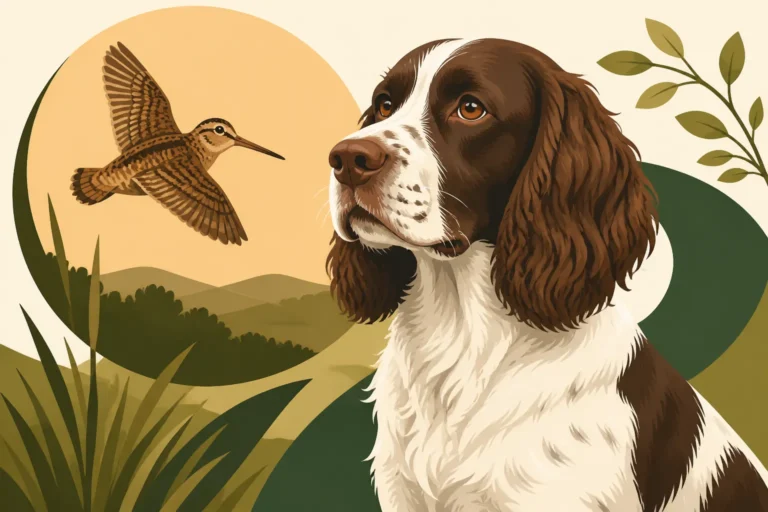
“Liver” describes the brown coloring on the dog’s coat. It can range from a warm, medium brown to a darker chocolate shade, depending on the individual dog, lighting, and coat condition. “White” describes the areas without that brown pigment, creating a two-color pattern rather than a single solid color.
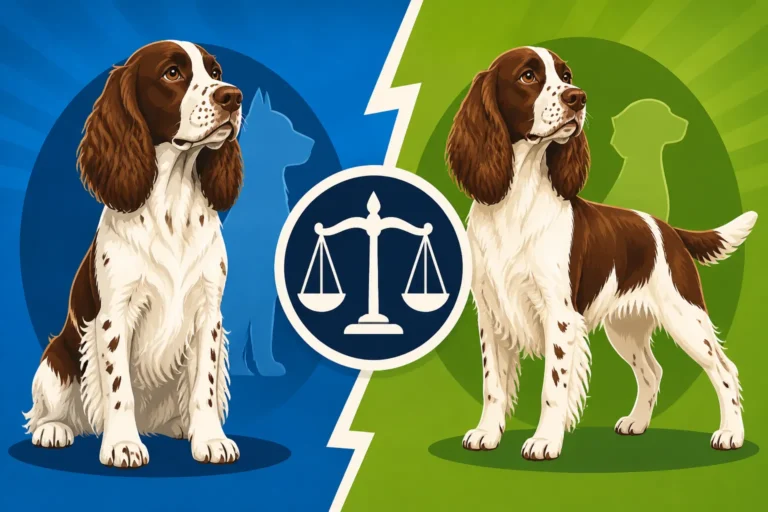
The brown may form broad patches on the head, back, or sides, while white covers much of the chest, legs, neck, or underside. Some dogs have a large liver saddle across the back; others have smaller patches or a more broken-up pattern. There is no single arrangement that every liver and white Springer Spaniel must have.
The pattern can also include fine brown flecks scattered through white areas. These flecks are commonly called ticking, and a coat with a close mixture of colored and white hairs may be described as roan. Those terms describe how the colors are distributed, not a different base color. For a broader overview of the breed’s permitted coat colors, see The Colors a Springer Spaniel Comes In and Which Colors the Springer Spaniel Standard Allows.
Common liver and white patterns
Some liver and white Springers have a mostly white body with distinct brown patches. Others appear much darker because large brown areas cover the back and sides. A white blaze down the face, white chest, and white feet are all possible, but the markings are not required to be symmetrical. One ear may be mostly brown while the other has a white edge, for example.
Look closely at the white areas, too. They may be clean and mostly unmarked, sprinkled with small brown spots, or so heavily ticked that the white looks mottled from a distance. That mixture can make two dogs with the same basic liver and white coloring look quite different in photographs.
A quick visual comparison can help when describing what you see:
| Feature | What it may look like |
|---|---|
| Liver patches | Brown areas on the head, body, or both |
| White areas | Clear white on the chest, legs, neck, or body |
| Ticking | Small colored hairs or flecks within white areas |
| Roaning | A close, blended mixture of white and colored hairs |
| Facial markings | A blaze, a mostly colored face, or an uneven combination |
A puppy’s coat may not show every small fleck clearly at first. As the coat develops, ticking can become easier to see, especially on white sections. How Ticking Develops on a Springer Spaniel Puppy explains why those markings can become more noticeable over time.
How to tell liver and white from similar patterns
Liver patches, ticking, and roan
A clean patch is usually the easiest marking to identify: it is an area where brown hairs form a distinct shape against white. Ticking appears as individual colored hairs or small spots within a white area. Roaning is more blended, with colored and white hairs mixed closely together so the area may look softly mottled rather than sharply spotted.
In real life, these patterns can overlap. A dog may have clear liver patches on the back, some ticking on the legs, and a roan-like mixture on part of the muzzle. The coat may also look different depending on whether it is wet, recently groomed, or photographed in bright sunlight. A phone photo can make brown look almost black in shade or lighter and more reddish under warm indoor lighting.
If you are looking at a puppy, avoid treating one early photograph as a complete preview of the adult pattern. The amount of visible ticking can change as the coat grows in, and the contrast between colors can look different once the adult coat has developed. How a Springer Spaniel's Markings Change With Age offers more detail on that transition.
Brown pigment on the nose and around the eyes
Liver coloring often extends beyond the coat. A liver-colored Springer Spaniel commonly has a brown or liver-colored nose and brown-toned eye rims, though individual pigment can vary. The eyes themselves may appear brown or hazel. These details help complete the overall look, but the coat pattern alone does not tell you exactly what shade a dog’s nose or eyes will be.
It is also worth separating coat color from health. A liver nose is a normal pigment feature for a liver-colored dog; it is not the same thing as a nose that has suddenly become pale, cracked, sore, or changed in appearance. New changes or irritation deserve a veterinary check rather than a guess based on coat color. For more on this feature, read Whether a Springer Spaniel Can Have a Liver Nose and Whether a Springer Spaniel Can Have Light Eyes.
Not every dog with brown patches will have identical markings on the nose, lips, or eye rims. If you are assessing a puppy, ask the breeder how they describe the parents’ colors and whether the puppy’s registered color description is available. That information can clarify terminology, especially when a coat has a mix of patches, ticking, and roaning.
How the color develops and varies
What may change from puppyhood to adulthood
A puppy may be born with its main patches already visible, but the smaller details can be harder to judge. Ticking may be sparse at first and become more apparent as the coat grows. A section that looks mostly white in an early photo may later show more scattered brown hairs, while the larger pattern of patches remains broadly recognizable.
Coat length and grooming can also affect what you notice. Feathering on the ears, chest, legs, and underside can soften the edges of patches or hide flecks within longer hair. After a bath or a trim, the colors may look sharper simply because the coat is clean and lying differently. That does not necessarily mean the dog’s underlying pattern has changed.
When comparing puppies, look at more than a single close-up. Photos of the puppy’s face, back, legs, and sides offer a better sense of how the pattern is distributed. If you want to understand the broader range of accepted patterns, Whether a Roan Springer Spaniel Is Correct and Whether a Mostly White Springer Spaniel Is Purebred address two questions that often come up when a dog’s markings look unusual.
Breed standards and color descriptions
Liver and white is a recognized Springer Spaniel color combination. Written standards and terminology can differ among registries and countries, so a breeder or registry may describe a pattern using words such as liver and white, liver roan, or tricolor when additional tan markings are present. The wording is useful for describing a dog, but it does not change its identity as an English Springer Spaniel.
A dog may also have tan points, usually small tan markings around areas such as the eyebrows, muzzle, or lower legs. Their presence can make the coat look more complex than a simple two-color pattern. If you see tan alongside liver and white, Whether a Springer Spaniel Can Have Tan Points explains how those markings fit into the breed’s color descriptions.
Color alone does not establish whether a dog is purebred, well-bred, healthy, or suited to a particular home. A convincing coat pattern cannot replace registration records, health information, or a careful conversation with the breeder. For prospective owners, questions about the parents’ health testing and temperament matter far more than whether a puppy has a wide blaze or a particular arrangement of spots.
Caring for a liver and white coat
Everyday brushing and stain management
Liver and white Springers do not need a special grooming routine solely because of their color. Their care depends more on coat length, activity, and how much feathering the individual dog has. Brushing helps remove loose hair, loosen small tangles, and catch burrs before they tighten into mats. Pay particular attention behind the ears, under the legs, and around the chest and tail.
White fur can make mud, food residue, and staining more noticeable, especially around the paws, muzzle, and underside. Gentle cleaning after a muddy walk is often more useful than frequent full baths. Use products intended for dogs and follow the label directions; harsh household cleaners or repeated scrubbing can irritate skin and damage the coat.
If you need to restock basic grooming items, Chewy is one place owners may compare dog brushes, combs, and pet shampoos. Choose tools to suit the coat and your dog’s tolerance rather than buying a product because it claims to brighten white fur. A comfortable, regular brushing routine is usually easier on both dog and owner than trying to correct every small mark at once. For broader coat-care context, see How a Show Springer Spaniel's Coat Differs.
Keeping coat color in perspective
A little dirt on white feathering is normal for a dog that walks through grass, runs in wet weather, or spends time outdoors. If you find yourself cleaning the same areas repeatedly, consider whether the dog is getting damp, picking up residue from food bowls, or rubbing against muddy surfaces. Practical adjustments—such as rinsing paws after a walk or drying the coat well—can help without turning grooming into a daily battle.
Chewy may also be useful when comparing a soft towel, a suitable brush, or a dog-safe shampoo for routine coat care. Keep the goal simple: clean skin and a comfortable coat, not a perfectly bright white finish. A product that causes redness, itchiness, or discomfort is not worth using just to make the markings look more vivid.
If discoloration appears suddenly or comes with itching, sores, odor, or hair loss, treat it as a possible skin issue rather than a color-pattern question. A veterinarian can help distinguish ordinary dirt or staining from irritation or another problem. For everyday grooming, Chewy is one possible place to look for basic supplies, but advice about persistent skin changes should come from your veterinary team.
A liver and white Springer Spaniel can be mostly white with broad brown patches, heavily patched with only small white sections, or marked with ticking and roaning. The brown pigment may also show on the nose and eye rims, while the exact pattern can become clearer as the puppy grows. Whatever the arrangement, the coat is only one small part of the dog: health, temperament, and fit with your household matter much more than the placement of each patch.
Disclaimer
This article is for general informational purposes only and does not constitute professional advice. Laws, prices and regulations vary by location and change over time. Consult a qualified professional for guidance on your specific situation.