How a Springer Spaniel’s Markings Change With Age
A Springer Spaniel puppy can look noticeably different by the time its adult coat comes in, which makes owners wonder whether the markings are changing or whether they misread the pattern in the first place. This guide explains what usually develops with age, what stays stable, and how to tell normal coat changes from staining, fading, or a skin problem.
What Springer Spaniel markings are made of
The basic color patterns
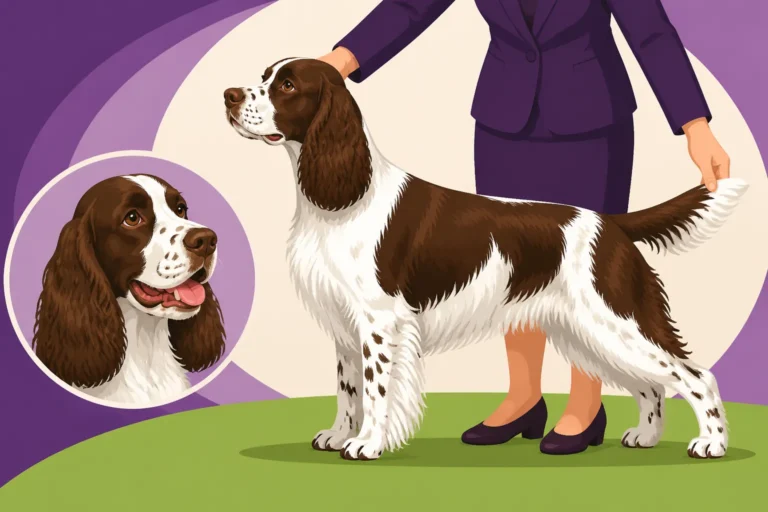
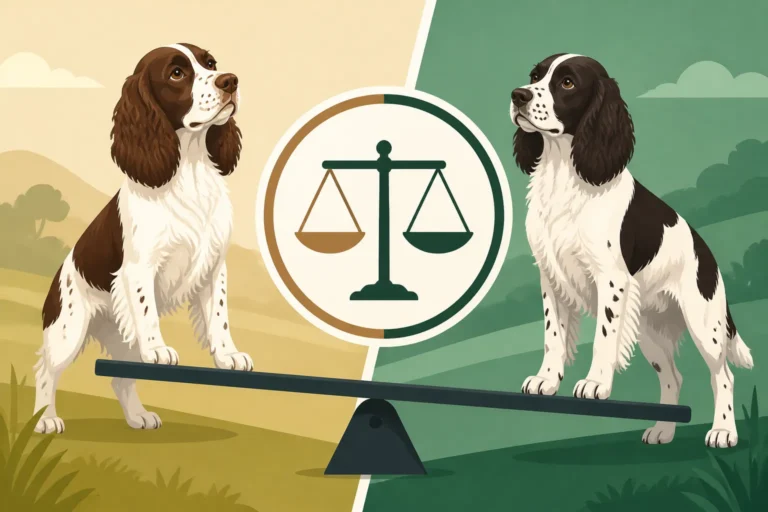
English Springer Spaniels commonly have black and white or liver and white coats. Some have tan markings as well, usually in a tricolor pattern. The colors can appear as clearly separated patches, fine flecks, or a mixture that gives the coat a roan appearance. For a fuller overview of the breed’s accepted colors and combinations, see The Colors a Springer Spaniel Comes In and Which Colors the Springer Spaniel Standard Allows.
A puppy’s pattern is shaped by inherited coat-color genes. Those genes influence which areas grow pigmented hair and which remain white. They do not usually produce a completely new pattern later in life. A dog with a liver patch on its back is not expected to develop a black patch there as it matures, for example. The outline and location of major colored areas are generally recognizable from puppyhood.
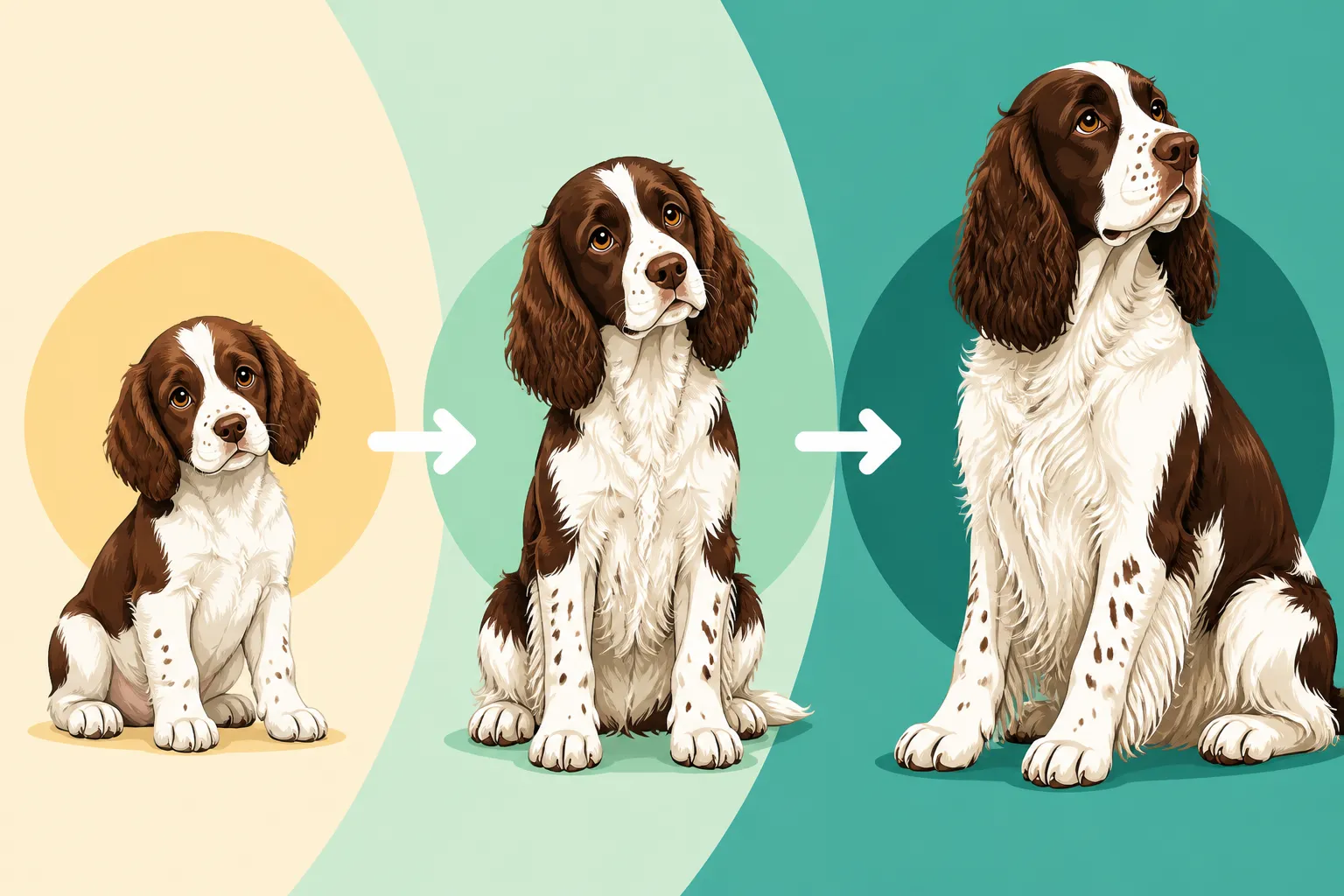
What can change is how clearly the pattern shows. A short puppy coat may look sparse or smooth, while an adult coat can add feathering and texture around the ears, chest, legs, and underside. Longer hair may soften the edge of a patch or make flecks look more numerous. That change in appearance can be striking without the underlying pattern actually moving.
Patches, ticking, and roan
Large patches are often the easiest markings to recognize early. A puppy may have a colored ear, a patch across its back, or a mostly white body with colored areas. As the coat grows, those boundaries can seem less crisp, particularly where longer hair overlaps the edge of a patch. The pattern may look more blended in photographs, especially when the coat is wet or tousled.
Ticking is made up of small colored flecks in areas that are otherwise white. It may be subtle when a puppy is very young and become easier to see as the coat develops. Roaning gives a more mixed, evenly speckled appearance rather than a few separate spots. These terms describe different ways colored hairs are distributed; everyday descriptions can vary, and show terminology may be more precise. How Ticking Develops on a Springer Spaniel Puppy explains why a puppy’s early coat may not show every fleck clearly.
A mostly white puppy can still be purebred, and the amount of white does not by itself tell you whether a dog is healthy or well bred. Coat markings are only one visible part of inheritance. If you are trying to identify a particular pattern, compare the whole coat rather than judging from one photograph or a small patch of fur. You can also read Whether a Mostly White Springer Spaniel Is Purebred for more on that question.
How markings may look different as a Springer Spaniel grows
Puppy coat to adult coat
During puppyhood, hair can be shorter, softer, and less dense than the adult coat. As the dog matures, feathering grows in and the coat may gain more texture. A white area that looked plain at first may show ticking more clearly later, while a dark patch can look larger simply because longer hair spreads around its edges.
The timing and degree of coat development vary among individual dogs. Two littermates can have similar basic patterns but look quite different as their coats mature. One may develop visible flecking across a white leg, while another’s white areas remain less marked. That difference does not necessarily mean one puppy’s pattern has changed more; it may be that the colored hairs are easier to see in one coat than the other.
This is why puppy photos can be helpful, but they are not always a perfect guide to the finished look. Lighting, coat length, wetness, and camera exposure all affect how colors appear. A dark patch can look nearly black in shade and brown in warm indoor light. For a broader description of a liver-and-white coat, see What Liver and White Looks Like on a Springer Spaniel.
Changes from sun, grooming, and everyday wear
Sun exposure can lighten or warm the appearance of some coats, particularly on the tips of the hair. A black coat may look brownish or rusty at the ends, and a liver coat may appear lighter in strong light. This is usually a change in the hair’s appearance rather than a change in the dog’s underlying pattern. Once the coat sheds and new hair grows, the look may shift again.
Grooming can also alter what you notice. Trimming feathering may make a patch boundary look sharper, while a longer coat can blur it. Clipping does not change the genetic pattern, though the new coat may come back with a different texture or shade for a time. Dirt, mud, saliva, and food can temporarily discolor light hair, especially around the paws, muzzle, and ears.
If you are shopping for a gentle brush or a dog-safe shampoo, Chewy is one place owners may compare product descriptions; choose items suited to your dog’s coat and skin, rather than trying to make the colors look brighter. A basic comb and regular brushing are often enough to keep feathering from tangling. Chewy’s listings can also be a place to check ingredient labels, but a product marketed for whitening or brightening should not be used without confirming that it is safe for your dog. A third option is to ask your groomer or veterinarian what is appropriate, particularly if the coat change comes with itching or irritation.
| What you notice | Common explanation | What to do |
|---|---|---|
| Flecks become clearer in white areas | Ticking is easier to see as the coat grows | Compare clear photos taken in similar light |
| Dark areas look lighter at the tips | Sun exposure, coat wear, or normal hair variation | Watch how new growth looks after shedding |
| A colored patch seems less sharply outlined | Longer feathering or coat texture softens the edge | Check the area when the coat is clean and dry |
| White hair looks yellow, brown, or reddish | Dirt, saliva, food, or other staining may be involved | Clean gently and look for a recurring source |
| Hair changes along with redness, odor, or itching | Skin or ear trouble may be affecting the coat | Contact your veterinarian |
What usually stays the same
The main distribution of color—where the large black, liver, and white areas sit—usually remains broadly consistent. Individual hairs are replaced over time, and the coat can change in length, texture, and shade, but the dog’s basic pattern does not normally rearrange itself as it grows.
Some owners notice small new-looking flecks and assume the pattern has shifted. Often, those hairs were present but difficult to see in the puppy coat. In other cases, a patch only becomes apparent when surrounding hair grows longer or the coat is clean and dry. A photo taken at eight weeks and one taken at a year can look very different even when the underlying pattern is stable.
Tan points are a separate part of the coat pattern and can be easier to identify once the coat has grown. They are commonly seen in particular areas, such as above the eyes, on the cheeks, or on the legs. For more detail on how that combination is described, see Whether a Springer Spaniel Can Have Tan Points and Whether a Tricolor Springer Spaniel Is Correct.
How to track coat changes and when to ask for help
Take consistent photos
If you want to document how your Springer Spaniel’s markings develop, take occasional photographs in similar conditions. Use natural light when possible, make sure the coat is dry, and photograph the dog from the same angles. Include a close view of any area you are watching, but also take a full-body picture so you can compare the overall pattern.
A simple record can help distinguish a gradual, ordinary coat change from a sudden one. Note your dog’s age, whether the coat was recently trimmed, and whether the dog had been swimming or playing in mud. If a patch seems different, compare several images rather than relying on memory. Owners often remember a puppy as looking more uniformly white or more vividly colored than the photos show.
Photos are also useful at grooming appointments and veterinary visits. If you are concerned about a change, show the clinician the images and explain when you first noticed it. This is more useful than trying to describe a color shift from memory, especially when the change has been gradual.
Tell pigment changes from staining
Before assuming that markings have changed, check whether the coat is clean and dry. Light hair can pick up discoloration from dirt, wet grass, food, or repeated licking. Hair around the eyes, mouth, paws, and ears can be particularly prone to staining. If the color comes off with appropriate gentle cleaning, it was likely on the hair rather than a new pigment pattern.
Avoid harsh household cleaners, bleach, human hair products, or strong whitening treatments. A dog may lick treated hair, and sensitive skin can react to products that are not designed for animals. If you are considering a coat-care product, check its instructions and ask your veterinary team if your dog has allergies or skin problems. Chewy may offer a range of grooming supplies, but the product label and suitability for your dog matter more than claims about making a coat look brighter.
Also check whether a color change is limited to the hair or involves the skin itself. New dark or pale skin areas, sores, swelling, hair loss, persistent odor, or intense itching are not simply cosmetic markings. Those signs deserve veterinary attention, especially if they appear suddenly or spread.
Recognize changes that need veterinary attention
A gradual shift in coat shade, clearer ticking, or more visible feathering is usually different from a sudden patch of hair loss or a visibly inflamed area. Contact a veterinarian if a coat change occurs alongside scratching, frequent licking, ear discomfort, scabs, redness, or a change in the skin’s texture. A skin or ear condition may affect the hair and can be uncomfortable even when the color change seems like the main issue.
Likewise, a new lump, wound, or rapidly changing skin mark should not be dismissed as a coat-color variation. Take a photo, note when it appeared, and arrange an examination if it persists, grows, or seems painful. A veterinarian can assess whether the concern involves the skin, the hair, or something unrelated to coat pattern.
If you are comparing a puppy’s markings with breed descriptions, remember that color alone does not confirm pedigree or predict temperament. A dog’s coat may look different as it matures, but its personality, health, and suitability as a companion cannot be judged from its patches. For more on the range of patterns, How Common a Black and White Springer Spaniel Is offers another useful comparison.
Disclaimer
This article is for general informational purposes only and does not constitute professional advice. Laws, prices and regulations vary by location and change over time. Consult a qualified professional for guidance on your specific situation.