Whether a Roan Springer Spaniel Is Correct
A roan English Springer Spaniel can be entirely correct: roan is a recognized coat pattern, not a sign that a dog is mixed or unusual. The confusion often starts when a puppy’s coat changes as it grows, or when ticking and roaning look similar in photos. This guide explains what roan means, how it differs from other markings, and what to check if you’re choosing a puppy or preparing for a show.
What roan means on an English Springer Spaniel
Roan is a mix of colored and white hairs
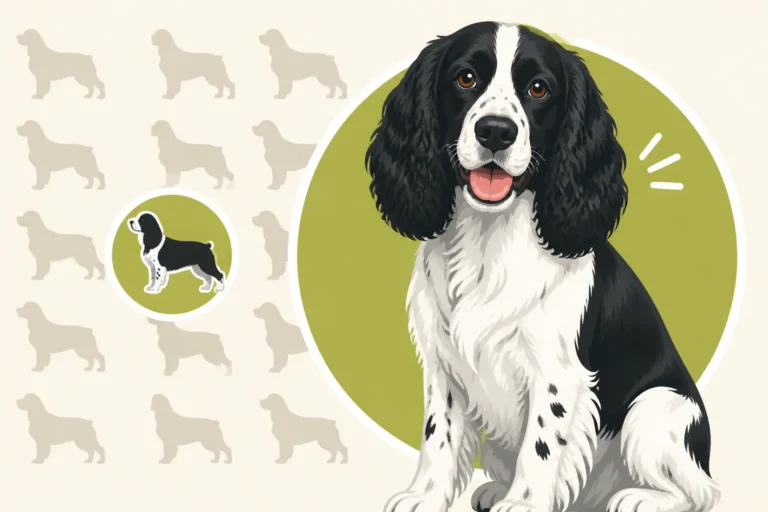
On a roan dog, colored hairs are mixed through white areas of the coat, giving those patches a finely speckled or blended appearance. The effect can look soft and even from a distance, but up close you can usually see individual dark and white hairs. Roan is a pattern, not a separate breed or a sign of mixed ancestry.
English Springer Spaniels may be described as blue roan or liver roan. “Blue” here refers to the appearance created by black and white hairs mixed together. It does not mean the dog has a solid blue coat. Liver roan has liver-colored hairs intermingled with white. Depending on the dog’s markings, a roan Springer may also have tan points.
Breed standards include roan among the acceptable Springer Spaniel color patterns. The precise wording and judging conventions can vary by registry and country, so if you plan to show a dog, check the standard used by the organization where you intend to compete. For a general overview of the permitted patterns, see Which Colors the Springer Spaniel Standard Allows.
Roan is different from ticking
Roan and ticking can both make white areas look spotted, which is why people sometimes use the terms interchangeably. They describe different appearances. Roan is an intermixture of colored hairs across a white area; ticking usually appears as individual colored spots against otherwise white fur. On some dogs, the two effects can be difficult to distinguish, especially in a small photograph or before the coat has fully developed.
A puppy’s markings may not look exactly like an adult’s. Small flecks can become easier to see as the coat grows, and the contrast can change with coat length, lighting, and grooming. That does not mean every puppy with white markings will become roan, or that a roan puppy’s coat will change into a different basic color. It means the visible pattern may become clearer over time.
For a closer look at how spots emerge, How Ticking Develops on a Springer Spaniel Puppy explains why a young dog’s white areas can look different as it matures. The broader topic of coat changes is covered in How a Springer Spaniel's Markings Change With Age.
Roan does not mean merle
Roan is also not the same as merle. They are separate coat patterns, and a roan Springer Spaniel should not be labeled merle just because the coat looks mottled in a photograph. Lighting, wet fur, a close trim, or a dense mixture of white and colored hairs can all make the pattern look less clear.
If a breeder describes a puppy as roan, ask what they mean and request clear photographs of the puppy’s coat, ideally in natural light. You can also ask to see the parents and any available registration or litter records. Those details help you understand the dog’s appearance without relying on a color label alone.
Is a roan Springer Spaniel correct for a breed standard
Roan is an accepted pattern
For ordinary breed identification, a roan coat is consistent with an English Springer Spaniel. Commonly recognized patterns include black and white, liver and white, roan, and tricolor combinations with tan markings. A dog does not become less of a Springer Spaniel because its white areas are densely flecked rather than mostly clear.
People sometimes assume that only clean, sharply separated patches are correct. That is too narrow a way to think about Springer Spaniel color. A coat can have broad white areas, fine roaning, ticking, or a combination of markings, while still fitting an accepted pattern. The dog’s overall breed type and the relevant standard matter more than whether its coat looks exactly like a particular photo online.
If you’re comparing a roan dog with a mostly white one, remember that color alone does not establish whether a dog is purebred. Pedigree and reliable breeder or registration records are more useful than appearance by itself. Whether a Mostly White Springer Spaniel Is Purebred discusses that distinction.
Show eligibility depends on the rules being used
A roan Springer Spaniel may be eligible to enter conformation events when its color and markings are permitted under the applicable breed standard. Eligibility is not the same as a guarantee of winning, of course. Conformation judging considers the dog as a whole, including its structure, movement, and breed characteristics—not simply whether the coat is an attractive shade of roan.
If you are considering showing a dog, check the current rules of the registry and the specific event. Ask an experienced breed mentor or show secretary if you are unsure how a particular pattern is classified. A breeder who regularly shows dogs can also help you understand how the coat is described on registration documents and entry forms.
Someone choosing a Springer Spaniel as a companion does not need to worry about show-ring preferences unless they plan to compete. A roan coat is a normal, recognized variation, and there is no need to prefer one accepted pattern over another for a pet home.
Color does not tell you which type of Springer you have
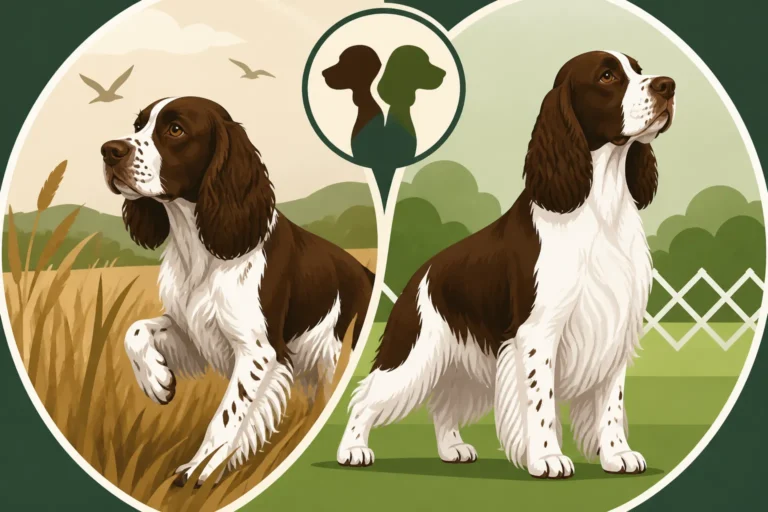
A roan coat does not, by itself, tell you whether a Springer Spaniel is field bred or show bred. Both appearance and working style vary within the breed, and color is not a reliable shortcut for predicting drive, temperament, or exercise needs. If you’re trying to decide what kind of dog fits your household, ask about the parents’ behavior and the breeder’s goals rather than using coat pattern as a clue.
For context on those differences, Two Breeds Registered as One: the Field and Show Springer Spaniel looks at the variation within the breed. It is more useful to consider a dog’s breeding, activity level, and individual personality than to assume that roan means a particular type.
Roan compared with other Springer Spaniel patterns
| Coat description | What it generally looks like | Helpful distinction |
|---|---|---|
| Blue roan | Black and white hairs mixed together in roaned areas | “Blue” describes the blended appearance, not a solid blue coat |
| Liver roan | Liver and white hairs mixed together in roaned areas | The colored hairs are liver rather than black |
| Ticking | Separate colored spots in white areas | Spots tend to look more distinct than an even mixture of hairs |
| Black and white | Black patches and white areas with less visible intermixture | The contrast may be more clearly divided |
| Liver and white | Liver patches and white areas with less visible intermixture | The coat has liver-colored patches rather than an overall roan effect |
| Tricolor | Black and white or liver and white, with tan markings | Tan points add another color to the pattern |
These descriptions are useful shorthand, not a substitute for examining the actual coat. A dog can have both roaning and more defined patches, and the appearance may be harder to read when the coat is long, dirty, wet, or photographed in poor light. If the distinction matters for registration or a show entry, confirm it with the relevant registry rather than guessing from a phone photo.
Roan versus black and white
A black-and-white Springer Spaniel usually has areas where black and white are more clearly separated. A blue roan has black hairs spread through white areas, which can make those sections appear grayish or finely speckled. From across a field, the difference may be subtle; close up, the mixed hairs are easier to see.
The same basic comparison applies to liver-and-white and liver-roan coats. A liver-and-white dog may have distinct liver patches, while a liver roan has liver hairs blended through white areas. Because individual coats vary, there is no need to expect every dog to match a perfectly neat diagram.
Roan and coat color are not health tests
The color pattern does not tell you whether a puppy has been screened for inherited conditions or whether the parents have had appropriate health checks. When you are evaluating a litter, ask about health testing separately from coat color. A striking pattern can catch your eye, but it cannot take the place of documentation and a conversation about the parents’ health and temperament.
If you are comparing puppies, ask the breeder to explain the coat descriptions and show you the available records. The article The DNA Test That Should Precede Every Springer Spaniel Purchase covers why health information deserves attention regardless of a puppy’s markings.
Choosing and caring for a roan Springer Spaniel
Look beyond the photograph
Coat pattern can be difficult to assess online. A white patch may look plain in one photo and flecked in another because of shadows, camera focus, or the direction the coat lies. Ask for photos taken in good natural light, and, if possible, see the dog in person. Looking at the coat from several angles makes it easier to tell whether the colored hairs are intermingled or gathered into distinct spots.
For a puppy, ask how the breeder describes its markings and how they record them. A responsible breeder should be able to explain the puppy’s appearance without presenting an accepted coat pattern as a health guarantee or a reason to pay extra. If you want a particular look, be honest about that preference, but weigh it alongside health, temperament, and whether the dog fits your lifestyle.
Roan should not be treated as a promise about an adult dog’s exact appearance. The overall color pattern is a useful description, but the visible detail can become more or less apparent as the coat grows and is groomed. The dog’s day-to-day needs will be much the same as those of another Springer Spaniel with a different accepted pattern.
Grooming needs come from the coat, not the roan pattern
Roan itself does not call for a special grooming routine. Springer Spaniels need regular coat care because of their feathering and the tendency for debris or tangles to collect in places such as behind the ears, under the legs, and around the furnishings. The individual dog’s coat length, texture, activity, and time spent outdoors are more relevant than whether it is roan.
After a walk through wet grass or brush, check the coat and paws for burrs, mud, and other debris. Brush gently through areas that tangle, and avoid pulling at mats, which can be uncomfortable. If you are assembling basic grooming supplies, retailers such as Chewy may offer brushes and combs in different styles; choose tools suited to the dog’s coat and use them carefully.
The same practical approach applies to bathing and trimming. A working dog that spends time in cover may need more frequent rinsing or debris checks than a dog that mostly walks on paved paths. For a wider look at grooming differences, see Two Coats, Two Routines: Field and Show Springer Spaniel Grooming. If you need to replace a comb or brush, Chewy is one place to compare general grooming supplies, but a groomer can advise you on the right tool for a particular coat.
Keep color preference in perspective
It is perfectly reasonable to have a favorite look. Some people love the soft, speckled appearance of a blue roan; others prefer liver-and-white patches or a tricolor coat. The important thing is not to let a color preference crowd out questions about the dog’s health, temperament, breeder practices, and likely activity level.
If you are buying a puppy, ask to meet the breeder, learn about the parents, and understand what support is available after the puppy goes home. If you are adopting an adult dog, ask about its behavior, grooming habits, and medical history where known. A dog’s markings can make it memorable, but the relationship you build depends on far more than its coat.
A roan English Springer Spaniel is a correct and recognized variation. The simplest way to avoid confusion is to separate three questions: what the coat looks like, what the applicable breed standard accepts, and what health and temperament information the dog’s people can provide. When those are considered independently, roan is just one appealing coat pattern among several.
Disclaimer
This article is for general informational purposes only and does not constitute professional advice. Laws, prices and regulations vary by location and change over time. Consult a qualified professional for guidance on your specific situation.