The Springer Spaniels That Lived in the White House
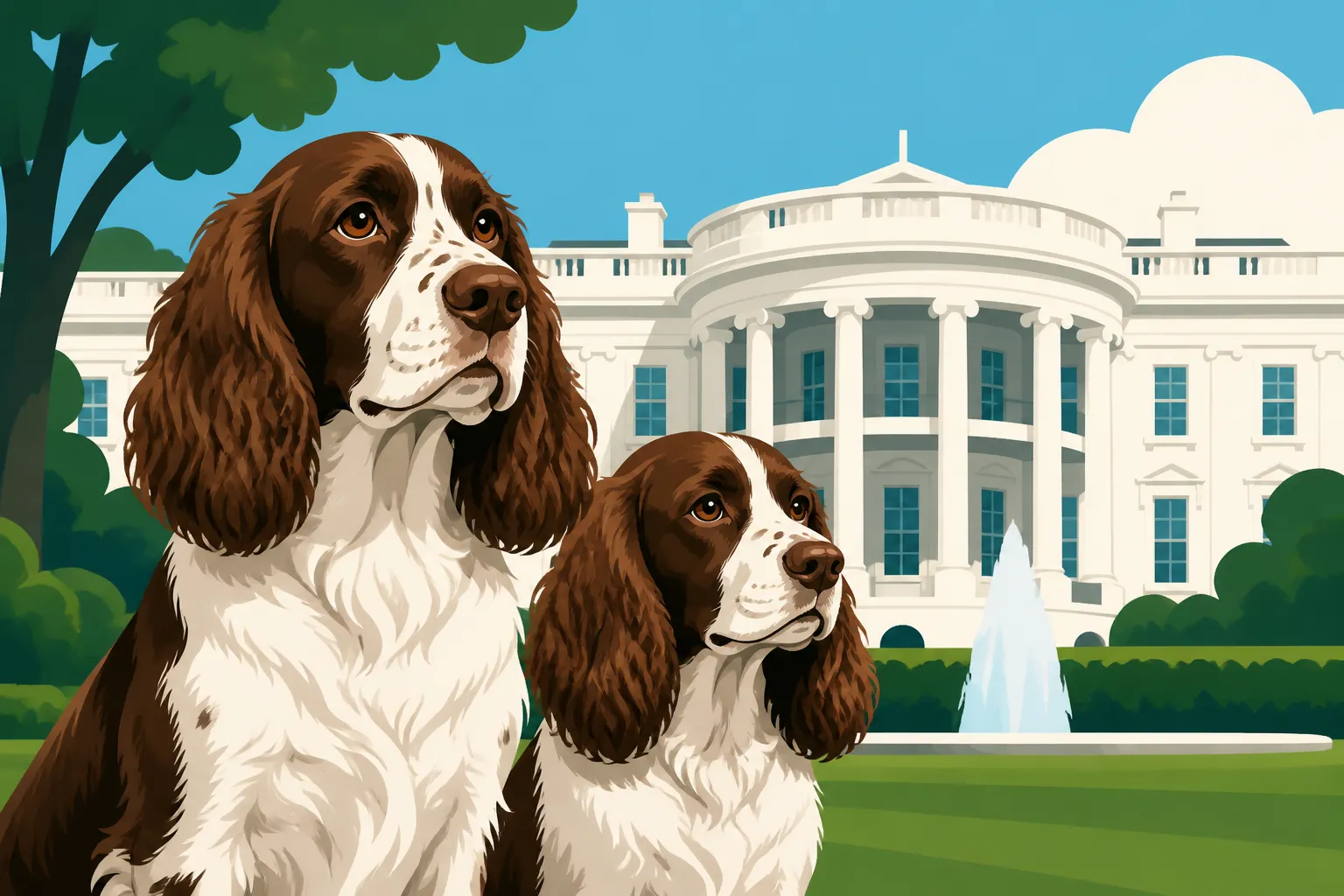
The White House’s best-known English Springer Spaniels were Millie and her daughter Spot Fetcher, dogs whose lives connected two presidential families and introduced millions of people to the breed. Their story is more than a charming bit of presidential trivia: it shows how a sporting dog can become a family companion, a public figure, and a very visible ambassador for its breed.
Millie became one of America’s best-known presidential dogs
How Millie joined the Bush family
Millie was an English Springer Spaniel who belonged to George H. W. Bush and Barbara Bush. When Bush became president, Millie moved with the family into the White House. Her friendly presence and distinctive, feathered ears made her easy to recognize, but she became especially famous because she was not simply a dog photographed beside her owners. She became a subject in her own right.
The Bushes’ affection for Millie came through in public appearances and interviews. She was part of their household, not a trained performer brought out for a photo opportunity. That distinction matters: a presidential dog can be a symbol to the public and still be an ordinary family dog with familiar needs, such as exercise, attention, grooming, and a quiet place to rest.
Millie’s popularity helped make the English Springer Spaniel more familiar to people who might otherwise have known the breed only as a hunting dog. If you are learning about the breed’s background, Springing Game: What the Springer Spaniel Name Describes explains the flushing work behind the name, while The Household a Springer Spaniel Was Built For offers useful context for the kind of home life these dogs tend to suit.
Why the public noticed her
Millie was a natural fit for the public imagination: affectionate-looking, alert, and unmistakably a spaniel. Her visibility also reflected the Bush family’s willingness to talk about her as a member of the household. She was not just “the president’s dog”; she had a personality and a place in the family’s daily life.
Her fame grew further when Barbara Bush wrote Millie’s Book, a first-person account told from the dog’s point of view. The book offered a playful way for readers to imagine life around the White House, while also making Millie’s name familiar well beyond political news. The appeal was simple: readers could enjoy the presidential setting, but the story still revolved around a dog’s everyday observations and relationships.
That public attention shouldn’t obscure the ordinary care behind the scenes. English Springer Spaniels have a medium-length coat, and their feathering can collect dirt, burrs, and tangles. Their drop ears also need routine attention, particularly after swimming or damp outdoor adventures. Owners trying to understand the breed’s coat differences can read The Colors a Springer Spaniel Comes In for appearance basics and How Different the Two Springer Spaniel Types Look for a comparison of field-bred and show-bred dogs.
Spot Fetcher carried the story into a second presidency
Millie’s daughter and the White House connection
Millie’s daughter Spot Fetcher was born during George H. W. Bush’s presidency and later lived in the White House during George W. Bush’s administration. That family link is the remarkable detail at the heart of the story: Spot was not simply another presidential dog chosen by a later president. She was Millie’s puppy, connecting the two Bush presidencies through the same Springer Spaniel family.
Spot’s name was often shortened to Spot, but “Spot Fetcher” had a playful, retriever-like ring to it. She joined a household that also included other dogs, and her life at the White House gave the English Springer Spaniel another period of public visibility. She is remembered as a dog who lived under both George H. W. Bush and George W. Bush, a rare distinction in presidential pet history.
The family relationship also highlights how much a dog’s individual temperament matters. A puppy may inherit breed tendencies, but the dog’s comfort with visitors, household noise, travel, and routine depends on many factors: socialization, training, health, and the people around them. A famous family name does not make a dog automatically suited to a busy home or an unpredictable schedule.
What made Spot’s story unusual
Spot’s life bridged two administrations and two generations of the Bush family. That makes her story stand out from the more familiar pattern of a president welcoming a new pet during a single term. The White House setting brought attention, but the connection to Millie gave the story its continuity.
It is easy to picture a presidential dog enjoying broad lawns and open rooms, but life in a large, busy household still takes adjustment. A dog needs predictable rest, kind handling, appropriate exercise, and clear boundaries—even when there are staff members and visitors moving through the home. For a Springer Spaniel, that balance can be especially important because many are enthusiastic, people-oriented, and quick to follow a scent or movement.
If Spot’s story has you wondering whether the breed is manageable in a typical home, Whether a Springer Spaniel Suits a First Time Owner explores the practical realities. For owners whose dogs become distressed when separated from family, The Springer Spaniel That Cannot Be Left Alone discusses a challenge that can arise with a strongly bonded companion breed.
What the White House dogs show about Springer Spaniels
A sporting dog can be a devoted household companion
English Springer Spaniels were developed as working gundogs, but their history does not prevent them from being affectionate family dogs. Many enjoy being close to their people and taking part in daily activities. The flip side is that a Springer may not be content with a short walk and long stretches of inactivity. They often benefit from a combination of physical exercise, training, sniffing, and time with their family.
The White House stories can make the breed look effortlessly polished. Daily life is usually less camera-ready. A Springer that has run through wet grass may arrive home with muddy feathering; one that swims may need careful drying; and one that has spent time in brush may need a close check for burrs or grass awns. Those are manageable routines, but they are part of living with a dog bred to work outdoors.
For practical coat care, Two Coats, Two Routines: Field and Show Springer Spaniel Grooming compares grooming needs across the breed’s two common types. After outdoor adventures, After the Hunt: Checking a Springer Spaniel Over Nose to Tail offers a useful reminder that ears, paws, coat, and skin all deserve attention. Owners assembling everyday supplies may find it convenient to compare grooming tools, leads, and enrichment toys at retailers such as Chewy, while choosing products that suit their dog’s coat and habits.
The breed’s needs are more important than its celebrity
A famous dog can spark interest in a breed, but celebrity should never be the main reason to choose one. A prospective owner should consider the dog’s energy, training needs, coat care, and ability to settle when the household is quiet. The field and show types can also differ in appearance and working drive, so asking a responsible breeder or rescue about an individual dog’s temperament is more useful than relying on a broad stereotype.
Here is a simple way to think about the daily realities:
| Springer Spaniel need | What it can look like at home | Why it matters |
|---|---|---|
| Regular activity | Walks, play, training, or structured outdoor time | Helps meet physical and mental needs |
| Scent and problem-solving | Search games, food puzzles, or supervised exploring | Gives a keen nose an appropriate outlet |
| Coat maintenance | Brushing and checking feathering for tangles or debris | Helps prevent mats and makes outdoor dirt easier to manage |
| Ear awareness | Routine checks, especially after water or damp weather | Drop ears can stay moist and may need attention |
| Training and routine | Reward-based practice and clear household rules | Supports calm behavior around visitors and daily distractions |
A puzzle feeder or treat-dispensing toy can make a meal more engaging for some dogs, and Chewy is one place owners may browse those kinds of supplies. The tool is not a replacement for training or interaction, though; a dog that needs company and activity will not have those needs met simply by being given another toy.
Owners should also resist trying to recreate a presidential dog’s lifestyle. A Springer does not need grand grounds or a formal household. The essentials are attentive care, appropriate exercise, thoughtful socialization, and a family prepared to include the dog in everyday life. When shopping for routine items, Chewy may be useful for comparing options, but a veterinarian or qualified groomer is a better resource for questions about health, diet, or coat-care concerns specific to an individual dog.
Millie and Spot’s lasting place in presidential pet history
More than a novelty story
Millie and Spot are remembered because their story crossed generations. Millie became known in her own right during George H. W. Bush’s presidency, and Spot carried that family connection into George W. Bush’s White House. Together, they gave the English Springer Spaniel unusual visibility in American public life.
Their story also shows why presidential pets resonate. People may follow politics for very different reasons, but the sight of a family dog can make a public figure’s home life feel familiar. Readers who had never met a Springer Spaniel could see one as a companion with a personality, rather than only as a sporting dog or a breed description.
Still, public affection is not the same as a complete picture of the breed. The dogs’ White House lives were shaped by a particular family and setting. Another Springer may be noisier, more energetic, less comfortable with crowds, or more interested in scent work. Breed tendencies can guide expectations, but they do not tell you everything about an individual dog.
What prospective owners can take from their example
Millie and Spot offer a warm introduction to the breed, but the most useful lesson is practical: a Springer Spaniel can become deeply woven into family life when the household makes room for the dog’s needs. That means planning for daily activity, building good routines, and accepting that a sporting coat may bring outdoor debris into the house now and then.
Before bringing one home, consider what a normal weekday would look like. Who will provide exercise and company? Is there time for grooming and training? Can the dog be included in family routines without being overwhelmed by constant activity? These questions matter whether the dog comes from a breeder or a rescue. Reading Whether Springer Spaniel Owners Would Choose One Again can help prospective owners think through the lived experience beyond the breed’s public image.
Millie and Spot remain memorable not because every Springer Spaniel is a presidential pet, but because their story made the breed’s companionship visible. They were dogs in a remarkable setting, yet the qualities people remember—loyalty, presence, and a place in family life—are familiar to many Springer Spaniel owners.
Disclaimer
This article is for general informational purposes only and does not constitute professional advice. Laws, prices and regulations vary by location and change over time. Consult a qualified professional for guidance on your specific situation.