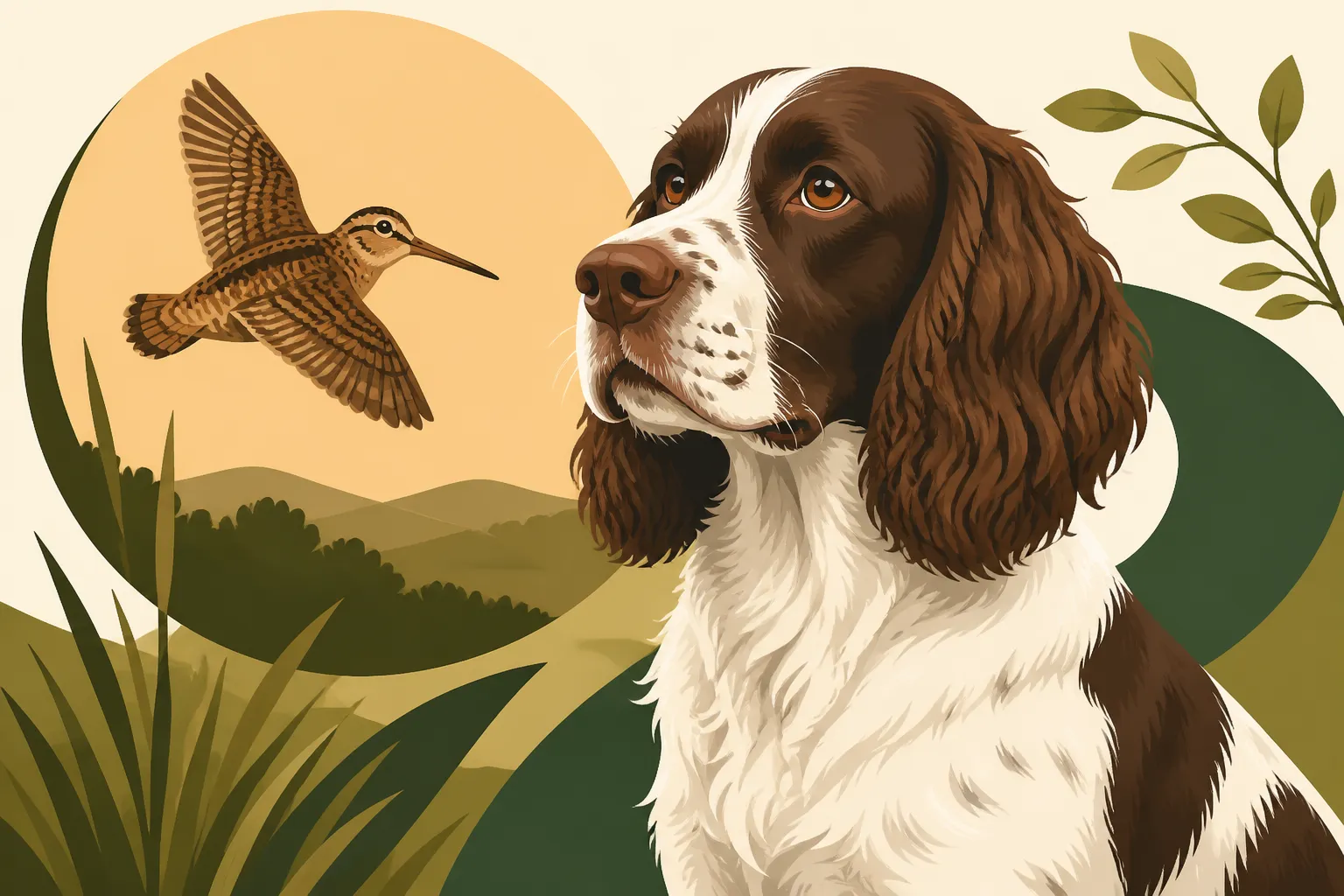
Whether Woodcock Named the Cocker and Springing Named the Springer
It’s a tale as old as time for spaniel enthusiasts: the constant wonder about where our beloved breeds got their names. You might have heard whispers, or perhaps pondered yourself, whether the majestic English Springer Spaniel earned its moniker from its distinctive "springing" action in the field, and if the smaller, equally charming Cocker Spaniel was indeed named after the woodcock, a bird it was specifically bred to hunt. It's easy to get lost in the folklore and breed histories, but understanding these origins helps us appreciate the deep-rooted purpose behind these wonderful dogs. This guide is going to take a deep dive into the historical tapestry that wove together the names and roles of both the Springer and Cocker Spaniel, unraveling the truths behind these fascinating etymologies.
The Energetic Origins of the Springer Spaniel Name
When you watch a Springer Spaniel work, or even just play in a field, it’s not hard to see where the "springing" part of their name comes from. These dogs are incredibly athletic, bursting with energy, and their traditional role in hunting involved a very specific, dynamic action: flushing game from dense cover. This wasn't about quietly pointing or meticulously retrieving; it was about getting in there, making some noise, and springing the game into the air for the waiting gun.
Springing Game: What It Actually Means
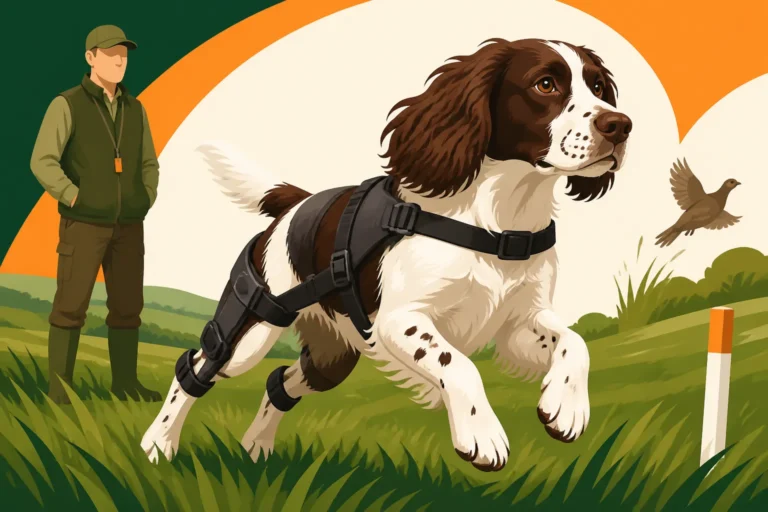
Imagine a hunter walking through thick brush, reeds, or tall grasses. They couldn't always see the pheasants, partridges, or hares hiding just a few feet away. This is where the spaniel came in. A Springer Spaniel would work diligently in front of the hunter, weaving back and forth in a methodical pattern known as "quartering." Their powerful legs, keen nose, and unwavering drive allowed them to plunge into dense cover that would be impenetrable for many other breeds. When they found game, instead of pointing, they would "spring" it – literally leaping and flushing the bird or animal directly into the air. This sudden, explosive movement would launch the hidden game out of cover, making it visible and accessible for the hunter to take a shot.
This dynamic style of hunting was absolutely essential before the advent of more specialized retrieving breeds. The Springer wasn't just flushing; it was often also expected to retrieve the fallen game, bringing it back to hand. This combination of flushing and retrieving made them incredibly valuable all-around gundogs. The sheer vigor and enthusiasm with which they perform this "springing" action is truly a sight to behold, and it’s no wonder it became the defining characteristic that led to their name. It's a testament to their purpose-driven breeding that even today, a casual walk in a park can see a Springer spontaneously "springing" through bushes, driven by that ancient instinct.
The Role of Cover and Terrain
The type of terrain and cover often dictated the need for a "springing" dog. Think about marshy areas, dense hedgerows, or fields of high crops. A pointer might be suitable for open fields where game birds are more easily spotted, but in thick, tangled undergrowth, a dog that could get right in amongst it and physically push the game out was indispensable. The Springer's medium size, sturdy build, and incredible stamina allowed them to navigate these challenging environments with ease. Their waterproof coats and strong, webbed feet also helped them handle wet or muddy conditions, making them versatile working companions in all sorts of British landscapes.
The hunter would rely on the Springer to move the game from where it was hiding to where it could be shot. This required a dog that worked relatively close to the gun, staying within range, so that when the game "sprang," it wasn't too far away. This close-working style is still prized in field-bred Springer Spaniels today, and it’s a direct link back to their historical naming convention. You can read more about how their working style developed in Springing Game: What the Springer Spaniel Name Describes.
The Woodcock Connection to the Cocker Spaniel
Now, let's turn our attention to the Cocker Spaniel. Unlike the "springing" action, the name "Cocker" points directly to a specific quarry: the woodcock. This isn't just a coincidence; these smaller spaniels were meticulously bred and trained to hunt this elusive woodland bird.
Hunting the Elusive Woodcock
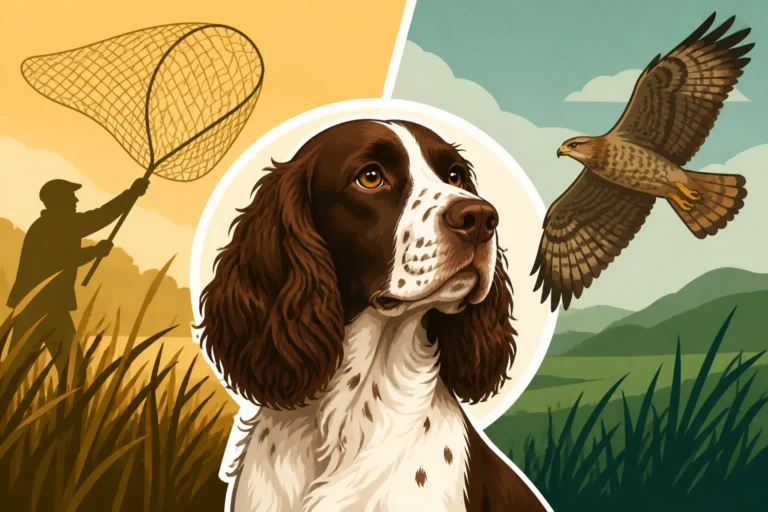
The woodcock is a fascinating bird, known for its superb camouflage, solitary nature, and preference for dense, damp woodland cover. It's not a bird you'd typically find in open fields. Hunting woodcock requires a different approach than flushing pheasants. The woodcock tends to hold very tightly, meaning it won't flush easily. It often stays hidden until the last possible moment, sometimes even allowing a dog to almost step on it before taking flight. This characteristic meant hunters needed a smaller, more compact dog that could navigate very tight, thorny undergrowth without getting stuck, and work close enough to literally push the bird out.
The original "cocking spaniels" were those small, energetic dogs that excelled at this specific task. Their smaller stature allowed them to slip through brambles and thickets that a larger Springer might struggle with. They had to be persistent, brave, and possess an excellent nose to root out these well-hidden birds. The intense focus required to find a woodcock in its natural habitat truly defined the breed’s early purpose and, subsequently, its name.
From "Cocking Spaniel" to "Cocker Spaniel"
Over time, as these smaller spaniels became more specialized in hunting woodcock, they became known as "cocking spaniels." It was a descriptor of their primary function. This gradually shortened to "Cocker Spaniel," a direct and enduring tribute to their skill in hunting this particular bird. While today's Cocker Spaniels (both English and American) are beloved companions and show dogs, that deep-seated hunting instinct, particularly for sniffing out and flushing small game, remains. You can still see that intense drive when a Cocker starts methodically scenting out an interesting patch of bushes in your backyard, just as their ancestors did in ancient woodlands. Finding durable toys and training aids that tap into this natural prey drive can be a great way to engage your Cocker, and resources for these items are plentiful on sites like Chewy.
The distinction between the "Springer" and "Cocker" became more pronounced as breeders began to selectively breed for specific sizes and working characteristics best suited for their respective game. This specialization solidified their identities, moving them from generic "land spaniels" to distinct breeds with distinct names.
A Shared History: Before the Formal Split
It might surprise you to learn that for a very long time, "Springer" and "Cocker" weren't really distinct breeds in the way we think of them today. They were more like classifications based on size and function, and often, puppies from the very same litter could be designated as one or the other depending on their mature size.
One Litter, Two "Breeds"
Before the formalization of breed standards by kennel clubs in the late 19th and early 20th centuries, it was common practice for breeders to categorize spaniels purely by their hunting abilities and their size. If a spaniel pup from a litter grew to be larger and more suited to "springing" larger game like pheasants and hares, it might be called a Springer. If it remained smaller, more compact, and excelled at hunting woodcock in dense cover, it would be dubbed a Cocker. This wasn't a matter of genetics in the modern sense of breed-specific DNA, but rather a practical approach to categorizing working dogs.
Think about it: breeders were less concerned with rigid physical standards and more with practical utility. A good gundog was a good gundog, and if one litter produced both a larger, more powerful flusher and a smaller, agile woodcock hunter, then all the better. This fluid naming system highlights how deeply intertwined the roles of these dogs were and how much their names were tied to their function in the field. This tradition of mixed-size litters continued right up until the official recognition of the breeds. You can delve deeper into this fascinating period by reading Why Springer and Cocker Puppies Once Came From One Litter.
The Role of Weight in Differentiation
For a period, the dividing line between a Cocker and a Springer was literally a matter of weight. There was an informal agreement among some breeders and hunters that a spaniel weighing under a certain amount (often around 25 pounds) would be considered a Cocker, while anything heavier was a Springer. This practical, albeit somewhat arbitrary, classification underlines the functional basis of their early identities. It wasn't about parentage as much as it was about the individual dog's physical attributes and the work it could do.
This practice of distinguishing by weight eventually gave way to more comprehensive breed standards that considered a wider range of physical characteristics, including bone structure, coat type, and overall conformation, in addition to size. But the initial focus on weight is a clear indicator of how fundamentally their hunting roles dictated their perceived "type."
The Formalization of Names and Breed Standards
The blurry lines between "Cocker" and "Springer" couldn't last forever, especially as dog shows gained popularity and kennel clubs began to establish more rigid breed standards. The early 20th century saw a significant shift, cementing the distinct identities we recognize today.
The 1902 Split and Breed Recognition
The year 1902 was pivotal for the English Springer Spaniel. It was in this year that the Kennel Club in the UK officially recognized the English Springer Spaniel as a distinct breed. This act drew a definitive line in the sand, separating them formally from the Cocker Spaniel. No longer could puppies from the same litter be called both. From this point forward, breeding programs began to focus on developing the specific characteristics associated with each breed, leading to the physical and temperamental differences we observe today.
This formal recognition was a massive step for both breeds. It meant that breeders now had clear guidelines to follow, aiming for consistency in appearance, size, and working ability within each breed. This also led to more structured breeding practices, including the establishment of studbooks and the tracking of pedigrees, which further solidified the distinction. The 1902 Split That Separated Springer From Cocker provides a fantastic overview of this landmark event in spaniel history.
Evolving Standards and Types
Post-1902, the two breeds began to diverge more rapidly. The English Springer Spaniel, with its slightly larger frame and powerful drive, continued to be celebrated for its ground-covering "springing" ability and versatility in hunting various game birds. Meanwhile, the Cocker Spaniel maintained its smaller size, excelling in dense cover and for smaller game. Over the decades, even within the English Springer Spaniel breed, two distinct types emerged: the field-bred Springer and the show-bred Springer, each optimized for different purposes, though both still carrying the name "Springer" rooted in that original flushing action.
The names, therefore, are not just arbitrary labels but living testaments to the historical working lives of these incredible dogs. They serve as a constant reminder of the specific tasks they were bred to perform and the qualities that made them indispensable companions to hunters for centuries. When you watch a Springer work, remember that bounding, enthusiastic "spring," and when you see a Cocker intently sniffing a bush, know that it carries the legacy of generations of woodcock hunters.
| Breed Name | Primary Action/Target | Traditional Role | Key Physical Trait (historical) | Modern Breed Status |
|---|---|---|---|---|
| English Springer Spaniel | "Springing" game (pheasant, hare) | Flushing game from heavy cover for the gun | Larger, more robust | Distinct, often two types |
| Cocker Spaniel | "Cocking" (woodcock) | Hunting woodcock in dense, tight undergrowth | Smaller, more agile | Distinct, often two types |
This table neatly summarizes how their names directly reflect their historical occupations. It's a beautiful example of how function truly shaped form and nomenclature in the world of gundogs.
The Enduring Legacy of Names
The names "Springer" and "Cocker" are more than just labels; they are a direct link to the ancestral duties and inherent instincts that define these breeds. Even if your Springer Spaniel has never set foot in a hunting field, or your Cocker Spaniel prefers the sofa to the thickets, those ancient drives are still there, influencing their personalities and behaviors.
Instincts Alive Today
Watch a Springer Spaniel in a park, and you’ll likely see them quartering a lawn, head down, tail wagging furiously, "springing" into the air after a perceived scent. This isn’t just random play; it’s the genetic memory of generations of working dogs performing their inherited duties. Similarly, a Cocker Spaniel’s intense focus on a scent trail, its ability to burrow into bushes, and its eagerness to retrieve a thrown toy all harken back to its woodcock-hunting ancestors. These are the instincts that make them such engaging and active companions. If you're providing enrichment for these intelligent dogs, remember their history. Interactive feeders or toys that allow them to use their nose, many of which can be found at Chewy, can be incredibly satisfying.
Understanding these origins helps us appreciate our dogs on a deeper level. It explains their endless energy, their powerful noses, their desire to be active, and their strong bond with their human companions, a bond forged in centuries of working side-by-side. The names are a daily reminder of their glorious past and the purpose for which they were so carefully bred.
Preserving the Working Heritage
For many enthusiasts, especially those involved in field trials and hunt tests, preserving these working characteristics is paramount. They strive to breed and train Springers and Cockers that can still perform the tasks they were originally named for. This ensures that the athleticism, intelligence, and biddability that define these breeds continue for future generations. Whether you have a working dog or a beloved family pet, honoring these roots means understanding their needs for exercise, mental stimulation, and companionship.
So, yes, the popular wisdom is indeed true: the Springer Spaniel got its name from its characteristic "springing" action to flush game, and the Cocker Spaniel was named for its prowess in hunting the woodcock. These names aren’t just arbitrary; they are deeply woven into the very fabric of their history and continue to influence the magnificent dogs we share our lives with today. It's a wonderful legacy to be a part of. The dedication to these dogs extends to every aspect of their care, from training to The DNA Test That Should Precede Every Springer Spaniel Purchase and understanding How Old the Springer Spaniel Is as an English Gundog.
Disclaimer
This article is for general informational purposes only and does not constitute professional advice. Laws, prices and regulations vary by location and change over time. Consult a qualified professional for guidance on your specific situation.