Where the English Springer Spaniel Comes From
It's fascinating to delve into the history of our beloved English Springer Spaniels, especially when you see how deeply their past is woven into their present-day personalities and instincts. Many new owners, and even some seasoned ones, struggle to understand why their Springer acts the way it does – why it has that relentless drive, that incredible nose, or that deep desire to be by your side. The answer often lies in their ancient origins and the very specific job they were bred to do. This guide will take you on a journey through time, exploring how the English Springer Spaniel came to be, tracing its lineage from generic hunting dogs to the distinct, cherished breed we know today, and shedding light on the historical forces that shaped its unique characteristics.
Ancient Roots and Early Spaniel History
When we talk about the origins of the English Springer Spaniel, we're not just looking back a few hundred years, but much further into a time when "breeds" as we understand them today didn't really exist. Instead, there were types of dogs, categorized by their function rather than a formal pedigree. The spaniel type, in general, has a long and storied history, deeply entwined with the development of hunting across Europe. These early dogs were essential partners for hunters, crucial for putting food on the table, and their lineage is steeped in the practical needs of rural life.
The Generic "Spaniel" Tag
In medieval times, and for centuries thereafter, the term "spaniel" was a broad descriptor, not a specific breed name. It simply referred to a type of dog believed to have originated in Spain – hence "spaniel" – known for its ability to work closely with hunters, flushing game from cover. These weren't the elegant, feathered dogs we recognize today; they were hardy, determined canines with a keen sense of smell and an eagerness to please their human companions. Imagine a bustling medieval village, where a hunter's success directly impacted the survival of his family. These versatile spaniel-type dogs were invaluable, adapting to various terrains and types of game.
They weren't bred for conformity in appearance or a strict lineage as we see with modern kennel club standards. Instead, they were bred for performance. If a dog was good at finding and driving game, its offspring were prized. This functional breeding meant there was a huge diversity in appearance, size, and coat among these early spaniels. Yet, they all shared that fundamental drive to work with a hunter, using their nose and energy to locate birds and small animals that might otherwise remain hidden in dense undergrowth.
Early Hunting Practices and Spaniel Roles
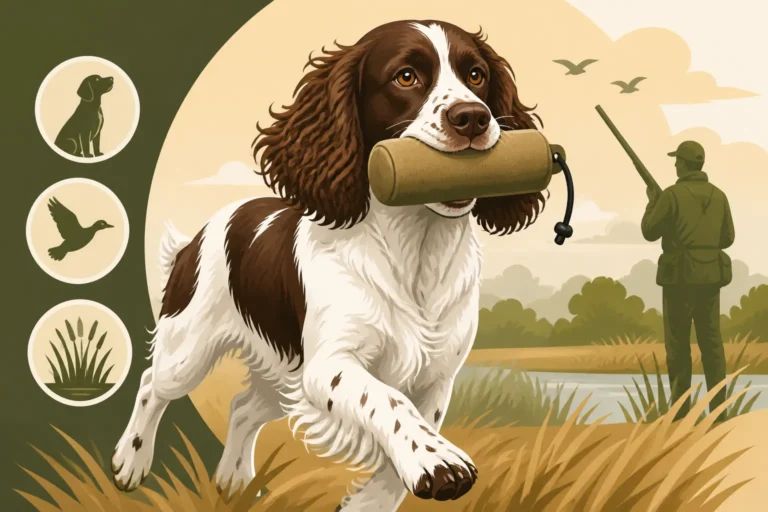
Before the widespread use of firearms, spaniels played a different, yet equally vital, role in hunting. Their primary job was to "spring" or "flush" game from its hiding places into nets, or towards falcons and hawks. This was a highly collaborative effort, requiring the dog to work within a specific range, responding to commands and cues from the hunter. It wasn't about retrieving shot game, because there often wasn't any "shot" game in the modern sense. It was about discovery and driving.
Think of a bustling woodland scene: the hunter would walk with his spaniels, who would dart through thickets and tall grasses, their tails wagging furiously as they sniffed out hidden pheasants, partridges, or rabbits. Once game was located, the dog would "spring" it into the air or out into an open area, allowing the hunter to cast a net over it or the falcon to swoop down. This required a dog that was biddable, energetic, and possessed an excellent nose, but also one that wasn't so independent that it would chase game out of control. It was a precise dance between man, dog, and bird of prey.
Medieval Depictions and Working Dogs
If you look at historical tapestries, paintings, or even written accounts from the Middle Ages and Renaissance, you'll often see dogs that bear a resemblance to our modern spaniels. They might not be identical, but the general conformation—the drop ears, the eager expression, the medium size—is discernible. These artistic depictions aren't just pretty pictures; they're historical documents showing us the working dogs of the era.
These images confirm that spaniel-type dogs were already integral to hunting practices across Britain and Europe. They were appreciated for their keen hunting abilities and their affectionate nature, often portrayed alongside their aristocratic owners, not just as tools but as companions. This long history of close partnership between humans and spaniels established the foundation for the deep bonds we still share with our English Springer Spaniels today, demonstrating their enduring role in human society, initially driven by necessity and later by companionship and sport.
The "Springer" Distinction: Before 1902
For a very long time, the name "Springer Spaniel" wasn't a formal breed designation but rather a description of a specific job within the spaniel family. It was all about what the dog did in the field. If a spaniel was particularly adept at flushing game into the air or out of dense cover, it was referred to as a "springer." This practical classification highlights how intrinsically linked these dogs were to the hunt itself, with their purpose defining their identity.
Working Purpose Dictated Name
Before the Kennel Club in England, and later the American Kennel Club, started formalizing breeds, dogs were largely named and categorized based on their utility. A "setter" would set game; a "pointer" would point; and a "springer" would, well, spring. It was a clear, functional labeling system. The qualities that made a good springer were a strong prey drive, an excellent nose for scent, stamina to cover ground all day, and a cooperative spirit. These traits were valued above all else, and breeders (or simply hunters who kept good lines) prioritized passing them on.
This focus on function meant that appearance was secondary. You might have seen dogs that looked quite different working side-by-side as "springers," simply because they all excelled at the job. This historical context helps us understand the incredible drive and keen hunting instincts still present in modern English Springer Spaniels. Their ancestors literally had "springing" in their job description, and that innate ability has been carefully preserved through generations.
How Spaniels Were Sorted by Size Before 1902
Interestingly, before formal breed standards solidified, one of the primary ways spaniels were differentiated, especially between what would become "Cockers" and "Springers," was simply by size. It wasn't necessarily about distinct parentage or genetic lines in the way we think of purebred dogs today. Instead, larger spaniel puppies from a litter might be designated as "springers," while their smaller siblings, often destined for hunting woodcock (hence "cocker"), would be called "cockers." This fluid system meant that even within a single litter, you could have what were essentially two different "types" of working dogs being developed. You can explore more about this historical classification in How Springer Spaniels Were Sorted by Size Before 1902.
This approach seems almost arbitrary by today's standards, but it made perfect sense at the time. A larger, more robust dog was better suited to pushing through thick cover and flushing heavier game like pheasants, while a smaller, more agile dog could navigate dense undergrowth more easily for smaller birds like woodcock. The practicality of the hunt dictated the classification. Imagine a farmer looking at a litter of puppies, deciding which ones would be best for different hunting tasks based purely on their developing physique.
The Norfolk Spaniel and the Springer Spaniel
When we trace the direct lineage of the English Springer Spaniel, one name frequently pops up: the Norfolk Spaniel. This now-extinct breed is widely considered a direct ancestor, perhaps even the immediate predecessor, of the modern English Springer Spaniel. The Norfolk Spaniel was a well-regarded working dog, known for its strong hunting abilities and keen sense of smell, particularly prevalent in the Norfolk region of England.
These dogs were larger spaniels, known for their strong build and tireless work ethic. They embodied many of the characteristics that would later define the English Springer Spaniel. In many ways, the early "Springer" type was essentially the Norfolk Spaniel, or very closely related strains. As breeders began to formalize types, the Norfolk Spaniel's traits were recognized and selectively bred, eventually merging into the emerging English Springer Spaniel breed. It’s a testament to the effectiveness of these historical working dogs that their qualities were so valued they became foundational to a new, distinct breed. You can learn more about this connection in The Norfolk Spaniel and the Springer Spaniel.
The Great Divide: Cocker vs. Springer
The year 1902 marks a pivotal moment in the history of the English Springer Spaniel. Before this date, the distinction between a "Cocker" and a "Springer" was largely functional and size-based. But the dawn of formal breed recognition brought about an official separation, forever altering the trajectory of these beloved spaniel types. It wasn't a sudden, clean break, but a process that solidified definitions and, eventually, led to two distinct breeds.
Which Littermates Became Cockers and Which Springers
It's hard for us to imagine today, but it wasn't uncommon for a single litter of spaniel puppies to produce both "Cocker" and "Springer" types. Breeders would simply wait for the puppies to grow a bit, then assess their size and conformation. The larger, heavier-boned puppies, often exhibiting the robust build suitable for "springing" game, would be designated as Springers. Their smaller, more compact littermates, deemed better suited for flushing woodcock in dense cover, would be classified as Cockers. It was a natural sorting process based on emerging physical characteristics and anticipated working roles. You can find more details on this practice in Which Littermates Became Cockers and Which Springers.
This practice highlights the incredible genetic diversity within these early spaniel lines and the flexible nature of "breed" definitions at the time. It wasn't about rigid pedigrees but about practical application. A breeder focused on utility would be thrilled to get both types from one litter, effectively covering different hunting needs. This shared lineage emphasizes how closely related English Springer Spaniels and English Cocker Spaniels truly are, sharing common ancestors and even siblings within the same generation.
What Weight Divided a Cocker From a Springer
The most practical, and perhaps arbitrary, demarcation between a Cocker and a Springer in these early days was weight. There was no absolute, universally agreed-upon weight, but generally, a spaniel puppy or young adult under a certain weight threshold (often around 25 pounds) might be considered a Cocker, while anything above that would be a Springer. This wasn't a scientific method, but a common-sense approach to categorizing dogs for their respective hunting tasks. For a deeper dive into this historical metric, check out What Weight Divided a Cocker From a Springer.
This weight-based division was practical because it often correlated with overall build and stamina. A heavier dog could push through denser brush more effectively, while a lighter dog could maneuver through tight spots more easily. However, it also meant that a dog's "breed" could effectively change as it grew, or that puppies from the same parents could belong to different classifications. It speaks to a time before genetics were understood in the way they are today, and classification was much more about observable traits and utility.
The 1902 Split That Separated Springer From Cocker
The year 1902 marked the official separation. The English Kennel Club formally recognized the English Springer Spaniel as a distinct breed, no longer to be confused with the Cocker Spaniel, despite their shared ancestry and former interbreeding. This decision was a monumental step, giving the Springer its own identity and laying the groundwork for the development of its specific breed standard. This historic event is fully explored in The 1902 Split That Separated Springer From Cocker.
This formal recognition meant that henceforth, breeders would register their dogs specifically as either English Springer Spaniels or Cocker Spaniels. The practice of classifying littermates differently based on size or function eventually faded as breeders began to focus on developing distinct lines for each breed. This split was crucial for solidifying the characteristics of the English Springer Spaniel, allowing breeders to refine its traits without the genetic "overlap" that had previously existed with the Cocker Spaniel. It was the birth of the English Springer Spaniel as a recognized, standalone breed.
Formal Recognition and Breed Standards
Once the English Springer Spaniel was officially recognized, the process of formalizing its characteristics and establishing breed standards began. This wasn't just about declaring a new breed; it was about meticulously defining what an ideal English Springer Spaniel should look, act, and be like. Kennel clubs on both sides of the Atlantic played crucial roles in this, shaping the breed's future and ensuring its integrity.
The Year the Kennel Club Recognized the Springer Spaniel
As mentioned, 1902 was the year of formal recognition for the English Springer Spaniel by The Kennel Club in England. This was a significant milestone, solidifying the breed's identity after centuries of being classified primarily by its working function. With this recognition came the establishment of an official breed standard, a detailed description of the ideal physical and temperamental traits. This standard provided a blueprint for breeders, guiding them in their efforts to produce consistent, high-quality English Springer Spaniels. Further details can be found in The Year the Kennel Club Recognized the Springer Spaniel.
The breed standard covered everything from coat color and texture to ear set, tail carriage, and overall conformation. It also touched upon temperament, emphasizing the breed's biddable, eager-to-please nature. This formalization meant that "English Springer Spaniel" was no longer just a job description; it was the name of a legitimate, documented breed with its own specific characteristics. This was vital for preserving the breed's unique qualities and ensuring its future development followed a consistent path.
The Year the AKC Recognized the Springer Spaniel
Across the pond, the American Kennel Club (AKC) soon followed suit, recognizing the English Springer Spaniel in 1910. This brought the breed into the fold of recognized sporting dogs in North America and ignited a passion for Springers among American hunters and dog enthusiasts. The AKC's recognition further cemented the breed's status globally and facilitated its growth and popularity in the United States. To learn more about this, see The Year the AKC Recognized the Springer Spaniel.
The AKC's adoption of a breed standard, largely mirroring the English one, meant that breeders in America had clear guidelines. This consistency between the two major kennel clubs helped maintain a unified vision for the breed, even as it developed its own distinct lines and characteristics in different regions. This period marked the true ascent of the English Springer Spaniel into widespread recognition and popularity.
Forming the Breed Clubs and Their Aims
With official recognition came the formation of dedicated breed clubs, such as the English Springer Spaniel Club of America. These clubs were established by passionate owners, breeders, and enthusiasts with clear aims: to promote the breed, preserve its working abilities, and uphold the integrity of its standard. They organized field trials, dog shows, and educational initiatives to inform the public and guide breeders.
These breed clubs played a critical role in gathering and disseminating knowledge about the breed, from health concerns to training techniques. They often established ethical guidelines for breeding, encouraging responsible practices that prioritized the health and temperament of the dogs. Many still act as invaluable resources for new owners, helping them navigate everything from finding a reputable breeder to understanding the unique needs of a Springer Spaniel. For instance, a first-time owner might consult club resources to figure out what type of food is best, whether it's a high-energy formula from a brand like Chewy or a specific diet for sensitive stomachs.
Evolution of the Breed: Field vs. Show Lines
The formal recognition of the English Springer Spaniel, while crucial for its preservation, also inadvertently set the stage for a significant divergence within the breed. Over time, different breeding philosophies emerged, leading to the development of two distinct "types" or "lines": the field-bred Springer and the show-bred Springer. While both are undeniably English Springer Spaniels, they look and behave quite differently, shaped by the goals of their respective breeding programs.
How the Field and Show Springer Spaniel Diverged
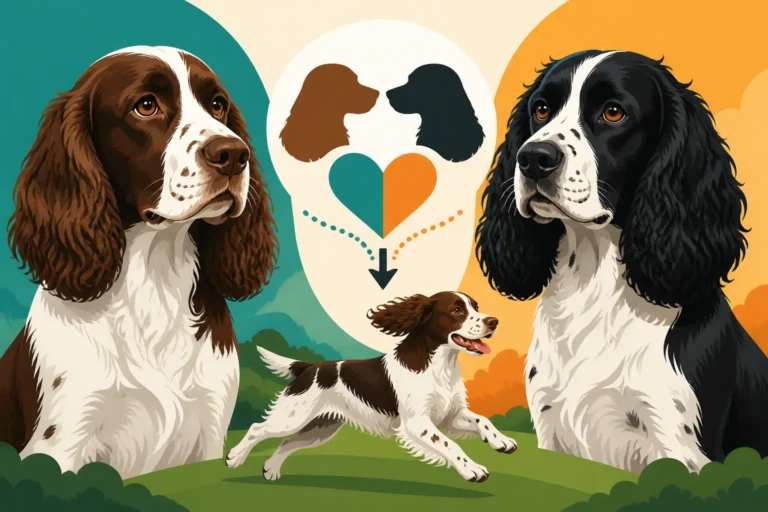
The divergence between field and show lines is a fascinating, and sometimes contentious, aspect of the English Springer Spaniel's history. Once the breed was established, some breeders continued to focus purely on working ability, aiming to produce top-tier hunting dogs. Others began to emphasize conformation to the written breed standard, prioritizing aesthetics for success in the show ring. Over generations, these different priorities led to distinct physical and temperamental traits. This split is often discussed as Two Breeds Registered as One: the Field and Show Springer Spaniel. For more detailed insights into this divergence, read How the Field and Show Springer Spaniel Diverged.
Field-bred Springers tend to be leaner, with less coat, higher energy, and an unyielding drive for hunting. They are bred for stamina, scenting ability, and responsiveness in the field. Show-bred Springers, on the other hand, often have a more substantial build, a longer, heavier coat (particularly the "feathering"), and a calmer demeanor, bred to excel in the conformation ring. Their emphasis is on elegance, symmetry, and adherence to the visual aspects of the breed standard. This distinction has become so pronounced that some advocate for officially splitting the breed into two.
How American Field Trials Shaped the Springer Spaniel
In America, field trials played a monumental role in shaping the field-bred English Springer Spaniel. These competitive events tested a dog's hunting abilities, including quartering, flushing, and retrieving, under realistic hunting conditions. Success in field trials became a hallmark of good breeding, and breeders focused intensely on producing dogs that could excel in these demanding competitions. This intense focus on performance further accentuated the differences between field and show lines. You can learn more about this influence in How American Field Trials Shaped the Springer Spaniel.
The demands of field trials favored dogs with exceptional intelligence, stamina, and an almost insatiable desire to work. This led to a very active, driven dog, often lighter in build and with a shorter coat to prevent tangles in heavy cover. The dogs that won trials were often bred extensively, passing on their performance-oriented genes. This selective breeding for specific working traits has resulted in the high-energy, focused hunting companion that many field Springer owners cherish today. When it comes to fueling these high-drive dogs, owners often look to specialized performance foods, easily found on platforms like Chewy.
How the Divide Harms the Springer Spaniel
While the development of distinct lines has allowed for specialization, it also comes with potential downsides. The widening gap between field and show types can sometimes lead to confusion for prospective owners who might not understand the profound differences in exercise needs, grooming requirements, and overall temperament. A family looking for a calm pet might unknowingly acquire a high-drive field-bred Springer, leading to frustration and potential behavioral issues if its intense energy isn't met. Conversely, a hunter might find a show-bred Springer lacks the necessary drive for serious fieldwork.
Furthermore, a narrower gene pool within each type can sometimes amplify certain health predispositions. While dedicated breeders in both camps strive for health, the emphasis on very specific traits can sometimes overshadow overall robustness. It becomes increasingly difficult to find a "middle-ground" Springer that excels in both conformation and field work, known as a Dual Champion. This divide underscores the challenge of balancing form and function in a single breed, and the ongoing debate about how best to preserve the integrity and versatility of the English Springer Spaniel. Delve deeper into the implications of this divergence in How the Divide Harms the Springer Spaniel.
Global Journey and Popularity
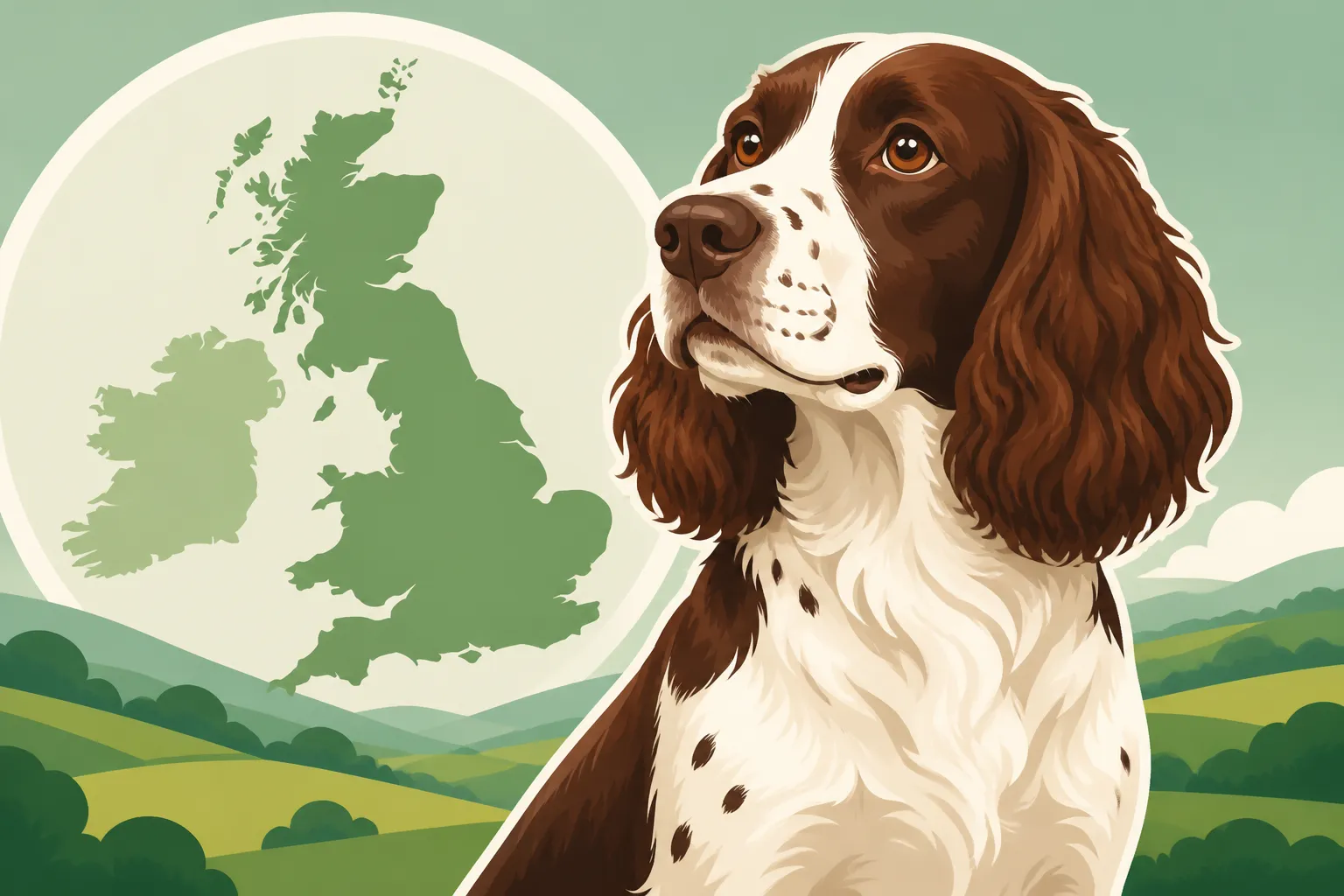
From its humble beginnings as a working spaniel in the British Isles, the English Springer Spaniel embarked on a global journey, gaining recognition and fervent admirers across continents. Its charming personality, versatile hunting skills, and striking appearance made it a beloved breed, not just among hunters but also as a cherished family companion.
The Decade Springer Spaniels Reached America
While spaniel-type dogs undoubtedly accompanied early European settlers to America, the formal introduction and recognition of the English Springer Spaniel as a distinct breed in the United States occurred primarily in the early 20th century. As we discussed, the AKC recognized the breed in 1910, but the preceding decade saw increasing interest and imports from England. This influx of well-bred Springers laid the foundation for the breed's rapid growth in popularity across North America. More specific information can be found in The Decade Springer Spaniels Reached America.
American hunters quickly recognized the Springer's potential as an exceptional gundog, particularly for upland game. Their natural ability to flush and retrieve, combined with their biddable nature, made them highly sought after. At the same time, their friendly and affectionate demeanor also endeared them to families, allowing them to establish a dual role as both working dog and beloved household pet. This versatility was key to their successful establishment in the American landscape.
Where the Springer Spaniel Is Most Popular Outside Britain
Beyond the United Kingdom and North America, the English Springer Spaniel has found enthusiastic communities in many other parts of the world. Countries with strong hunting traditions, particularly those that favor upland game, have naturally embraced the breed. Canada, Australia, and various European nations have thriving Springer Spaniel clubs and dedicated breeders. The breed's adaptability to different climates and terrains, coupled with its inherent working desire, makes it a popular choice for hunters globally.
Furthermore, the Springer's amiable disposition has made it a popular choice for companion homes even where hunting is not a primary focus. Their intelligence and eagerness to please translate well into various canine sports like agility, obedience, and scent work, broadening their appeal. This global distribution is a testament to the breed's enduring qualities and its ability to connect with people from diverse backgrounds, proving that a good dog is appreciated no matter where you are. Even in these distant markets, owners can reliably find supplies for their Springers from international pet supply companies or local distributors, much like how many in the US turn to Chewy for their needs.
The Springer Spaniels That Lived in the White House
The popularity of the English Springer Spaniel in America is perhaps best exemplified by its presence in the highest office: the White House. Several U.S. Presidents have owned English Springer Spaniels, bringing the breed into the national spotlight and showcasing their loving, loyal nature to millions. Perhaps the most famous White House Springer was "Spot" (officially Spot "Spotty" Fetcher), belonging to President George W. Bush. Spot was a familiar sight, often seen accompanying the President or playing on the White House lawn, captivating the public with his friendly demeanor.
Having such a prominent canine inhabitant helped cement the Springer's image as a wonderful family dog—loyal, playful, and affectionate. These high-profile dogs showcased the breed's intelligence and adaptability, proving they could thrive in environments ranging from the field to the demanding, high-profile life of a presidential pet. Their presence in such a symbolic home further solidified the English Springer Spaniel's place in the hearts of many Americans, inspiring many to seek out a Springer of their own.
| Era/Event | Key Development | Impact on Breed |
|---|---|---|
| Pre-1902 | Generic "spaniel" type, sorted by working function (springing) and size. | Emphasis on natural hunting ability, less on uniform appearance. Fluid classification with Cockers. |
| 1902 (UK) | English Kennel Club formally recognizes English Springer Spaniel as a distinct breed. | Official breed standard established, beginning of formal pedigree tracking. Separation from Cocker Spaniels. |
| 1910 (USA) | American Kennel Club recognizes English Springer Spaniel. | Breed gains popularity in North America, American field trials begin to influence breeding. |
| Post-1910 | Divergence into distinct "field" and "show" lines. | Specialization leads to physical and temperamental differences. Field dogs for work, show dogs for conformation. |
| Ongoing | Global popularity as gundogs and family companions. | Wide distribution, adaptability to various roles and environments. Breed clubs continue to preserve standards. |
Disclaimer
This article is for general informational purposes only and does not constitute professional advice. Laws, prices and regulations vary by location and change over time. Consult a qualified professional for guidance on your specific situation.