How the Divide Harms the Springer Spaniel
A working English Springer Spaniel and a show-bred Springer can look like two versions of the same dog on paper, yet feel strikingly different in the field and at home. That gap can narrow the gene pool, complicate health and temperament decisions, and leave owners unsure what the breed is meant to be. Here’s how the divide developed, where the real risks lie, and what responsible breeders and buyers can do.
How the field and show Springer became so different
Two kinds of success shaped two kinds of dogs
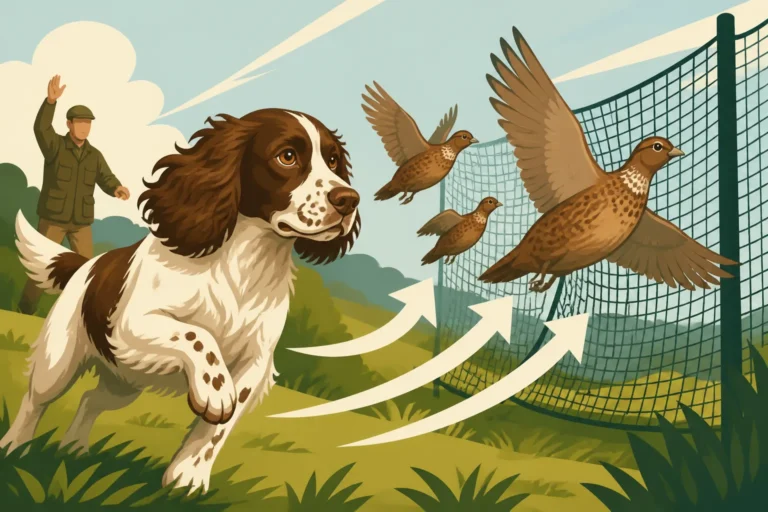
The English Springer Spaniel was developed as a flushing dog: its job was to search cover, find game and flush it within a hunter’s range. Over time, breeders selected dogs for different settings. In the show ring, appearance and movement became central goals. In working homes and field trials, drive, stamina, responsiveness and hunting style mattered most.
Neither set of priorities is inherently wrong. A breed can have dogs suited to both work and conformation without losing its shared identity. The concern is that, over many generations, breeding decisions can emphasize a narrow set of traits for one purpose while another line emphasizes a different set. The result may be dogs that differ considerably in build, coat, energy, and how readily they switch from activity to rest.
That divergence is part of How the Field and Show Springer Spaniel Diverged. It’s also why a family considering a Springer should not assume that the breed name alone predicts what life with a particular dog will be like. A field-bred dog may have strong working instincts and need purposeful outlets; a show-bred dog may carry more coat and still have plenty of energy. Individuals vary, but line and breeder choices matter.
A shared registration does not guarantee a shared gene pool
Field and show Springers remain part of the same breed, but that does not mean the two populations regularly contribute equally to one another. When breeders mostly choose mates from within a narrow circle of dogs with similar goals, the practical breeding population can become smaller than the registry suggests.
This is the issue explored in The Seventy Year Gene Pool Divide Inside One Springer Spaniel Breed. A large overall number of registered dogs can give a misleading impression of genetic breadth if many dogs are not actually considered for breeding across the lines. In other words, having many Springers in the world does not automatically mean that breeders have a wide range of unrelated, suitable mates for every breeding decision.
The split can also make it harder to maintain a common picture of the breed. A field breeder may prize a dog’s ability to search dense cover and respond to handling at a distance. A show breeder may prioritize the qualities needed to meet a conformation standard. The more those goals pull in different directions, the easier it becomes for each community to define the “real” Springer in its own terms.
How the divide can harm the breed
A narrower breeding pool can reduce options
A divided population may limit breeders’ choices, especially when they are trying to combine strong health, sound temperament, useful structure and the traits needed for a specific job. If breeders repeatedly select from a small group of fashionable, successful or closely related dogs, genetic diversity can become a concern. The risk is not that every line is unhealthy; it is that limited choices can make it harder to avoid concentrating unwanted inherited traits over time.
This does not mean crossing a field dog with a show dog is automatically the answer. A cross can bring together useful qualities, but it can also produce a range of coat, build, energy and working ability that may not suit every home or breeding plan. Thoughtful decisions require information about the individual dogs and their relatives, not a simple assumption that mixing types fixes a problem. The questions behind The Breeders Still Crossing the Two Springer Spaniel Types are therefore about purpose and evidence, not just appearance.
Health risks also need to be considered disease by disease. It would be misleading to say that one type is categorically healthier than the other. Different lines may have different patterns of concern, and a dog’s risk depends on its family history, testing and other factors. How Health Problems Differ Between Springer Spaniel Types and Which Springer Spaniel Type Is Healthier are useful ways to frame the question: look for records and screening practices rather than relying on a broad label.
The label can hide what a dog actually needs
The divide can harm prospective owners when “field” or “show” is treated as a complete description of temperament and lifestyle. A buyer may choose a field-bred puppy expecting a manageable jogging companion, then discover that the dog’s hunting drive and need for structured work are more demanding than expected. Another buyer may choose a show-bred puppy assuming it will be calm, only to find a lively adolescent who needs training, exercise and a job to do.
This mismatch can lead to frustration for both dog and owner. A high-energy dog without enough outlets may develop habits such as persistent barking, destructive chewing or frantic attention-seeking. A sensitive dog in a home that relies on harsh corrections may become hesitant rather than more reliable. These are not inevitable outcomes of either type, but they underline why breeders should explain the likely range of traits in their lines.
The coat can also shape daily care. Some show lines carry more feathering, which may collect burrs and tangle more readily; some field lines have a shorter, more practical coat, but still need regular brushing and checks after time outdoors. Owners who need brushes, ear-care supplies or enrichment items may find it convenient to compare options at a retailer such as Chewy, while following a grooming or care routine suited to their own dog rather than the type label. The practical details of Two Coats, Two Routines: Field and Show Springer Spaniel Grooming can help make those expectations clearer.
| Area | How the divide may show up | What to ask or check |
|---|---|---|
| Working drive | Some field lines may be selected for strong hunting motivation and stamina | What activities do the parents enjoy, and how do they settle at home? |
| Coat and grooming | Some show lines may have more feathering to maintain | How often do related dogs need brushing, trimming and post-walk checks? |
| Breeding choices | Separate priorities can narrow the pool of suitable mates | How are health, temperament, relatedness and function considered together? |
| Owner expectations | Broad labels can create misleading assumptions | What are the individual dog’s needs, and what support does the breeder provide? |
What responsible breeding and buying can do
Put health, temperament and function in the same conversation
A responsible breeding decision should not treat health testing as an optional extra or assume that a successful show record or field performance proves a dog is a sound breeding choice. Breeders can consider relevant health screening, family history, temperament, structure and the traits needed for the puppies’ intended homes. The appropriate checks depend on the breed’s known concerns and the dogs involved; buyers should ask what tests were performed, what the results mean, and whether they can see documentation.
It is equally important to ask how the breeder evaluates temperament in everyday life. How do the parents behave around people? Can they relax after activity? How do they respond to unfamiliar situations, handling and training? A polished answer is less useful than specific examples. For a working litter, ask what the parents do in real training or hunting settings. For a companion-focused litter, ask how the breeder considers energy level, sociability and the ability to settle.
Buyers can also learn how the two types divide practical work by reading How a Springer Spaniel and a Labrador Divide the Work. The point is not to choose a dog based on a comparison alone, but to think carefully about the job and lifestyle a Springer is being bred for—and whether that matches the home waiting for it.
Choose an individual dog, not a stereotype
Before contacting breeders, write down what a normal week looks like in your household. Include work hours, exercise, training time, grooming tolerance and what the dog will do when it rains or your schedule changes. If you want a dog for hunting, ask about working ability and the kind of training the breeder expects an owner to provide. If you want a companion, ask how the breeder matches puppies to homes and what they know about the adults’ ability to settle.
Be cautious of simple promises such as “this type is always calmer” or “that type is always healthier.” A breeder should be able to discuss the strengths and challenges of their dogs without suggesting that one label guarantees a particular outcome. Ask to meet adult relatives when possible, and look for consistency between what the breeder says and how the dogs behave.
Equipment and upkeep are part of the decision too. A dog that swims, hunts or spends time in brush may need more frequent coat and ear checks than one whose outings are mostly neighborhood walks. Some owners use Chewy or other pet retailers to source routine supplies, but product choice cannot replace a veterinarian’s advice when a dog has recurring ear or skin problems. Keep a simple care record so you can spot patterns and explain them clearly at checkups.
Can the divide be reduced without erasing the differences
Cross-type breeding needs a clear purpose
Bringing field and show lines together can broaden choices in some breeding programs, but it is not a shortcut to a healthier or more balanced dog. The breeder needs a reason for the pairing and a realistic plan for evaluating the puppies as they mature. A litter may show a range of coat types, activity levels and working instincts; predicting exactly how those traits will combine is difficult.
The most useful goal is not to make every Springer identical. The breed can serve different homes and activities while still sharing sound health, stable temperament and recognizable working roots. Reducing unnecessary isolation between lines may help preserve options, but only if breeders make careful choices rather than crossing dogs simply because they come from different camps.
For a buyer, ask what the cross is intended to achieve and how the breeder will assess the results. Ask whether the parents have complementary qualities and what shortcomings the breeder is trying to avoid. The answer should be specific enough to show that the decision is about the dogs, not a slogan about “hybrid vigor” or a promise that mixed lines produce a perfect pet.
A healthier future depends on cooperation
The divide is most damaging when it becomes a reason not to share information. Field and show breeders may emphasize different strengths, but both benefit from honest records, responsible health screening and a wider conversation about what the breed needs. Cooperation does not require abandoning a breeding purpose. It means recognizing that no single measure—appearance, field success, pedigree, or test result—tells the whole story.
Breed clubs, breeders and owners can support that broader view by talking openly about health and temperament trends, making education accessible, and helping buyers understand what a particular line is likely to demand. Prospective owners can contribute by choosing carefully, staying in touch with the breeder and being candid about the dog’s needs as it grows. If routine grooming tools or enrichment supplies are needed, Chewy is one place owners may compare everyday options, but the key decision is still selecting a dog whose likely needs fit the household.
The divide does not mean that every field-bred Springer is unsuitable as a pet, or that every show-bred Springer lacks working ability. It means those qualities should be investigated rather than assumed. When breeders and buyers look beyond labels—and keep health, temperament and purpose in view—the two traditions can remain distinct without losing sight of the shared breed they belong to.
Disclaimer
This article is for general informational purposes only and does not constitute professional advice. Laws, prices and regulations vary by location and change over time. Consult a qualified professional for guidance on your specific situation.