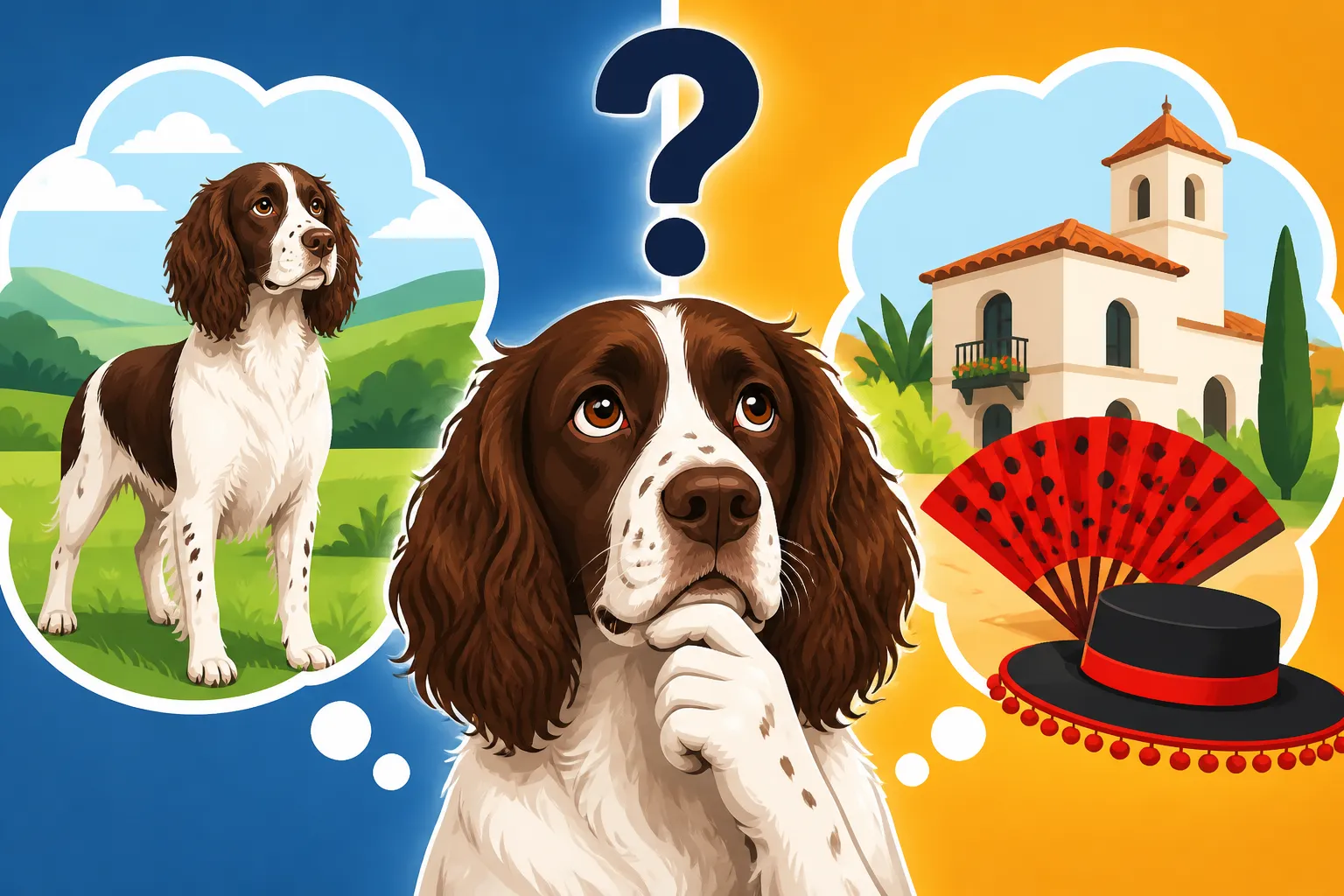
Whether Spaniel in Springer Spaniel Means Spanish Dog
It's a common assumption that when we talk about a "spaniel," especially an English Springer Spaniel, the "spaniel" part of their name must directly mean "Spanish dog." It's an easy leap to make, given the sound of the word, and many folks believe their beloved furry friend hails from a direct line of Iberian ancestors. But the truth, like many things in the fascinating history of dog breeds, is a little more nuanced and stretches back further than you might imagine. This guide will unravel the true origins of the term "spaniel" and delve into how our wonderful English Springer Spaniel came to bear its distinctive name.
Unraveling the "Spaniel" Mystery: Is It Truly Spanish?
Let's address the elephant in the room right away: while the word "spaniel" certainly sounds like it's pointing straight to Spain, the actual historical and linguistic evidence suggests it's not quite that simple. It's a bit like assuming a "French fry" must have been invented in France – the truth is often more complex! For centuries, people have speculated, and it's a perfectly logical deduction, but the full story is more about a geographical region and a style of dog rather than a definitive national origin.
The frustration often comes from wanting a clear-cut answer for our beloved companions' heritage. We see "spaniel" and think of sunny Spanish plains, but the dogs themselves, or at least their ancestors, roamed across a much wider European landscape. The term became a general classification for a type of dog, rather than a passport stamp. These dogs were characterized by their long coats, drop ears, and their remarkable ability to work closely with hunters, flushing game into nets or for hawking, and later, for guns. They were valued for their enthusiastic drive and willingness to plunge into dense cover. This cooperative nature is something we still cherish in our Springers today, whether they're working a field or snuggled on the sofa after a good long walk.
A Deep Dive into Early Spaniel History and Etymology
To truly understand the "spaniel" in Springer Spaniel, we need to go back in time, far before kennel clubs and official breed standards were even a twinkle in anyone's eye. The origins of the word "spaniel" are indeed tied to the Iberian Peninsula, but perhaps not in the way many people assume.
The most widely accepted theory suggests the word "spaniel" derives from the Old French word espaigneul (or espaignol), which essentially meant "Spanish dog." However, it's crucial to understand that this term wasn't necessarily describing a breed that originated solely in Spain, but rather a type of dog that was prominent in or associated with the region of Spain, and then spread across Europe. Think of it less as a specific breed designation and more as a regional descriptor, much like we might say "an Irish setter" or "a German shepherd." These dogs were known for their soft mouths, their enthusiasm for flushing game, and their often floppy ears.
During the Middle Ages and Renaissance, these types of dogs were highly valued across Europe, particularly by nobility and hunters. They were exported from the Iberian Peninsula to other parts of Europe, especially to Britain and France. It's quite possible that the dogs themselves, or at least the concept of these land-hunting, bird-flushing dogs, gained popularity after being imported from that region. Therefore, they became known as the "Spanish dogs" not necessarily because their absolute lineage began there, but because that's where their widespread recognition and export perhaps began. This historical context is vital to understanding How Old the Springer Spaniel Type Is and their journey across continents.
The Evolution of the Term "Spaniel"
Over centuries, as these "Spanish dogs" diversified across Europe, the term "spaniel" became a catch-all. It encompassed various sizes and specialized forms, all sharing those key characteristics: a love for hunting, drop ears, and a dense, often wavy coat. In England, these dogs further developed into different types based on the game they hunted and the terrain they worked. We had "land spaniels" and "water spaniels," and within the land spaniels, distinctions began to form based on size. The larger ones were known for "springing" game, while smaller ones were adept at "cocking" (hunting woodcock).
The distinction wasn't always clear-cut; it's a fascinating bit of history that highlights how breeders and fanciers, even without today's understanding of genetics, worked to refine dogs for specific tasks. Before formalized breeding, puppies in the same litter might even be sorted into "cockers" and "springers" based on their size and potential utility. It was a fluid definition that gradually solidified over time, culminating in the formal recognition of separate breeds much later. This long and winding road shows how much the definition of "spaniel" truly evolved from a simple geographical tag to a descriptor of a working type. You can learn more about how breeds developed in our article, The Norfolk Spaniel and the Springer Spaniel, which touches on some of these early ancestors.
The English Springer Spaniel: More Than Just a Name
So, if "spaniel" refers to a general type of dog historically associated with Spain, where does the "English" and "Springer" part come from for our specific breed? These additions tell us a much more precise story about their development and purpose, proudly proclaiming their heritage and their specialized skill.
The "English" part is straightforward: it signifies the breed's refinement and development primarily within England. While the foundational "spaniel" types were certainly found across Europe, the English Springer Spaniel as we know it today was meticulously developed and standardized in Great Britain. This process involved generations of dedicated breeders who selected for specific traits, temperament, and working ability that were ideally suited to the British landscape and hunting traditions. The focus was on creating a highly effective gundog, capable of working challenging cover and retrieving game with enthusiasm. Many of the records detailing their development are found in old sporting journals and kennel club registrations, giving us a clear lineage to England.
The Specialization of the "Springer"
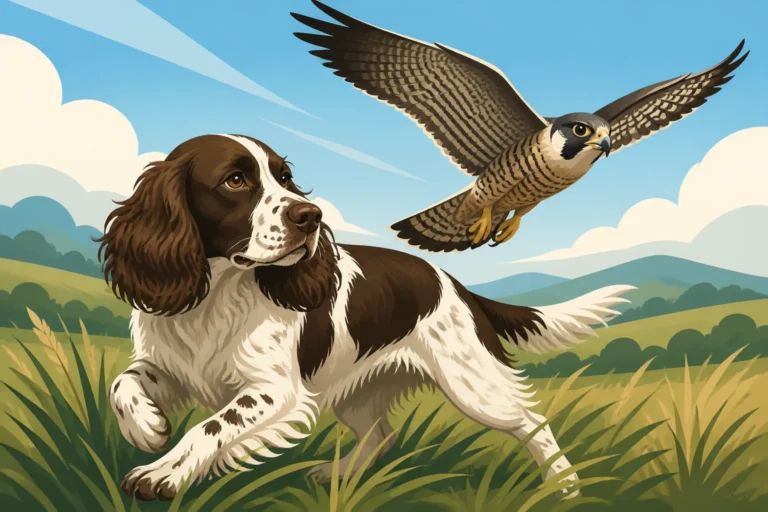
The "Springer" in English Springer Spaniel is perhaps the most defining characteristic, directly describing their original job in the field. Unlike pointers or setters that point to game, or retrievers that retrieve after the shot, Springers were bred to "spring" game. What does this mean exactly? It means they would vigorously push through dense undergrowth, brambles, and thick cover to flush birds or small game from their hiding places, forcing them into the air or into the open where a hunter could then shoot them. This was a crucial role, especially before widespread use of specialized retrieving breeds. You can read more about this in How a Springer Spaniel Worked Before Firearms.
This active, energetic method of flushing required a dog with immense stamina, fearlessness in challenging terrain, and an unshakeable bond with its handler, ensuring it worked within gun range. Their athletic build, powerful legs, and weather-resistant coat were all perfectly adapted for this demanding work. Even today, a well-bred Springer still exhibits this inherent drive to quarter and flush, whether they're working a pheasant field or enthusiastically exploring your backyard. This instinct is a strong part of their identity and helps define What the Springer Spaniel Name Describes.
The "Springing" Action: How the Springer Earned Its Full Name
The full name, English Springer Spaniel, beautifully encapsulates their geographical origin, their specialized hunting action, and their broader classification as a spaniel. It’s a testament to centuries of selective breeding and refinement, culminating in the energetic, intelligent, and biddable dogs we love today.
Let's consider the mechanics of that "springing" action. A Springer doesn't just run through the brush; they perform a systematic, quartering pattern, zig-zagging back and forth in front of the hunter. When they hit scent, their body language changes, becoming more intense, and they dive into the thickest cover with gusto, startling the game into flight or movement. This explosive flush, or "spring," is what made them invaluable to hunters. It's a breathtaking sight to behold a well-trained Springer working a field, covering every inch of ground with unwavering determination. This innate drive is why A Field Bred Springer Spaniel Is a Different Dog to Live With and needs consistent exercise and mental stimulation.
From Field to Family: The Modern Springer Spaniel
While their heritage is deeply rooted in hunting, the English Springer Spaniel has transitioned beautifully into a beloved family companion, a fantastic sport dog in agility and obedience, and even a working dog in detection fields. Their intelligence, eagerness to please, and boundless energy make them versatile partners for active individuals and families. Of course, this energy means they thrive with engagement and activity, whether it's long hikes, training sessions, or just a good romp in the park.
Even for modern pet owners, understanding the "springing" instinct helps explain why their Springer is always on the go, keen to explore every bush, and excited by every rustle in the leaves. It's hardwired into them! When you're looking for toys or gear for your active Springer, whether it's durable retrieve dummies or a comfortable harness for those long walks, you'll find a huge range of products available at places like Chewy, catering to their energetic needs.
Here's a quick summary of the key theories regarding the "Spaniel" designation:
| Theory / Aspect | Description |
|---|---|
| Spanish Origin (Direct) | The most common assumption: "spaniel" directly means "from Spain" and implies sole origin. |
| Old French Derivation | More accurate: "espaigneul" (Old French) meaning "Spanish dog," indicating dogs associated with or exported from the Iberian Peninsula. |
| Type, Not Pure Origin | "Spaniel" became a classification for a type of hunting dog (drop-eared, flushing, retrieving) prevalent in/from the region, rather than indicating Spain as the singular point of origin for all spaniels. |
| Historical Diffusion | These dogs spread across Europe from the Iberian Peninsula, taking their regional descriptor with them, which then evolved into a general term. |
So, the next time someone asks if your Springer Spaniel is a "Spanish dog," you can confidently explain that while the word "spaniel" has historical ties to the Iberian Peninsula through linguistic roots, it evolved into a broader descriptor for a type of versatile gundog. Our English Springer Spaniels are the proud result of centuries of selective breeding in England, perfected for their unique "springing" talent in the field. They are truly an English marvel, carrying a name that tells a rich tale of their working past and their journey to becoming the cherished companions they are today. Whether you get their food, toys, or even a cozy bed from Chewy, know that you're caring for a dog with a noble and storied history.
Disclaimer
This article is for general informational purposes only and does not constitute professional advice. Laws, prices and regulations vary by location and change over time. Consult a qualified professional for guidance on your specific situation.