The 1902 Split That Separated Springer From Cocker
Have you ever looked at an English Springer Spaniel and an English Cocker Spaniel and wondered how they ended up being two distinct breeds, when they seem so similar in many ways? It's a common point of confusion for many dog lovers, and frankly, it's a fascinating bit of history rooted in the very practicalities of dog breeding and function. This guide will take you back to the turn of the 20th century to unravel the story of how a seemingly simple decision by The Kennel Club in 1902 officially drew a line in the sand, separating these beloved spaniel types into the breeds we know today, and why understanding this split offers a deeper appreciation for both.
The Ancient Roots: Before the Official Split
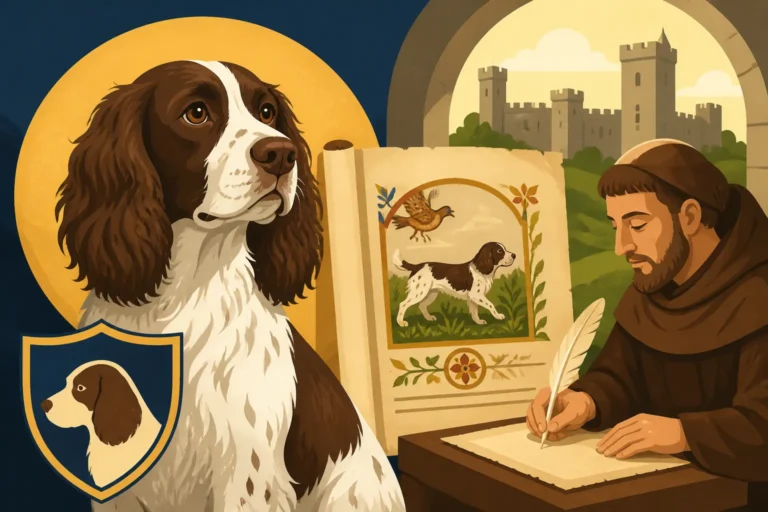
Before there were official breed registries and fancy dog shows, dogs were bred for a purpose. Their appearance was secondary to their ability to do a job, and that was certainly the case for spaniels. These cheerful, energetic dogs were essential partners for hunters across the British Isles, and for centuries, they were simply known by their overarching "spaniel" type.
Early Spaniels and Their Undifferentiated Role
Imagine wandering through the English countryside hundreds of years ago. You wouldn't find distinct "English Springer Spaniels" or "English Cocker Spaniels" as we understand them today. Instead, you'd encounter a variety of land spaniels, all lumped together under a single, functional umbrella. These dogs were valued for their ability to find and "spring" game – flushing birds or small animals from dense cover – for their human hunting companions. Their primary role was to work close to the hunter, meticulously covering ground, using their incredible noses to locate hidden prey, and then, with a burst of energy, sending it airborne or bolting it from bushes, making it accessible for nets, falcons, or later, early firearms. They were the all-purpose hunting companion of their day, indispensable for putting food on the table or providing sport. This deep history is part of why we still see that incredible drive and scenting ability in today's Springers.
There was no pedigree certificate to speak of, no strict adherence to a written standard. Breeders simply aimed to produce good working dogs. If a particular litter showed promise, those puppies would be kept and bred. If a dog excelled in the field, it was treasured, regardless of its exact size or ear set. This pragmatic approach meant that variation within the spaniel population was not only accepted but expected. Hunters needed dogs that could adapt to different terrains and types of game, and a diverse gene pool often provided that versatility. It was a fluid, functional world where a dog's worth was measured by its performance in the field, not by a judge's ribbon in a show ring. For a peek into their earlier uses, check out Springer Spaniels Working Under Falcons.
Sorting by Size, Not by Type
One of the most fascinating aspects of this pre-1902 era is how spaniel puppies were categorized, particularly when it came to those destined to be "cockers" or "springers." It wasn't about distinct parentage or even a specific genetic predisposition for one type over another in the modern sense. Instead, it was a practical sorting process based purely on size and sometimes, perceived working aptitude within a single litter. The smaller, more compact puppies, often thought to be better suited for flushing woodcock (hence "cocker"), were designated as such. Their slightly larger, more robust littermates, believed to be better at "springing" heavier game like pheasants or hares from thick cover, were called "springers."
This meant that it was entirely possible for a litter to contain both "cockers" and "springers," born from the same mother and father. Imagine the scene: a proud mama spaniel with a litter of adorable, wriggling pups, some of which would grow to be small enough for woodcock work, while others would become the larger, more powerful flushers. This fluid system meant that the genetic lines were highly intertwined, and the physical distinctions were more a matter of degree than of distinct heritage. Breeders weren't trying to create separate breeds; they were simply categorizing their output for different hunting needs. If you're curious about how this worked, you can read more in How Springer and Cocker Puppies Once Shared a Litter.
This tradition of sorting by size rather than rigid breed lines highlights a stark contrast to modern breeding practices. Today, if you buy a Springer Spaniel puppy, you expect it to grow into a Springer Spaniel, not a Cocker Spaniel! This historical context truly emphasizes how much the concept of "breed" has evolved. Back then, it was all about utility. If a smaller dog could dart through dense undergrowth to flush out woodcock, it was a cocker. If a slightly larger, more powerful dog could push through heavier cover for pheasant, it was a springer. The names were descriptors of function rather than strict genetic blueprints.
The Nimble Hunters of Old England
The daily life of these undifferentiated spaniels was one of tireless work and dedication in the field. They were truly partners to the hunter, expected to be agile, intelligent, and possess an unwavering drive to find game. Their keen sense of smell was paramount, allowing them to locate birds that other dogs might miss. They had to be quick, both in finding and flushing, but also responsive to their handler's commands, often working in close proximity, sometimes under nets or alongside falcons.
Their ability to cover ground with an energetic, quartering pattern – systematically working back and forth in front of the hunter – was highly prized. This methodical approach ensured no patch of cover went unchecked. When they found game, they were expected to "spring" it, startling it into flight or into the open, allowing the hunter to make a move. This required a delicate balance of drive and control. A dog that ranged too far or chased wildly was of little use. These were dogs bred for intense focus and partnership, traits that are still deeply ingrained in the English Springer Spaniel today. Their intelligence and eagerness to please made them highly trainable, a quality that ensured their continued popularity through the centuries.
The Rise of Breed Specialization and Kennel Clubs
As the 19th century progressed, the world of dog breeding began to undergo a significant transformation. What was once a purely functional endeavor, focused on producing working animals, started to embrace a new dimension: aesthetics and the concept of "purebred" animals. This shift laid the groundwork for the formal separation of many breeds, including our beloved Springers and Cockers.
The Victorian Era and Canine Fanciers
The Victorian era, with its burgeoning middle class and increased leisure time, saw a dramatic rise in dog fancying. Dog shows became incredibly popular events, offering a platform for breeders to showcase their finest specimens and for enthusiasts to admire a wide array of breeds. This new focus on exhibition brought with it a desire for consistency and predictability in appearance. People wanted dogs that conformed to a specific look, not just a specific job. This led to the establishment of kennel clubs, the setting of official breed standards, and the meticulous recording of pedigrees. It was a dramatic departure from the old ways, where a dog's value was almost exclusively determined by its working ability.
This passion for purebred dogs meant that informal classifications, like simply calling a small spaniel a "cocker," were no longer sufficient. Fanciers wanted clear, consistent definitions. They sought to refine physical traits, such as head shape, ear set, coat quality, and conformation, ensuring that puppies from specific parents would reliably grow into dogs that looked a certain way. This shift in focus, from purely functional to aesthetically defined, set the stage for the formal recognition and separation of many breeds that had previously coexisted under broader, more generic categories. It was an exciting time for dog lovers, but also one that brought new rules and regulations to the ancient art of breeding.
Early Efforts to Define Spaniel Types
Before the official split, there were numerous attempts to bring order to the diverse world of spaniels. Various groups of enthusiasts and breeders began to articulate what made a "cocker" a cocker and a "springer" a springer, beyond just size. They started to describe ideal physical characteristics and temperaments for each type, often based on the specific game they hunted. For instance, a cocker, being used primarily for woodcock in dense cover, might be favored for a slightly more compact, powerful build and a coat that protected it from brambles. A springer, tackling larger game and thicker cover, might be preferred for greater leg length and substance.
These discussions and informal standards were crucial in shaping the thinking that eventually led to formal breed recognition. Breeders would often share their ideas and observations, and certain lines became known for consistently producing dogs that leaned more towards one type or another. While the official split was still a few decades away, these early efforts to define and delineate were essential steps in carving out distinct identities for the different spaniel varieties. Without this groundwork, the Kennel Club's decision in 1902 might have felt arbitrary, but it was, in fact, the culmination of years of informal specialization and evolving preferences among dog fanciers.
The Influence of Specific Families and Kennels
Like with many breeds, the development of the English Springer Spaniel was heavily influenced by dedicated individuals and specific kennels. These early pioneers meticulously bred dogs, often keeping detailed private records long before official registries existed. They focused on refining the working abilities that made spaniels so effective, while also beginning to pay attention to consistent physical traits. Families with a deep love for gundogs passed down their knowledge and their prized lines through generations. These lines, sometimes tied to specific estates or regions, started to produce dogs with recognizable characteristics, even if they were not yet "breeds" in the modern sense.
One notable example is the Boughey family, whose dedication to their spaniel lines played a significant role in the breed's formative years. They, and others like them, were essentially the first "breeders" in a more specialized sense, carefully selecting dogs for both their hunting prowess and increasingly, their conformation. Their efforts provided the genetic material and the foundational stock from which the official English Springer Spaniel would eventually emerge. These dedicated individuals understood the nuanced differences in working styles and physical attributes that made certain spaniels more suited to specific tasks. For more on these foundational lines, you might enjoy reading about The Boughey Family's Springer Spaniel Line. Their commitment was vital, preserving and refining the traits that would eventually define the Springer Spaniel.
The Pivotal Year: 1902 and Official Recognition
The turn of the 20th century marked a defining moment for many dog breeds in Britain, and none more so than for the spaniels. After centuries of being categorized by function and size within litters, a formal decision was made that would forever alter the course of the English Springer Spaniel and the Cocker Spaniel.
The Kennel Club's Decision
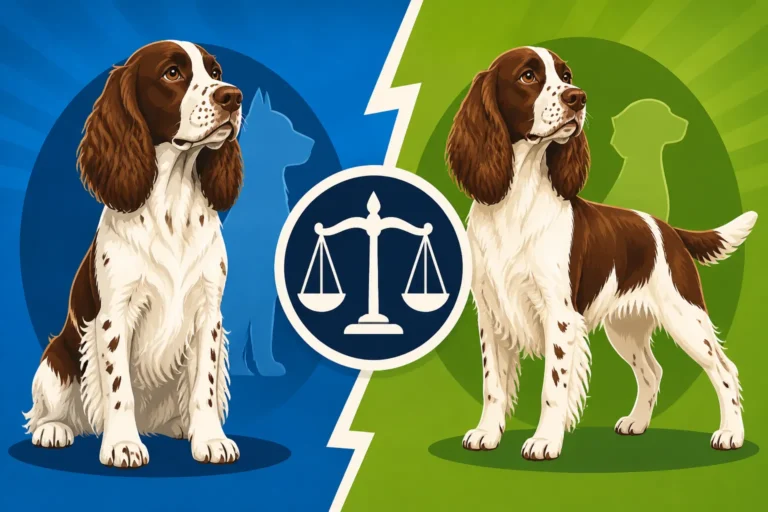
In 1902, The Kennel Club (KC) in the UK made the momentous decision to officially recognize the English Springer Spaniel as a distinct breed. This was a monumental shift, transforming it from a general descriptor for larger spaniels in a litter to a formal, standalone breed with its own specific standard. At the same time, the Cocker Spaniel also received its separate recognition. This act cemented the division between the two, providing a clear delineation that breeders and owners could adhere to. No longer would a single litter produce both "springers" and "cockers"; going forward, breeders would aim to produce one or the other, adhering to their respective developing standards.
This decision wasn't made overnight or in a vacuum. It was the culmination of years of debate, informal specialization, and a growing desire among dog fanciers for greater clarity and consistency in breed definitions. The Kennel Club's role was to formalize these distinctions, providing a framework for breeding, showing, and registering dogs. This meant that pedigrees would now trace back to recognized Springer or Cocker ancestors, rather than a more generic spaniel lineage. If you’re interested in the specifics, The Year the Kennel Club Recognized the Springer Spaniel delves into this key event. It was a clear signal that the age of informal classification was over, and the era of distinct, pedigreed breeds had truly arrived.
Defining Characteristics for the Divide
So, what exactly were the criteria used to formally split these two long-intertwined spaniel types? Primarily, the division hinged on size and weight. Historically, as mentioned, the larger dogs from a litter were "springers" and the smaller ones were "cockers." The Kennel Club's formal recognition essentially codified this practice into a breed standard. Springers were designated as the larger, heavier of the two, built for greater endurance and power to flush heavier game from dense cover. Cockers, conversely, were defined as smaller, more compact dogs, better suited for working through lighter cover for woodcock.
However, it wasn't just about the number on the scale. While weight was a primary differentiator, there were also subtle, emerging differences in physical appearance and working style that contributed to the split. Springers were expected to be more substantial, with longer legs and a generally more athletic build for covering larger areas. Cockers, while still athletic, emphasized a more compact, robust frame for navigating dense undergrowth. The standards began to articulate differences in head shape, ear length, and overall body proportion, although these were still evolving. This official distinction gave breeders clear goals to work towards, solidifying the physical and functional differences between the two breeds. A deeper dive into these criteria can be found in What Weight Divided a Cocker From a Springer.
This formalization gave breeders a tangible guide. Imagine a breeder before 1902 trying to explain the difference between their "springers" and "cockers" to a potential buyer – it was often anecdotal or based on the individual dog. After 1902, they could point to an official standard, guaranteeing a certain size range and set of characteristics. This transparency was a huge boon for establishing trust and driving the purebred dog movement forward. It meant that when someone sought a "Springer Spaniel," they knew exactly what general size and type of dog they were getting, rather than relying on the breeder's subjective judgment.
The Immediate Aftermath for Breeders
For breeders who had, for generations, been producing both "springers" and "cockers" from the same lineage, the 1902 ruling presented a significant challenge and a new direction. Suddenly, their fluid breeding programs had to adapt to rigid categories. They could no longer simply pick the largest puppies and call them Springers and the smallest as Cockers from a mixed litter. The new standards mandated that a dog was either a Springer or a Cocker, based on its parentage and conformity to the established breed type. This meant a choice had to be made: would they specialize in breeding English Springer Spaniels, or Cocker Spaniels?
This decision had profound implications. Breeders now had to carefully select their breeding stock, focusing on dogs that embodied the specific traits of either the Springer or the Cocker standard. This often involved separating their existing lines and strategically breeding only within the chosen type to ensure offspring consistently met the new, formal definitions. It was a pivotal moment that accelerated the genetic divergence of the two breeds, pushing them further apart than mere size differences had done before. This commitment to distinct lines was costly and time-consuming, requiring careful planning and often, difficult decisions about which dogs to continue breeding. It’s a testament to the dedication of these early breeders that they embraced these new challenges, shaping the future of both breeds in the process.
The Divergence: Post-1902 Evolution
With the official split in 1902, the English Springer Spaniel and the Cocker Spaniel embarked on their separate evolutionary journeys. No longer sharing the same litters or ambiguous definitions, breeders on both sides of the divide began to specialize, honing the characteristics that would make each breed unique and beloved in its own right.
Shaping the Modern English Springer Spaniel
Once formally recognized, the English Springer Spaniel began to develop its distinct identity, driven by breeders who sought to refine its traits for specific purposes. The breed standard emphasized a medium-sized, sturdy, and well-balanced dog, capable of enduring long days in the field. They needed powerful legs for springing game from dense cover, a strong, happy tail that never stopped wagging (a true indicator of the spaniel's joy in work!), and a weatherproof coat that protected them from the elements. This focused breeding led to a dog that was slightly taller and more rangy than its Cocker cousin, with a powerful drive to quarter the ground systematically and an unflagging desire to retrieve.
The emphasis remained firmly on their working ability as flushing and retrieving gundogs. Breeders selected for keen noses, high intelligence, biddability, and a "soft mouth" for retrieving game without damaging it. This dedicated focus over decades solidified the Springer Spaniel as an exceptional field companion, renowned for its stamina, courage, and enthusiasm. Their cheerful disposition and eagerness to please also made them highly trainable, adaptable to various hunting situations, and eventually, wonderful family pets for active homes. The breed's journey from a general spaniel type to the specific, capable gundog we know today is a testament to those early breeding choices. For more on the breed's origins, see How Old the Springer Spaniel Type Is.
The Cocker Spaniel's Path
While the English Springer Spaniel was being refined for larger game and more expansive flushing, the Cocker Spaniel continued its specialization, particularly for woodcock and smaller quarry in denser undergrowth. Breeders focused on a more compact, slightly lower-to-the-ground build, allowing the Cocker to navigate thickets and briars with ease. Their powerful little bodies were perfectly designed for pushing through cover where a larger dog might struggle. Over time, the Cocker Spaniel's path diverged even further, especially with the development of the American Cocker Spaniel.
The English Cocker Spaniel largely retained its working abilities, albeit for smaller game, maintaining a strong drive and a merry disposition. However, in America, there was a greater emphasis on developing the breed for the show ring and as a companion animal. This led to the American Cocker Spaniel evolving into a distinct breed altogether – often smaller, with a rounder head, shorter muzzle, and a much more profuse coat. This divergence highlights how once a breed is established, different regional preferences and breeding goals can lead to entirely new variations. The original split paved the way for these further differentiations, showing just how dynamic breed development can be.
The American Influence and Further Splits
The story of the English Springer and Cocker split doesn't end in 1902 in the UK. When these breeds made their way across the Atlantic to America, the breed fancy continued to evolve, leading to further distinctions. The American Kennel Club (AKC) officially recognized the English Springer Spaniel in 1910, a few years after the Kennel Club in Britain. However, the American Cocker Spaniel, over time, developed along a distinctly different path from its English cousin. American breeders, driven by different ideals and preferences, particularly in the show ring, began to emphasize certain physical traits that led to a significant divergence.
The American Cocker became smaller, with a more domed head, shorter muzzle, and an immensely long, profuse coat compared to the English Cocker. So pronounced were these differences that eventually, the AKC recognized the "English Cocker Spaniel" as a separate breed from the "Cocker Spaniel" (which became the American Cocker Spaniel). This additional split illustrates how powerful geographical separation and differing breeding goals can be in shaping distinct breeds, even from a shared ancestry. It's a testament to the dynamic nature of breed development, constantly adapting to human preferences and functional demands. For more on this, look up The Year the AKC Recognized the Springer Spaniel. This historical progression shows that defining a "breed" is an ongoing process, influenced by culture, geography, and the passions of dedicated fanciers.
Why the Split Still Matters Today
Understanding the historical split between the English Springer Spaniel and the Cocker Spaniel isn't just a fascinating historical anecdote; it has real, tangible implications for owners today. This historical context helps us appreciate the unique characteristics of each breed and make informed decisions about bringing one into our homes.
Understanding Breed Temperament and Needs
The 1902 split, and the subsequent focused breeding programs, had a profound impact on the temperaments and inherent needs of both breeds. English Springers, bred to cover large areas and flush heavier game, typically possess a higher energy level, an intense drive, and a robust physical stamina. They thrive on activity, mental stimulation, and a job to do. A Springer is often a dog that needs more than just a walk around the block; they need opportunities to run, explore, and use their incredible noses. Their enthusiastic, often bouncy nature is a direct reflection of their heritage.
Cocker Spaniels, particularly English Cockers, while still active, were traditionally bred for smaller game in denser cover, which often translated to a slightly more compact energy output, though they still have plenty of vim and vigor! They are often described as merry and affectionate, fitting well into family life but still requiring regular exercise and engagement. The different evolutionary paths mean that while both are loving companions, their exercise requirements, tendency for vocalization, and general "busyness" can vary significantly. Knowing this history helps prospective owners match a dog's natural predispositions to their lifestyle. For a clearer picture, check out How Different the Two Springer Spaniel Types Look.
This difference in temperament and need is crucial for preventing common owner frustrations. Many people are drawn to the beautiful looks of a Springer or Cocker without fully understanding the centuries of selective breeding that have instilled certain traits. A Springer who isn't given enough outlets for its energy might become bored and destructive, not because it's a "bad" dog, but because its innate needs aren't being met. This knowledge empowers owners to provide the right environment for their chosen companion.
Health Considerations and Genetic Pools
The formal separation of the English Springer Spaniel and the Cocker Spaniel in 1902 also led to the creation of distinct genetic pools. While there was a shared ancestry, once breeders began to focus exclusively on one type or the other, the flow of genes between them essentially ceased. Over many generations, this can lead to different genetic predispositions for certain health conditions. Each breed, through its isolated breeding lines, has developed its own set of prevalent health concerns that responsible breeders actively screen for.
For instance, while both breeds can suffer from general canine ailments, Springers might be more prone to certain eye conditions like Progressive Retinal Atrophy (PRA) or Primary Glaucoma, or hip and elbow dysplasia, which are all serious concerns. Cockers might have a higher incidence of specific ear issues or other conditions. This isn't to say one breed is inherently "healthier" than the other, but rather that their unique genetic paths have made them susceptible to different sets of challenges. Understanding this distinction is vital for prospective owners to research specific breed health clearances and for breeders to continue working towards healthier generations. You can learn more about this by reading How Health Problems Differ Between Springer Spaniel Types. This awareness helps owners partner effectively with their vets for preventative care tailored to their dog's breed. For example, knowing the Springer's propensity for ear issues might lead an owner to invest in quality ear cleaning solutions, perhaps from a reputable pet supplier like Chewy, to help prevent infections.
The Enduring Charm of Both Breeds
Despite their divergence and the unique paths they've taken, both the English Springer Spaniel and the Cocker Spaniel continue to enchant dog lovers around the world. Each breed, in its own way, embodies the delightful characteristics that make spaniels so special: their boundless enthusiasm, unwavering loyalty, intelligence, and deeply affectionate nature. They are dogs that crave companionship and are happiest when they are an integral part of their human families.
Whether you're drawn to the energetic, robust Springer who loves to be out exploring, or the slightly more compact, merry Cocker who might be content with a good walk and then snuggling on the couch, both breeds offer immense joy and devotion. Their individual histories have sculpted them into distinct, yet equally charming, companions. Their enduring popularity in both working homes and as beloved family pets is a testament to the fundamental spaniel spirit that continues to shine through, a spirit that originated centuries ago before any formal splits were even conceived. Both breeds represent centuries of careful selection, first for function, and later for form and companionship, proving that their individual charms are truly timeless.
The "Two Breeds in One" Reality
Even after the 1902 split formally separated the English Springer Spaniel from the Cocker Spaniel, the story of breed divergence wasn't over for the Springer. Over the last century, a new and equally significant split has occurred within the English Springer Spaniel breed itself, creating two distinct types that often surprise first-time owners.
The Field vs. Show Springer Divide
This is perhaps one of the most significant and often misunderstood aspects of the modern English Springer Spaniel. Just as the general spaniel population split into Springers and Cockers, the English Springer Spaniel eventually diverged into two distinct lines: the "field-bred" (or working-bred) Springer and the "show-bred" (or bench-bred) Springer. These two types, while both registered as English Springer Spaniels, look and often act so differently that many people mistake them for entirely separate breeds. This divergence accelerated dramatically through the 20th century as breeders prioritized different traits for different arenas – the demanding world of field trials versus the aesthetic requirements of the conformation show ring.
The field-bred Springer is, first and foremost, a working gundog. They are bred for intense drive, stamina, and an unflagging desire to hunt. Their appearance is secondary to their function, resulting in a dog that is typically lighter-boned, with a shorter, less profuse coat, and often with a more energetic, intense demeanor. The show-bred Springer, on the other hand, is bred to conform to a specific aesthetic standard. They are generally heavier-boned, with a thicker, longer coat, a more pronounced stop (the indentation between the eyes), and a calmer, more sedate temperament (though still a spaniel!). This internal division is so profound that it's often said there are "two breeds registered as one." It’s worth exploring Two Breeds Registered as One: the Field and Show Springer Spaniel for more context on this.
Physical and Behavioral Differences
The differences between field-bred and show-bred English Springers are quite striking. Physically, the field Springer typically has a leaner, more athletic build, often appearing more "leggy" with less feathering on its legs, chest, and tail. Their coats are generally coarser and shorter, designed for practicality in thorny cover, and they tend to have a lighter eye color. Show Springers are usually stockier, with a deeper chest, more substantial bone, and a much more abundant, silky coat and feathering that requires significant grooming. Their heads are often heavier, with a more pronounced stop and darker eyes.
Behaviorally, the distinctions are just as significant. Field Springers are often described as "redlining" – constantly on the go, with an insatiable drive to explore, hunt, and retrieve. They require immense amounts of physical exercise and mental stimulation, thriving when given a "job." Their eagerness to please is matched only by their endless energy. Show Springers, while still active spaniels, generally possess a calmer demeanor. They are often more suited to being family companions in homes that can provide good, but not necessarily extreme, daily exercise. Their biddability makes them excellent in obedience and agility, but their "off switch" is typically much easier to find than that of their field-bred cousins.
Choosing the Right Springer for Your Home
Given this profound internal split, understanding the difference between field-bred and show-bred English Springers is absolutely critical for any prospective owner. Choosing the wrong type for your lifestyle can lead to significant frustration for both you and the dog. If you’re an avid hunter, participate in field trials, or enjoy intense outdoor activities like long-distance hiking, a field-bred Springer might be your ideal partner. They thrive in environments where their innate drive and stamina can be fully utilized.
Conversely, if you're looking for a loving family companion who enjoys walks, playtime, and then settles down for a cuddle on the couch, a show-bred Springer might be a far better fit. They still need exercise and mental engagement, but typically not to the same demanding degree as their working counterparts. Before committing to a Springer, research breeders thoroughly and talk extensively about the lineage and temperaments of their dogs. It's about matching energy levels and expectations. Don't be swayed solely by a cute puppy face; understand what that puppy is bred to become. Considering your lifestyle carefully is the best way to ensure a happy and harmonious life together. This is where resources like Chewy can be helpful, offering a vast array of toys and training aids tailored to different energy levels, whether you need heavy-duty chew toys for a field Springer or plush comfort for a show Springer. For further insight into making this decision, you can refer to Which Springer Spaniel Type Suits a Pet Home.
| Characteristic | Pre-1902 "Spaniel" (Undifferentiated) | Post-1902 English Springer Spaniel | Post-1902 Cocker Spaniel (English) |
|---|---|---|---|
| Primary Classification | By size within a litter | Official Breed Standard | Official Breed Standard |
| Size/Weight | Larger pups ("Springers") / Smaller pups ("Cockers") | Medium-large, sturdy (approx. 40-50 lbs) | Small-medium, compact (approx. 25-30 lbs) |
| Typical Role | All-purpose flushing/retrieving | Flushing/retrieving heavier game | Flushing woodcock/smaller game |
| Physical Build | Varied | Athletic, rangy, strong legs | Compact, robust, lower to ground |
| Coat Type | Varied, functional | Medium length, dense, weatherproof | Medium length, dense, weatherproof |
| Temperament | Energetic, biddable, keen nose | Enthusiastic, high drive, tenacious | Merry, affectionate, active |
| Genetic Lines | Highly intertwined | Separate from Cockers | Separate from Springers |
This article is for general informational purposes only and does not constitute professional advice. Laws, prices and regulations vary by location and change over time. Consult a qualified professional for guidance on your specific situation.